

Written by Andrew Marshall
UK parent of three sharing practical advice to help families enjoy camping, walking, garden play, and simple outdoor adventures across the UK.
Creator of Simple Days Outside.
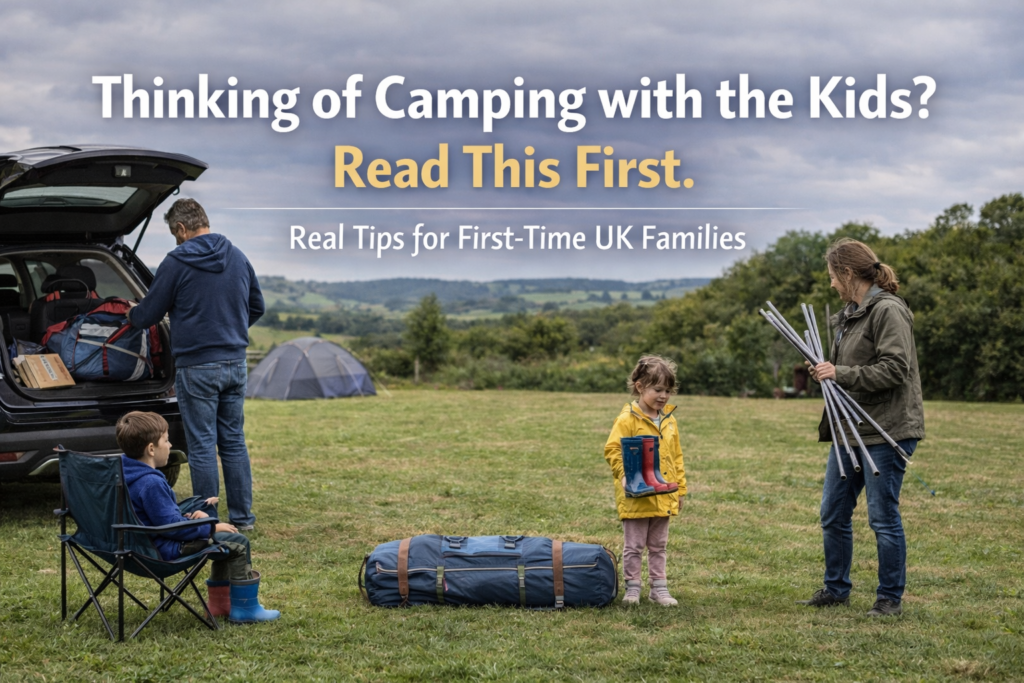
First-time family camping in the UK usually begins with optimism.
You picture fresh air, rosy-cheeked kids, toasted marshmallows, and everyone falling asleep peacefully after a wholesome day outdoors.
What actually happens is slightly different.
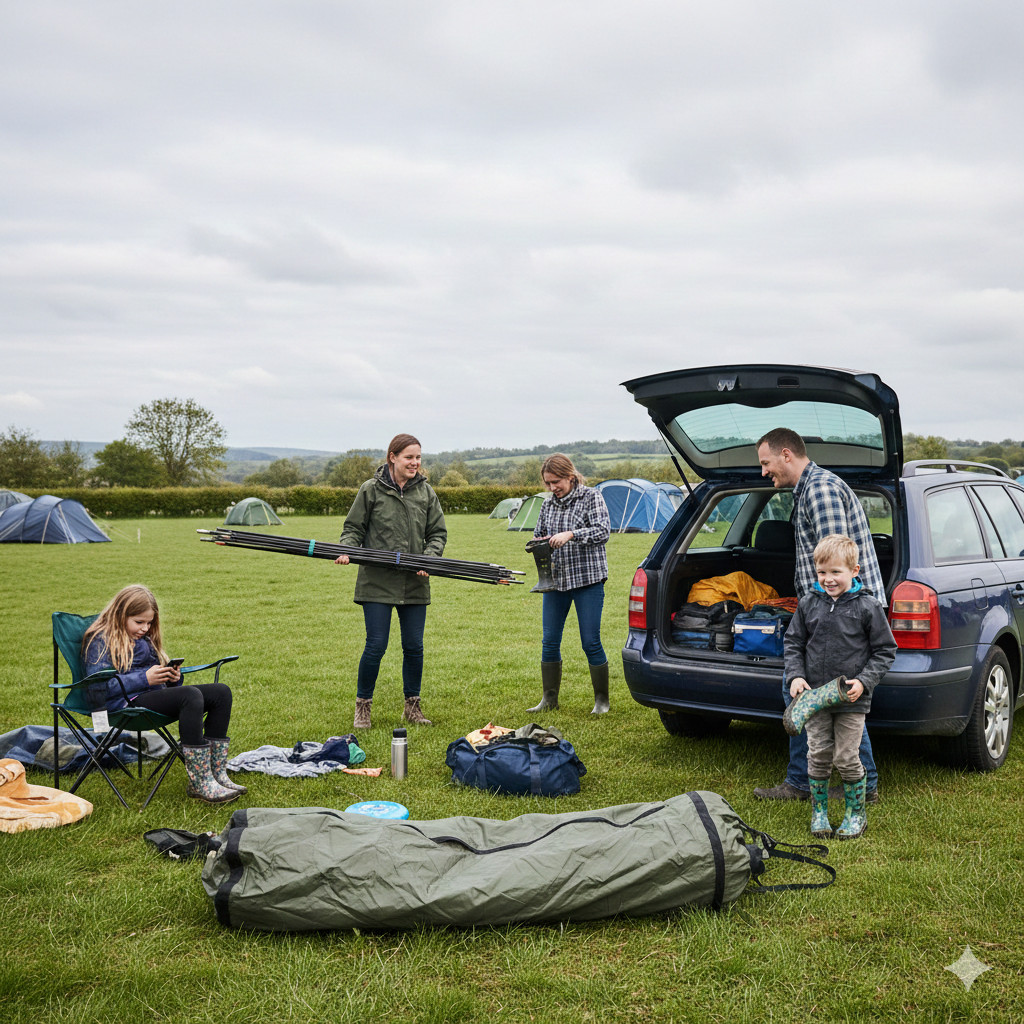
You arrive later than planned. Someone needs the toilet immediately. The wind picks up just as you open the tent bag. You can’t remember which poles go where. And within 20 minutes you’re wondering whether you should’ve just booked a cottage.
Here’s the good news: first-time family camping isn’t hard because you’re not “outdoorsy enough”. It’s hard because you’re doing normal parenting tasks — feeding, bedtime, keeping everyone warm — in a new environment with less comfort and more weather.
Once you prepare for that properly, everything feels easier.
This guide walks you through what no one really tells you about camping with kids in the UK — and how to get ready without overbuying or overthinking it.
👉 In This Guide
The biggest surprise: the weather matters more than anything else
In the UK, camping success usually comes down to one thing — how warm and dry everyone stays.
It doesn’t have to rain for a trip to feel uncomfortable. Even in summer, temperatures can drop quickly once the sun goes down. Kids who were fine at 6pm suddenly feel freezing at 10pm. And a slightly damp tent in the morning can make everyone feel grumpy before breakfast.
That’s why your sleep setup is far more important than fancy cooking gear or entertainment.
A proper family tent with enough space makes a huge difference straight away. Not because you need luxury, but because cramped sleeping areas and wet bags create tension quickly. Most families are more comfortable sizing up rather than sticking to the exact “person rating” on the label.
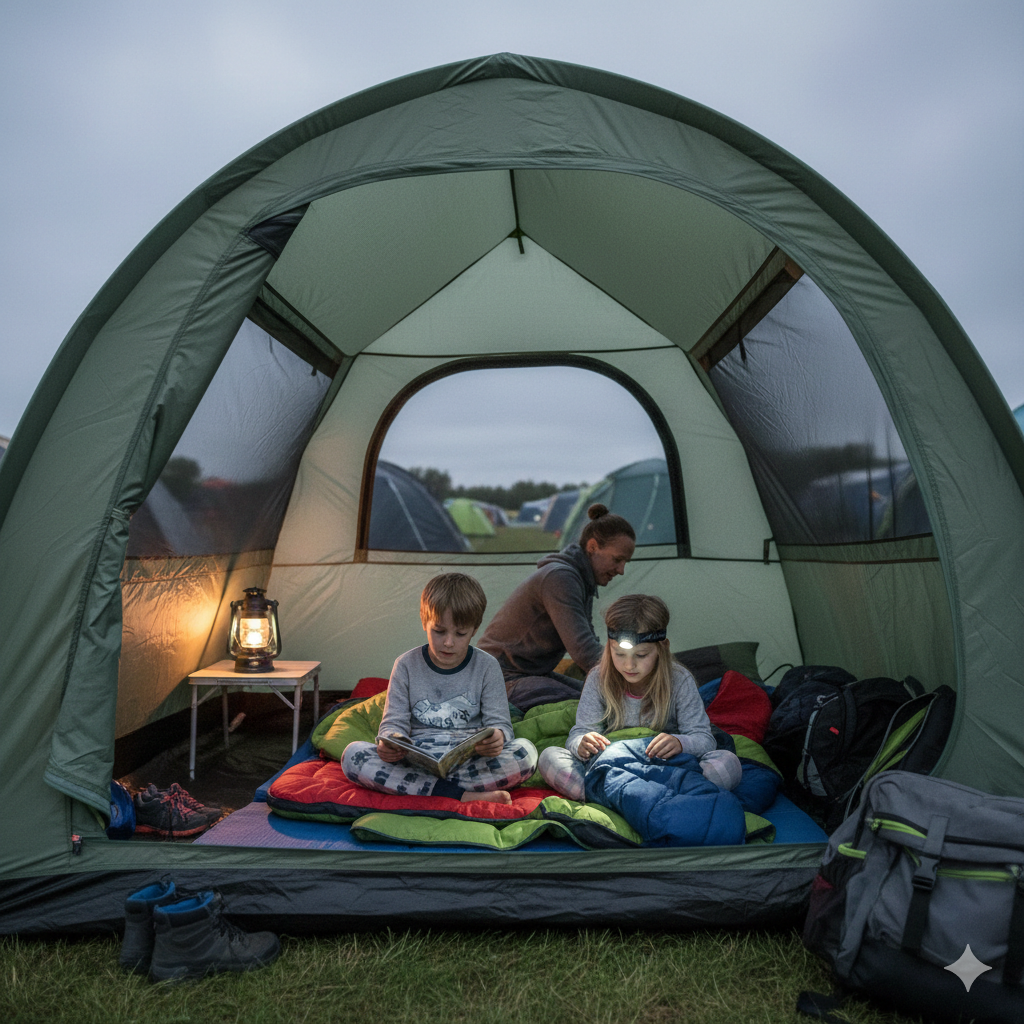
Inside the tent, warmth comes from underneath as much as above. A decent sleeping mat or camping air bed stops cold ground from creeping up through the night. Pair that with proper kids sleeping bags — not thin festival-style ones — and you’ve already solved half of first-time camping stress.
If your children tend to kick blankets off, a small extra layer or even a carefully sealed hot water bottle tucked into the bottom of the sleeping bag can be a quiet game-changer.
When kids sleep well, everything else feels manageable.
The second surprise: bedtime feels different outdoors
At home, bedtime is predictable. Camping bedtime is… atmospheric.
It’s lighter later. There are noises. Zips suddenly become fascinating. And everyone is slightly overstimulated from being outside all day.
Instead of trying to recreate a perfect home routine, simplify it.
Have pyjamas and toothbrushes in one easy-to-reach place. Use a soft rechargeable camping lantern instead of harsh phone torches. Let kids wind down with something small and familiar — a short book, colouring, or quiet chat time.
It may take longer than usual. That’s normal. The key is calm, not speed.
A small kids head torch can also help if they need to nip to the toilets after dark — it makes them feel capable rather than nervous.
Condensation isn’t your tent failing
One of the most common first-time worries is waking up to damp tent walls and thinking the tent is leaking.
In most cases, it’s just condensation. Warm breath meeting cool fabric in British air does that.
Opening vents slightly overnight helps. Keeping wet clothes out of the sleeping area helps. In the morning, a quick wipe down with a microfibre towel keeps things fresh and stops damp spreading to bedding.
It’s normal. It’s manageable. And it doesn’t mean you bought the wrong tent.
Food doesn’t need to be impressive — it needs to be easy
First-time family camping meals should be familiar and quick.
You don’t need elaborate cooking setups. In fact, complicated meals often create more stress than enjoyment.
A simple camping stove, a stable surface, and a reliable lighter are usually enough. If you’re cooking in breezy UK conditions, a small windshield makes everything more efficient.
Keep food simple:
- pasta and sauce
- wraps with easy fillings
- sausages or burgers if you’re set up for it
- cereal or porridge for breakfast
A sturdy cool box or insulated bag keeps things safe without worrying constantly about spoilage.
And bring more snacks than feels reasonable. Camping seems to increase children’s hunger levels by about 40%.
The mess multiplies quickly (unless you plan for it)
Shoes. Wet socks. Coats. Toys. Snack wrappers.
Without a simple system, your tent will feel chaotic by the end of the first evening.
The easiest fix isn’t perfection — it’s giving things a home.
Shoes stay in the porch. A basic camping doormat or camping groundsheet keeps mud down. Wet clothes get their own corner or bag. Small items like torches and wipes live in a camping hanging organiser so you’re not rummaging through bags at 9pm.
Organisation doesn’t need to be military-level. It just needs to stop you asking, “Has anyone seen…?” every ten minutes.
Rain doesn’t ruin camping — lack of preparation does
Rain is part of UK camping. Accepting that early makes everything easier.
The difference between a miserable trip and a memorable one usually comes down to clothing and storage.
Proper kids waterproof jackets and waterproof trousers mean puddles become fun rather than stressful. Spare socks are non-negotiable. A couple of dry bags protect pyjamas and tomorrow’s clothes from unexpected damp.
If you have space, a simple tarp or extra sheltered area creates a dry zone for eating or sitting. Even without that, a good porch area keeps the worst of the mess out of sleeping spaces.
When kids are dry, they’re usually happy. When they’re soaked and cold, everything feels bigger than it is.
You don’t need endless entertainment
Parents often worry about boredom on the first trip.
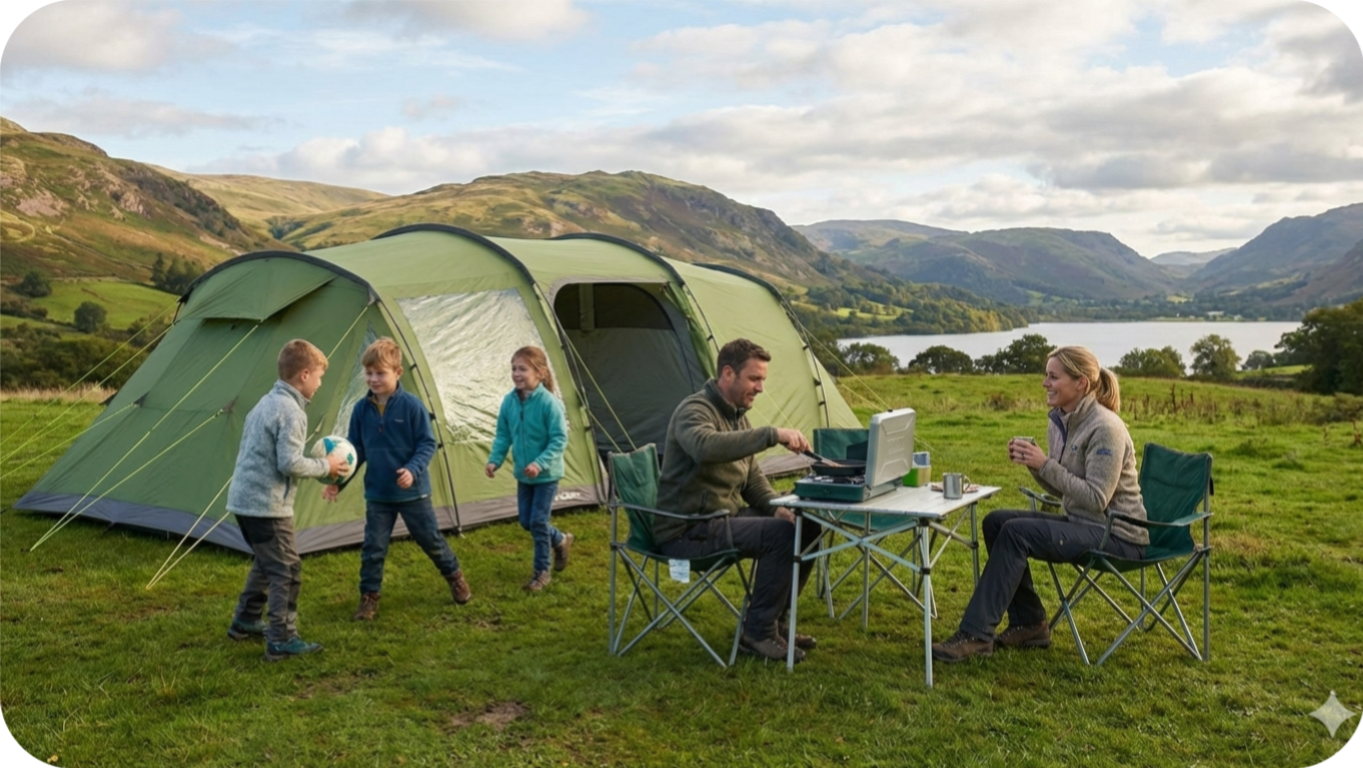
In reality, campsites are fascinating. Other kids, open space, sticks, grass, bugs — it’s all new.
A few small extras help:
- bubbles
- a ball
- maybe a cheap kite
- torches for evening exploring
But you don’t need boxes of toys. Nature does most of the work.
Safety doesn’t need to feel dramatic
Camping in the UK isn’t extreme wilderness survival. Still, a few basics bring peace of mind.
A simple first aid kit, plasters, insect cream, hand sanitiser and sun cream (yes, even here) cover most small issues. A reliable portable power bank keeps phones alive when you’re using them for photos, torches, and checking the weather.
You’re not preparing for disaster. You’re preparing for small inconveniences.
The unspoken truth: your first trip is practice
Here’s what no one says clearly enough — your first family camping trip is a learning trip.
You’ll realise you packed too much of one thing and not enough of another. You’ll adjust sleep setups next time. You’ll refine food choices. You’ll work out what your family actually needs.
That’s normal.
Start with one night if you’re unsure. Choose a campsite with decent facilities. Arrive early enough to set up in daylight. Keep meals simple.
If everyone sleeps warm, stays reasonably dry, and eats regularly, the rest usually falls into place.
🏕️ Before You Book Anything…
If this is your very first trip, two things will make everything feel calmer: knowing exactly what to pack, and choosing the right size tent.
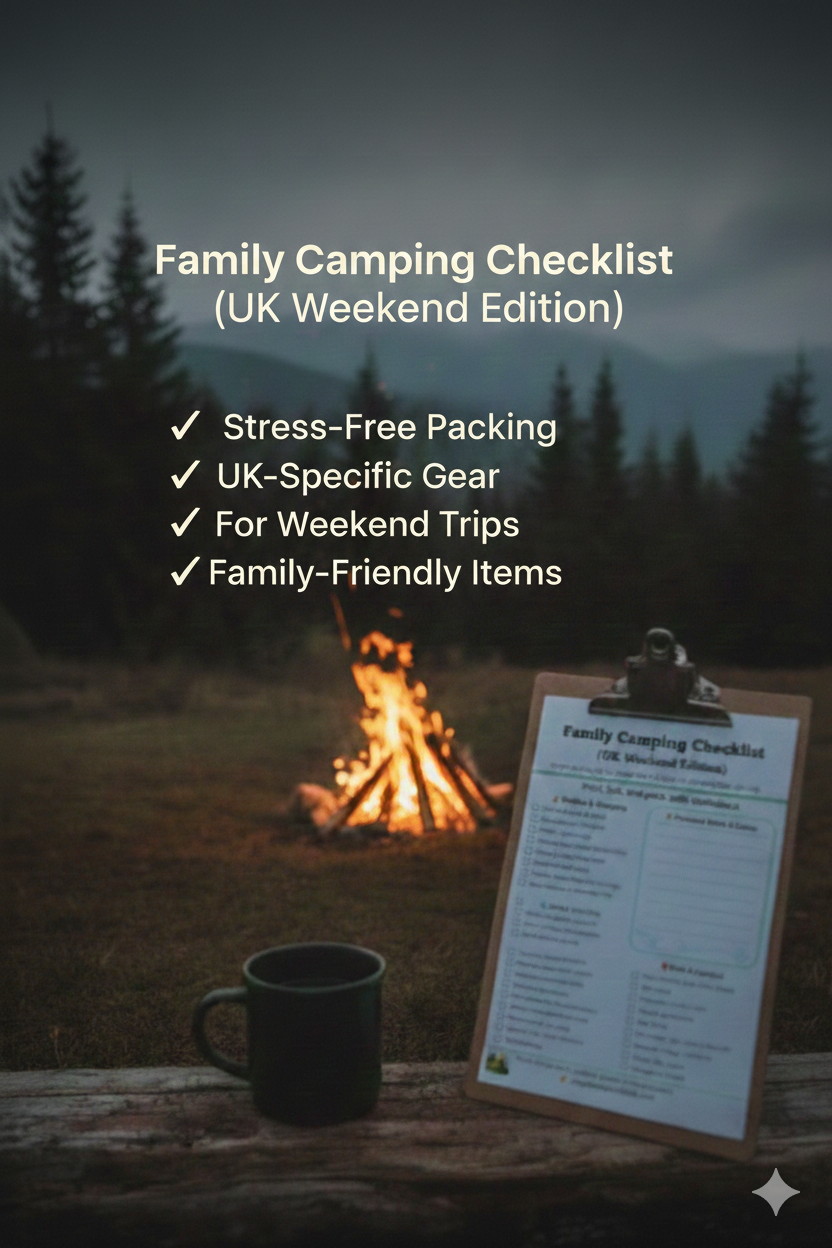
Our Family Camping Checklist: What You Actually Need (UK) keeps packing simple and realistic — no overbuying, no forgotten essentials.
And if you’re still deciding on shelter, What Size Tent Does a Family of 4 (or 5) Really Need? (UK Guide) breaks down the space most UK families actually feel comfortable in, especially when rain and bags are involved.
Getting those two sorted first takes a lot of the pressure off your first trip.
What actually makes a first camping trip successful?
It isn’t perfection.
It’s:
- a tent with enough space to breathe
- warm sleeping arrangements
- a simple rain plan
- easy food
- and realistic expectations
The magic isn’t in elaborate setups. It’s in small, comfortable moments — morning light through the tent fabric, a child proudly carrying their torch to the toilets, everyone sitting together after a simple meal.
Once you’ve done it once, the second trip feels completely different. Calmer. More confident. Like you’ve quietly levelled up.
And most parents find that what felt overwhelming at first becomes something they look forward to.
Camping doesn’t need to be extreme. It just needs to be prepared.
If you focus on warmth, dryness, space, and simple systems, your first family camping trip in the UK can feel exactly how you hoped it would — relaxed, outdoorsy, and surprisingly lovely.
If you’re planning a relaxed family camping break, our Family Camping & Short Trips guide covers the essential gear, simple setups, and realistic advice for weekends away with kids — without overpacking or stress.
About The Author – Andrew Marshall
Andrew Marshall is the creator of Simple Days Outside and a UK parent of three who regularly camps, walks, and explores outdoor activities with his family. His guides focus on practical gear, realistic family adventures, and simple ways to help families enjoy the outdoors across the UK. The recommendations on this site are based on real-world use, research, and the kind of equipment families actually rely on for weekend trips and everyday outdoor fun.