

Written by Andrew Marshall
UK parent of three sharing practical advice to help families enjoy camping, walking, garden play, and simple outdoor adventures across the UK.
Creator of Simple Days Outside.
If you’ve ever tried pitching a tent while two children are asking for snacks, one needs the toilet, and the wind has suddenly picked up… you’ll know this isn’t a small decision.
For most UK families planning short camping trips, the question isn’t “Which tent is the most technical?” — it’s “Which one will be easier when we’re tired on a Friday evening?”
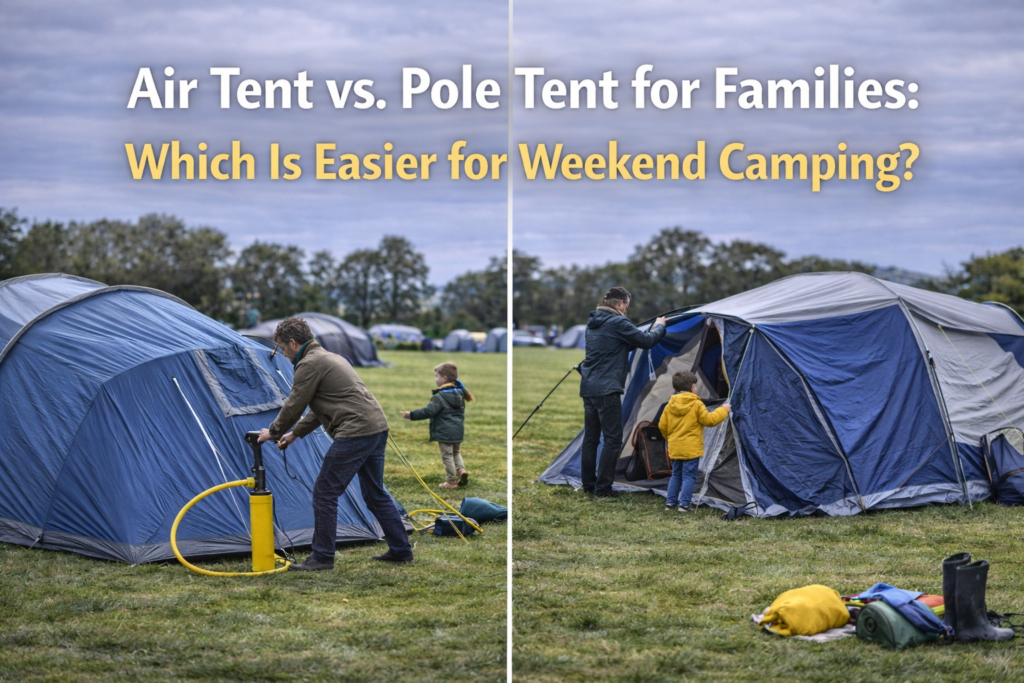
Air tents and pole tents are the two main options you’ll see when browsing family tents. Both are common across UK campsites. Both can work perfectly well for weekend trips.
But “easier” depends on context.
Is it your first trip? Are you camping mainly in summer? Do you have limited boot space? Are you trying to keep costs down?
In this guide, we’ll calmly compare:
- How each type sets up
- How stressful they feel in real conditions
- How they cope with UK wind and rain
- Packing size and storage
- Cost differences
- And which one makes more sense for short family weekends
The aim isn’t to declare a winner. It’s to help you choose the one that will feel simplest for your family.
👉 In This Guide
What Is an Air Tent?
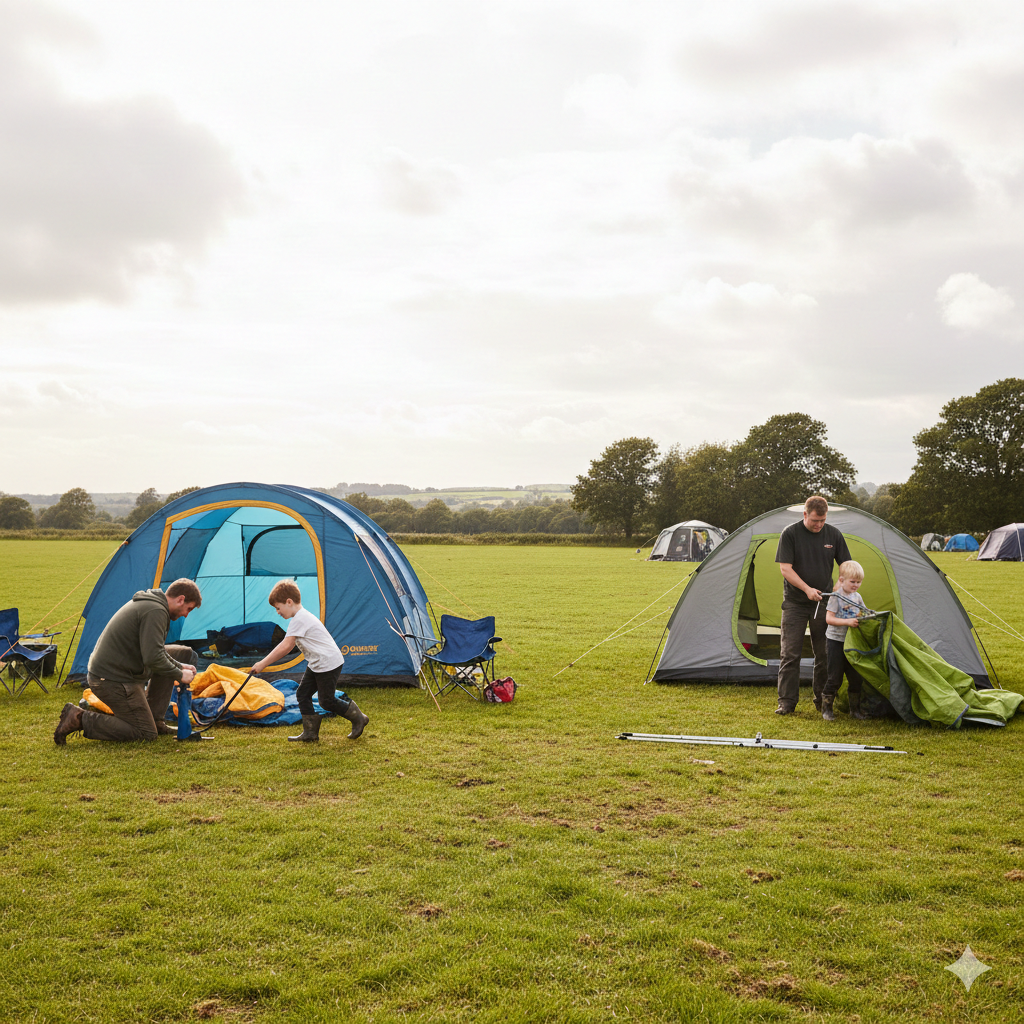
An air tent (sometimes called an inflatable tent) replaces traditional poles with inflatable beams. Instead of threading poles through sleeves, you peg the tent out flat, connect a pump, and inflate the beams until the structure stands up.
Most family air tents use multiple inflation points, and usually include a manual pump — though some families choose to use an electric tent pump to speed things up.
Families are often drawn to air tents because they look simpler. No tangled poles. No guessing which pole goes where. No bending fibreglass rods while children lose patience.
Typical UK price range
- Entry-level family air tents: around £300–£450
- Mid-range: £450–£800
- Larger premium models: £800+
They are generally more expensive than pole tents of similar size.
Pros of Air Tents
- No pole threading or assembly
- Structure inflates quickly once laid out
- Often feels less fiddly for beginners
- Sturdy once fully inflated
- Many designed with proper family layouts and blackout bedrooms
Cons of Air Tents
- Higher upfront cost
- Heavier and bulkier when packed
- Pump required
- Repairs can feel more technical
- Not always dramatically faster on the first attempt
Air tents are popular for weekend family trips because they reduce the “where does this pole go?” stress — especially for first-timers.
If this is your first camping trip, our guide to First-Time Family Camping in the UK covers the wider preparation that makes setup smoother, whichever tent you choose.
What Is a Pole Tent?
A pole tent is the traditional style most people picture. It uses fibreglass, steel, or aluminium poles that slide through sleeves or clip systems to create structure.
Most family pole tents are tunnel-style, meaning they form curved sections that create sleeping pods and living space.
They’ve been used on UK campsites for decades — and they’re still everywhere.
Typical UK price range
- Entry-level family pole tents: £150–£300
- Mid-range: £300–£600
- Larger steel-poled models: £600+
They are usually significantly cheaper than air tents of similar size.
Pros of Pole Tents
- More affordable
- Lighter in many cases
- Smaller packed size
- No pump required
- Easier to repair with replacement pole sections
Cons of Pole Tents
- Threading poles can be fiddly
- Can feel stressful in wind
- More visible components during setup
- First-time pitching may take longer
Despite newer designs, pole tents remain popular for families who want reliable shelter without stretching the budget.
Setup Comparison: Which Is Actually Easier?
This is where most families focus — and it’s worth being realistic.
First-Time Setup
Air tents feel simpler because there are fewer visible parts. You lay it out, peg corners, connect the pump, and inflate.
However, the first attempt still involves learning:
- Pegging order
- Correct inflation pressure
- Tensioning guy lines
Pole tents require:
- Sorting poles
- Matching colour codes
- Feeding poles through sleeves
For beginners, air tents often feel less confusing — but not effortless.
Setup in Wind
Wind changes everything.
With pole tents:
- Poles can flex before fully secured
- Fabric may flap during assembly
- It can feel like a two-person job
With air tents:
- Once pegged properly, inflation creates structure quickly
- Fewer loose components blowing around
In both cases, good tent pegs for hard ground and secure guy lines matter more than beam type.
Setup With Kids “Helping”
Pole tents can feel more interactive — children can pass poles or pegs.
Air tents often involve more “stand back while we pump” moments.
Neither eliminates stress entirely. Practice at home helps more than tent type.
Packing Down
Air tents must be fully deflated and carefully rolled to fit back into the bag. They’re often heavier to lift.
Pole tents collapse into smaller sections and usually pack more flexibly.
Neither is stress-free after a long weekend — but air tents can feel bulkier in the car boot.
Weather & Stability in UK Conditions
The UK means wind, rain, and occasionally soggy ground.
Wind Handling
Both air and pole tents can be stable if properly pegged and guyed out.
Larger steel-poled tunnel tents are very stable. Quality air tents with reinforced beams are also impressively sturdy.
Ground conditions matter. A proper tent footprint groundsheet can help protect the base on rough or damp pitches.
Rain Handling
Waterproofing depends on fabric ratings and proper pitching.
Both types perform well in UK rain if designed for it. Ventilation is important to reduce condensation.
Choosing the right size also helps keep muddy wellies and coats out of sleeping areas — our guide on What Size Tent Does a Family of 4 Really Need? goes into that properly.
Repairs
Pole sections can be replaced individually.
Air beams can be repaired with specific kits, though failures are relatively rare.
Neither tent type is automatically fragile.
Choosing the right campsite makes a bigger difference than most families expect — a calm, level pitch with nearby facilities lets you focus on pitching and enjoying the trip. For a simple way to check what matters most before you book, take a look at our Family Campsite Checklist (UK): 12 Things to Check Before You Book, which walks through the practical details that help weekend trips feel easier from the very start.
Weight & Packing Size
For families driving hatchbacks or smaller SUVs, this matters.
Air tents:
- Heavier
- Bulkier when packed
- Take up more boot space
Pole tents:
- Often lighter
- Slimmer packed bags
- Easier to store at home
If your weekend trips are short and you’re trying not to fill the entire boot, this may influence your decision.
Our One-Night Camping With Kids guide talks more about keeping weekend packing manageable.
Cost Comparison (UK)
Entry-level pole tents are significantly cheaper than air tents.
Air tents cost more because of inflatable beam systems, heavier materials, and more complex construction.
Is it worth it?
If you camp frequently and value simplicity, possibly yes.
If you camp once or twice a year, a well-designed pole tent is perfectly reasonable.
Spending more doesn’t automatically mean a better experience — it depends on what reduces stress for you.
When an Air Tent Makes More Sense
An air tent may suit you if:
- You’re new to camping
- Setup stress worries you
- Budget allows for higher upfront cost
- You camp several times per year
- You prefer fewer visible components
Many families feel the reduction in fiddly setup makes weekends smoother.
When a Pole Tent Makes More Sense
A pole tent may suit you if:
- Budget is important
- You’re happy following instructions
- You want lighter packed weight
- Storage space at home is limited
- You camp occasionally
They remain reliable, practical, and widely used for good reason.
Author Insight
If I’m honest, most tent stress doesn’t come from the tent itself — it comes from trying to pitch it while everyone’s hungry, the light’s fading, and the wind’s picked up at exactly the wrong moment. I’ve seen both air tents and pole tents go up smoothly, and I’ve seen both turn into minor Friday-night dramas. The biggest difference usually isn’t the design — it’s how prepared you feel. A tent you understand, in a size that suits your family, is far easier than the “latest” model you haven’t practised with.
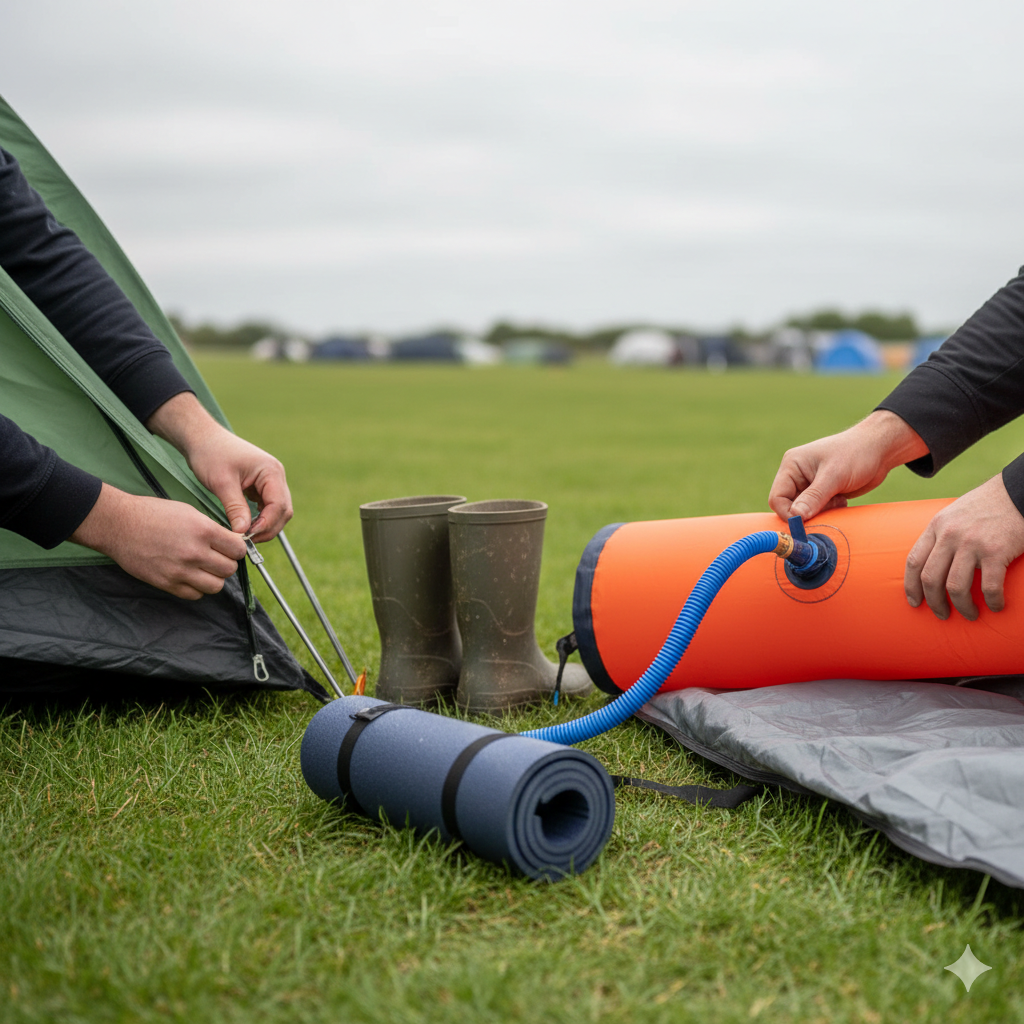
Final Verdict: Which Is Easier for Most Families?
For short UK weekend trips, the honest answer is this:
If budget allows and you’d prefer fewer fiddly steps, an air tent often feels less stressful — especially for beginners.
If budget matters and you don’t mind threading poles, a well-designed pole tent is completely workable and can feel just as stable once you’ve pitched it a few times.
Neither option is “best” for everyone.
The most important thing is choosing the right size, practising setup once at home, and keeping expectations realistic.
Weekend camping with kids doesn’t need to be impressive — it just needs to feel manageable.
If you’re weighing up tent choices as part of planning a short break, our Family Camping & Short Trips hub pulls together everything from tent sizing to simple weekend packing plans — all aimed at keeping family camping realistic and low-stress.
🏕️ Still Deciding? These Guides Can Help
If you’re narrowing down your tent choice, these practical guides break the decision into simple next steps — from setup speed to budget and comfort.
About The Author – Andrew Marshall
Andrew Marshall is the creator of Simple Days Outside and a UK parent of three who regularly camps, walks, and explores outdoor activities with his family. His guides focus on practical gear, realistic family adventures, and simple ways to help families enjoy the outdoors across the UK. The recommendations on this site are based on real-world use, research, and the kind of equipment families actually rely on for weekend trips and everyday outdoor fun.