


Written by Andrew Marshall
UK parent of three sharing practical advice to help families enjoy camping, walking, garden play, and simple outdoor adventures across the UK.
Creator of Simple Days Outside.
Arriving at a campsite with children waiting in the car while you wrestle with tent poles isn’t most people’s idea of “relaxing”.
Weekend camping should feel simple.
You pull up. You unload. The tent goes up without drama. Everyone eats before sunset. No one says, “Why did we do this?”
That’s why ease of pitching matters so much for short UK family trips. Especially when:
- You’re arriving after work on a Friday
- The weather is unpredictable
- The kids are already tired
- Or it’s your first few trips
In this guide, we’ll look at what genuinely makes a tent “easy to pitch” for families — and what to prioritise when choosing one for quick weekend set-up.
Because easier doesn’t always mean smaller. And expensive doesn’t always mean simpler.
👉 In This Guide
What Actually Makes a Tent Easy to Pitch?
When brands say “quick pitch”, they usually mean one of four things:
- Fewer poles
- Inflatable beam systems
- Colour-coded poles
- Clip-based structures instead of sleeves
But in real life, ease comes down to three practical factors:
- How many steps are involved
- How heavy the structure feels
- Whether it’s manageable with two adults (or one)
For weekend camping, simplicity matters more than size.
1. Air Tents: Often the Simplest Option
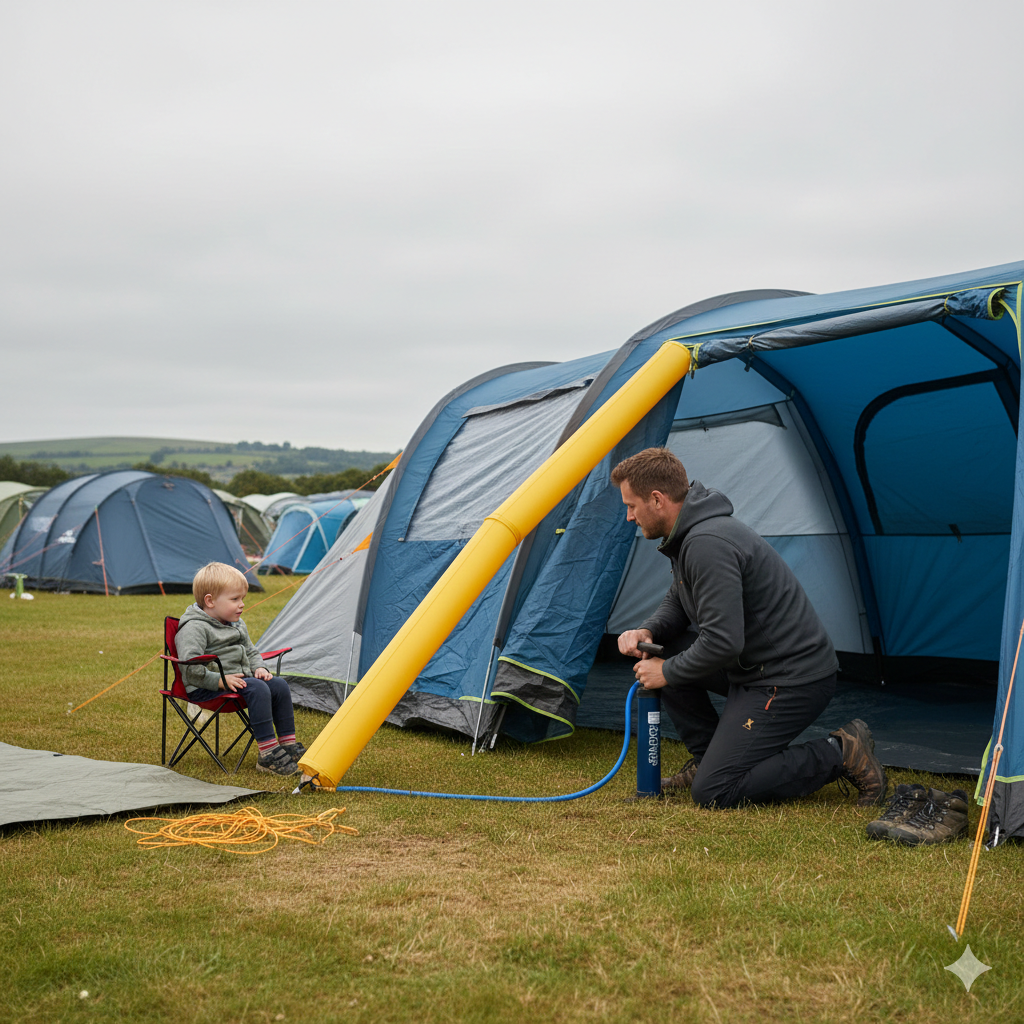
Air tents (inflatable tents) are popular with families for one big reason: no pole threading.
Instead of assembling poles, you:
- Lay the tent flat
- Peg key points
- Attach a pump
- Inflate
The structure stands up in sections as air beams fill.
For many families, this reduces stress because there’s less visible “fiddling”.
Using a manual tent pump is standard, though some families prefer a small electric tent pump to speed things up.
Air tents aren’t always faster on the very first attempt — but once familiar, many families find them calmer to pitch.
If you’re still deciding between inflatable and traditional styles, our guide on Air Tent vs Pole Tent for Families: Which Is Easier for Weekend Camping? goes deeper into the comparison.
2. Colour-Coded Pole Tents: Underrated Simplicity
Not all pole tents are complicated.
Many modern family tents use:
- Colour-coded poles
- Clip systems rather than sleeves
- Fewer structural sections
This can make them surprisingly manageable.
The key is avoiding overly large designs for short trips.
For quick weekends, mid-sized tunnel tents are often easier than very tall, multi-room structures.
If you’re unsure about size, our guide on What Size Tent Does a Family of 4 (or 5) Really Need? can help prevent buying something unnecessarily huge.
3. Pre-Attached Groundsheet Designs
Some family tents include sewn-in groundsheets or semi-attached systems.
For weekend use, this helps because:
- You’re not aligning multiple layers
- You reduce setup steps
- Packing down is simpler
It’s a small detail — but when it’s raining lightly, fewer loose pieces matter.
Features That Make Weekend Set-Up Easier
Here’s what genuinely helps on short UK trips:
✔ Fewer Poles or Beams
Less structural complexity = less confusion.
✔ Clear Instructions (That Make Sense)
Look for tents with simple diagrams and consistent pole markings.
✔ Manageable Packed Weight
Even if setup is easy, lifting a 30kg tent bag repeatedly isn’t ideal.
✔ Decent Storage Bag Design
Tents that actually fit back into their bag without wrestling make Sunday mornings much calmer.
What Doesn’t Automatically Mean “Easy”
Some features sound impressive but don’t necessarily reduce setup time:
- Extra internal dividers
- Multiple porch extensions
- High ceiling height across the full footprint
- Decorative add-ons
For short trips, simpler layouts are usually easier.
Realistic UK Weekend Scenarios
Let’s talk real life.
Arriving After Work
If you arrive at 6pm, light may already be fading in spring or autumn.
An easy-pitch tent should allow:
- Main structure up within 15–25 minutes
- Bedrooms clipped in quickly
- Minimal confusion
Large multi-room setups may take longer than advertised.
Light Wind
Wind exposes weak setup designs.
Tents that:
- Stand up quickly once partially assembled
- Don’t require too many loose components
Feel far less stressful.
Kids “Helping”
Children often want to join in.
Air tents are less interactive (mostly pumping and pegging).
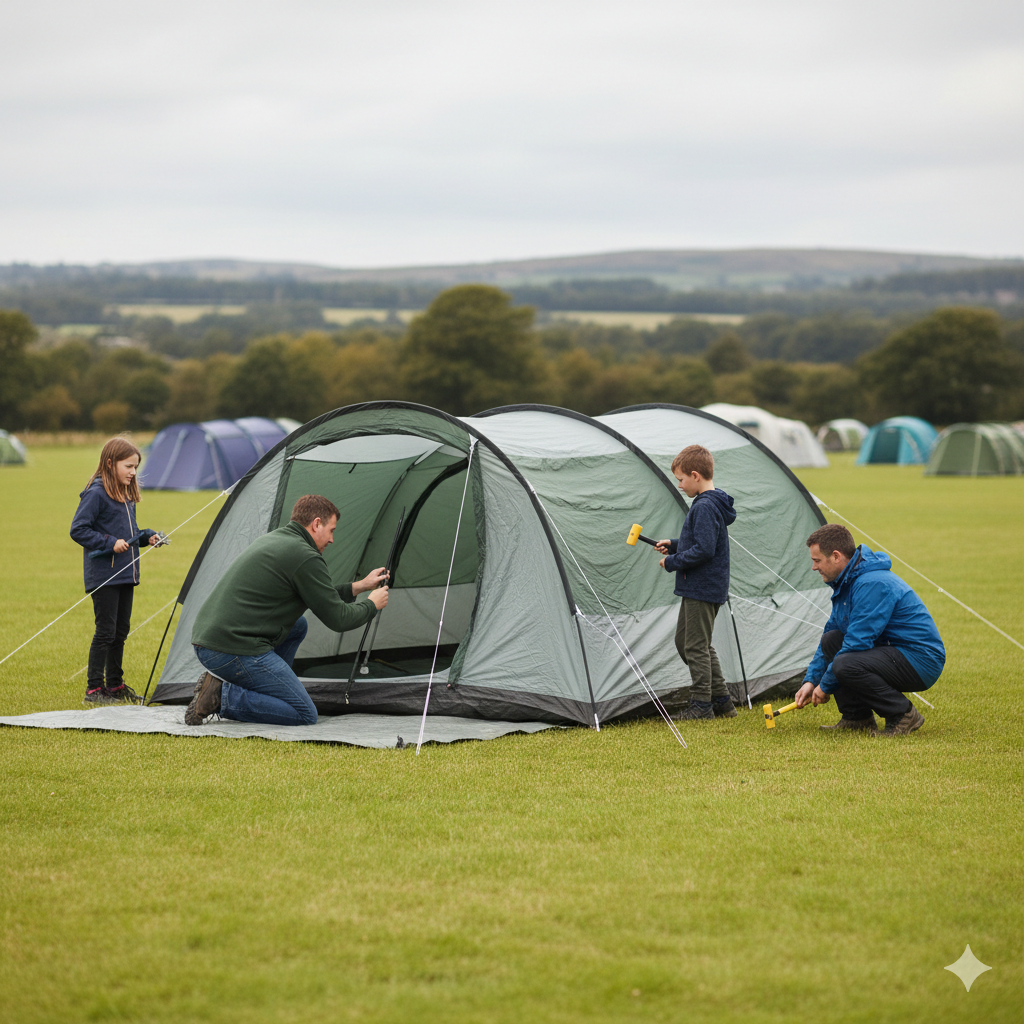
Pole tents allow handing over pegs and holding poles.
Neither is perfect — but simpler structures reduce frustration.
If you’re brand new to camping altogether, our guide on First-Time Family Camping in the UK: What No One Tells You (And How to Prepare) covers how to reduce stress before you even arrive.
Space vs Simplicity
This is where many families get stuck.
Bigger feels safer.
But larger tents:
- Take longer to pitch
- Require more pegging
- Weigh more
- Take longer to pack away
For short weekend trips, choosing a tent just one size above your sleeping needs is often easier than going two sizes up.
For example:
- Family of 4 → consider 5–6 berth
- Family of 5 → consider 6–7 berth
Beyond that, setup time increases quickly.
Comfort Still Matters
Easy setup shouldn’t mean uncomfortable.
For weekend camping, look for:
- Proper ventilation
- Enough standing space in central area
- Separate sleeping pods
- Room for basic camping storage organisers
Keeping things tidy inside makes pack-down easier too.
And don’t forget — tent comfort matters less if sleep is poor. A good setup of self inflating camping mats or suitable kids’ beds can make more difference than tent fabric thickness.
Weather Handling for Short Trips
An easy-pitch tent still needs to handle UK rain.
Look for:
- Waterproof ratings suited to UK conditions
- Taped seams
- Stable guying system
A calm, sheltered pitch helps enormously. Our Family Campsite Checklist (UK): 12 Things to Check Before You Book explains how site choice reduces stress before you’ve even unpacked.
Budget vs Premium for Easy Pitching
More expensive doesn’t always mean easier.
Premium tents may:
- Feel sturdier
- Offer better blackout bedrooms
- Have improved layouts
But they can also be heavier and larger.
Mid-range family tents often hit the sweet spot:
- Solid materials
- Manageable size
- Straightforward pitching systems
If you’re weighing up budget versus higher-end options, our guide on Cheap vs Premium Family Tents (UK): Is Paying More Really Worth It? looks at whether spending more truly improves weekend trips.
Quick Weekend Setup Checklist
Before buying, ask:
- Can two adults pitch this comfortably?
- Does it avoid excessive pole sections?
- Is the packed size realistic for your boot?
- Is it bigger than you actually need?
- Does it include features that genuinely reduce effort?
If the answer feels practical rather than impressive, you’re probably choosing wisely.
Final Thoughts
The best easy-to-pitch family tent isn’t necessarily the most expensive.
It’s the one that:
- Goes up without confusion
- Feels stable in light wind
- Packs down without argument
- Suits short, realistic UK trips
For weekend camping, simplicity often beats scale.
A manageable, well-designed tent reduces stress more than extra living space ever will.
And when the tent goes up smoothly, everything else feels easier.
For additional advice on preparing for UK campsite stays, families can refer to guidance from the Camping and Caravanning Club, which offers practical information on pitching, safety, and campsite etiquette.
If you’re planning more short camping breaks like this, our Family Camping & Short Trips hub brings together practical guides on tents, packing, campsite choice and sleep setups — all designed to make weekend family camping feel manageable rather than overwhelming.
🏕️ Planning a Simple Weekend Trip?
If you’re choosing a tent for short family breaks, these guides help you think beyond just pitching time — from sleep comfort to packing realistically for UK conditions.
About The Author – Andrew Marshall
Andrew Marshall is the creator of Simple Days Outside and a UK parent of three who regularly camps, walks, and explores outdoor activities with his family. His guides focus on practical gear, realistic family adventures, and simple ways to help families enjoy the outdoors across the UK. The recommendations on this site are based on real-world use, research, and the kind of equipment families actually rely on for weekend trips and everyday outdoor fun.