

Written by Andrew Marshall
UK parent of three sharing practical advice to help families enjoy camping, walking, garden play, and simple outdoor adventures across the UK.
Creator of Simple Days Outside.
1️⃣The Starting Point
If you live in the UK, you already know the routine: it can be dry when you leave the house, drizzle by lunchtime, and proper sideways rain by the school run. Kids don’t stop moving just because the weather’s grim — they still want the park, the scooters, the football pitch, the muddy path through the woods.
A good waterproof jacket isn’t about looking outdoorsy or spending loads. It’s about keeping them comfortable enough that they’ll actually wear it, warm enough that the wind doesn’t cut through, and dry enough that you’re not dealing with soaked jumpers and damp sleeves every other day.
This guide is here to help you choose a jacket based on what matters in real life: UK rain, school uniforms, active kids, and the way “waterproof” means very different things depending on the jacket.
👉 In This Guide
2️⃣ What actually makes a jacket waterproof?
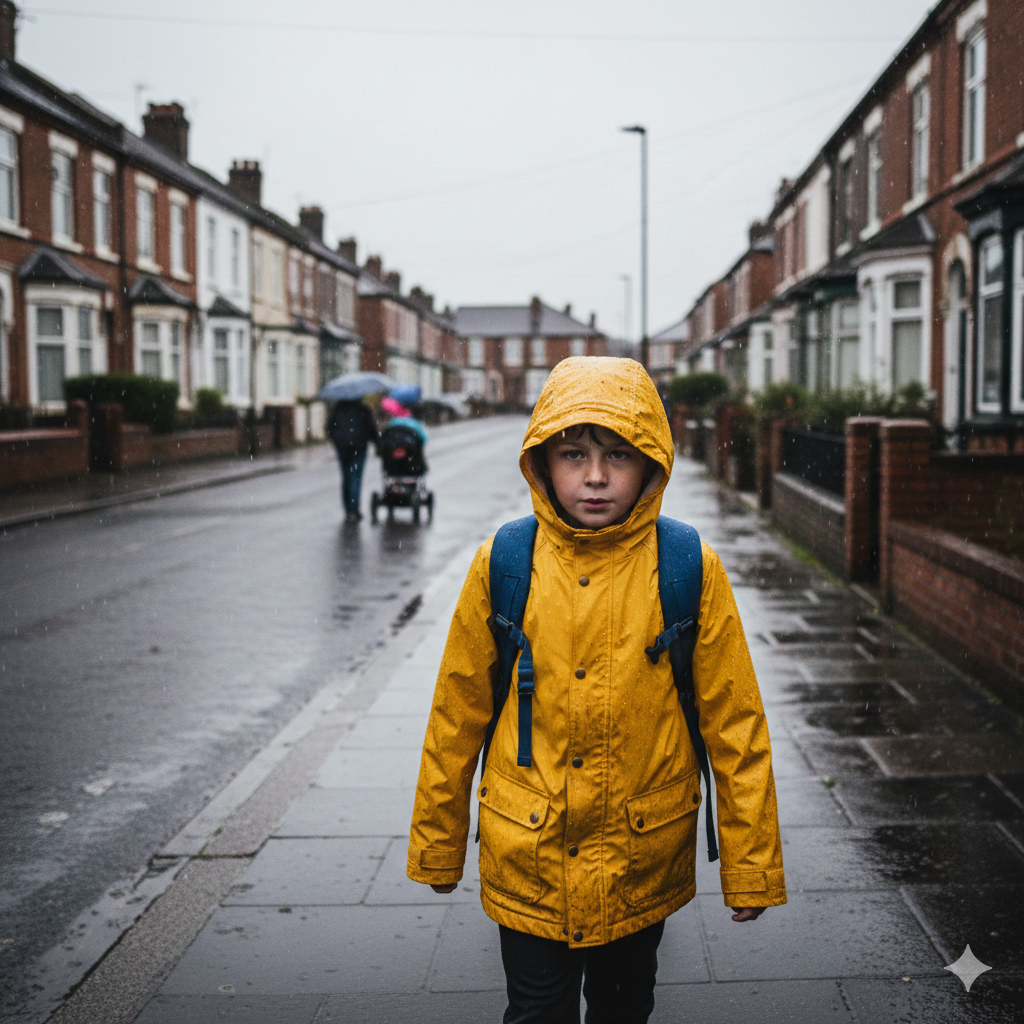
Most parents start with the label: “waterproof” or “showerproof.” The problem is those words aren’t consistent. Two jackets can both claim waterproofing, but one will keep them dry in heavy rain and the other will wet through on the walk to school.
Here’s what actually matters.
Waterproof ratings (mm) — the simple explanation
Waterproof ratings are usually shown as a number in millimetres: 3,000mm, 5,000mm, 10,000mm and so on.
The easiest way to think about it is this:
- The higher the number, the more pressure the fabric can handle before water pushes through.
- Wind-driven rain, kneeling on wet ground, leaning on a soaked fence, and backpack straps all increase pressure.
So while UK rain itself isn’t “high pressure,” kids create pressure by sitting, kneeling, and getting on with life.
3,000mm vs 5,000mm vs 10,000mm (what it means in the UK)
3,000mm:
- Usually fine for light rain and short outings
- Can struggle with steady rain or long walks
- Often works best as a “spare in the bag” jacket
This is the territory of a 3,000mm waterproof rating jacket when you’re buying for quick trips and mild days.
5,000mm:
- A solid everyday level for many UK families
- Better in steady rain and windy drizzle
- More reliable for school use, playground time, and weekend walks
10,000mm:
- Handles heavy rain, long outdoor days, and rougher use
- A better pick for kids who are outside a lot (scouts, forest school, sport, dog walks)
- Often paired with better construction (but not always)
There are jackets rated higher than 10,000mm, but for most families, the difference you feel day-to-day comes more from seams, hood design, cuffs, and durability than chasing huge numbers.
Taped seams — the detail that stops leaks
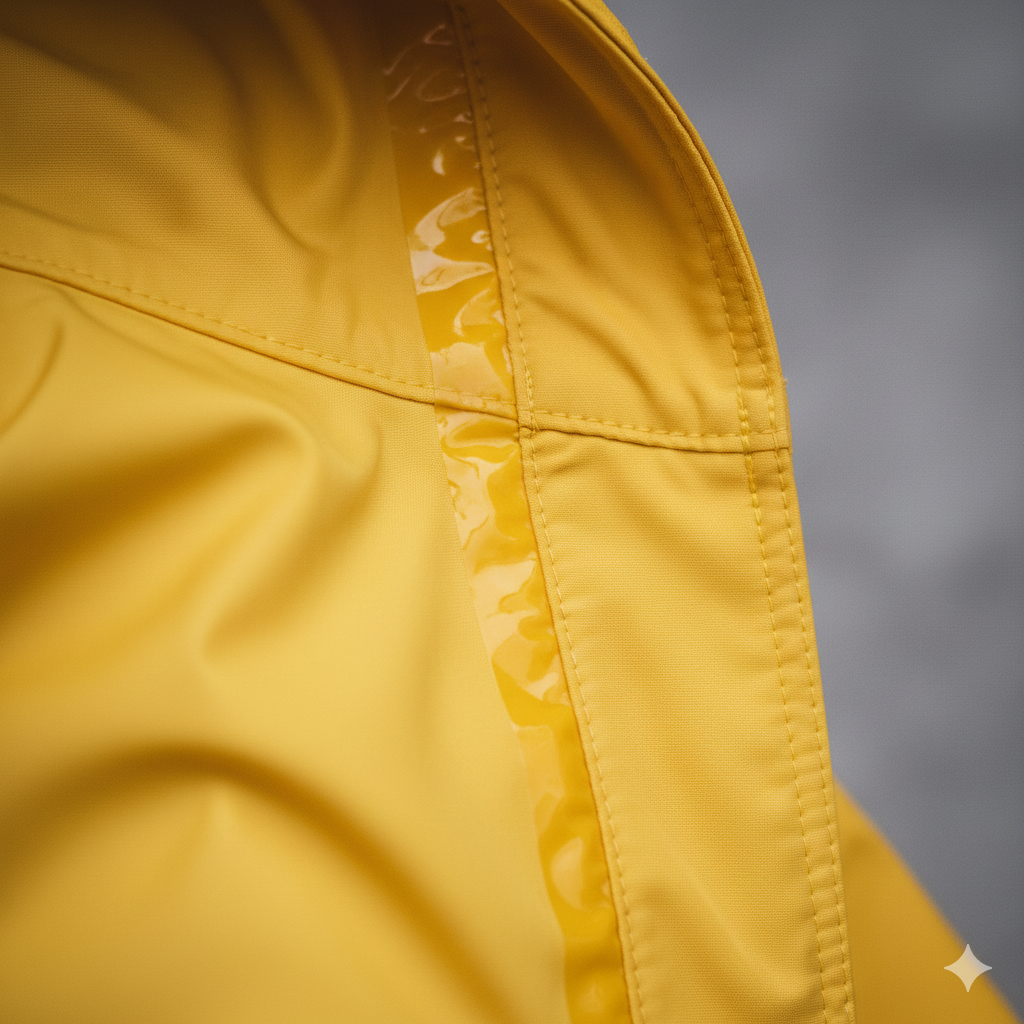
Even if the fabric is excellent, water can still leak through the stitching. That’s where taped seams come in.
- Fully taped seams: tape covers seams throughout the jacket (best for proper wet weather)
- Critically taped seams: tape is only in key areas (often shoulders and hood)
- Untaped seams: water can seep in over time, especially in heavy rain
If you’ve ever had a jacket that’s “waterproof” but ends up damp around shoulders or the back, seam taping is usually why.
A taped seam waterproof coat often makes more difference than bumping the rating slightly.
Fabric coatings and membranes — what’s going on inside
Most kids’ waterproof jackets are built in one of these ways:
- Coated fabric (PU coating): common in budget jackets; can work well but may feel less breathable
- Membrane fabric: a thin layer that blocks water while letting sweat vapour escape; often seen in mid-range jackets
- 2-layer / 3-layer construction: more technical (often pricier), usually more durable and breathable
You don’t need to memorise these — just know that cheaper jackets often rely on coatings that can wear off faster, especially if they’re washed often or rubbed by backpacks.
Why cheap jackets sometimes fail
A jacket can fail in a few very normal ways:
- Seams aren’t taped, so rain sneaks through stitching
- The outer fabric “wets out” (soaks up water), making the inside feel clammy
- The coating wears down from washing, tumble-drying, or heavy rubbing
- The zip isn’t protected, so water gets in through the front
- The hood and cuffs don’t seal, so rain runs inside at the neck and wrists
It’s rarely that a jacket is “fake waterproof.” It’s usually that it’s built for light use and ends up being used like a proper outdoor coat.
3️⃣ Breathability (why it matters more than parents think)
Waterproofing keeps rain out. Breathability helps sweat escape.
If your child is running, climbing, cycling, or charging around the playground, they’ll sweat even in cold weather. When a jacket doesn’t breathe, moisture builds up inside and they feel damp anyway — which makes it hard to tell whether the jacket leaked or they just overheated.
What breathability looks like in real life
Poor breathability often shows up as:
- Damp back and shoulders after walking to school
- Sweaty arms under the sleeves
- That clammy feeling when the outside looks dry but the inside is wet
For active kids, breathability can be as important as waterproofing, especially if they wear the jacket every day.
This is where a breathable school waterproof jacket can genuinely make mornings easier — less arguing, less discomfort, fewer “I’m hot” complaints.
Breathability ratings (simple explanation)
Breathability is sometimes listed as a number like 3,000g, 5,000g, 10,000g (often written as g/m²/24h). Higher generally means more moisture can escape.
A simple guide:
- 3,000g: okay for gentle use and short walks
- 5,000g: decent for school, parks, everyday play
- 10,000g+: better for active kids, longer days out, sports, hiking, forest school
If you can’t find a breathability rating, look for practical signs instead:
- Ventilation zips or mesh-lined pockets
- A lining that feels less “plastic bag”
- Reviews mentioning comfort during active use
Breathability is also helped by fit and layering — which brings us to sizing.
4️⃣ Fit & sizing (this is where most jackets win or lose)
A jacket can have great specs and still be a nightmare if it doesn’t fit properly. Kids won’t keep a hood up if it blocks their vision. Sleeves that ride up mean wet wrists. A jacket that’s too snug won’t layer over school jumpers.
Room for layering (without going huge)
In UK weather, most kids wear a waterproof as the outer shell and choose warmth underneath depending on the day.
Look for:
- Enough space for a school jumper or fleece
- Shoulder room for movement (climbing frames, scooters, bikes)
- Not so oversized that the cuffs and hem don’t seal
A good rule: if they can comfortably raise their arms and you can still pinch a bit of space at the chest over a jumper, you’re in the right zone.
Sleeve length (the quickest test)
Sleeves should reach the wrist with arms relaxed, and still cover the wrist when arms are raised.
If sleeves ride up when they grab a rail or hold handlebars, they’ll end up with wet sleeves underneath.
Useful features:
- Elasticated cuffs
- Velcro cuff adjusters
- Inner storm cuffs on some jackets (great for wind and rain)
Hood fit (the thing kids complain about most)
A good hood should:
- Sit securely without sliding over their eyes
- Have a small peak/brim to stop rain running down the face
- Adjust at least one way (drawcord or elastic)
If the hood is floppy, kids will take it off. If it’s tight around the face, they’ll hate it. If it blocks peripheral vision, they won’t wear it for school or cycling.
Elastic cuffs and hem — small details, big difference
In UK drizzle, rain often creeps in at the edges:
- Water runs down the sleeves into the wrists
- Wind pushes rain under the hem
- Backpack straps funnel water down the shoulders
Better jackets often have:
- Adjustable cuffs
- A slightly longer back hem (useful for school and sitting on wet benches)
- A storm flap over the zip
School uniform compatibility
For school use, you’re balancing waterproofing with everyday practicality.
Think about:
- Colour rules (some schools are strict)
- Whether it fits over a blazer or thick jumper
- Pocket placement (kids love pockets, but they also fill them with stones)
- Easy zips (especially for younger children)
If a jacket is hard to zip, hard to move in, or too “technical” feeling, it ends up staying in the bag.
5️⃣ When budget jackets are enough
There’s no shame in buying sensibly. Plenty of kids do perfectly well with budget waterproofs — especially when they’re growing fast, losing things, or you just need something reliable for normal UK rain.
Budget jackets are often enough when:
- Your child mainly needs it for short walks and playground time
- You already have a warm layer underneath
- You want a spare kept in school or in the car
- They’re not outdoors for hours at a time in heavy rain
The key is being realistic. A budget jacket can be genuinely waterproof, but it may not handle repeated long exposure or heavy use as well as higher-end options.
If you’re specifically trying to keep it affordable, it’s worth reading our guide on Kids Waterproof Jackets Under £40 (UK): Budget Picks That Stay Dry — it focuses on what to look for in cheaper jackets so you don’t end up with one that wets through after a week.
What to prioritise in the budget range:
- Some seam taping (even partial is better than none)
- A hood with a small peak
- Elasticated cuffs
- A decent zip and storm flap
- Reviews mentioning “stayed dry in heavy rain” rather than just “looks nice”
If you can find a jacket that ticks those boxes, you’re doing well.
6️⃣ When it’s worth spending more
Sometimes paying more isn’t about brand — it’s about a jacket that lasts longer, stays waterproof through repeated use, and keeps kids comfortable in real UK weather.
It’s usually worth spending more if:
- They’re outside daily (walks to school, outdoor play, sports)
- You do regular weekend walks, camps, or forest school
- Your child runs hot and gets sweaty easily (breathability matters)
- You want one jacket to last multiple seasons
- You’re tired of replacing jackets that wet out or rip
Higher-quality jackets often offer:
- Better seam taping (more complete coverage)
- Stronger fabric at elbows and shoulders
- Better zips and storm flaps
- A hood that actually stays put
- Better balance of waterproofing and breathability
If you want a deeper look at what makes a “proper UK weather” jacket, our guide Best Kids Waterproof Jackets for UK Weather goes into the features that tend to make the biggest difference over a full season of use.
One calm reminder: spending more only works if the jacket gets worn. The best jacket is the one your child actually puts on without a fight — so fit and comfort still come first.
7️⃣ Full wet weather protection (it’s not just the jacket)
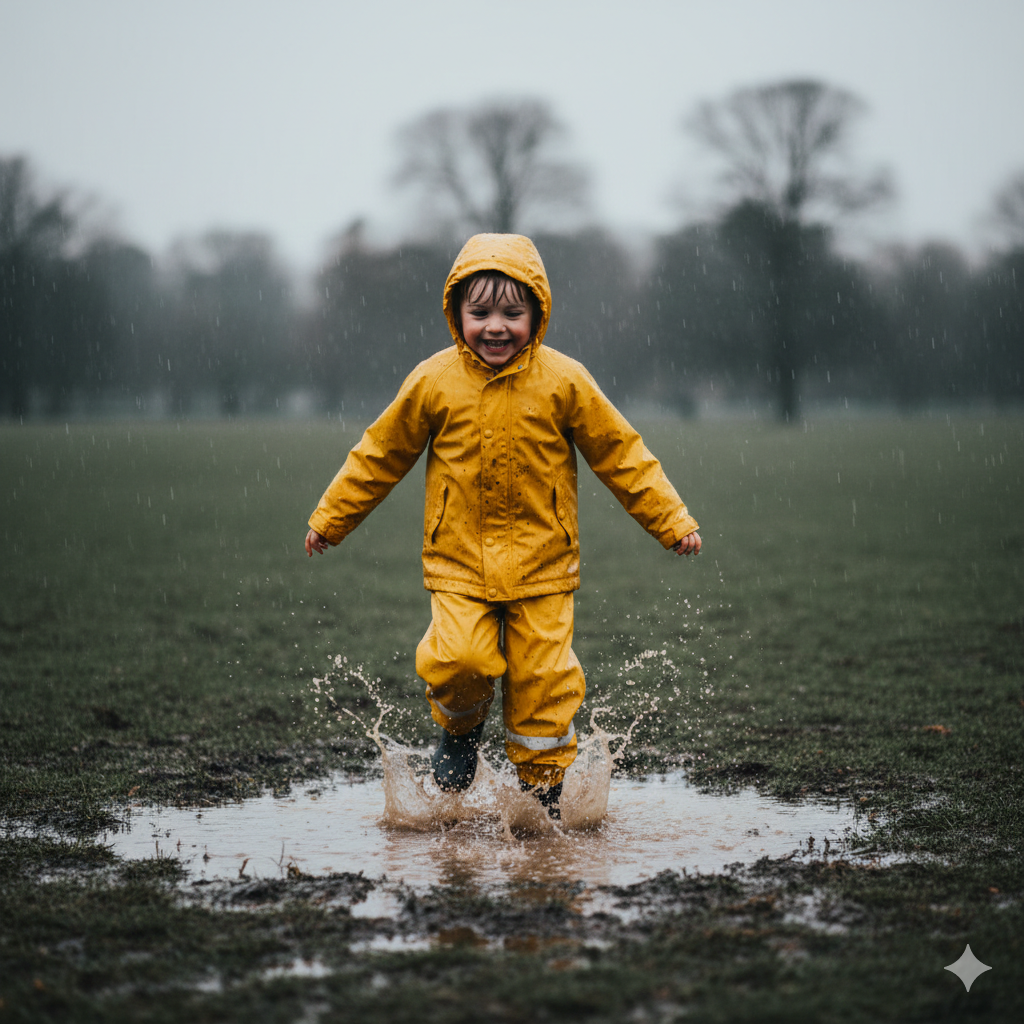
A waterproof jacket is only half the story. If it’s raining properly, kids get wet from below too — especially walking through wet grass, puddles, or sitting on damp logs.
If you’ve ever had the coat do its job but the child still comes home soaked, it’s often:
- Trousers soaked through
- Water running down into shoes
- Damp from sitting and kneeling
For full-body protection, consider pairing the jacket with waterproof trousers. For nursery, primary school and weekend walks, it can be the difference between “we lasted five minutes” and “they played for an hour.”
We’ve put together a separate guide on Best Waterproof Trousers for Children (UK) if you want to get this right without buying something overly expensive or awkward.
A simple system that works for many families:
- Waterproof jacket on top
- Waterproof trousers when it’s properly wet
- Warm layer underneath depending on temperature
- Spare socks in the bag (always)
8️⃣ Beach, water play, and swimming contexts
Waterproof jackets aren’t just for rain. In the UK, beach days can be windy and damp even in summer. Water play parks, outdoor swimming spots, and paddling days often need a “wrap-up” layer that keeps kids warm when they come out of the water.
This is where a jacket can help, but it’s not always the best solution on its own. After swimming, kids often need something that:
- Warms them up quickly
- Blocks wind
- Helps them change without fuss
- Absorbs water rather than trapping it inside
If your family does a lot of beach days, outdoor pools, lochs, or water parks, it can be worth looking at changing robes too — we cover that in Top Outdoor Changing Robes & Dry Robes for Families (UK).
For those days, you might also find yourself searching for a lightweight packable rain jacket for kids that lives in the bag and comes out when the weather turns.
9️⃣ Common buying mistakes (quick reality check)
Here are the mistakes that catch families out most often:
- Buying “waterproof” without checking for taped seams
- Going too small so it can’t fit over a jumper or blazer
- Choosing a hood that doesn’t adjust (it won’t stay on)
- Ignoring cuffs — water runs straight up sleeves
- Picking a jacket that’s too warm (kids sweat, then feel damp)
- Expecting a cheap jacket to handle hours of heavy rain, week after week
- Not re-proofing when water stops beading on the surface
- Forgetting that backpacks rub coatings and seams over time
- Choosing style over comfort (if it’s scratchy or stiff, they won’t wear it)
If you avoid just a few of these, you’ll usually end up with a jacket that actually works.
🔟 Quick decision checklist (scannable summary)
If you want the short version, use this:
Choose this if it’s mainly for school and normal UK rain:
- 5,000mm waterproof rating (or higher)
- Some seam taping (preferably full)
- Adjustable hood with a small peak
- Elastic or adjustable cuffs
- Room for a jumper underneath
Choose this if your child is outside a lot (forest school, scouts, weekends):
- 10,000mm waterproof rating
- Fully taped seams
- More breathable fabric if possible
- Reinforced elbows/shoulders
- Reliable zip + storm flap
Choose this if you just need a spare “keep in the bag” coat:
- Lightweight
- Packs down easily
- Basic waterproofing for short bursts
- Comfortable hood and cuffs
If you’re browsing online, keep your search practical — things like kids waterproof jackets and a breathable school waterproof jacket will usually get you into the right category faster than brand names.
1️⃣1️⃣ FAQs
What waterproof rating is enough for UK rain?
For most UK families, 5,000mm is a strong everyday level for school runs, parks, and typical rain. It gives you a decent buffer for drizzle and steady rain without needing a very technical jacket.
If your child:
- spends a lot of time outdoors,
- walks longer distances in the rain, or
- does activities like forest school and scouting,
then 10,000mm tends to be more reliable — especially when paired with fully taped seams and a good hood.
3,000mm can work, but it’s best treated as:
- “fine for light rain and short outings,” rather than “all-day waterproof.”
It’s also worth remembering that waterproof rating is only one part of the picture. A jacket can have a high rating but still fail if seams aren’t taped or the hood and cuffs don’t seal properly.
Are cheap jackets actually waterproof?
Some are — especially for light use. The issue is consistency and lifespan.
A budget jacket can be genuinely waterproof when new, but it may:
- have untaped seams,
- wet out quicker,
- feel clammy because breathability is lower,
- lose performance faster after repeated washing or heavy wear.
If you’re buying on a budget, focus less on the word “waterproof” and more on build details:
- seam taping,
- hood peak and adjustment,
- cuffs,
- zip protection,
- user reviews mentioning real rain.
For that exact reason, we created Kids Waterproof Jackets Under £40 (UK): Budget Picks That Stay Dry — it’s aimed at helping you choose cheaper options that still hold up in real UK weather.
Do kids need insulated waterproof jackets?
Most kids don’t need insulation built into the waterproof layer — especially in the UK where temperatures change a lot and kids’ activity levels vary wildly.
A flexible approach usually works better:
- Waterproof shell on the outside
- Warm layer underneath (jumper, fleece, thin insulated layer) depending on the day
Insulated waterproof jackets can be useful if:
- your child tends to feel cold,
- they stand around outdoors rather than running about,
- you want one simple “grab and go” jacket for winter.
But they can also cause problems:
- kids overheat and sweat,
- the inside gets damp,
- it’s harder to use the same jacket across seasons.
For school, many families find a shell plus layers is the easiest system. It also makes it easier to handle that classic UK problem: cold morning, mild afternoon, random rain in between.
How long should a kids waterproof jacket last?
In a perfect world, a good jacket could last a few seasons. In reality, it depends on growth, use, and how it’s cared for.
A rough, realistic guide:
- Budget jackets: often 1 season of regular use (sometimes longer, sometimes less)
- Mid-range jackets: 1–2 seasons of solid use, depending on wear and growth
- Higher-quality jackets: potentially 2+ seasons, especially if sized with layering room and looked after
The biggest factors affecting lifespan:
- Backpack rubbing on shoulders
- Rough play and climbing (elbows and cuffs take a beating)
- Washing and drying (wrong care can reduce waterproofing)
- Whether it’s re-proofed when the water stops beading
If you notice rain no longer beads on the outside and the fabric stays dark and wet, the jacket may need re-proofing — it doesn’t always mean it’s “ruined.”
If you want one that’s more likely to survive a full UK season of heavy use, look for durability features and proper seam taping — the sort of thing we cover in Best Kids Waterproof Jackets for UK Weather.
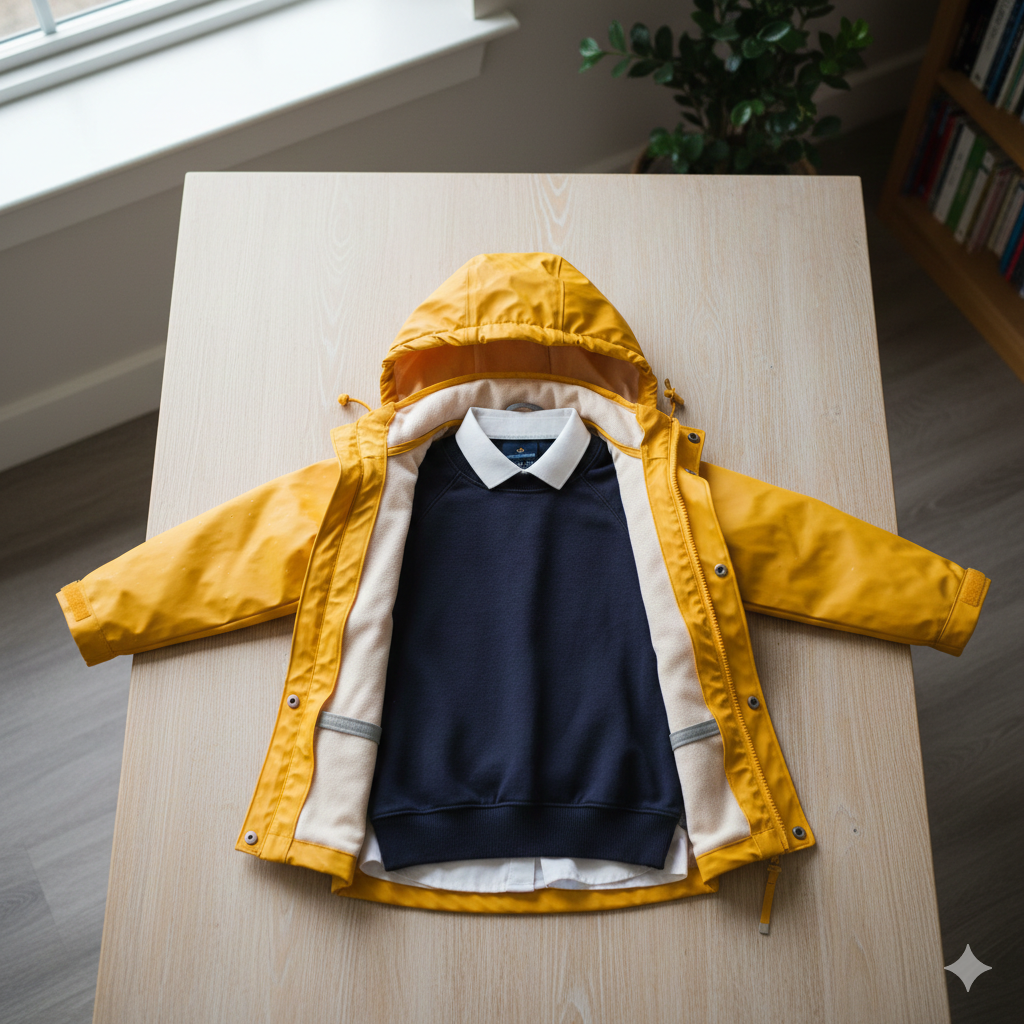
1️⃣2️⃣ The Final Verdict
Choosing a kids waterproof jacket in the UK isn’t about finding the “best” one — it’s about choosing the right one for how your child actually lives.
If it’s mainly for school and everyday rain, a well-fitting jacket with decent seam taping, a reliable hood, and sensible waterproofing will do the job. If your child is outside constantly, spending a bit more for better breathability and construction can save you money (and hassle) over the season.
Start with fit. Check the hood and cuffs. Then look at waterproof rating and breathability as the extra reassurance — not the whole story. When a jacket feels comfortable and works in real weather, kids wear it without fuss, and that’s the point.
Having the right clothing makes a huge difference to how enjoyable time outdoors feels, especially for children. Comfortable, weather-appropriate layers help kids stay warm, dry and relaxed — whatever the conditions. You’ll find more parent-friendly advice like this in our Practical Outdoor Clothing & Comfort
hub, where we cover simple, reliable choices for everyday family adventures in the UK.
Related Outdoor Clothing Guides
If you’re building a simple, reliable wet-weather setup for UK days out, these guides help you cover the other pieces without overbuying. They’re written with real family use in mind — school, weekends, and the kind of weather we actually get.
About The Author – Andrew Marshall
Andrew Marshall is the creator of Simple Days Outside and a UK parent of three who regularly camps, walks, and explores outdoor activities with his family. His guides focus on practical gear, realistic family adventures, and simple ways to help families enjoy the outdoors across the UK. The recommendations on this site are based on real-world use, research, and the kind of equipment families actually rely on for weekend trips and everyday outdoor fun.