

Written by Andrew Marshall
UK parent of three sharing practical advice to help families enjoy camping, walking, garden play, and simple outdoor adventures across the UK.
Creator of Simple Days Outside.
If you live in the UK, you’ll know that most family walks don’t start with dramatic mountain backdrops. They start at the park gate, along a canal path, across a muddy school field, or up a gentle countryside trail with a snack stop halfway.
Some days are dry and easy. Other days involve wet grass, slippery slopes, and that thick clay mud that clings to everything.
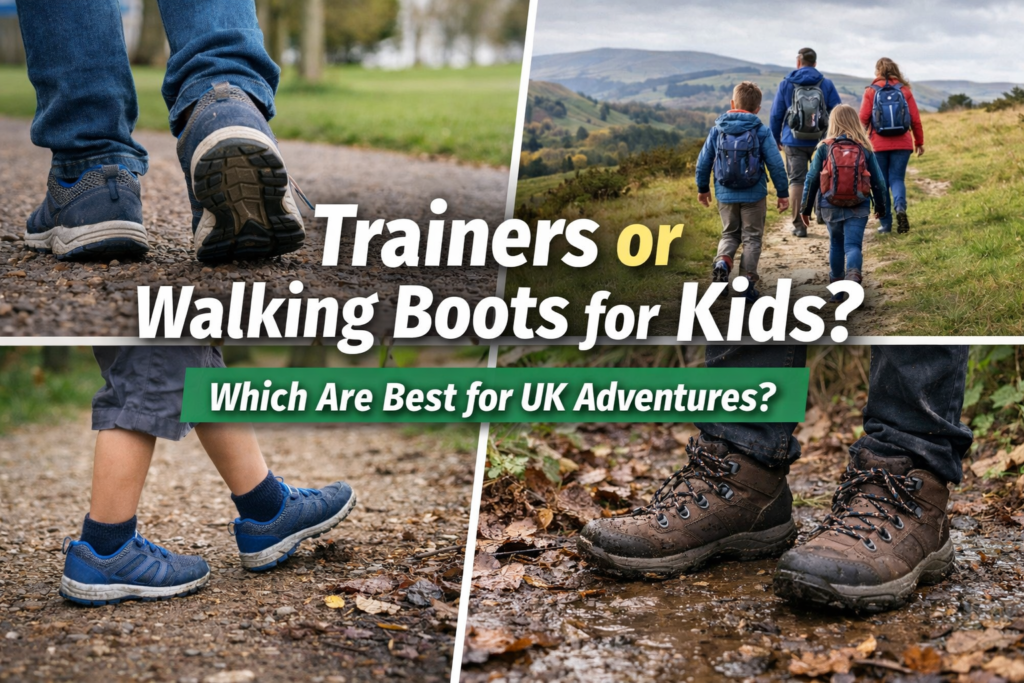
So when it comes to your child’s footwear, what actually makes sense — trainers or walking boots?
The honest answer is: it depends.
Not on what looks “outdoorsy”. Not on what influencers use. But on terrain, distance, weather, age, confidence and — realistically — budget.
This guide walks through each of those factors calmly and practically, so you can choose what works for your family.
👉 In This Guide
When Trainers Are Actually Fine
For many UK families, trainers are absolutely enough.
If you’re mostly doing:
- Short local walks (30–60 minutes)
- Dry weather outings
- Paved paths, gravel tracks or maintained park trails
- School field strolls
- Older, confident walkers
Then good-quality trainers can work perfectly well.
Modern kids trail trainers often have decent grip, lightweight construction and enough structure for everyday exploring. A pair of lightweight hiking trainers for kids can feel far more comfortable for children who don’t like stiff shoes.
Why Trainers Work in These Situations
1. They’re lighter.
Children tire more quickly than adults. A lighter shoe makes a noticeable difference on short walks.
2. They’re flexible.
Especially for younger children who are still building strength, flexibility can feel more natural than a rigid boot.
3. They’re multi-purpose.
School, park, weekend walks — one pair can cover it all.
4. They’re usually cheaper.
If you’re not tackling rough terrain, it can feel unnecessary to invest in boots.
For families who mainly walk in parks, nature reserves with maintained paths, canal towpaths or coastal promenades, trainers are often a sensible, realistic choice.
Where Trainers Fall Short
The issue isn’t that trainers are “bad”. It’s that UK conditions can change quickly.
Here’s where they start to struggle.
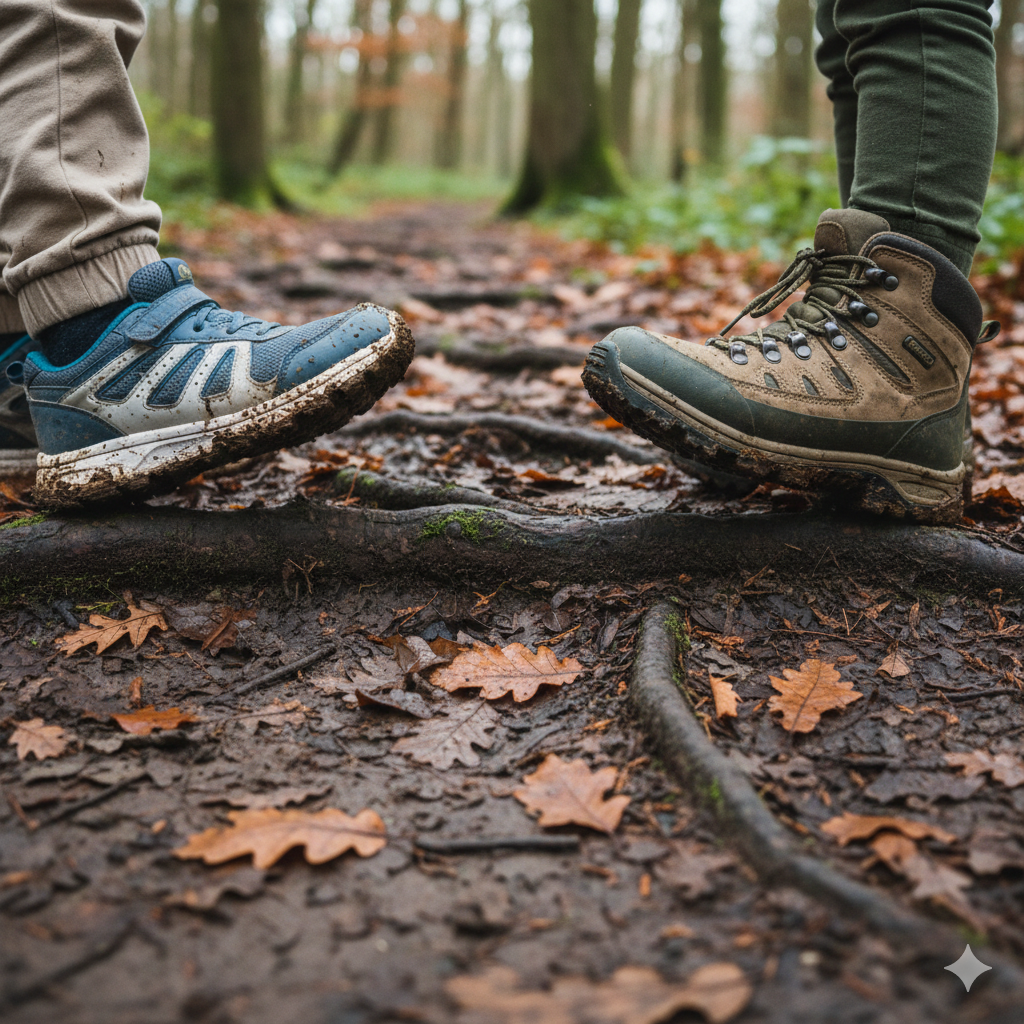
1. Mud
Even good trainers rarely have deep lugs. Once you’re on churned-up woodland paths or winter football fields, grip becomes unreliable. Slips are more likely.
2. Wet Grass
Dew-covered slopes or damp countryside meadows can be surprisingly slippery. Flat-soled trainers don’t cope well.
3. Water Resistance
Most trainers are not waterproof. Once soaked, they stay wet — and cold. This matters more than people expect on longer walks.
4. Longer Distances
On 5–8km family walks, especially on uneven terrain, feet start to feel the difference. Thin soles can mean less cushioning over stones and roots.
5. Ankle Stability
Low-cut trainers provide no ankle support. On rutted paths, loose gravel or uneven woodland trails, this can increase the risk of rolled ankles — especially for less confident walkers.
If your child has slipped more than once on muddy trails or come home with wet socks on a cool day, it may be time to reconsider.
When Walking Boots Make More Sense
There’s a clear point where walking boots move from “optional” to genuinely helpful.
Walking boots are worth considering if you’re regularly walking on:
- Uneven countryside paths
- Hill trails
- Forest tracks
- Rocky coastal routes
- Wet or muddy farmland footpaths
- Colder autumn and winter terrain
Good kids waterproof walking boots offer:
- Deeper tread for grip
- Water resistance
- Firmer soles
- Better ankle coverage
On longer rural walks, especially in changeable UK weather, these features make a noticeable difference.
The Key Benefits
Grip:
Deeper lugs handle mud, loose gravel and wet grass more confidently.
Waterproofing:
Dry feet matter. Wet socks on a windy hill can cut a walk short very quickly.
Support:
Proper ankle support hiking boots for kids can help on uneven ground.
Warmth:
Boots tend to be slightly warmer, which is useful in autumn and winter.
If you’re doing regular countryside hikes of 5km+, climbing gentle hills, or walking through woodland in wetter months, boots usually become the safer and more comfortable option.
Downsides of Walking Boots
Boots aren’t perfect either.
It’s worth being honest about their limitations.
1. Heavier
Children feel weight quickly. On short flat walks, boots can feel unnecessary.
2. Stiffer
Some boots need a short break-in period. If worn only occasionally, they may feel rigid compared to trainers.
3. Overkill for Local Walks
For a quick 40-minute park walk, boots can feel excessive.
4. Cost
Boots often cost more than trainers. For fast-growing feet, that matters.
If your family mostly sticks to flat, dry terrain, boots may not be worth the investment.

Age Considerations
Age plays a big role in the decision.
Toddlers (2–4 years)
At this stage, comfort and flexibility matter more than technical features.
Heavy boots can interfere with natural movement. Lightweight footwear with flexible soles is often better.
If you’re unsure, our guide to Top 5 Walking Boots for Toddlers (UK – Lightweight & Comfy Picks)
focuses on genuinely lightweight, toddler-friendly options rather than scaled-down adult boots.
Primary School Age (5–10 years)
This is where terrain becomes more relevant.
Confident walkers tackling countryside paths may benefit from boots. Park explorers can still manage perfectly well in trainers.
Older Children (10+)
At this stage, distance and terrain matter most. If you’re doing proper family hill walks, boots usually become more useful.
Terrain Breakdown
Here’s a simple comparison:
| Terrain | Trainers | Walking Boots |
|---|---|---|
| Paved park paths | ✔️ Ideal | ✔️ Fine |
| Gravel tracks | ✔️ Usually fine | ✔️ Better grip |
| Muddy woodland | ❌ Limited grip | ✔️ Designed for it |
| Wet grass slopes | ❌ Slippery | ✔️ Safer |
| Hill trails | ⚠️ Depends on dryness | ✔️ Better support |
| Winter countryside walks | ❌ Cold & wet risk | ✔️ Warmer & drier |
If most of your walking sits in the top two rows, trainers are often enough.
If you regularly find yourself in the bottom three, boots usually make more sense.
Distance & Duration
Distance quietly changes everything.
Under 3km
Most children will cope well in decent trainers on dry terrain.
3–6km
Grip and cushioning start to matter more. If it’s countryside terrain, boots become helpful.
6km+
On longer family walks, especially mixed terrain, boots usually offer better comfort and confidence.
Also consider:
- Are you carrying snacks and layers?
- Is there elevation?
- Are there muddy sections?
The more variables involved, the more boots make sense.
Budget Reality
Budget is a genuine factor for families.
When Trainers Are Enough
If you:
- Walk occasionally
- Stick to local parks
- Avoid muddy trails
- Have fast-growing children
Then good-quality trainers may be the sensible option.
Look for:
- Decent tread
- Reinforced toe
- Firm heel structure
- Comfortable cushioning
Some breathable kids walking shoes are more than adequate for typical UK family outings.
When Boots Are Worth It
Boots are usually worth investing in if:
- You walk year-round
- You regularly use countryside footpaths
- Your child complains about slipping
- You’ve experienced wet feet on longer walks
If you’re ready to explore proper options, our guide to Best Walking Boots for Kids (UK) breaks down practical picks for real UK conditions.
What About Backpacks & Full Day Trips?
If your walks are stretching into full-day trips, footwear becomes even more important.
Children carrying small backpacks feel instability more easily. Proper grip and ankle support help.
For longer outings, you may also want to look at practical kit choices in our guide to Best Family Walking Backpacks for Day Trips (UK).
Shoes, socks, backpack weight — it all works together.
Clear Summary
Choose trainers if:
- Walks are short
- Terrain is flat or paved
- Weather is dry
- Your child prefers lighter shoes
- You mostly stay in parks or maintained paths
Choose boots if:
- Terrain is muddy or uneven
- Walks are longer than 5km
- You walk in autumn and winter
- Slipping has been an issue
- You regularly use countryside footpaths
There isn’t one “better” option. There’s only what suits your family’s walking habits.
FAQs
Can kids hike in normal trainers?
Yes — if the terrain is dry and well-maintained. For short, flat walks, trainers are often perfectly fine. Problems arise on muddy, slippery or uneven ground.
Are walking boots necessary in the UK?
Not always. Many UK walks don’t require boots. They become more useful for muddy woodland, hill paths and winter countryside walking.
Are waterproof trainers good enough?
Water-resistant trainers can help, but they rarely match the protection of proper boots. For occasional damp paths, they’re fine. For regular wet terrain, boots are more reliable.
Do toddlers need walking boots?
Usually not heavy ones. Lightweight, flexible options are better for toddlers.
Final Thoughts
Most UK family walks don’t require technical gear. But they do require realistic thinking.
If your walking is mostly parks and paved trails, trainers are often enough.
If you’re regularly on muddy woodland paths, hill routes or winter countryside terrain, boots are usually the more comfortable and confident choice.
The right answer isn’t about looking prepared. It’s about helping your child enjoy the walk — without cold feet, slipping, or unnecessary weight.
Choose based on where you actually walk — not where you imagine you might go.
Walking outdoors as a family doesn’t need to be complicated or extreme. Simple routes, comfortable gear, and a relaxed pace are often all it takes to make walks enjoyable for everyone. You’ll find more practical, parent-friendly guides in our Family Walking & Easy Hiking hub, designed to help families enjoy the outdoors together without stress or overplanning.
Related Family Walking Guides
If you’re planning more regular family walks, these guides may help you choose practical gear that fits UK conditions:
Each guide focuses on realistic terrain, comfort and value — not overcomplicated kit.
About The Author – Andrew Marshall
Andrew Marshall is the creator of Simple Days Outside and a UK parent of three who regularly camps, walks, and explores outdoor activities with his family. His guides focus on practical gear, realistic family adventures, and simple ways to help families enjoy the outdoors across the UK. The recommendations on this site are based on real-world use, research, and the kind of equipment families actually rely on for weekend trips and everyday outdoor fun.