

Written by Andrew Marshall
UK parent of three sharing practical advice to help families enjoy camping, walking, garden play, and simple outdoor adventures across the UK.
Creator of Simple Days Outside.
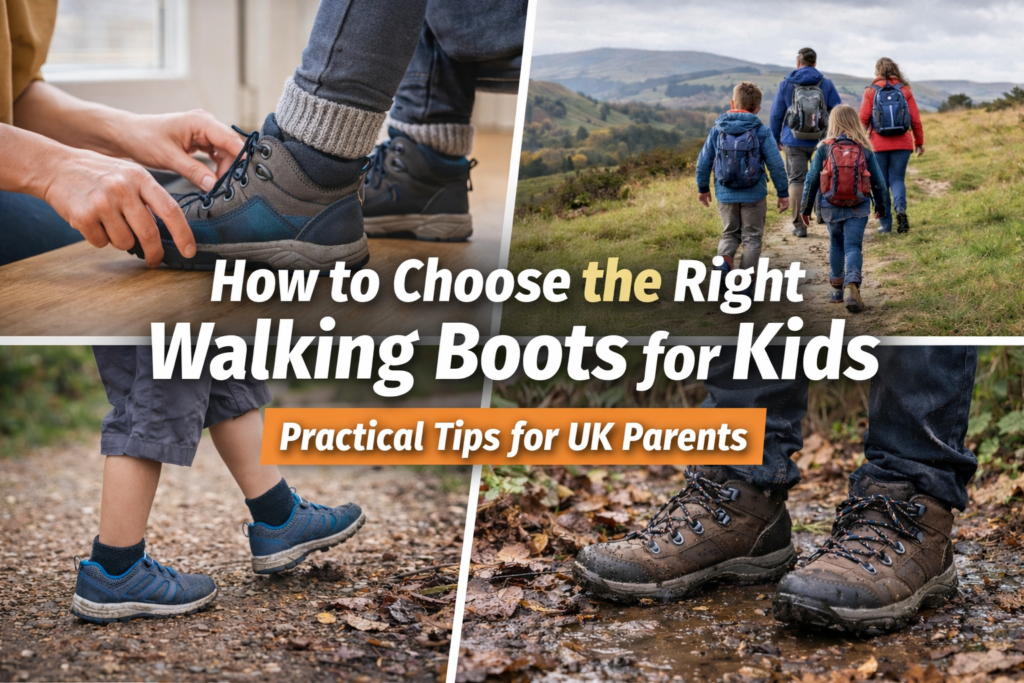
Buying walking boots for children sounds simple — until you’re standing in front of a shelf full of options wondering what actually matters.
In the UK, we’re not choosing boots for desert trails or alpine expeditions. We’re choosing them for muddy woodland paths, damp grass, gravel canal tracks, coastal routes, school field trips, and the occasional hill walk in unpredictable weather.
Add in fast-growing feet, different confidence levels, and varying budgets — and it becomes clear that not all kids’ walking boots are equal.
This guide walks you calmly through what really matters when choosing walking boots for children in the UK — so you can buy once, buy well, and feel confident about your decision.
👉 In This Guide
Why Walking Boots Matter for Kids
Not every child needs walking boots. But when terrain and weather demand them, the right pair makes a noticeable difference.
Good kids waterproof walking boots provide:
- Better grip on mud and wet grass
- More protection from stones and roots
- Ankle stability on uneven ground
- Warmer, drier feet in colder months
For short park walks in dry weather, trainers may be fine. But for woodland trails, countryside paths, or autumn and winter walks, boots become far more practical.
If you’re still weighing up the difference between footwear types, see our guide – Trainers vs Walking Boots for Kids (UK): What’s Actually Better? for a balanced comparison.
How to Choose the Right Size & Fit
Fit is more important than brand.
A poorly fitted boot — even an expensive one — will cause discomfort.
1. Length
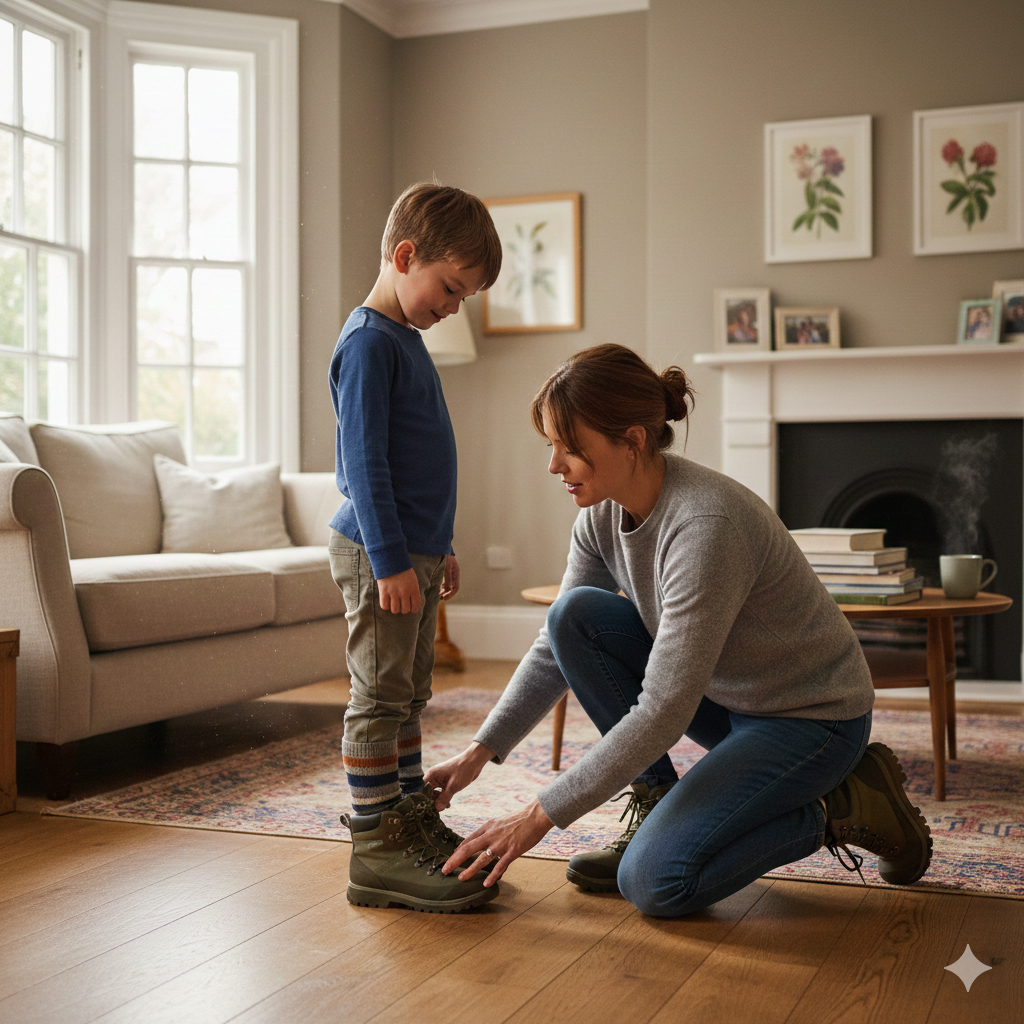
There should be about a thumb’s width (roughly 10–12mm) between the longest toe and the end of the boot.
Too small = sore toes downhill.
Too big = heel slip and blisters.
2. Width
Children’s feet vary more than we expect. Look for boots that don’t squeeze across the forefoot.
If your child complains of pressure at the sides, they may need a wider fit.
3. Heel Hold
The heel should feel secure without lifting excessively when walking uphill.
4. Try With Walking Socks
Always fit boots using proper walking socks — thicker than school socks. This makes a real difference to sizing.
Materials & Weatherproofing
In the UK, weatherproofing matters.
Waterproof Boots
For regular countryside walking, waterproof boots are usually the safer choice.
They:
- Keep feet dry in wet grass
- Handle puddles and muddy trails
- Stay warmer in colder weather
Look for mid-height kids hiking boots with breathable waterproof membranes.
Breathable (Non-Waterproof) Boots
These are lighter and cooler in summer. Fine for dry weather walking, but less practical year-round in the UK.
If most of your walks are spring/summer on dry trails, breathable options can work well.
For year-round British walking? Waterproof usually wins.
Sole Grip & Terrain Types
Grip is often overlooked — until a child slips.
Here’s what to look for:
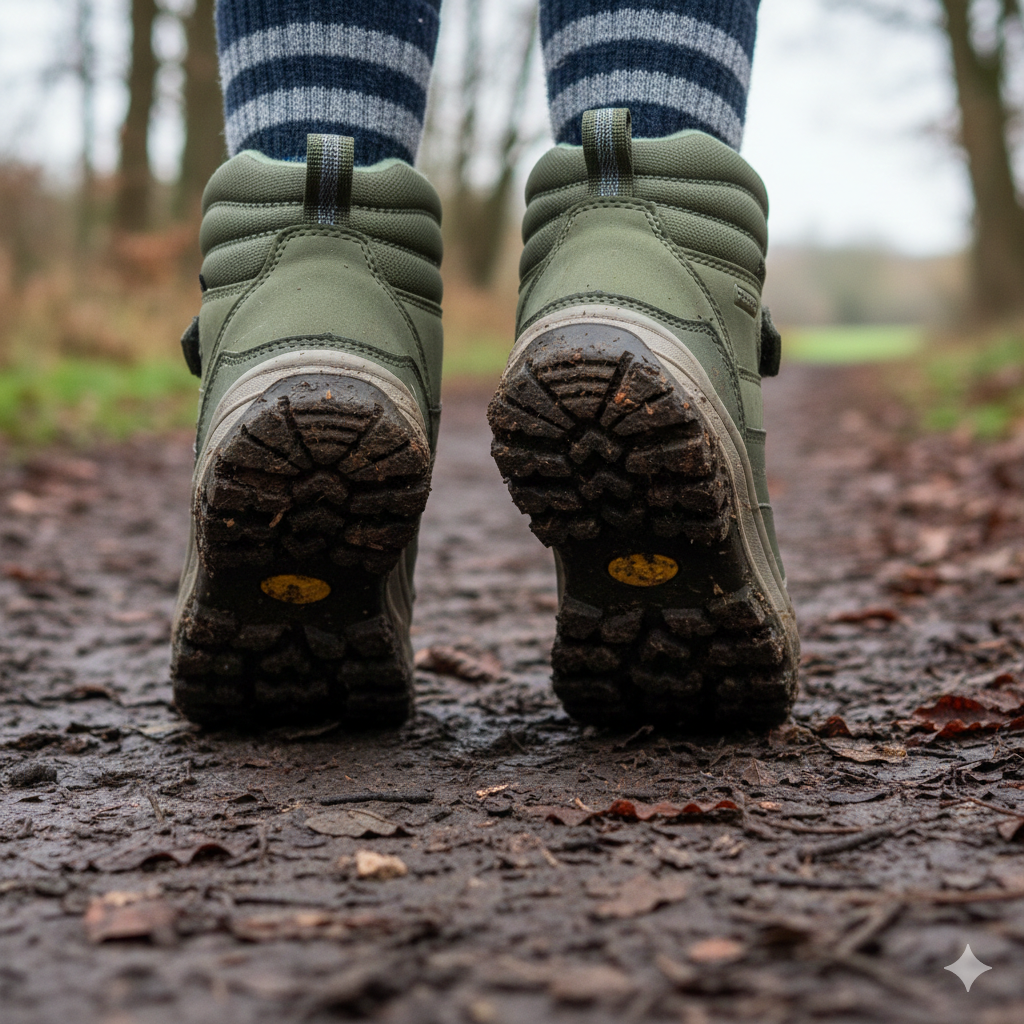
Deep Lugs
Better for:
- Mud
- Woodland trails
- Wet grass
Moderate Tread
Fine for:
- Gravel paths
- Canal tracks
- Dry countryside
Avoid flat, shallow soles if you regularly walk on rural terrain.
Good grippy sole trail boots for kids should visibly show defined tread patterns.
Weight & Flexibility for Longer Walks
Children feel weight quickly.
Heavy boots can cause fatigue on longer walks.
What to look for:
- Lightweight construction
- Flex at the forefoot
- Firm (but not rigid) ankle support
The goal isn’t “mini adult mountaineering boots”. It’s supportive but wearable.
For toddlers especially, flexibility matters more than structure. If buying for under-5s, see Top 5 Walking Boots for Toddlers (UK – Lightweight & Comfy Picks) for realistic toddler-friendly options.
Common Mistakes UK Parents Make
Here are the most common buying mistakes:
1. Buying Too Big “To Last Longer”
A little growth room is fine. Too much creates instability.
2. Choosing Based on Looks
Chunky doesn’t always mean supportive.
3. Ignoring Socks
Thick walking socks change fit significantly.
4. Overbuying for Occasional Use
If you walk once or twice a year, boots may be unnecessary.
5. Forgetting Terrain Reality
Ask yourself: Where do we actually walk?
When Trainers Are Okay vs When You Need Boots
Trainers Are Fine If:
- Walks are short
- Terrain is paved or gravel
- Weather is dry
- Your child is confident
Boots Make More Sense If:
- You regularly walk in mud
- Grass is wet or uneven
- Walks exceed 5km
- It’s autumn or winter
If you’re unsure where you sit, our guide to
Best Walking Boots for Kids (UK)
breaks down reliable options for different needs.
UK Sizing Tips & Growth Room
UK Size Basics
Children’s UK sizes increase roughly every 3–6 months depending on age.
As a rough guide:
- Ages 4–6: often size 9–12
- Ages 7–10: often size 13–3
- Ages 11+: often size 4+
Always measure both feet — one may be slightly larger.
Growth Room Rule
Allow about 10–12mm in length.
Not more than 15mm.
Fit Checklist
Before committing:
✔ Toe space without sliding
✔ No heel lift when walking uphill
✔ Comfortable across forefoot
✔ Secure lacing
✔ Tested with walking socks
Recommended Walking Boots
Below are practical, well-reviewed options available on Amazon UK. These are chosen for grip, comfort and real UK conditions.
1️⃣ Mountain Warehouse Adventurer Kids Walking Boots
A reliable entry-level waterproof boot.
- Waterproof upper
- Durable rubber outsole
- Padded ankle collar
UK Parent Tip: A good budget option for occasional countryside walks without overspending.
2️⃣ Regatta Holcombe Junior Waterproof Boots
A lightweight but supportive option.
- Waterproof membrane
- Cushioned EVA midsole
- Deep traction outsole
UK Parent Tip: Ideal for mixed terrain — woodland trails and moderate hills.
3️⃣ Merrell Moab Speed Mid Waterproof Kids Boots
A more premium lightweight hiking option.
- Breathable waterproof membrane
- Flexible sole design
- Excellent grip pattern
UK Parent Tip: Worth considering for regular walkers covering longer distances.
When browsing, look for phrases like lightweight hiking boots for kids and mid-height waterproof walking boots for children to quickly filter practical options.
Short UK Size Conversion Snapshot
If checking EU sizes:
- UK 13 ≈ EU 32
- UK 1 ≈ EU 33
- UK 3 ≈ EU 35–36
Always check brand-specific size charts.
Final Thoughts
Choosing walking boots for children doesn’t need to be complicated.
Think about:
- Where you walk
- How often
- The season
- Your child’s comfort
- Realistic growth room
You don’t need technical mountaineering boots. You need supportive, waterproof, grippy footwear that matches typical UK terrain.
Buy based on real family use — not imagined adventures.
That’s usually the most sensible choice.
Walking outdoors as a family doesn’t need to be complicated or extreme. Simple routes, comfortable gear, and a relaxed pace are often all it takes to make walks enjoyable for everyone. You’ll find more practical, parent-friendly guides in our Family Walking & Easy Hiking hub, designed to help families enjoy the outdoors together without stress or overplanning.
Related Family Walking Guides
If you’re building your family walking kit, these guides may help:
Each focuses on practical, UK-specific advice for everyday family walking.
About The Author – Andrew Marshall
Andrew Marshall is the creator of Simple Days Outside and a UK parent of three who regularly camps, walks, and explores outdoor activities with his family. His guides focus on practical gear, realistic family adventures, and simple ways to help families enjoy the outdoors across the UK. The recommendations on this site are based on real-world use, research, and the kind of equipment families actually rely on for weekend trips and everyday outdoor fun.