

Written by Andrew Marshall
UK parent of three sharing practical advice to help families enjoy camping, walking, garden play, and simple outdoor adventures across the UK.
Creator of Simple Days Outside.
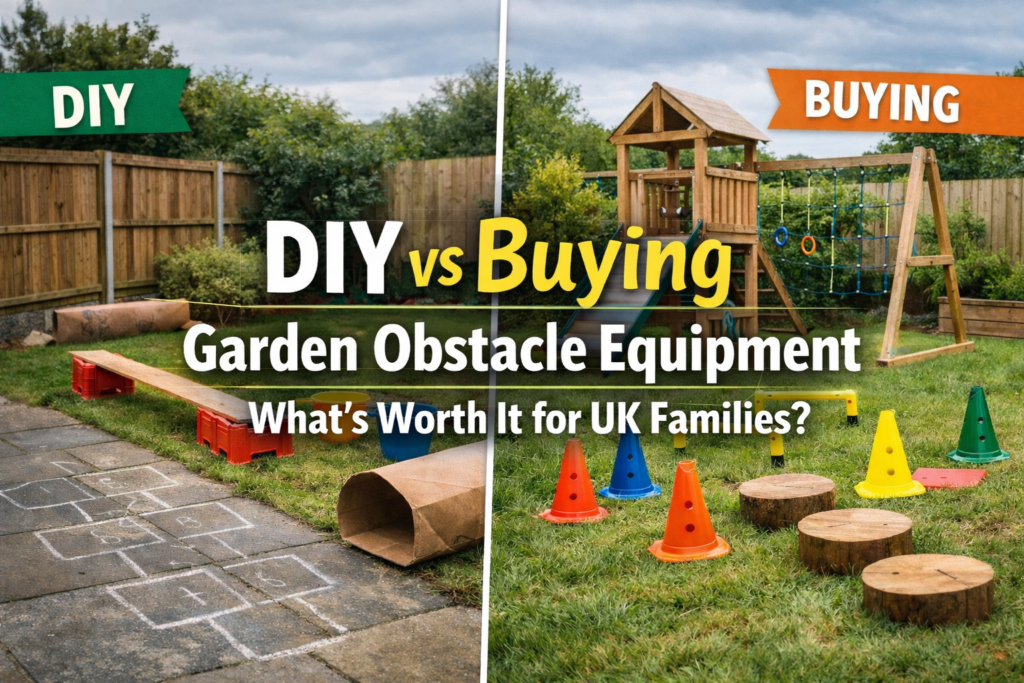
Garden obstacle courses are one of those simple ideas that sound easy — until you’re standing in a damp patch of grass, holding a cardboard box that’s already going soft in the drizzle.
If you’ve got mixed-age kids, a typical UK garden (read: not massive), and weather that changes its mind hourly, the question isn’t just “Can we build this?”
It’s:
Should we build it — or is it worth buying proper equipment?
This guide breaks it down calmly and realistically, so you can decide what actually makes sense for your family, your budget, and your garden.
What Counts as DIY Garden Obstacle Equipment?
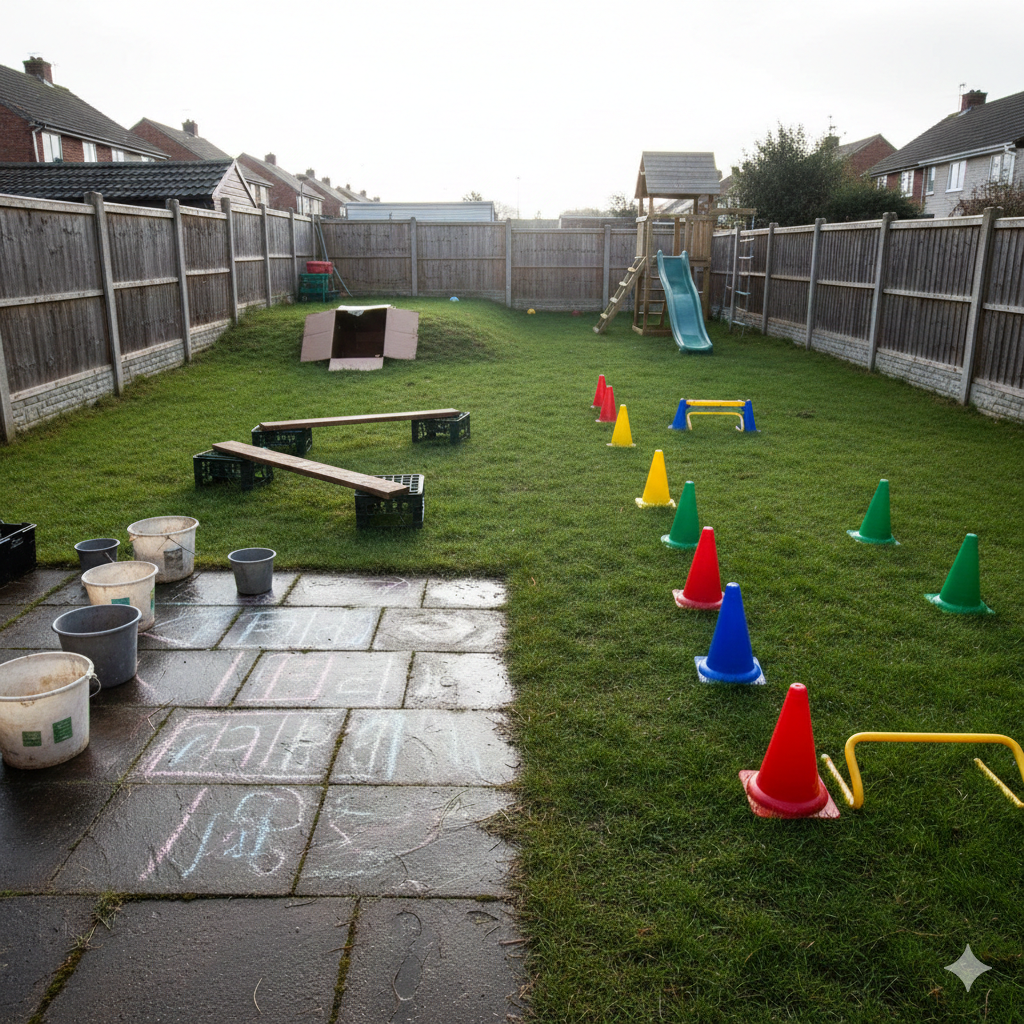
When people say “DIY obstacle course”, they usually mean using whatever is already in the house or shed.
That might include:
- Buckets to weave around
- Chalk lines for hopping patterns
- Pool noodles for balance beams
- Garden chairs to crawl under
- Planks laid between crates
- Cardboard tunnels
- Football cones from the garage
You can absolutely create brilliant setups this way — and if you need inspiration, our guide to Best Garden Obstacle Course Ideas for Kids (UK) – Easy Outdoor Fun at Home) explores simple layouts that work well in smaller British gardens.
DIY doesn’t mean “bad”.
It means improvised.
And sometimes improvised is exactly what you need.
When DIY Is the Better Choice
There are situations where building your own course isn’t just cheaper — it’s smarter.
1. Younger Children (Toddlers to Early Primary)
Younger kids don’t need structured equipment.
They’re happy to:
- Jump between chalk circles
- Crawl under washing lines
- Step over broom handles
- Balance along a line of plant pots
At this age, imagination matters more than durability.
Spending money on structured gear often isn’t necessary.
2. Tight Budgets
Let’s be honest — garden play equipment can add up quickly.
If money’s tight, DIY:
- Costs almost nothing
- Uses items you already own
- Lets you test ideas before investing
It’s also helpful during school holidays when you just need something to burn energy without buying another big item.
3. Temporary Setups
Sometimes you only want something for:
- A birthday party
- A half-term challenge
- A sunny weekend
- A quick energy reset after school
In these cases, hauling out cones and buckets makes far more sense than assembling permanent gear.
4. Testing What Your Kids Actually Enjoy
This one’s important.
Before buying things like adjustable backyard hurdle set or wooden balance stepping stones, it’s worth checking:
Do they actually like obstacle-style play?
Some children prefer climbing.
Some prefer imaginative den building.
Some want football.
Some want swings.
DIY lets you test the concept first.
When Buying Equipment Makes More Sense
There’s a point where improvised setups start becoming frustrating — or unsafe.
Here’s when buying becomes the smarter move.
1. Older Children (7+)
As kids grow, they:
- Run faster
- Jump harder
- Weigh more
- Take bigger risks
A plank across two buckets might work at 4 years old.
It’s not stable at 9.
That’s when purpose-built options like kids garden obstacle cones, a ninja slackline kit for kids, or structured climbing equipment become more appropriate.
2. Repeated Use
If your children use obstacle setups weekly, durability matters.
DIY items:
- Shift
- Tip
- Soften in wet weather
- Break after repeated use
UK gardens are rarely bone dry for long. Cardboard tunnels simply don’t survive British drizzle.
Equipment designed for outdoor use lasts far longer.
3. Safety Concerns
Safety isn’t about paranoia — it’s about realism.
Common DIY risks include:
- Slippery planks
- Unstable stacking
- Wet grass under jumping zones
- Sharp edges on broken crates
- Trip hazards from loose items
If your garden is uneven or regularly damp, investing in stable equipment and even rubber safety play mats can significantly reduce injury risk.
If you’re considering larger structures, our guide on What Should You Put Under a Climbing Frame? (UK Garden Safety Guide) explains safe surfacing in detail.
4. Limited Supervision Time
DIY courses often require:
- Constant adjusting
- Resetting fallen items
- Watching closely for tipping
If you’re cooking dinner or working from home, structured equipment can be more “set and leave”.
A properly installed heavy-duty garden climbing frame or fixed play setup needs far less micromanaging.
You can explore long-term options in our guide to Best Climbing Frames for Kids (UK Guide for Gardens Big & Small) if you’re thinking bigger than just cones and hurdles.
Cost Comparison: DIY vs Buying
Let’s break it down simply.
Short-Term Cost
DIY:
- Usually free
- Uses existing household items
Buying:
- £20–£80 for smaller items
- £200+ for structured frames
DIY clearly wins short term.
Long-Term Value
If used weekly:
- DIY items wear out
- Replacements add up
- Setups require constant rebuilding
Quality outdoor equipment:
- Lasts multiple seasons
- Handles rain and UV
- Can grow with children
So while buying costs more upfront, it often works out cheaper over several years.
Space Considerations in Typical UK Gardens
Most UK family gardens aren’t enormous.
That matters.
DIY is flexible and easy to pack away.
But permanent equipment takes space.
Ask yourself:
- Will it block the lawn?
- Does it limit football space?
- Can it be folded or stored?
Compact items like a foldable garden play tunnel or small cone sets are easier to live with in smaller gardens.
Large climbing frames require commitment.
Safety Considerations (DIY and Bought Equipment)
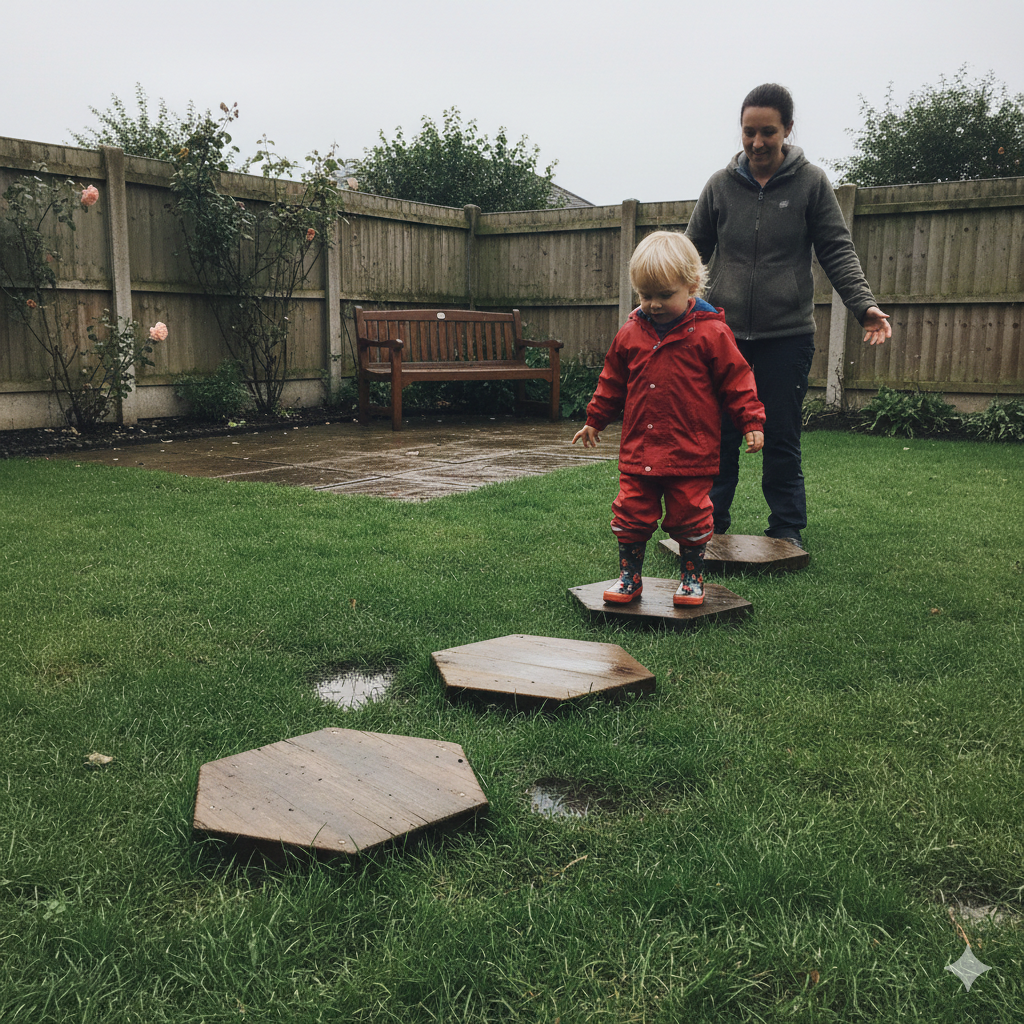
Whether you build or buy, safety basics matter.
1. Surface
Wet grass is slippery.
Hard paving increases injury risk.
Avoid:
- Concrete landing zones
- Loose paving slabs
- Sloped surfaces
Consider impact-absorbing options if using climbing equipment.
2. Stability
If stacking items:
- Check for wobble
- Avoid lightweight plastic buckets for balancing
- Never rely on cardboard for weight-bearing
If buying equipment, check weight ratings and anchoring requirements.
3. Anchoring
UK weather brings wind.
Anything lightweight can tip.
Even purchased hurdle sets should be:
- Pegged into grass
- Weighted appropriately
- Checked regularly
4. Mixed-Age Siblings
This is a big one.
If a toddler and a 10-year-old share the same setup:
- The younger child may copy risky moves
- The older child may overpower lightweight gear
Sometimes separating activities works better than trying to design one setup for all ages.
So… What’s Actually Worth It?
Here’s the balanced truth.
DIY is brilliant when:
- Kids are younger
- Budget is tight
- You want flexible setups
- You’re testing ideas
- It’s short-term fun
Buying equipment makes more sense when:
- Kids are older
- It’s used weekly
- Safety becomes a concern
- You want durability
- You need less supervision
For many UK families, the best approach isn’t one or the other.
It’s:
Start DIY → Observe what they love → Invest gradually in the pieces that get used most.
That might mean:
- Starting with cones
- Then adding hurdles
- Eventually upgrading to structured climbing
Calm progression. Not impulse spending.
Final Verdict
There’s no universal “right” answer.
DIY obstacle courses are:
- Creative
- Flexible
- Budget-friendly
Bought equipment is:
- Durable
- Safer for bigger kids
- Lower maintenance long-term
In a typical UK garden with unpredictable weather and mixed-age siblings, a blended approach usually works best.
Build when it makes sense.
Buy when it becomes practical.
That’s the sweet spot.
Simple outdoor play at home can be just as exciting as days out when kids have the right ideas and equipment to keep them moving. You’ll find more practical, parent-friendly guides in our Garden & Outdoor Play for Kids hub, all designed to make outdoor time easy, active, and fun without overcomplicating things.
🌿 Related Garden Play Guides
Keep the momentum going.
If you’re building out a garden play setup — whether that’s a quick DIY course or something more permanent — these practical UK guides will help you choose what actually fits your space, budget and children’s ages.
About The Author – Andrew Marshall
Andrew Marshall is the creator of Simple Days Outside and a UK parent of three who regularly camps, walks, and explores outdoor activities with his family. His guides focus on practical gear, realistic family adventures, and simple ways to help families enjoy the outdoors across the UK. The recommendations on this site are based on real-world use, research, and the kind of equipment families actually rely on for weekend trips and everyday outdoor fun.