

Written by Andrew Marshall
UK parent of three sharing practical advice to help families enjoy camping, walking, garden play, and simple outdoor adventures across the UK.
Creator of Simple Days Outside.
Climbing frames are one of the best long-term garden investments for active kids.
But what goes underneath them matters more than most parents realise.
In the UK, we’re dealing with:
- Wet grass for half the year
- Compact clay soil in many areas
- Muddy patches after rain
- Small or sloped gardens
- Close fencing and limited run-off space
So while grass might seem “fine”, it’s not always the safest long-term option.
This guide breaks down what actually works under a climbing frame in a typical British garden — based on safety, drainage, cost and practicality.
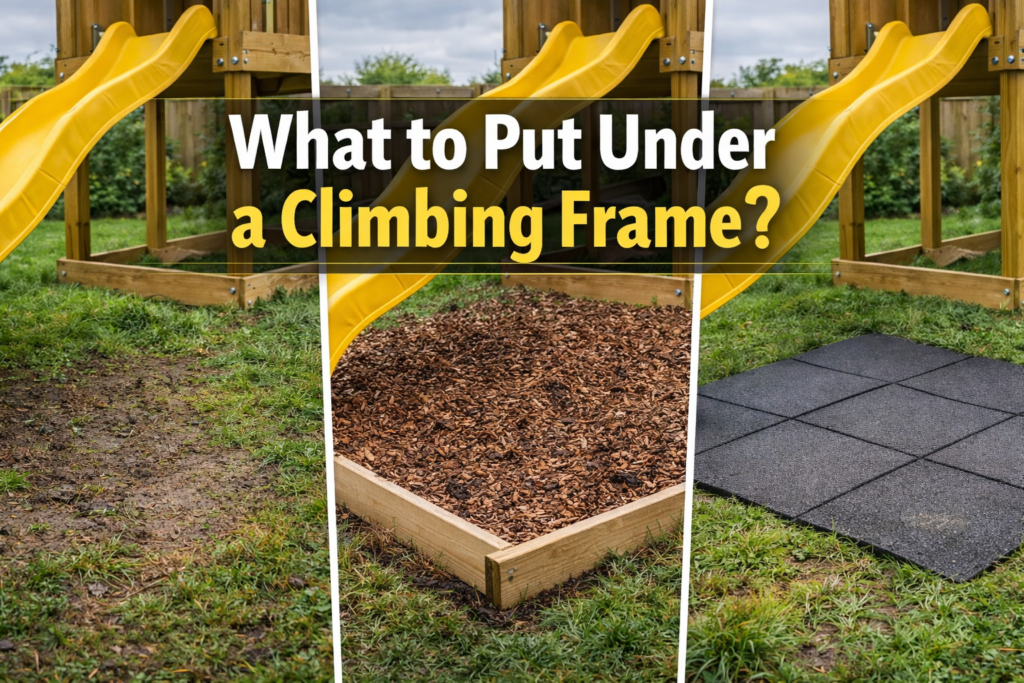
Is Grass Enough Under a Climbing Frame?
Short answer: sometimes — but not always.
Fresh, level grass on soft soil can absorb minor falls.
But over time:
- Landing spots become compacted
- Mud forms beneath slides
- Grass wears away
- Surfaces become uneven
Wet grass is also slippery. In autumn and winter, this becomes a bigger issue.
For a small toddler climbing frame with platform, grass may be fine for the first year.
For taller structures, it usually isn’t enough long term.
Key Things to Consider Before Choosing a Surface
Before picking materials, think about:
- Height of the climbing frame
- Age of your children
- Frequency of use
- Drainage in your garden
- Whether the ground is level
If you’re still choosing a frame, our guide to Best Climbing Frames for Kids (UK Guide for Gardens Big & Small) explains how height and structure affect fall zones.
Surface planning should happen alongside frame selection — not afterwards.
Common Surfacing Options for UK Gardens
Let’s go through the realistic choices.
1️⃣ Natural Grass
Best for: Low-height frames and younger children
Pros:
- Already there
- No installation cost
- Soft when freshly grown
Cons:
- Compacts over time
- Turns muddy
- Slippery when wet
- Needs maintenance
Works temporarily, but rarely stays ideal.
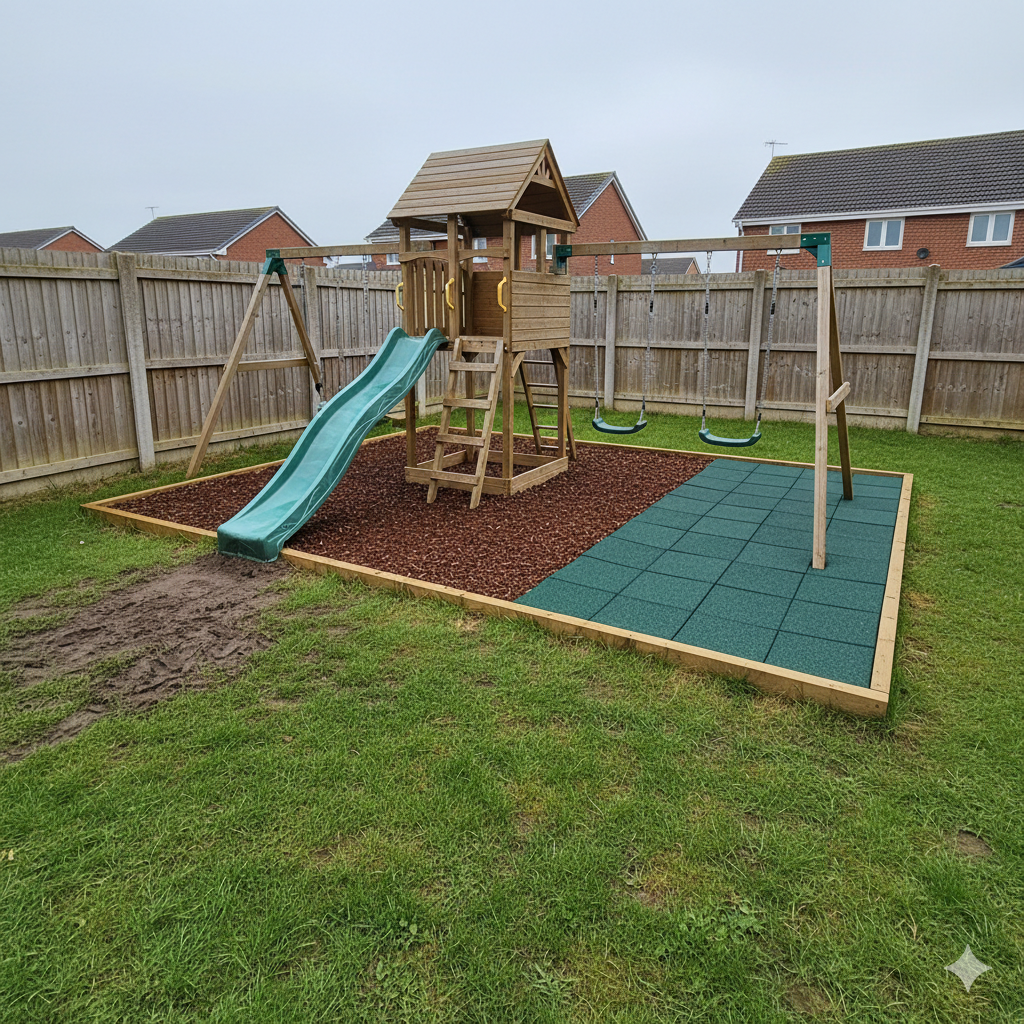
2️⃣ Bark or Wood Chippings
Often used in parks and schools.
Pros:
- Good shock absorption
- Affordable compared to rubber
- Natural appearance
Cons:
- Needs topping up
- Can spread into lawn
- Requires edging to contain it
For medium-height frames, bark is a practical middle-ground solution.
3️⃣ Rubber Safety Mats
Best for: Higher platforms and regular use
Pros:
- Consistent impact protection
- Low maintenance
- Good grip in damp weather
Cons:
- Higher upfront cost
- Requires levelling underneath
Rubber safety play mats are popular in UK gardens where space is tight and controlled impact zones are needed.
They work particularly well under swing seats and slide exits.
4️⃣ Artificial Grass with Shock Pad
Pros:
- Neat appearance
- Mud-free
- Better drainage than worn lawn
Cons:
- Installation cost
- Needs proper underlay
- Can heat up in summer
Works best when installed professionally with appropriate under-padding.
5️⃣ Sand
Common in play areas.
Pros:
- Soft landing
- Encourages sensory play
Cons:
- Spreads everywhere
- Needs containment
- Cats often use it
Usually better suited to designated sand pits than entire fall zones.
How Much Clearance Do You Need?
Surface isn’t just about what’s under the ladder.
You need safe landing zones:
- In front of slides
- Under swings
- Around climbing walls
- Beneath monkey bars
The larger the garden climbing frame with monkey bars, the larger the fall zone required.
Always follow manufacturer clearance guidelines.
Drainage Matters in UK Gardens
British gardens often sit on:
- Clay-heavy soil
- Slight slopes
- Areas prone to pooling water
If you install bark or rubber on poorly drained soil, you may create standing water underneath.
Before laying anything:
- Check for water pooling after rain
- Level uneven areas
- Improve drainage if needed
Ignoring drainage leads to rot, instability and unpleasant smells over time.
Anchoring & Stability
Surface choice affects stability.
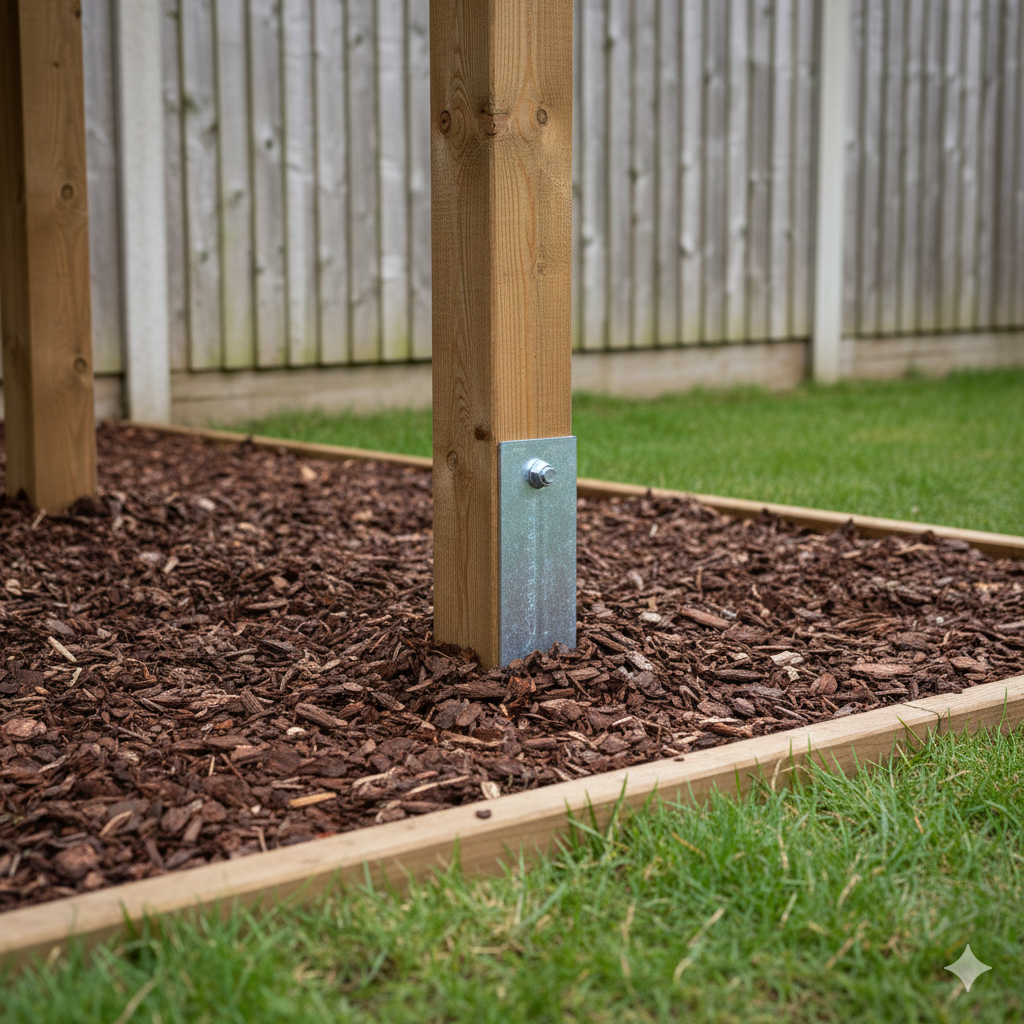
Most larger frames — especially a pressure-treated timber play tower — require:
- Ground anchors
- Concrete footings
- Proper levelling
Surface materials must not interfere with anchor security.
Install anchors first. Then add surface layers.
Age & Height Considerations
Surface depth should match risk.
For:
- Toddlers (3–5) → Lower height, smaller impact zones
- Primary age (6–8) → Moderate height, more active climbing
- Older kids (9+) → Higher climbing, bigger swings, more force
If you’re weighing up whether to invest in larger equipment or keep things flexible, our guide to DIY vs Buying Garden Obstacle Equipment: What’s Worth It for UK Families? explores that decision clearly.
Surface planning changes when equipment changes.
What About Paving Slabs or Concrete?
Short answer: avoid them.
Hard surfaces increase injury severity.
Even rubber mats placed directly on concrete without shock-absorbing layers are less effective.
Climbing frames should never be installed directly over:
- Concrete patios
- Stone slabs
- Decking without padding
Impact absorption matters more than appearance.
So What’s Actually Best?
For most UK family gardens:
- Small toddler frame → Level grass initially, upgrade if worn
- Medium wooden frame → Bark or rubber mat zone
- Large play centre → Dedicated rubber safety area or deep bark base
There isn’t one universal answer.
The safest choice balances:
- Height of frame
- Frequency of use
- Drainage
- Budget
- Garden size
Safety doesn’t have to mean turning your lawn into a playground park.
It just means planning realistically.
Final Thoughts
A climbing frame itself is only half the setup.
The surface underneath determines:
- Slip risk
- Impact protection
- Long-term stability
- Mud management
- Overall safety
Done properly, you create a garden space that feels active — not hazardous.
Take time to plan the ground before installing the frame.
It’s the part most people rush.
And the part that matters most.
Simple outdoor play at home can be just as exciting as days out when kids have the right ideas and equipment to keep them moving. You’ll find more practical, parent-friendly guides in our Garden & Outdoor Play for Kids hub, all designed to make outdoor time easy, active, and fun without overcomplicating things.
Related Garden Play Guides
If you’re building out your garden play area, these guides will help you plan it properly:
About The Author – Andrew Marshall
Andrew Marshall is the creator of Simple Days Outside and a UK parent of three who regularly camps, walks, and explores outdoor activities with his family. His guides focus on practical gear, realistic family adventures, and simple ways to help families enjoy the outdoors across the UK. The recommendations on this site are based on real-world use, research, and the kind of equipment families actually rely on for weekend trips and everyday outdoor fun.