

Written by Andrew Marshall
UK parent of three sharing practical advice to help families enjoy camping, walking, garden play, and simple outdoor adventures across the UK.
Creator of Simple Days Outside.
Outdoor swimming can be one of the best parts of a UK summer.
But open water isn’t a swimming pool.
Conditions change. Water temperatures stay low. Depth isn’t always obvious. And what looks calm from the bank can behave very differently once you’re in it.
This guide is part of our Summer Fun & Water hub, where we share practical advice to help UK families enjoy beaches, lakes and outdoor swimming safely.
The aim here isn’t to scare you.
It’s to help you assess water calmly and confidently — wherever you go.
Understand the Differences: Sea vs Lake vs River
All open water behaves differently. Knowing what you’re standing in front of makes better decisions easier.
🌊 Sea Swimming (Coast & Beaches)
The sea changes constantly.
Things to consider:
- Tides – A large sandy area can disappear quickly.
- Rip currents – These are more common on surf beaches.
- Wave power – Even small waves can knock children off balance.
- Water temperature – UK sea water is cold even in summer.
If you’re choosing the coast, look for:
- Lifeguarded beaches (especially during school holidays)
- Clear flag systems
- Established bathing areas
Beaches with Blue Flag status are monitored for water quality and safety standards, which can offer extra reassurance for families.
🏞 Lakes & Reservoirs
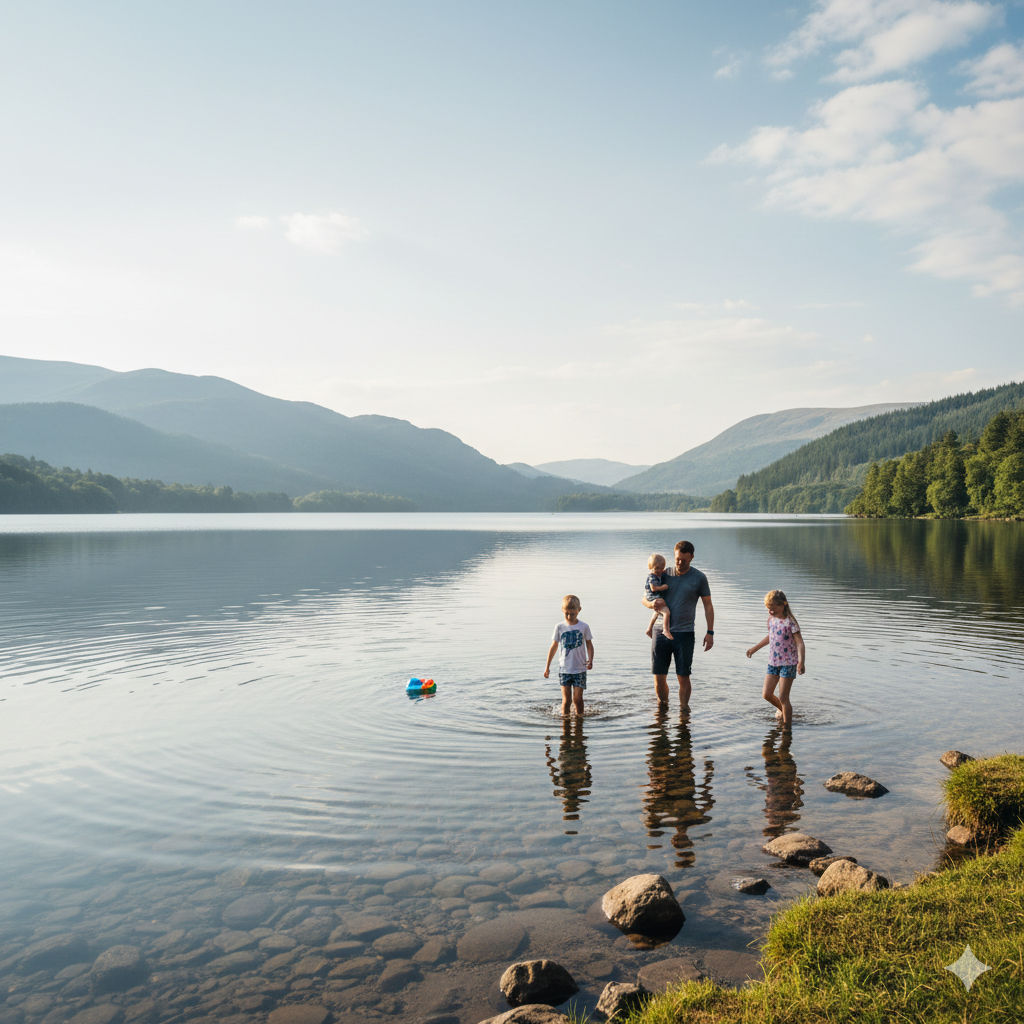
Lakes often look calm and inviting.
But they can have:
- Sudden depth changes
- Hidden drop-offs
- Very cold deeper water
- Limited visibility below the surface
Reservoirs may also have underwater structures and steep edges.
Check:
- Is swimming officially permitted?
- Are there clear entry and exit points?
- Are others swimming safely?
If you’re combining swimming with activities like paddle boarding, our guide on Best Family Paddle Boards for Beginners (UK Lakes & Lochs Guide) explains what to look for in calmer inland water.
🌊 Rivers
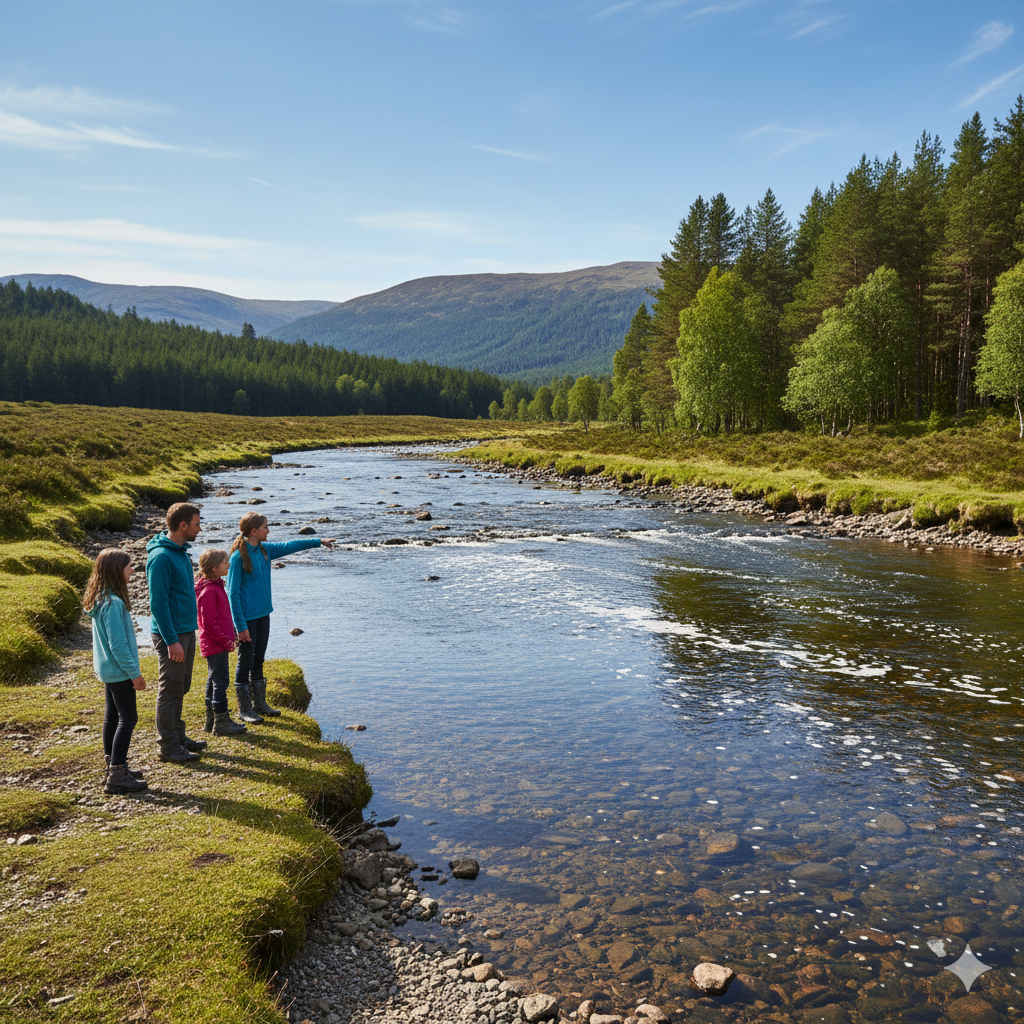
Rivers are often underestimated.
Even if they look slow-moving, they may have:
- Strong undercurrents
- Debris beneath the surface
- Slippery banks
- Sudden depth changes
After heavy rainfall, rivers can rise quickly and become unsafe.
If the water looks murky, fast or swollen, it’s usually best to wait for another day.
Author Insight: Why We Changed Plans at Glen Etive
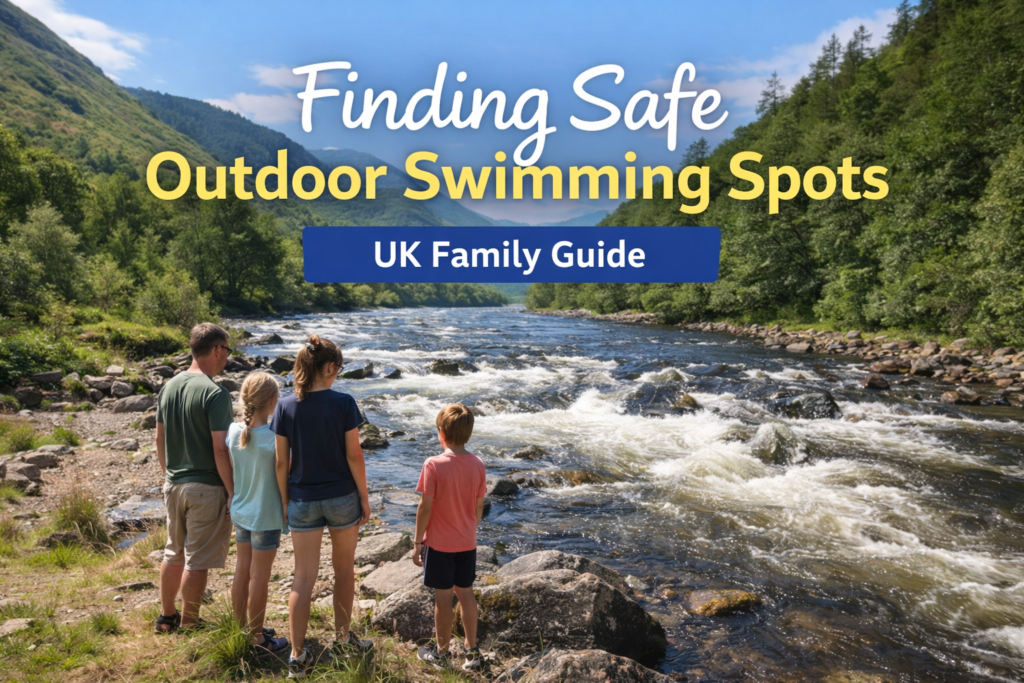
On the hottest day of summer 2025, we drove to our usual swimming spot along the River Etive in Glen Etive.
It’s somewhere we’ve visited before. Clear water. Calm sections. Familiar ground.
But as soon as we got out of the car, something felt different.
The water level was slightly higher than normal. The current was moving faster. The surface looked calm in places, but you could see the strength underneath — especially near the bends and deeper sections.
It wasn’t dramatic. There were no warning signs. No obvious danger.
Just a quiet change in conditions.
We stood there for a few minutes and asked ourselves a simple question:
Would we feel completely relaxed letting the kids play here today?
The honest answer was no.
So we packed everything back into the car and drove to Loch Tulla instead, where the water was still, shallow near the edge, and far more predictable.
Nothing bad happened that day.
But later, thinking about how strong the river looked — and how easily children can lose footing in moving water — it was unsettling to imagine what could have happened if we’d ignored that instinct.
Sometimes safe outdoor swimming isn’t about bravery.
It’s about recognising small changes and choosing the calmer option.
How to Check Water Quality in the UK
Before you travel, it’s worth doing a quick water check.
In England, the Environment Agency monitors designated bathing waters. Similar monitoring exists across Scotland, Wales and Northern Ireland.
Here’s what to look for:
- Recent bathing water ratings
- Blue Flag status
- Local authority signage
- Online community updates
- Recent weather (heavy rain often impacts rivers and coastal runoff)
Heavy rainfall in the previous 24–48 hours can reduce water quality, especially near river mouths or urban areas.
If conditions have been unsettled, consider postponing.
What to Look for When You Arrive
Even if everything looked fine online, assess conditions in person.
Take two minutes before anyone enters the water.
✔ Lifeguards Present
Where available, lifeguards provide the safest family swimming conditions.
✔ Clear Access Points
Avoid scrambling down unstable banks or rocks.
✔ Safe Entry & Exit
Can you get out easily if someone feels cold or tired?
✔ Warning Signage
Read it. It’s there for a reason.
✔ Other Families
If lots of families are calmly paddling in a clearly defined area, that’s usually a good sign.
✔ Sudden Depth Changes
Walk in slowly. Feel the ground underfoot. Avoid jumping or diving into unknown water.
If something feels uncertain, pause.
You can always choose not to swim.
Family Safety Basics (Without Overcomplicating It)
Outdoor swimming doesn’t need to feel risky.
But a few clear principles help.
Stay Within Close Supervision Range
Children should always be within quick reach in open water.
Designate:
- A boundary marker
- A depth limit
- A maximum distance
Clear, simple rules work better than vague warnings.
Cold Water Awareness
Cold water shock can happen quickly.
Encourage:
- Gradual entry
- Splashing face and chest first
- Avoiding sudden jumps
Even confident swimmers can struggle in cold water.
Avoid Inflatables Offshore
Lilos and inflatables drift easily.
They can move further from shore faster than children can swim back.
Keep inflatables close to the water’s edge only.
Float-to-Live Principle
If someone gets into difficulty:
- Tilt head back
- Relax
- Float on your back
- Regain calm before moving
Teaching this early builds confidence without fear.
Know When to Say No
If:
- The water looks rough
- Currents are visible
- It’s very windy
- There’s no safe entry
- The temperature feels extreme
It’s fine to skip swimming that day.
A paddle at the shoreline still counts as a good outdoor day.
Practical Kit That Makes Things Easier
You don’t need specialist gear for family swimming, but a few simple items help.
A bright tow float for open water swimming increases visibility for older children or adults in lakes.
For colder conditions, kids neoprene swim gloves can help little hands stay warm for longer.
A waterproof dry bag backpack keeps clothes, phones and snacks protected near the water’s edge.
Afterwards, quick-dry microfibre towels are easier to carry and shake sand off more easily than thick cotton ones.
On rocky shores, non-slip swim shoes for rocky shores help prevent slips and cuts.
And if you’re setting up for a longer beach visit, a compact beach shelter provides wind protection and warmth between swims, see our guide to Best Pop-Up Beach Shelters & Windbreaks for Families (UK) for practical options.
None of these are essential.
They just make things more comfortable.
Planning Safe Family Water Days
Outdoor swimming works best when it’s part of a simple, realistic plan.
If you’re organising a full beach day, our guide on How to Plan a Simple Family Beach Day (UK Guide Without Overpacking) explains how to keep the whole outing calm and manageable.
And if you want a practical checklist before leaving home, What to Take to the Beach With Kids (UK Parent Packing List) keeps packing focused without going overboard.
The goal isn’t perfection.
It’s awareness.
A Calm Approach Builds Confidence
Most UK outdoor swimming days are positive experiences.
But the difference between relaxed and stressful usually comes down to:
- Checking conditions
- Understanding the type of water
- Supervising closely
- Making simple, sensible decisions
You don’t need secret spots.
You don’t need dramatic warnings.
You just need awareness and restraint.
When families understand how to assess open water calmly, outdoor swimming becomes one of the most rewarding parts of summer — not something to feel nervous about.
Related Summer Water Guides
Planning a beach day or outdoor water trip? These guides focus on keeping things simple, safe and comfortable — so you can spend more time enjoying the day.
About The Author – Andrew Marshall
Andrew Marshall is the creator of Simple Days Outside and a UK parent of three who regularly camps, walks, and explores outdoor activities with his family. His guides focus on practical gear, realistic family adventures, and simple ways to help families enjoy the outdoors across the UK. The recommendations on this site are based on real-world use, research, and the kind of equipment families actually rely on for weekend trips and everyday outdoor fun.