

Written by Andrew Marshall
UK parent of three sharing practical advice to help families enjoy camping, walking, garden play, and simple outdoor adventures across the UK.
Creator of Simple Days Outside.
Outdoor swimming with children in the UK can be brilliant.
It can also feel slightly nerve-wracking the first few times.
Not because it’s inherently dangerous — but because open water doesn’t come with painted depth markers, lifeguard whistles or predictable temperatures.
This guide is part of our Summer Fun & Water hub, where we share practical advice to help UK families enjoy beaches, lakes and outdoor swimming safely.
The goal here isn’t to give you a list of rules.
It’s to help you feel steady and in control when your children step into open water.
The Bit No One Mentions: The Water Is Usually Colder Than You Think
Even on the hottest day of the year, most UK lakes and seas are cold.
Not “refreshing pool cold.”
Cold enough to make you gasp.
Children often react first with excitement — then shock.
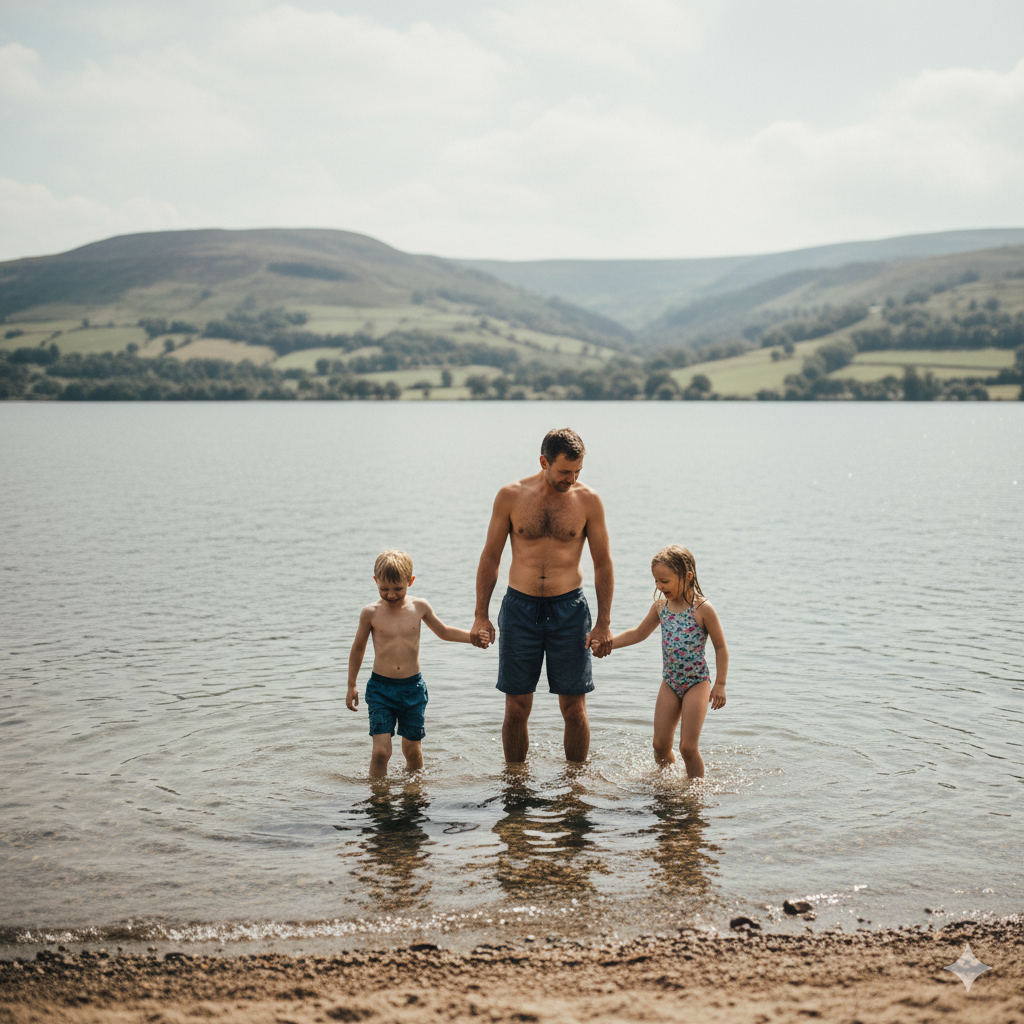
That sharp intake of breath when cold water hits their chest? That’s normal. But it’s why gradual entry matters.
Encourage:
- Walk in slowly
- Splash arms and chest first
- Pause before going deeper
No rushing. No showing off.
Confidence grows faster when entry is calm.
If you know your child struggles with cold, something simple like UV protective swim tops for kids can add a small layer of warmth while also protecting from sun exposure.
Water Doesn’t Stay the Same All Day
One difference between outdoor swimming and pools is unpredictability.
In the UK:
- Tides shift beaches dramatically.
- Rivers rise after rain.
- Wind changes surface conditions.
- Sandbanks move.
A spot that felt perfect last month may feel different today.
If you’re unsure how to assess those changes properly, our guide on How to Find Safe Outdoor Swimming Spots in the UK (Lakes, Rivers & Sea) explains what to look for without overcomplicating it.
But even without research, trust your eyes.
Is the water moving faster than usual?
Is it murkier?
Does it feel colder than expected?
Small changes matter.
The Supervision Shift That Makes the Biggest Difference
Most of us don’t need more safety information.
We need fewer distractions.
Open water supervision works best when:
- One adult is actively watching.
- Phones are away.
- Conversations are short.
- You’re in the water too (where possible).
Standing on shore scrolling while children swim further out is when small issues turn into bigger ones.
If you’re in lakes or calm sea water and an older child wants to venture slightly further, a bright tow float for open water swimming adds visibility and gives them something to hold if they get tired.
It’s not about fear.
It’s about margin.
Depth Is the Big Unknown
In pools, children learn depth gradually.
In lakes and rivers, depth can change within one or two steps.
A child laughing and splashing in knee-deep water can suddenly be in water over their shoulders.
That’s why I prefer:
- Clear entry points
- Gradual slopes
- Visible lakebeds where possible
On rocky or uneven shores, non-slip swim shoes for rocky beaches can make a surprising difference to confidence. Slipping while getting in is often more frightening than the swimming itself.
Rivers Deserve Extra Respect
Calm rivers can still carry strong force underneath.
After rainfall especially, water levels rise and currents strengthen.
If the water seems faster than usual or the sound is louder than you remember, pause.
It’s rarely worth “seeing how it feels.”
Children can lose footing more easily in moving water than still water — not because they can’t swim, but because the ground shifts under them.
If there’s any doubt, paddling near the edge is enough.
Inflatables: Fun, But Only in the Right Place
Inflatables create a false sense of security.
They’re brilliant in shallow, calm water close to shore.
But offshore, wind and tide can move them quickly.
Children drift before they realise it.
If you bring them, set a clear rule:
Inflatables stay in the shallow zone only.
No exceptions.
When to Say “We’ll Just Paddle Today”
One of the strongest habits you can build as a parent is the ability to say no without drama.
It might be:
- The water feels much colder than expected.
- The beach is overcrowded.
- The river looks stronger than usual.
- Your child seems hesitant.
- You feel slightly uneasy.
That quiet instinct matters.
Outdoor swimming should feel steady — not forced.
Sometimes the best choice is a shoreline paddle, a picnic, and warm towels afterwards.
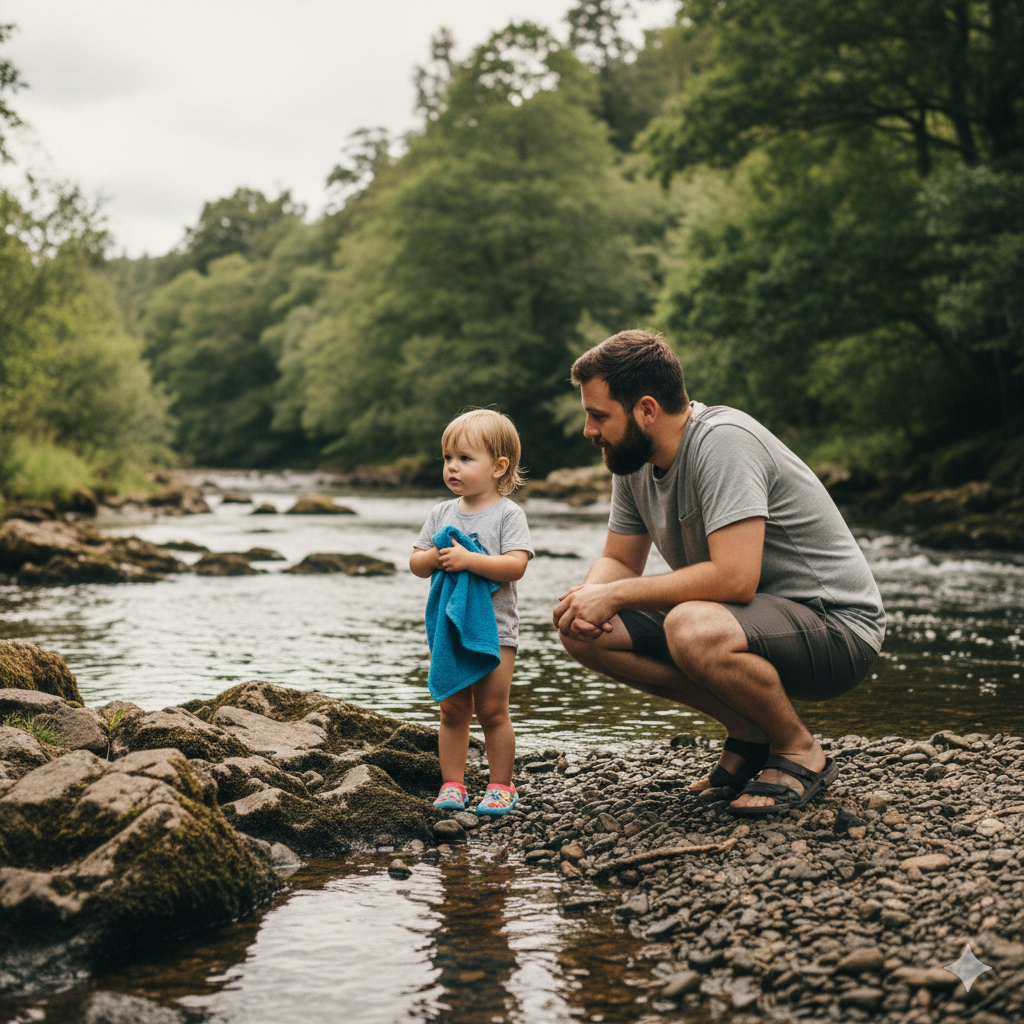
Speaking of towels, quick-dry microfibre towels are far easier to wrap shivering children in than heavy cotton ones that stay damp.
Helping Children Build Water Confidence (Without Pressure)
Outdoor swimming confidence doesn’t come from being pushed.
It comes from familiarity.
Some children leap straight in. Others hang back at the shoreline for weeks before they’re ready to go deeper.
Both are normal.
You can build steady confidence by:
- Letting them control how far they go
- Making the first few visits short
- Keeping early swims playful rather than performance-based
- Avoiding comparisons with siblings or friends
Confidence grows when children feel safe, not challenged.
If a child hesitates in cold water, avoid phrases like:
“Don’t be silly” or “It’s fine, just go in.”
Instead try:
“Let’s go in together slowly.”
Outdoor water should feel like exploration — not a test.
And often, the child who takes it slow at first becomes the most capable swimmer later, because they’ve learned to read conditions rather than ignore them.
Comfort Reduces Risk
Children who are comfortable behave more predictably.
Children who are freezing, slipping, squinting into wind or worried about footing are more likely to panic.
Small things help:
- A waterproof dry bag backpack keeps spare clothes dry and accessible.
- A lightweight layer ready on shore means no delay after swimming.
- Shade from a compact shelter reduces fatigue on hot days.
If you’re organising the whole day around swimming, our guide on How to Plan a Simple Family Beach Day (UK Guide Without Overpacking) explains how to keep everything manageable.
Because tired, overwhelmed children make water supervision harder.
After-Swim Safety: The Part That’s Easy to Forget
Most parents focus on getting into the water safely.
But getting out matters just as much.
Children lose body heat quickly once they stop moving.
After swimming:
- Dry them promptly
- Change out of wet clothes
- Add layers sooner than you think necessary
Even on warm days, wind across wet skin can chill children quickly.
This is where preparation quietly reduces risk. Having a towel ready rather than buried in the car makes transitions smoother. A spare top easily accessible in a waterproof dry bag backpack avoids rummaging while children stand shivering.
Fatigue is another factor.
Cold water + excitement + physical exertion = tired children.
And tired children are less steady on uneven banks or rocky paths when leaving.
Slow down the exit. Take your time.
Most incidents happen during transitions — not mid-swim.
Calm Is Contagious
Children read adult energy quickly.
If you approach open water:
- Calm
- Observant
- Unrushed
- Clear about boundaries
They mirror that.
If you appear anxious or unpredictable, they sense that too.
Outdoor swimming in the UK isn’t extreme.
It’s not wild survival.
It’s a simple summer activity that just requires awareness.
And most problems arise from:
- Rushing
- Underestimating cold
- Ignoring subtle conditions
- Losing focus
None of which are complicated to manage.
You Don’t Need To Be Fearful To Be Responsible
There’s a balance.
You don’t need dramatic warnings.
You don’t need constant worry.
You need:
- Gradual entry
- Close supervision
- Clear boundaries
- The confidence to walk away
That’s it.
Outdoor swimming with kids can be one of the most memorable parts of growing up in the UK.
Cold water. Big skies. Pebbled shores. Highland rivers. Quiet lakes.
With steady awareness and simple habits, it stays exactly what it should be —
Refreshing. Grounding. And something everyone enjoys.
Related Summer Water Guides
If you’re building confidence around open water as a family, these guides go a little deeper into planning, location checks and practical preparation — all with the same calm, realistic approach.
About The Author – Andrew Marshall
Andrew Marshall is the creator of Simple Days Outside and a UK parent of three who regularly camps, walks, and explores outdoor activities with his family. His guides focus on practical gear, realistic family adventures, and simple ways to help families enjoy the outdoors across the UK. The recommendations on this site are based on real-world use, research, and the kind of equipment families actually rely on for weekend trips and everyday outdoor fun.