UK parent of three sharing practical advice to help families enjoy camping, walking, garden play, and simple outdoor adventures across the UK. Creator of Simple Days Outside.
Packing for a family camping trip often feels more complicated than the trip itself.
Some packing lists online make it sound like you need to recreate your home in a field, while others assume you’re happy surviving on minimal gear. Most UK family camping trips sit somewhere in the middle — a few nights away, fairly close to home, with children who want comfort, routine and reassurance as much as fresh air.
This checklist is designed for real UK family camping. It’s for parents who want to be prepared without overpacking, who want weekends to feel relaxed rather than chaotic, and who would rather enjoy the trip than manage piles of unused gear.
👉 In This Guide
How to Use This Checklist (Before You Start Packing)
Before ticking items off, it helps to step back and think about how you’re camping.
This checklist assumes:
You’re driving to a campsite, not hiking in
You’re staying 1–3 nights
You’re camping in typical UK conditions, not extreme weather
If that sounds like your trip, this list will cover what you actually need — and help you avoid the common overpacking traps.
A useful mindset is this:
If it helps with sleep, warmth, food or calm, it’s probably worth bringing. If it’s “nice to have” but awkward to pack, you can likely skip it.
👉 Grab your FREE Family Camping Checklist (UK Weekend Edition)
Grab your FREE printable packing list for stress-free 1–2 night camping trips with kids.
👉 Printable packing list for stress-free 1–2 night trips with kids
🎉 Your Checklist Is On Its Way!
Check your inbox to download your Family Camping Checklist (UK Weekend Edition).
If it doesn’t arrive within a minute or two:
• Check spam or promotions
• Search for “Simple Days Outside”
• Add us to your contacts
We hope it helps you pack faster and enjoy a stress-free trip ⛺
Shelter & Sleeping: Get This Right First
If these basics are sorted, everything else tends to fall into place.
Tent & Setup Essentials
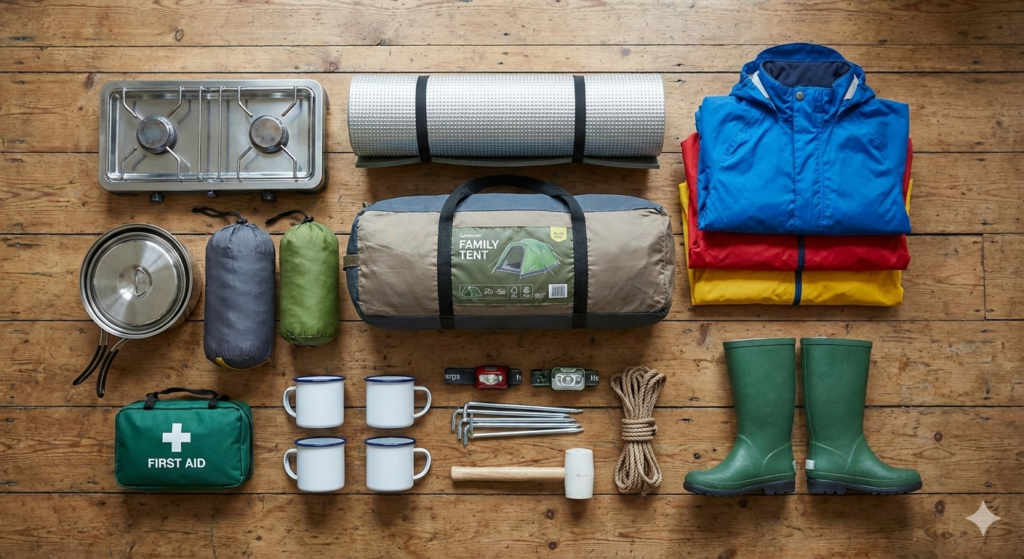
Family tent (with poles or air pump if inflatable)
Tent pegs (bring extras — ground varies across the UK)
Mallet or hammer
Guy lines (even if your tent includes them)
Groundsheet or footprint
A tent with a small porch or living area makes a big difference for family camping. It gives you somewhere to leave muddy shoes, store bags, and manage wet weather without dragging everything into the sleeping space.
Sleeping Gear (For Adults and Kids)
Sleeping bags suitable for UK temperatures
Camping beds, airbeds or sleeping mats
Pillows (real ones if space allows)
Extra blanket or fleece
Children often sleep better with familiar bedding. Even a pillowcase from home can help them settle more quickly in a new environment.
Clothing: Plan for Layers, Not Outfits
UK camping isn’t about looking good — it’s about staying dry, warm and comfortable.
Everyday Clothing
Comfortable daytime clothes
Warm layer (fleece, hoodie or jumper)
Waterproof jacket for each person
Spare trousers or leggings
Underwear and socks (bring extras)
Pyjamas / sleepwear
It’s usually better to bring fewer outfits and more layers. Damp clothes are common on campsites, especially after rain or early-morning dew.
Footwear
Wellies or waterproof boots
Trainers or comfortable shoes
Sliders or flip-flops (for showers or around the pitch)
Wet feet can quickly make kids miserable, so spare socks and practical shoes are worth the space.
Cooking & Eating: Keep Meals Simple
Camping meals don’t need to be impressive — they just need to be easy.
Cooking Equipment
Camping stove or BBQ
Gas canister or fuel
Lighter or matches
One saucepan
One frying pan
Kettle (camping or electric, depending on campsite rules)
If a meal needs lots of utensils or perfect timing, it’s usually not worth it on a family camping trip.
Snacks are especially important with children — they help prevent tiredness turning into meltdowns.
Eating & Cleaning Gear
Plates and bowls (plastic or enamel)
Cutlery
Mugs
Tea towels
Washing-up sponge
Small bottle of washing-up liquid
You don’t need full kitchen sets — just enough to get through meals comfortably.
Lighting & Power: Don’t Rely on Daylight
Even well-lit campsites feel dark once you’re inside the tent.
Lantern or tent light
Torch (at least one per adult)
Headtorch (optional but useful)
Power bank
Charging cables
Soft lighting inside the tent helps children feel calmer at bedtime and makes evenings more relaxed.
Toiletries & Health: Keep It Practical
You don’t need your entire bathroom cabinet — just the essentials.
Toiletries
Toothbrushes and toothpaste
Wet wipes
Hand sanitiser
Tissues
Shower gel / shampoo (travel size)
Towels
First Aid & Health Essentials
Basic first aid kit
Plasters
Pain relief (adult and child)
Antihistamine (if needed)
Sun cream
Insect repellent
Having these to hand saves late-night walks to campsite shops.
Camping Furniture: Small Comforts, Big Difference
While not essential, these often make family camping much easier.
Camping chairs
Folding table
Picnic blanket
Having somewhere comfortable to sit in the evening helps everyone wind down after a busy day.
Kids’ Essentials: The Things That Really Matter
These are often the difference between a smooth weekend and a stressful one.
Favourite soft toy or comfort item
Small blanket
Night light (battery powered)
Simple toys or games
Books or colouring
Torch for bedtime
Familiar items help children feel secure and settle faster in a new environment.
If you’re camping with children in warmer weather, it’s also worth checking official UK advice on sun protection and hydration for kids, especially during long outdoor days. Clear guidance can help you plan safely and avoid common issues like sunburn or dehydration.
Weather & Campsite Practicalities
UK camping usually involves at least one of these.
Waterproof bags or bin liners
Microfibre cloths
Spare carrier bags
Door mat or old towel for tent entrance
A simple mat or towel outside the tent helps keep mud and water under control.
Optional Extras (Useful, Not Essential)
These aren’t required, but often appreciated.
Windbreak
Clothes line or pegs
Extra guy lines
Small broom or brush
Earplugs (for light sleepers)
Bring these only if you have the space.
What You Can Usually Leave at Home
These items are often packed “just in case” and barely used:
Too many clothes
Fancy cooking equipment
Full sets of plates and cutlery
Decorative campsite items
Multiple lanterns or gadgets
If something feels heavy, awkward, or unlikely to be used, it’s usually safe to skip.
Author Insight
Over time, I’ve realised that family camping works best when you focus on the basics rather than trying to plan for every situation. Warm beds, simple meals and familiar comforts make a far bigger difference than extra gear. A clear checklist helps take the stress out of packing and lets the weekend feel calmer from the moment you arrive.
🏕️ Getting the Core Camping Setup Right
A good checklist makes packing easier, but comfort on a family camping trip also depends on having the right tent and sleeping setup. Enough space, proper weather protection, and decent beds can make evenings calmer and mornings far less rushed. If you’re still choosing key gear, our guides to Best Family Tents for Weekend Camping (UK) and Top 5 Best Camping Beds for Kids (UK) walk through sensible, family-friendly options that work well together for typical UK weekend trips.
Final Thoughts: Focus on Comfort, Not Stuff
The most enjoyable family camping trips aren’t the ones with the most gear — they’re the ones where everyone feels warm, comfortable and relaxed.
If you’ve covered:
Shelter
Sleep
Food
Suitable clothing
A few familiar comforts
You’re already well prepared.
Once the essentials are sorted, everything else is optional. Packing less often means setting up faster, tidying less, and spending more time enjoying being outdoors together — which is what family camping is really about.
If you’re planning a relaxed family camping break, our Family Camping & Short Trips guide covers the essential gear, simple setups, and realistic advice for weekends away with kids — without overpacking or stress.
Andrew Marshall is the creator of Simple Days Outside and a UK parent of three who regularly camps, walks, and explores outdoor activities with his family. His guides focus on practical gear, realistic family adventures, and simple ways to help families enjoy the outdoors across the UK. The recommendations on this site are based on real-world use, research, and the kind of equipment families actually rely on for weekend trips and everyday outdoor fun.