

Written by Andrew Marshall
UK parent of three sharing practical advice to help families enjoy camping, walking, garden play, and simple outdoor adventures across the UK.
Creator of Simple Days Outside.
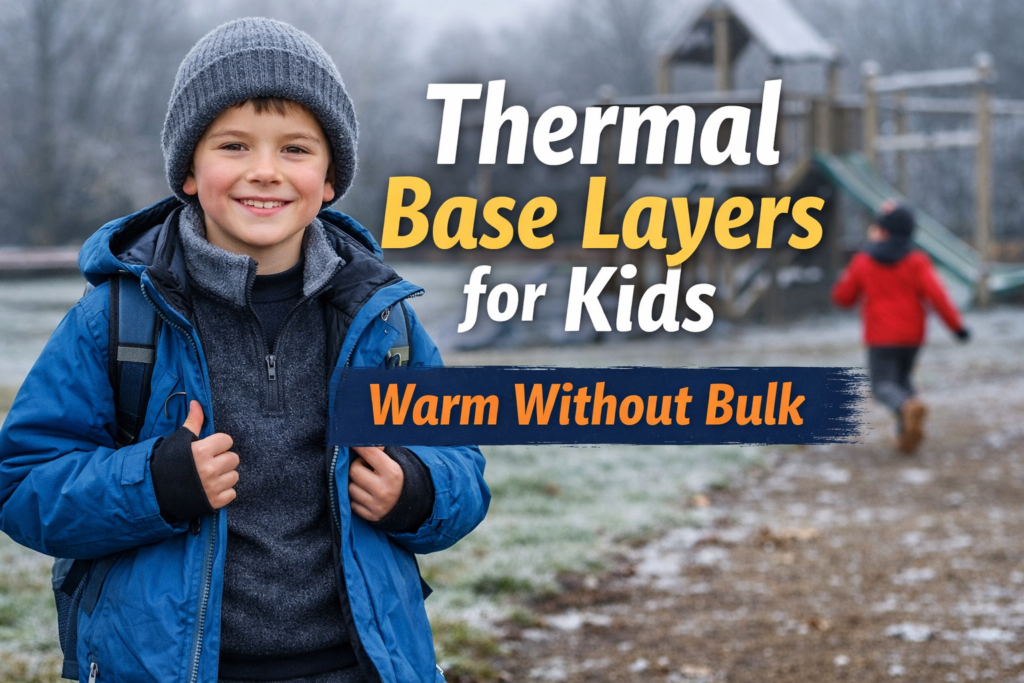
Dressing children for cold weather in the UK is rarely straightforward. Conditions change quickly — sunshine can turn to wind and drizzle within minutes, and playgrounds or parks often feel colder than the temperature suggests. Bulky coats may seem like the obvious solution, but they can cause children to overheat during activity and then chill rapidly once they stop moving.
This guide is part of our Practical Outdoor Clothing & Comfort hub, where we share straightforward advice to help families stay warm, dry and comfortable in real UK conditions.
Thermal base layers offer a smarter approach. By keeping warmth close to the skin and managing moisture, they provide steady comfort without restricting movement. Whether it’s a winter school run, a muddy park visit or a cold coastal walk, the right base layer can make outdoor time far more enjoyable.
👉 In This Guide
Why UK Cold Feels Different
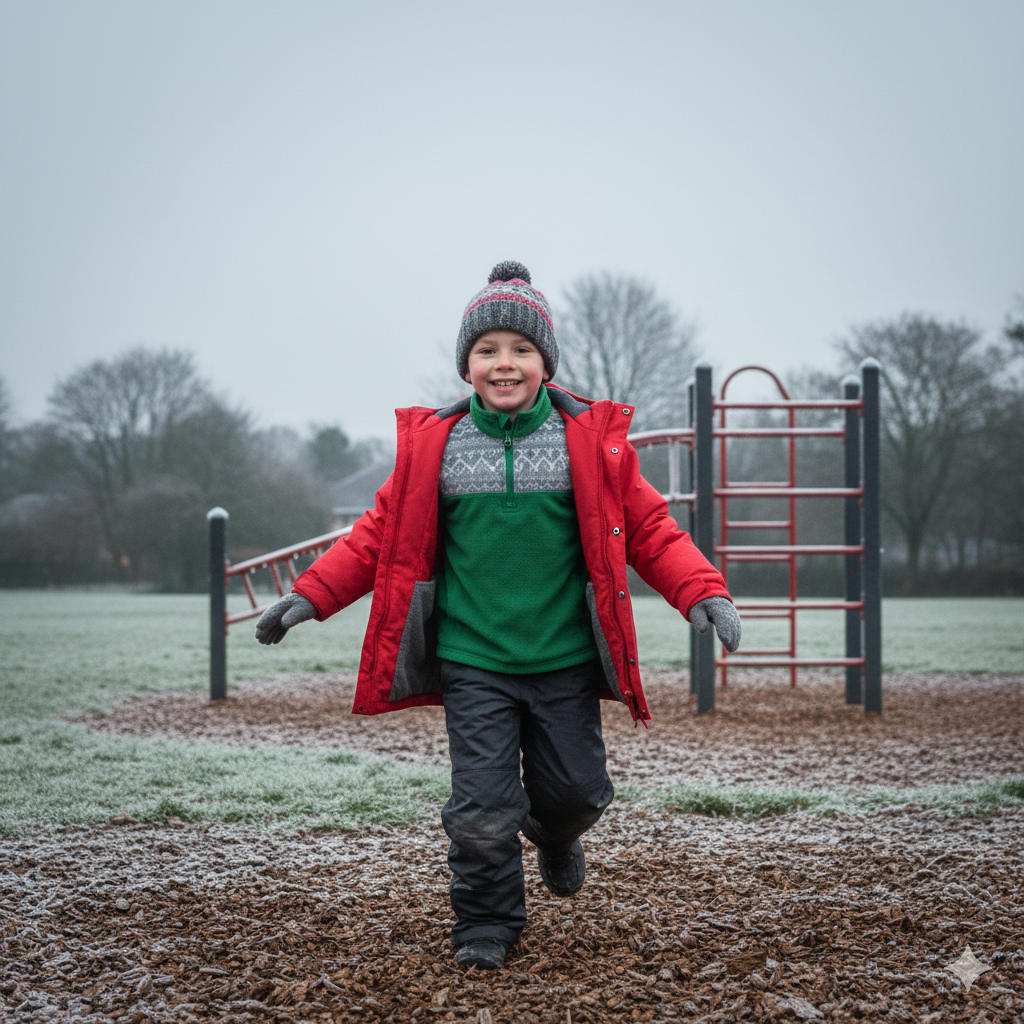
Cold weather in Britain is often damp rather than dry. Moisture in the air, wet ground, and persistent wind combine to draw heat away from the body faster than temperature alone suggests. A calm, sunny day at 5°C can feel mild, while a windy 8°C day with drizzle can feel far colder.
Children are particularly affected because they move constantly, sit on cold surfaces, and may not notice when clothing becomes damp. Thermal base layers help counter these conditions by maintaining warmth even when activity levels change.
What Thermal Base Layers Actually Do
A base layer is worn directly against the skin, making it the most important piece for temperature regulation.
Good thermals:
- Trap a thin layer of warm air close to the body
- Move sweat away from the skin
- Reduce rapid cooling when activity stops
- Improve the performance of outer clothing
- Provide warmth without bulk
Rather than making children feel hot, they aim to keep body temperature stable.
The Sweat–Chill Problem
Children generate a lot of heat when playing. If that heat can’t escape, sweat builds up. Once they slow down, damp clothing cools quickly, especially in wind.
This common cycle — overheating during activity and chilling afterwards — is one of the main reasons children complain about being both hot and cold on the same outing.
Thermal base layers reduce this by keeping skin drier and preventing sudden temperature drops.
Why “Warm Without Bulk” Matters
Bulky clothing can restrict movement and discourage active play. When children move less, they generate less body heat, which can make them feel colder overall.
Thermals allow children to stay warm while still being able to:
- Run and climb
- Sit comfortably
- Wear backpacks
- Play normally
- Move without stiffness
For active outdoor use, flexibility often matters as much as insulation.
Tops, Bottoms or Full Sets?
Thermal tops are the most common starting point and may be enough for mild conditions. However, legs lose heat too, especially when children sit on cold benches, kneel on damp ground, or stand in windy areas.
Full sets are particularly useful for:
- Long periods outdoors
- Early morning activities
- Cold or windy locations
- Camping or hiking
- Spectator sports
- Children who feel the cold easily
A kids thermal base layer set worn under everyday clothing can provide more effective warmth than adding thicker outer layers.
Thermals as the Foundation of Layering
Thermals work best as part of a simple layering system:
- Base layer — temperature regulation
- Mid layer — insulation (fleece or jumper)
- Outer layer — protection from wind and rain
This structure adapts easily to changing conditions. If temperatures rise, outer layers can be removed while the base layer maintains comfort.
For a practical explanation of how these layers work together in everyday situations, see our guide on How to Layer Kids for UK Weather .
Thermals are especially effective under waterproof clothing. Outer shells block wind and rain but often provide little insulation on their own. Adding a thermal layer underneath significantly improves warmth.
Reliable outerwear such as those discussed in Best Kids Waterproof Jackets can protect against wind-driven rain while thermals maintain body heat underneath. For wet playgrounds or muddy paths, thermal leggings combined with waterproof trousers provide a warm, dry barrier, as explained in Best Waterproof Trousers for Children.
Choosing the Right Material
Different fabrics perform differently in damp, changeable weather.
Synthetic Thermals
Most common and affordable.
Benefits include:
- Quick drying
- Durable
- Lightweight
- Easy care
- Good performance in wet conditions
These are suitable for everyday use, including school and play.
Merino Wool Thermals
More expensive but highly effective.
Advantages include:
- Excellent temperature regulation
- Breathable comfort
- Warm even when damp
- Naturally odour resistant
Well suited to long outdoor days or colder regions.
Cotton-Based Thermals
Less suitable for outdoor use in damp conditions because cotton retains moisture and can feel cold when wet.
Fit Matters More Than Thickness
Thermals work by keeping warm air close to the body, so they should fit snugly without restricting movement.
Look for:
- Stretch fabric
- Comfortable seams
- Secure but gentle waistbands
- Sleeves and legs that stay in place
They should feel soft and comfortable rather than tight.
Breathability and Moisture Control
Overheating can be as uncomfortable as being cold. Good thermals allow excess heat and moisture to escape while retaining warmth.
Signs a base layer is working properly:
- Skin feels warm but not sweaty
- No clammy sensation
- Comfort when activity slows
- Fewer clothing adjustments needed
School Use vs Outdoor Adventures
Thermals are not limited to hiking or extreme cold. Thin base layers can be worn comfortably under school uniforms and everyday clothing.
For daily wear:
- Lightweight styles are usually sufficient
- Neutral colours blend easily
- Easy washing is important
For outdoor trips:
- Slightly thicker materials may be useful
- Full sets provide extra warmth
- Higher-performance fabrics handle prolonged exposure better
Some families keep separate sets for everyday use and for outdoor activities.
Cold Starts and Changing Conditions
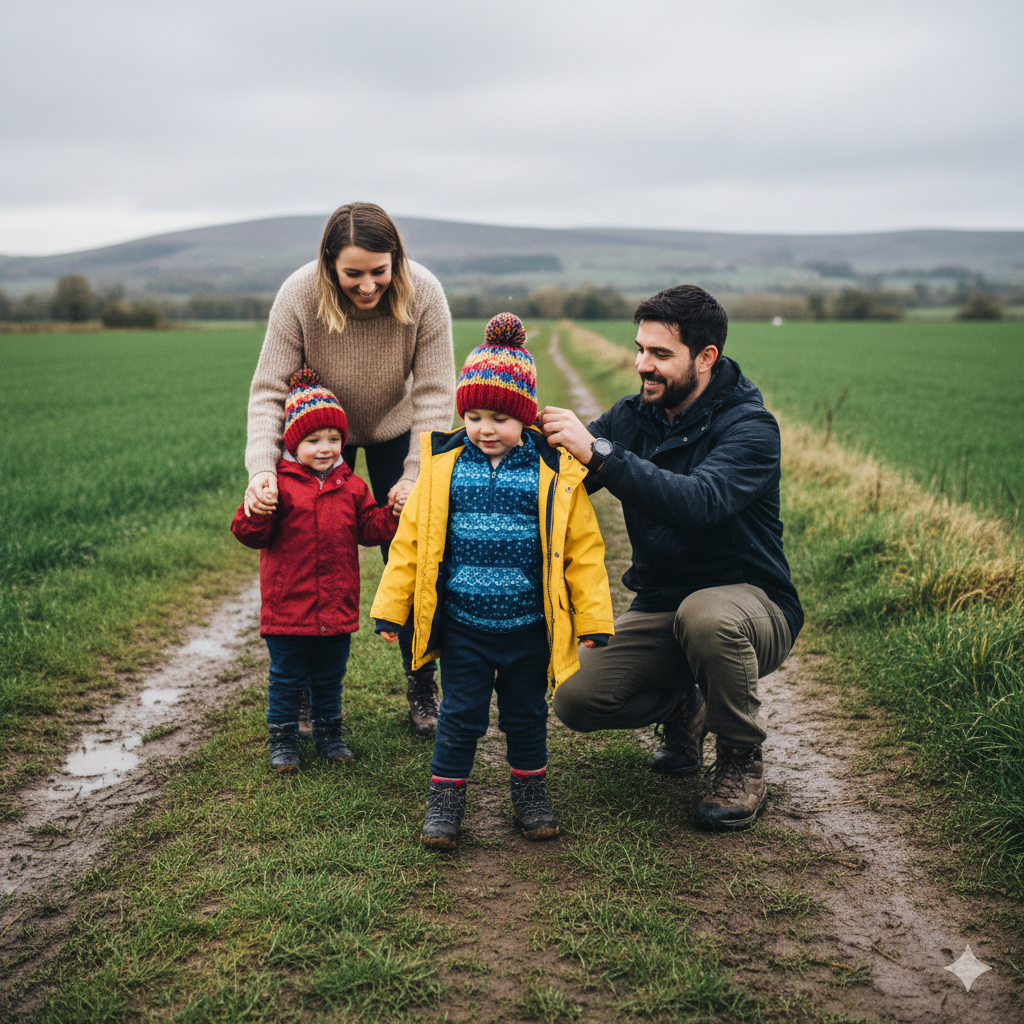
Winter days often begin cold and become milder later. Thermals allow outer layers to be removed without leaving children underdressed.
Instead of carrying multiple jumpers, a base layer combined with a weatherproof outer shell can cover a wide range of temperatures.
Wind and Coastal Conditions
Wind significantly increases heat loss. Coastal areas and open landscapes often feel colder than inland temperatures suggest.
Thermals help maintain core warmth so lighter outer layers remain effective. If clothing becomes wet from rain or paddling, changing into a dry base layer can quickly restore comfort.
How Many Sets Are Needed?
Most families do not need a large number of thermal outfits.
A practical approach:
- One or two sets for everyday use
- One spare or warmer set for longer outdoor activities
This usually covers typical winter conditions.
Washing and Care
Thermal base layers are generally easy to maintain.
- Follow label instructions
- Avoid fabric softener, which can reduce moisture-wicking performance
- Air dry when possible
- Keep tops and bottoms paired
Merino wool versions may require cooler washes and gentle cycles.
Additional Items That Improve Warmth
Base layers work even better when combined with simple accessories that reduce heat loss from extremities:
These items complement the base layer system without adding excessive bulk.
Signs Thermal Layers Would Help
Thermals are especially useful if a child:
- Gets cold easily
- Spends long periods outdoors
- Has early morning starts
- Plays in wet or windy environments
- Dislikes heavy coats
- Is slim and loses heat quickly
Small Layer, Big Difference
Thermal base layers are easy to overlook because they are thin and largely invisible under clothing. However, they often make the biggest difference to comfort in cold, damp conditions.
By stabilising temperature and reducing moisture build-up, they allow children to stay active without constant clothing changes or bulky outfits.
Warmth without restriction. Protection without heaviness. Comfort that adapts to unpredictable weather.
Related Guides for Outdoor Clothing & Comfort
If you are building a practical cold-weather wardrobe for your family, these guides cover outer layers and additional protection for wet and windy conditions.
About The Author – Andrew Marshall
Andrew Marshall is the creator of Simple Days Outside and a UK parent of three who regularly camps, walks, and explores outdoor activities with his family. His guides focus on practical gear, realistic family adventures, and simple ways to help families enjoy the outdoors across the UK. The recommendations on this site are based on real-world use, research, and the kind of equipment families actually rely on for weekend trips and everyday outdoor fun.