

Written by Andrew Marshall
UK parent of three sharing practical advice to help families enjoy camping, walking, garden play, and simple outdoor adventures across the UK.
Creator of Simple Days Outside.
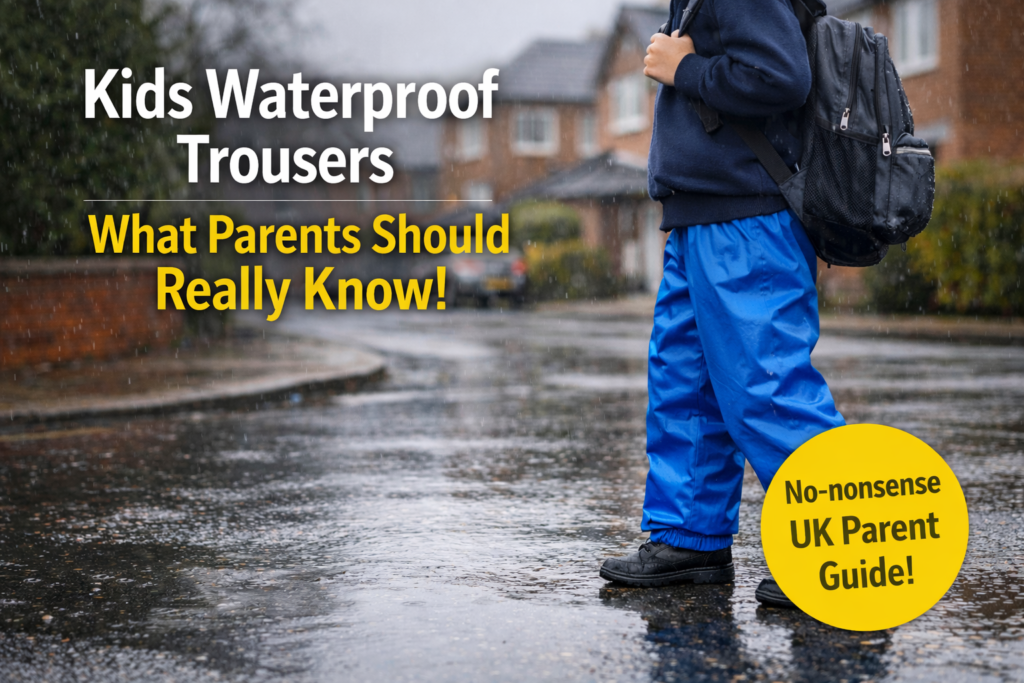
Buying waterproof trousers for children sounds simple — until you’re standing in a shop wondering why some look like ski gear, others like bin bags, and none of the labels explain how they actually work in real UK weather.
This guide is part of our Practical Outdoor Clothing & Comfort hub, where we share simple, realistic advice to help UK families stay warm, dry and comfortable outside — whether that’s the school run, weekend walks, or muddy park adventures.
If you want trousers that children will actually wear (and that won’t fall apart after two rainy weeks), the key is understanding fit, comfort, ease of use and durability — not just “waterproof” on the label.
👉 In This Guide
Why Waterproof Trousers Matter in the UK
In countries with predictable weather, waterproof trousers might feel optional. In the UK, they’re often the difference between a normal day out and a miserable one.
Typical situations where they genuinely help:
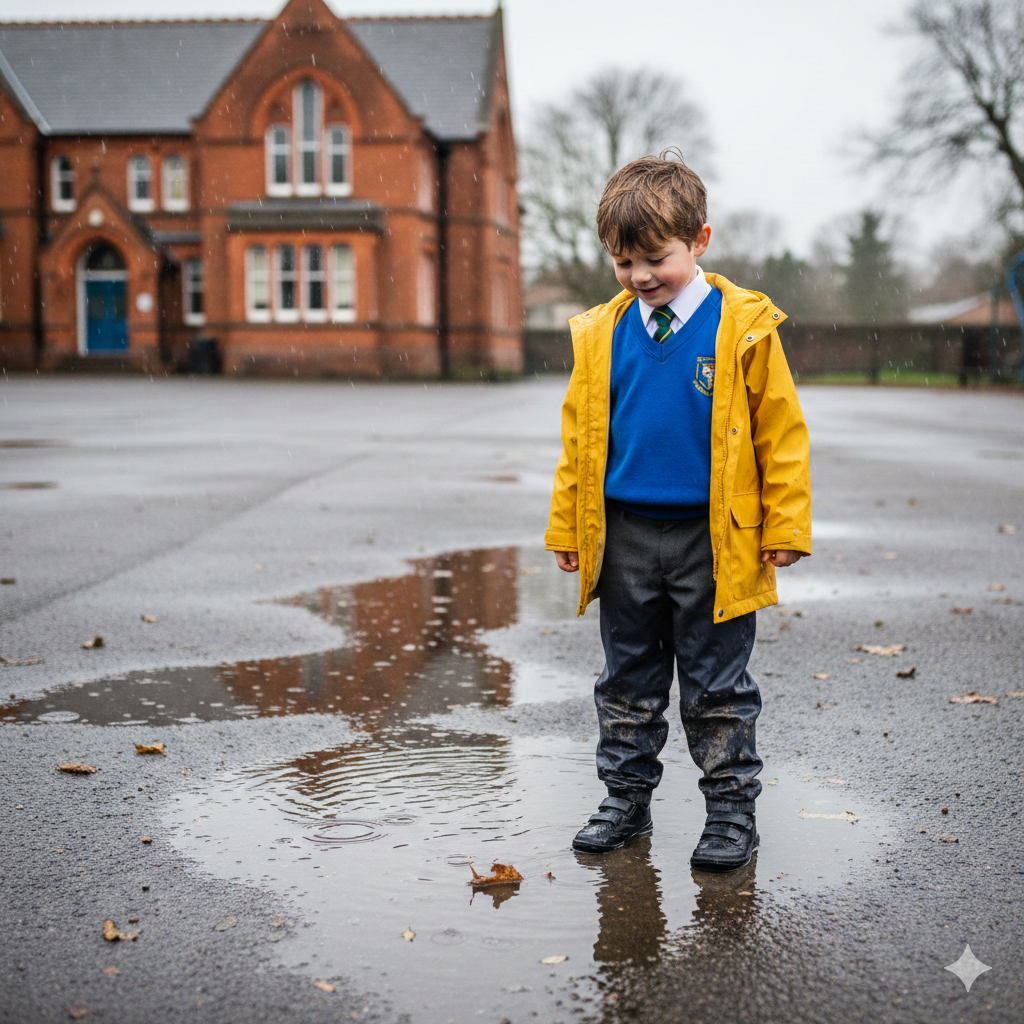
- Walking to school in steady rain
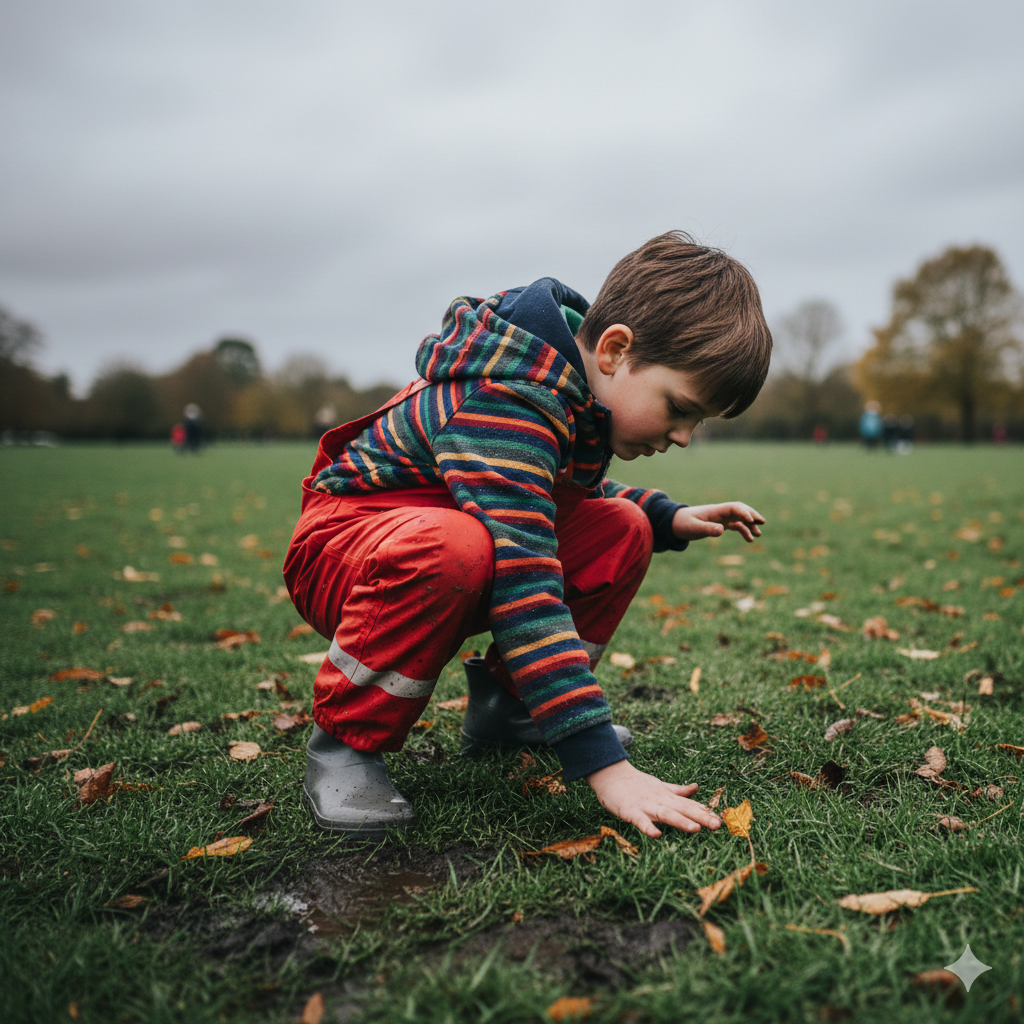
- Sitting on wet benches or grass
- Playing football on muddy fields
- Camping trips with damp mornings
- Woodland walks after overnight rain
- Wind-driven drizzle that soaks jeans in minutes
Many schools also expect waterproof trousers for outdoor learning or forest school sessions.
Unlike jackets, trousers protect the part of the body that gets wet fastest — legs, knees and seat — especially when children sit down or kneel on wet ground.
If you’re unsure what styles are worth buying, our guide to the Best Waterproof Trousers for Children explains the main types available.
Getting the Right Fit (This Matters More Than Brand)
Waterproof trousers are designed to be worn over normal clothes, not instead of them. If they fit like joggers, they’re probably too small.
Waist Fit
Most children’s waterproof trousers use elastic waists, which work well for quick changes.
You’ll also find adjustable waterproof trousers for growing children, which use drawcords or tabs. These are useful if your child sits between sizes or needs extra life out of them.
Avoid trousers that:
- Dig into the waist over layers
- Slide down during running
- Require constant adjustment
A snug but flexible fit is ideal.
Length and Leg Room
Too short = ankles exposed and water running inside boots.
Too long = fabric dragging under shoes and wearing through quickly.
Look for:
- Enough length to cover the top of wellies
- Room for bending knees comfortably
- No tightness across thighs when crouching
Movement and Play
Children don’t walk neatly — they climb, crawl, kneel and sprint.
If trousers are too slim, they restrict movement and kids will resist wearing them. If they’re too baggy, they flap around, catch on things and feel awkward.
A practical test:
If your child can squat fully without pulling at the waist or knees, the fit is usually right.
Growth Room (But Not a Size Too Big)
Buying oversized waterproofs is a common money-saving strategy — but it often backfires.
Problems with overly large trousers:
- Fabric bunches behind knees
- Children trip on hems
- Waist won’t stay secure
- Water collects in folds
Allow modest growth room, not “two winters’ worth.”
Ease of Use (Critical for Real Families)
If trousers are difficult to put on, they simply won’t get used — especially during rushed mornings.
Pull-On Styles
Basic waterproof overtrousers are pull-on, which works fine if children are putting them on before leaving home.
However, they can be frustrating when worn over shoes.
Many parents choose elastic waist waterproof trousers for school because they’re simple and reliable, even for younger children.
Full-Zip or Side-Zip Designs
For school use or sudden rain, side zips make a huge difference.
kids waterproof overtrousers with full zip can be put on without removing shoes or boots — ideal for:
- Changing at school
- Campsites
- After-school activities
- Quick weather changes
Older children especially appreciate not having to take shoes off in muddy playgrounds.
Younger vs Older Children
Reception–Year 2:
Simple pull-on styles with wide legs are easiest.
Junior school age:
Side zips become more useful as independence increases.
Tweens:
Comfort and appearance matter more — bulky trousers may get refused outright.
Waterproofing vs Breathability (Why Both Matter)
Not all “waterproof” fabrics behave the same.
What Waterproofing Does
Prevents rain from soaking through the fabric. Essential for prolonged wet conditions.
However, fully waterproof materials can also trap heat and moisture inside.
Why Breathability Matters
Active children generate a lot of heat. If trousers don’t breathe:
- Legs become sweaty
- Clothes underneath get damp anyway
- Kids complain about feeling clammy
- Trousers get taken off early
For everyday UK use, breathable kids rain overtrousers often feel more comfortable than heavy-duty waterproof gear designed for mountaineering.
When Maximum Waterproofing Is Overkill
Ultra-heavy waterproof trousers are useful for:
- All-day outdoor activities in heavy rain
- Winter camping
- Mountain conditions
But for school runs, parks and most walks, lighter options work better.
Many parents prefer lightweight packable waterproof trousers that can live in a backpack until needed.
Durability & Everyday Wear
Children are hard on clothing — especially at knee level.
Reinforced Knees and Seat
If your child kneels on wet ground regularly, look for reinforced knee rain trousers for kids. These withstand repeated abrasion and reduce tearing.
Without reinforcement, thin fabrics can wear through surprisingly quickly.
Fabric Strength
Cheap waterproof trousers often fail at:
- Seams
- Inner leg friction points
- Knees
- Elastic waist stitching
That doesn’t mean expensive is always better — but ultra-thin fabrics may only last a season.
Frequency of Use
Consider how often they’ll be worn:
Occasional use:
Basic lightweight trousers are fine.
Daily school wear or forest school:
Durability becomes far more important.
Comfort for Walking, School and Play
Comfort determines whether waterproof trousers stay on or get stuffed into a bag.
Key comfort factors include:
- Soft inner lining or coating
- Quiet fabric (less rustling)
- No tight elastic at ankles
- Freedom of movement
If your child wears them for school outdoor sessions, they’ll need to sit, climb and run comfortably.
Pairing waterproof trousers with the right layers underneath also makes a big difference — our guide on How to Layer Kids for UK Weather (Simple Parent’s Guide) explains this clearly.
Compatibility With Jackets
Waterproof trousers work best as part of a system, not standalone gear.
A lightweight pair can compensate for a less waterproof jacket, and vice versa.
If you’re choosing a full rain outfit, consider how trousers will work with a suitable coat. Our guide to the Best Kids Waterproof Jackets for UK Weather can help you match both.
Common Mistakes Parents Make
Buying Too Small
Children grow fast, and tight waterproofs quickly become unusable over normal clothes.
Choosing Fashion Over Function
Stylish slim-fit designs often restrict movement and reduce layering space.
Ignoring Ease of Changing
If trousers can’t go over boots, they may never get worn at school.
Overpaying for Unnecessary Features
Technical mountaineering specs aren’t needed for playground use.
Forgetting Layering Needs
Waterproof trousers don’t provide warmth on their own. In cold weather, base layers or trousers underneath are still needed.
Author Insight: What Actually Works Long Term
From a parent perspective, the most successful waterproof trousers aren’t the most technical — they’re the ones children tolerate wearing.
A practical “sweet spot” tends to be:
- Comfortable over clothes
- Quick to put on
- Durable enough for repeated use
- Not overly bulky
- Breathable enough for play
Many families also keep a spare pair in school bags or car boots, because rain rarely arrives when it’s convenient.
Final Thoughts: Choose for Real Life, Not the Label
The best waterproof trousers for kids aren’t necessarily the most expensive or the most advanced — they’re the ones suited to your child’s daily routine.
For most UK families, prioritise:
- Correct over-clothes fit
- Easy on/off design
- Comfortable movement
- Practical durability
- Balanced waterproofing and breathability
If those are right, children are far more likely to wear them — which is ultimately the whole point.
📚 Related Clothing Guides for Families
Choosing waterproof trousers is just one part of keeping children comfortable outdoors. The guides below explain how to build a complete, practical clothing system for UK conditions — from jackets and base layers to warm, dry changing options after wet activities.
About The Author – Andrew Marshall
Andrew Marshall is the creator of Simple Days Outside and a UK parent of three who regularly camps, walks, and explores outdoor activities with his family. His guides focus on practical gear, realistic family adventures, and simple ways to help families enjoy the outdoors across the UK. The recommendations on this site are based on real-world use, research, and the kind of equipment families actually rely on for weekend trips and everyday outdoor fun.