
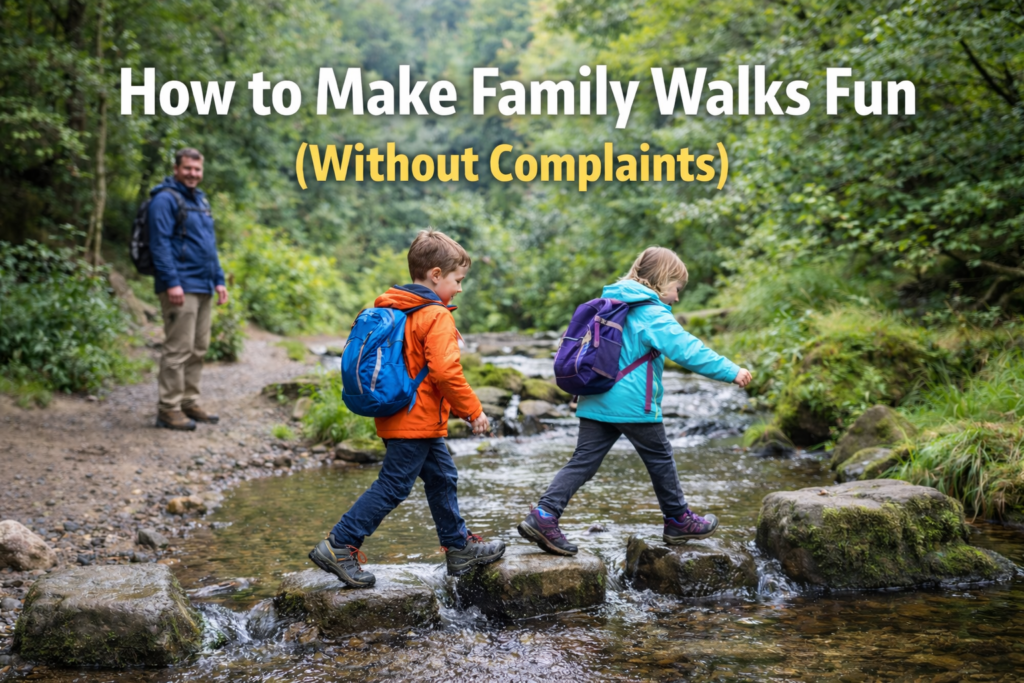

Written by Andrew Marshall
UK parent of three sharing practical advice to help families enjoy camping, walking, garden play, and simple outdoor adventures across the UK.
Creator of Simple Days Outside.
Let’s be honest: the phrase “family walk” doesn’t always inspire joy in children.
To adults, it means fresh air, scenery, maybe a nice café at the end.
To kids, it can sound suspiciously like: “We’re going outside to be bored for a very long time.”
And that’s how you end up 15 minutes into a “lovely countryside stroll” with someone asking:
- “How much longer?”
- “Why are we walking?”
- “Can we go home now?”
- “My legs hurt.”
- “I’m hungry.” (They ate 12 minutes ago.)
The good news is that family walks don’t have to be endurance tests. With the right approach, they can actually become one of the easiest, cheapest, and most enjoyable ways to spend time together outdoors.
This guide is packed with practical, realistic, slightly sneaky ways to keep kids engaged — without bribery (well… minimal bribery). This guide is part of our Family Walking & Easy hiking hub, If your looking for more practical ideas and solutions head over there to find out more.
👉 In This Guide
First: Change the Goal (This Is Crucial)
Most adults plan walks around distance or destination.
Kids don’t care about either.
They care about:
- Fun
- Food
- Freedom
- Interesting things
- Not being cold, hungry, or bored
A successful family walk is not measured in miles. It’s measured in how many complaints you didn’t hear.
If you haven’t yet planned your first proper outing, our guide First Family Walk? What to Pack for a 2–3 Hour UK Trail explains the basics that keep everyone comfortable from the start.
Pick Routes That Are Interesting (Not Just “Nice”)
Adults can appreciate scenery. Children want stimulation.
Great beginner routes include:
- Woodland paths with things to explore
- Lakes, rivers, or beaches
- Parks with playgrounds
- Routes with animals nearby
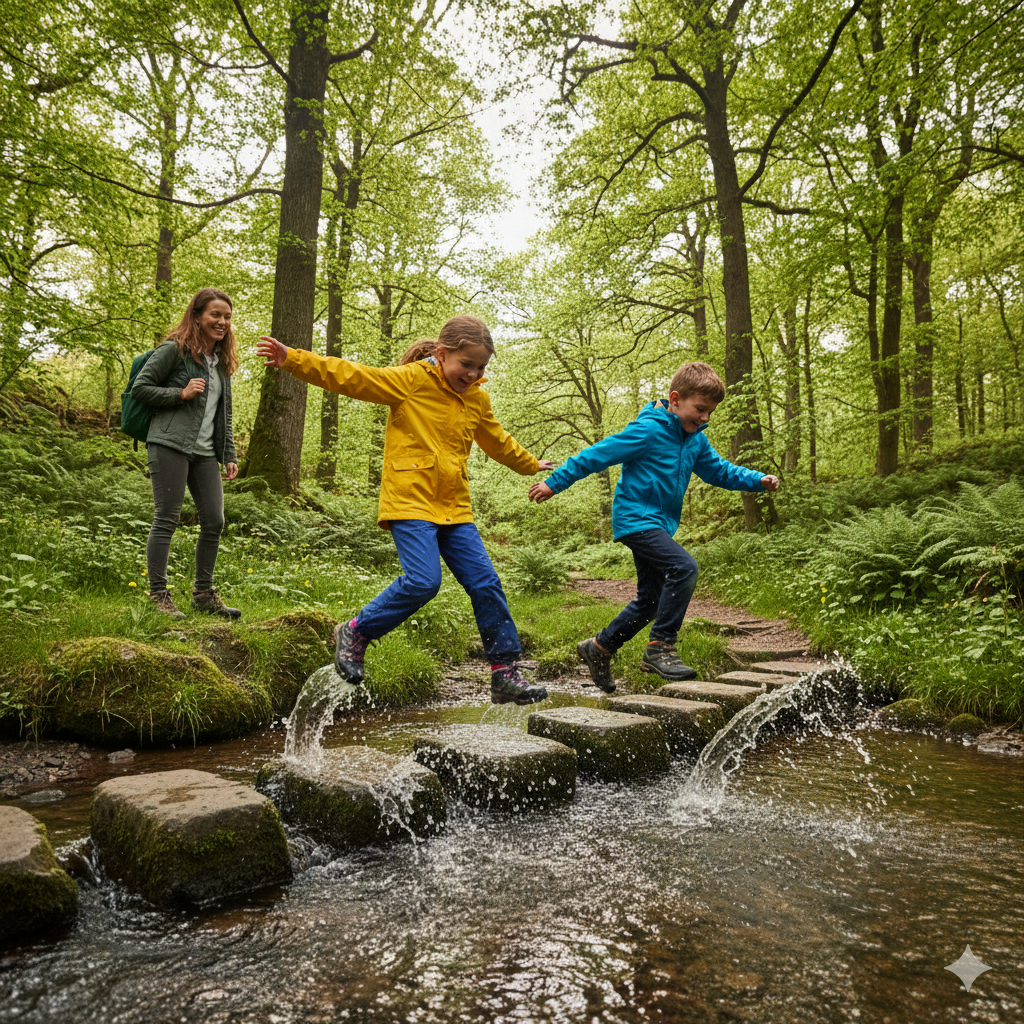
- Trails with bridges, tunnels, or stepping stones
A technically beautiful but empty moorland path can feel like walking through wallpaper to a child.
Think: things to do, not just things to see.
Snacks Are Not a Backup Plan — They’re Strategy
Food is motivation. Food is morale. Food is peacekeeping.
Many experienced parents quietly structure walks around snack timing.
Bring easy, high-energy options like:
- Fruit
- Crackers
- Sandwiches
- energy snack bars for kids
- Biscuits or small treats
Small, frequent snack breaks prevent energy crashes and irritability.
Bonus trick: don’t reveal all the snacks at once. The mysterious “bag of reserves” is powerful.
Turn the Walk Into a Game
Walking with no purpose feels endless. Walking with a mission feels exciting.
Simple game ideas:
Spotting Challenges
- Count dogs
- Find something red
- Spot birds or butterflies
- Find the biggest stick
- Look for animal tracks
“Treasure Hunt” Style
Create a mental checklist:
- Something round
- Something shiny
- Something noisy
- Something tiny
- Something that smells
No prep required, but surprisingly engaging.
Give Kids Control (Within Safe Limits)
Children are far happier when they feel involved.
Let them:
- Choose between two routes
- Decide when to stop for snacks
- Lead the way on obvious paths
- Carry their own small bag
- Choose a destination feature (“Let’s reach that tree”)
A lightweight kids daypack for walking can make them feel like proper adventurers rather than reluctant tag-alongs.
Pace Matters More Than Distance
Adults naturally walk faster than children.
If kids feel dragged along, they tire sooner and complain more.
A comfortable family pace includes:
- Wandering
- Stopping
- Running ahead safely
- Exploring
If you’re unsure what distances are realistic, How Far Can Kids Walk? (Realistic UK Distance Guide by Age) explains typical ranges that keep things manageable.
Build in Mini Destinations
Long walks feel endless. Short stages feel achievable.
Examples:
- “Let’s reach that bridge.”
- “Snack stop at the bench.”
- “We’ll turn back at the lake.”
Frequent small goals maintain motivation far better than one distant endpoint.
Dress for Comfort, Not Instagram
Uncomfortable kids complain. Comfortable kids explore.
Common problems include:
- Overheating
- Cold hands
- Wet feet
- Blisters
- Heavy clothing
Lightweight, breathable footwear is especially important on warm days. Our guide to Best Kids Walking Shoes for Summer (UK Lightweight Options) explains what works for typical UK conditions.
Let Them Get Muddy (Within Reason)
Trying to keep kids pristine outdoors is exhausting and usually futile.
Puddles will be stepped in. Mud will be found. Sticks will be collected.
Accepting a certain level of mess actually reduces stress and increases enjoyment.
Waterproof trousers can turn muddy chaos into carefree fun.
Use Curiosity as Fuel
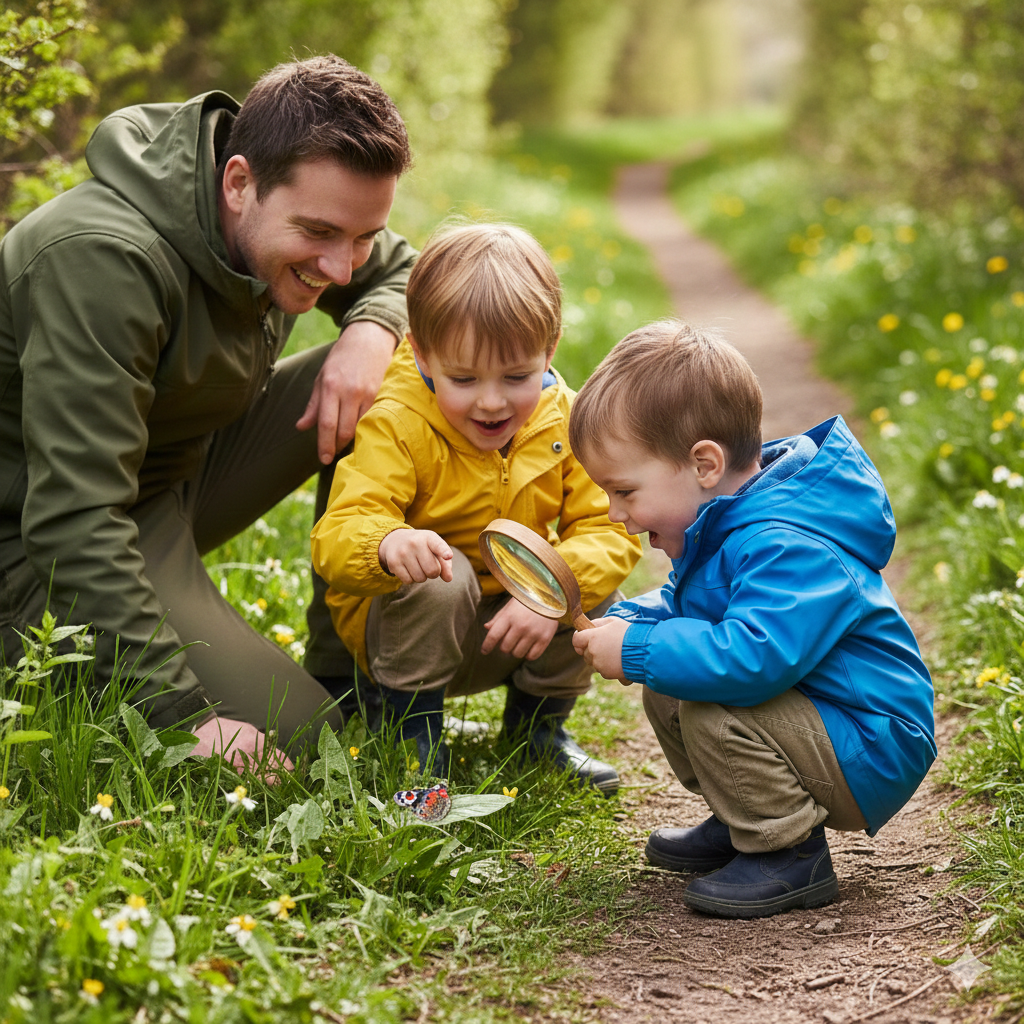
Children are naturally curious — use it.
Encourage them to:
- Look under logs (carefully)
- Watch insects
- Listen for birds
- Notice shapes in clouds
- Identify plants or flowers
You don’t need to be an expert. Enthusiasm matters more than accuracy.
Bring One “Secret Fun Item”
This doesn’t need to be big.
Examples:
- Small magnifying glass
- Binoculars
- Ball
- Frisbee
- Mini camera
- Bubble wand
Pulling it out halfway through can revive flagging spirits dramatically.
Time It Right
Walking with tired or hungry children is… ambitious.
Late morning or early afternoon often works best.
Avoid:
- Just before meals
- Late evening when everyone is tired
- Immediately after long car journeys
Well-rested kids are cooperative kids.
Don’t Skip the “Reward”
Knowing something good awaits can transform motivation.
Rewards don’t have to be extravagant:
- Ice cream
- Hot chocolate
- Playground time
- Beach stop
- Picnic
- Favourite snack
Even adults walk further for cake.
Keep Bags Light (Seriously)
Heavy bags make everyone grumpy.
You only need essentials:
- Water
- Snacks
- Spare layers
- Wet wipes
- Basic first aid
Our guide to Best Family Walking Backpacks for Day Trips (UK) covers comfortable options that don’t feel like you’re hauling camping gear.
Accept That Complaints Will Happen Anyway
Even perfect planning can’t prevent every “Are we nearly there yet?”
Complaints are not failure — they’re part of walking with children.
The goal isn’t silence. It’s keeping complaints manageable and short-lived.
Know When to Turn Back
Pushing too far creates negative memories.
Signs it’s time to head back:
- Persistent whining
- Frequent tripping
- Slowing dramatically
- Refusing snacks or drinks
- Tears or irritability
Stopping while everyone still feels reasonably positive builds confidence for next time.
Make the Journey the Entertainment
If the only purpose is “walking,” boredom sets in quickly.
But if the walk includes:
- Exploring
- Playing
- Discovering
- Chatting
- Laughing
…it stops feeling like exercise and starts feeling like an adventure.
Author Insight: The Walk That Changed Everything
I once planned what I thought was the perfect family walk — beautiful scenery, sensible distance, great weather.
Within 20 minutes:
- Someone was hungry
- Someone else needed the toilet
- A shoe lace emergency occurred
- A dramatic “I can’t walk anymore” declaration happened
We stopped for snacks, threw stones into a stream, climbed on logs, and spent half an hour watching ducks.
We barely covered half the planned route.
And yet it ended up being one of the most enjoyable outings we’d had — because I stopped trying to make it a “proper walk” and let it become a day outside instead.
That experience changed how I plan every trip now.
Fun first. Distance second.
Final Thoughts: Fun Beats Fitness Every Time
Family walks don’t need to be epic, impressive, or long to be worthwhile.
They just need to feel:
- Comfortable
- Relaxed
- Interesting
- Manageable
- Positive
Start small, keep expectations realistic, and focus on enjoyment rather than achievement.
Over time, those short, slightly chaotic outings often turn into longer adventures — not because you pushed harder, but because everyone wants to go again.
And if you finish the day with muddy shoes, empty snack bags, tired kids, and a quiet car ride home…
You did it exactly right.
Related Walking Guides for Families
If you’re starting to enjoy family walks (or at least surviving them with minimal complaints), these practical guides will help you go further with less stress. From choosing footwear that actually handles British mud to understanding realistic distances for children, they cover the small decisions that make a big difference to comfort, confidence, and enjoyment.
About The Author – Andrew Marshall
Andrew Marshall is the creator of Simple Days Outside and a UK parent of three who regularly camps, walks, and explores outdoor activities with his family. His guides focus on practical gear, realistic family adventures, and simple ways to help families enjoy the outdoors across the UK. The recommendations on this site are based on real-world use, research, and the kind of equipment families actually rely on for weekend trips and everyday outdoor fun.