

Written by Andrew Marshall
UK parent of three sharing practical advice to help families enjoy camping, walking, garden play, and simple outdoor adventures across the UK.
Creator of Simple Days Outside.
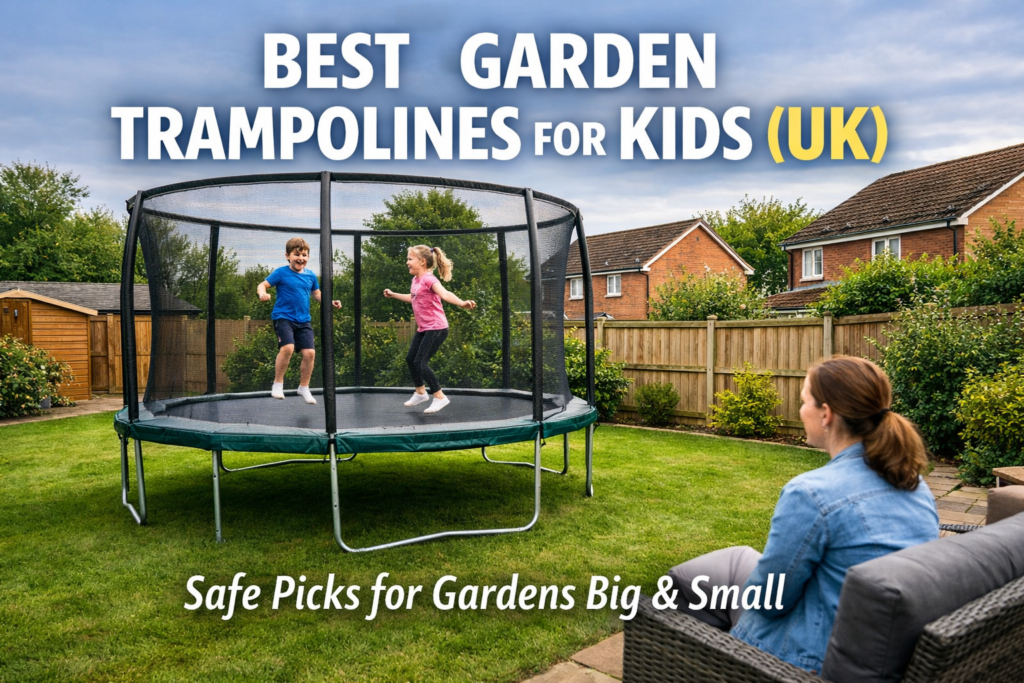
A garden trampoline is one of the most popular long-term play investments UK families make — and for good reason. It gets children outdoors, burns off energy, and often becomes the centrepiece of the garden for years rather than weeks. For school-age children especially, a well-chosen trampoline offers active play without needing constant planning, transport, or expensive days out.
If you’re planning to upgrade your outdoor space more broadly, you may also want to explore our wider Garden & Outdoor Play guides, which cover everything from climbing frames to obstacle courses and ways to keep kids active at home .
At the same time, trampolines are a purchase many parents approach cautiously. They’re large, visible, and not inexpensive — so concerns about safety, durability in British weather, garden space, and long-term value are completely understandable.
This guide focuses on proper family trampolines — not toddler toys — designed for primary-school children and older. The aim is simple: help you choose a high-quality model that fits your garden, withstands UK conditions, and still feels like a smart investment years down the line.
👉 In This Guide
How to Choose the Right Trampoline
Before looking at specific models, it helps to understand what actually makes a trampoline enjoyable, safe, and durable in everyday family use.
Size vs Garden Space
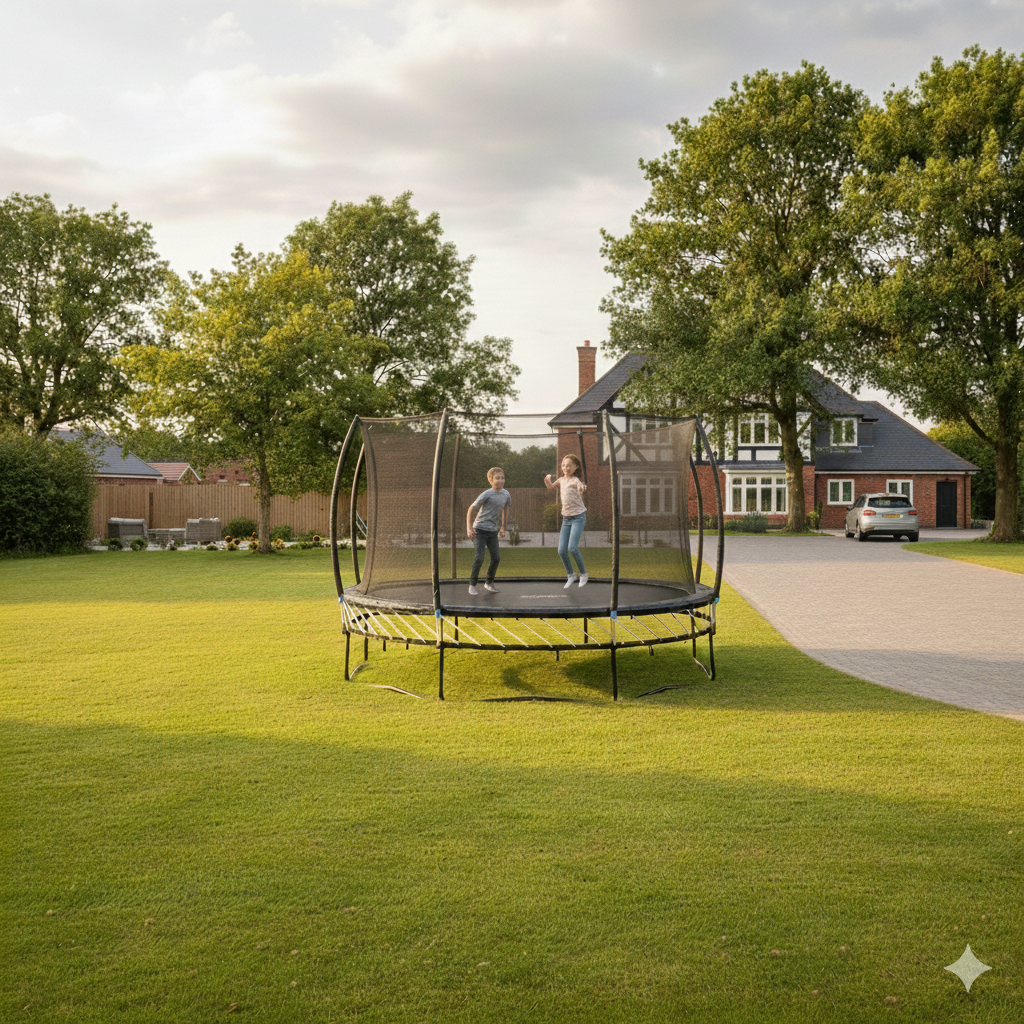
Bigger trampolines are generally more fun and allow safer movement, but they also dominate a garden visually and physically.
Always allow clearance space around the trampoline — ideally at least 1 metre on all sides. Overhanging branches, fences, sheds, washing lines, and walls can all become hazards.
As a rough guide:
- 6–8 ft — small gardens, one child at a time
- 10–12 ft — typical UK family gardens
- 14 ft+ — large gardens or multiple children
Also consider how the trampoline fits with the rest of your outdoor layout. If your garden already includes swings, slides, seating, or a patio area, balance matters. Many families combine a trampoline with a frame or climbing structure to create a varied play space without overcrowding .
Round vs Rectangular
Round trampolines
- Most common in UK gardens
- Naturally guide jumpers toward the centre
- More forgiving for casual play
- Usually more affordable
- Typically easier to assemble
Rectangular trampolines
- Provide a higher, more controlled bounce
- Common in gymnastics training
- Better for confident older children
- Require stronger frames and more space
- Usually significantly more expensive
For most families, a round model offers the safest and most practical balance.
Safety Enclosures
For school-age children, an enclosure isn’t optional — it’s essential.
Look for:
- Strong, padded support poles
- Durable, tightly woven netting
- A secure zip entrance
- Internal netting (inside the springs) where possible
A large garden trampoline with enclosure is now the standard design for family use and greatly reduces the risk of falls.
Weight Limits and User Capacity
Manufacturers list maximum user weight, but it’s wise to choose a trampoline rated well above your child’s current size.
Higher limits usually indicate:
- Stronger frames
- Better springs
- Greater long-term durability
- Ability to handle older children later
Even if you intend one jumper at a time, friends and siblings will inevitably use it too.
Frame Durability
The frame determines whether the trampoline lasts three years or ten.
Look for:
- Galvanised steel construction
- Thick tubing
- Reinforced joints
- Corrosion-resistant coatings
Cheaper models often fail at weld points or joints rather than the jumping surface.
Weather Resistance (Crucial in the UK)
Rain, damp air, frost, and wind are constant challenges for outdoor equipment.
Important features include:
- UV-resistant jump mat
- Rust-resistant frame
- Replaceable safety netting
- Option to use a weatherproof trampoline cover
In exposed areas, securing the trampoline with a trampoline anchor kit can prevent movement or tipping during storms.
Access and Height
Larger trampolines can sit quite high off the ground. For younger school-age children, a stable heavy-duty trampoline ladder makes access much safer and easier.
Some ladders are removable, which can also prevent unsupervised use by very young children.
In-Ground vs Above-Ground (Briefly)
In-ground trampolines offer a tidy, low-profile look and easier access, but they require excavation, drainage planning, and careful installation.
Above-ground models are far more common in UK homes because they are portable, affordable, and easier to maintain — which is why they are the focus of this guide.
Recommended Trampolines (Amazon UK)
The following options prioritise safety, durability, and long-term value rather than bargain pricing.
1) SONGMICS 12 ft Garden Trampoline with Safety Net
Best for: Typical UK family gardens
This model hits the sweet spot between size, cost, and reliability.
Key strengths
- 12 ft diameter suits most gardens
- Robust galvanised steel frame
- Internal safety net design
- Good weight capacity
- Widely available replacement parts
Realistic limitations
- Bounce is moderate rather than athletic
- Still a large footprint
For many families, this size offers the best balance between usability and space.
2) KESSER 10 ft Trampoline with Enclosure
Best for: Medium gardens or younger school-age children
A practical option when space is limited but you still want a proper trampoline.
Key strengths
- More compact footprint
- Durable frame for its size
- Good enclosure system
- Easier to position in tighter gardens
Realistic limitations
- Less space for multiple jumpers
- May feel small for teenagers later
If your garden is typical of newer housing developments, this size often works well.
3) Big Air Universal 14 ft XL Garden Trampoline
Best for: Large gardens and energetic play
A substantial trampoline that feels closer to park-style equipment.
Key strengths
- Very spacious jumping area
- Higher weight capacity
- Strong frame and springs
- Suitable for older children and groups
Realistic limitations
- Dominates smaller gardens visually
- Requires careful assembly and placement
If space allows, larger trampolines usually deliver the longest lifespan of use.
4) Zero Gravity Ultima 4 12 ft Trampoline
Best for: Families prioritising build quality
A sturdy mid-to-large model designed for long-term use.
Key strengths
- Thick steel frame
- Reliable enclosure system
- Good bounce performance
- Suitable for mixed ages
Realistic limitations
- Slightly higher price point
- Requires adequate space
This is a dependable “buy once, keep for years” option.
5) Sportspower 8 ft Trampoline with Enclosure
Best for: Small gardens or restricted space
Despite its size, this is still suitable for school-age children.
Key strengths
- Fits compact gardens
- Lower height for easier access
- Easier assembly
- Good starter trampoline
Realistic limitations
- Best for one jumper at a time
- Limited long-term capacity as children grow
For urban gardens or homes with limited outdoor space, this may be the only realistic choice.
👨👧 Author Insight
I was already into my mid-teens when trampolines first started appearing in gardens here in the UK, and I absolutely loved them. They quickly became the place everyone wanted to hang out — simple, active fun that didn’t need screens, money, or planning.
As soon as my own kids were old enough, buying a trampoline was one of the first big garden purchases I made, and it’s easily been one of the most used. Sunny days, after-school energy bursts, weekend playdates — it gets used constantly. If you have the space for one, it’s hard to think of many outdoor toys that deliver as much long-term enjoyment for children.
What Size Trampoline Do You Actually Need?
Many parents underestimate how large trampolines look once installed.
Small Gardens
An 8–10 ft model is often the practical limit.
Measure carefully, including clearance space. Also consider access routes for assembly — narrow side passages can make installation challenging.
Compact trampolines still provide excellent exercise and entertainment for one – two children at a time.
Medium Gardens
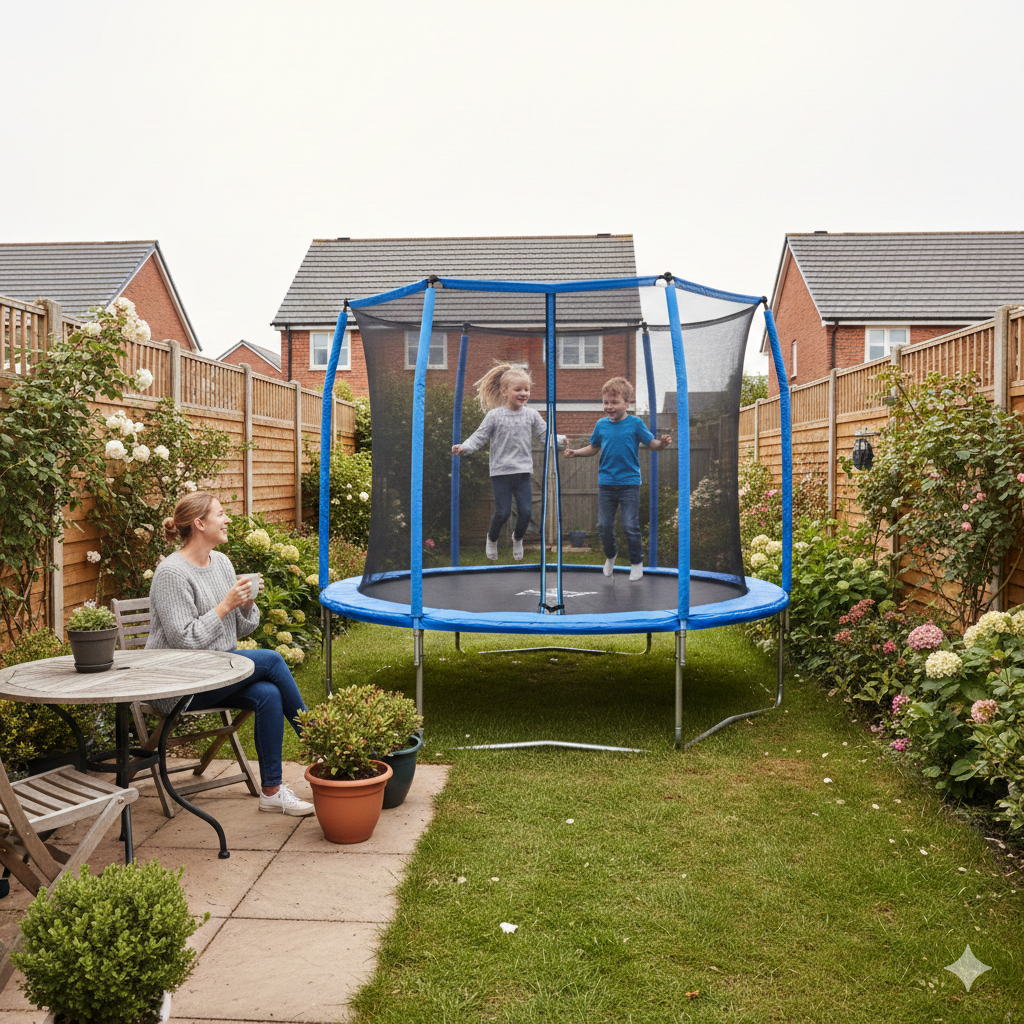
Most UK family gardens fall into this category.
A 10–12 ft trampoline provides enough space for energetic play without overwhelming the garden. It also leaves room for seating, planting, or other play equipment.
If you’re planning additional outdoor activities — obstacle courses, dens, or play zones — thoughtful layout prevents overcrowding.
Large Family Gardens
If you have the space, a 14 ft or larger trampoline delivers the most versatile experience.
Older children can jump comfortably, and siblings or friends can share more easily. These models also tend to remain appealing well into the teenage years.
Number of Children
While safety guidance usually recommends one jumper at a time, real life is rarely that simple.
If you have multiple children or frequent visitors, a larger trampoline reduces collisions and frustration.
Future Growth
Children grow quickly — and so do their expectations.
Buying slightly larger than you think you need often prevents having to replace the trampoline after only a couple of years.
Safety Tips for Everyday Use
No trampoline is completely risk-free, but sensible habits dramatically reduce problems.
Choose a safe location
Place the trampoline on level ground away from fences, trees, sheds, and hard surfaces.
Secure it in windy weather
A trampoline anchor kit can prevent lifting or tipping during storms.
Inspect regularly
Check springs, netting, padding, and frame joints for wear — especially after winter.
Avoid overcrowding
Many injuries occur when multiple children bounce unpredictably.
Keep the surrounding area clear
Remove bikes, toys, furniture, and garden tools from the vicinity.
Consider ground safety
Soft surfaces underneath can reduce impact risk if a child falls outside the enclosure 📎.
Use ladders sensibly
Younger children may need help climbing on and off safely.
Final Verdict: How to Choose with Confidence
The best trampoline is not simply the largest or most expensive — it’s the one that fits your garden, suits your children’s ages, and will realistically be used for years.
Measure your space carefully.
Allow clearance and think about overall garden layout.
Prioritise durability.
A well-built trampoline withstands weather and heavy use far better than budget alternatives.
Choose enclosed designs.
They offer the best balance of safety and practicality.
Think ahead.
Children grow quickly, and a slightly larger model usually proves the better investment.
For most UK families, a 10–12 ft enclosed trampoline from a reputable brand provides the ideal balance of fun, safety, and longevity. Larger models are excellent if space allows, while compact options still deliver valuable outdoor activity where space is limited.
Done right, a trampoline becomes one of those rare purchases that genuinely earns its place — encouraging outdoor play, exercise, and independence without needing constant planning or expense.
🌿 Related Guides
About The Author – Andrew Marshall
Andrew Marshall is the creator of Simple Days Outside and a UK parent of three who regularly camps, walks, and explores outdoor activities with his family. His guides focus on practical gear, realistic family adventures, and simple ways to help families enjoy the outdoors across the UK. The recommendations on this site are based on real-world use, research, and the kind of equipment families actually rely on for weekend trips and everyday outdoor fun.