

Written by Andrew Marshall
UK parent of three sharing practical advice to help families enjoy camping, walking, garden play, and simple outdoor adventures across the UK.
Creator of Simple Days Outside.
Garden trampolines are one of the most loved — and most debated — pieces of outdoor play equipment in UK homes. Children see them as pure fun, while parents understandably wonder about safety, accidents, and whether the benefits outweigh the risks. In reality, trampolines can be a fantastic addition to family gardens when chosen and used sensibly.
If you’re planning a broader upgrade to your outdoor space, you may also find it helpful to explore our full Garden & Outdoor Play guides, which cover everything from simple activity ideas to larger equipment that keeps kids active at home 📎.
This guide looks at the real picture behind trampoline safety — not worst-case headlines or unrealistic promises. You’ll learn what actually causes most injuries, how to reduce risks in everyday use, and how to make a trampoline a positive, long-term feature of your garden rather than a source of worry.
👉 In This Guide
👨👧 Author Insight
We’ve had a trampoline in our garden for years, and thankfully the worst we’ve ever dealt with has been the occasional small bump or bruise — nothing serious at all. In fact, on sunny days it sometimes feels like half the kids on the street end up on it at some point, taking turns, laughing, and burning off energy. It’s always been more about jokey, friendly fun than daredevil stunts, and with a decent enclosure and a bit of common sense, it’s proved far less worrying than we initially expected.
Why Trampolines Get a Bad Reputation
You’ll often see alarming headlines or blanket warnings online, but these rarely reflect how trampolines are used in real homes.
Most injuries happen because of a small number of common factors:
- Multiple children bouncing unpredictably demonstrated at once
- Lack of safety enclosure
- Poor placement (near fences, patios, sheds)
- Worn or damaged equipment
- Very young children using adult-sized trampolines
- Rough play or flips beyond ability
In other words, the issue is usually not “trampolines are dangerous” — it’s how they’re used.
What Safety Actually Looks Like in Real Gardens
Safe trampoline use isn’t about strict rules or hovering supervision. It’s about a few practical choices that dramatically reduce risk.
1) The Enclosure Matters More Than Anything Else
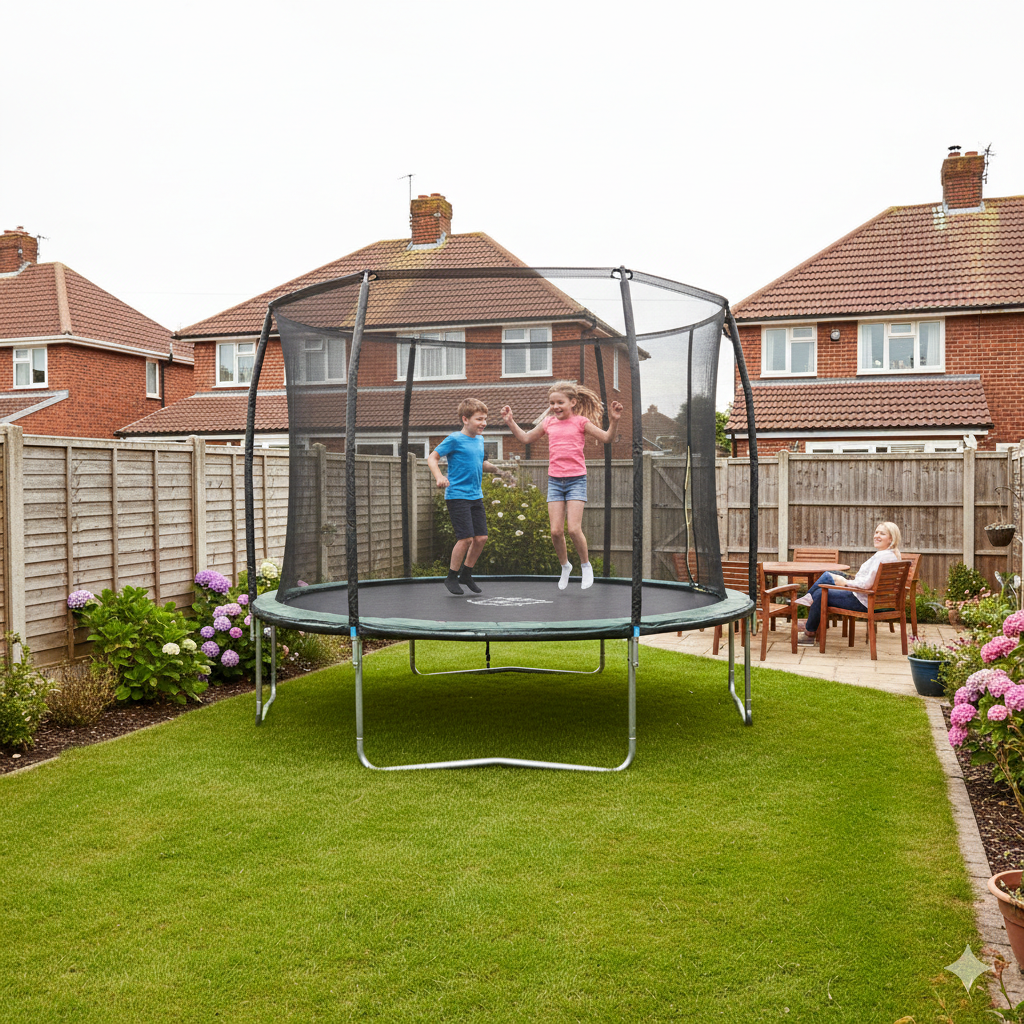
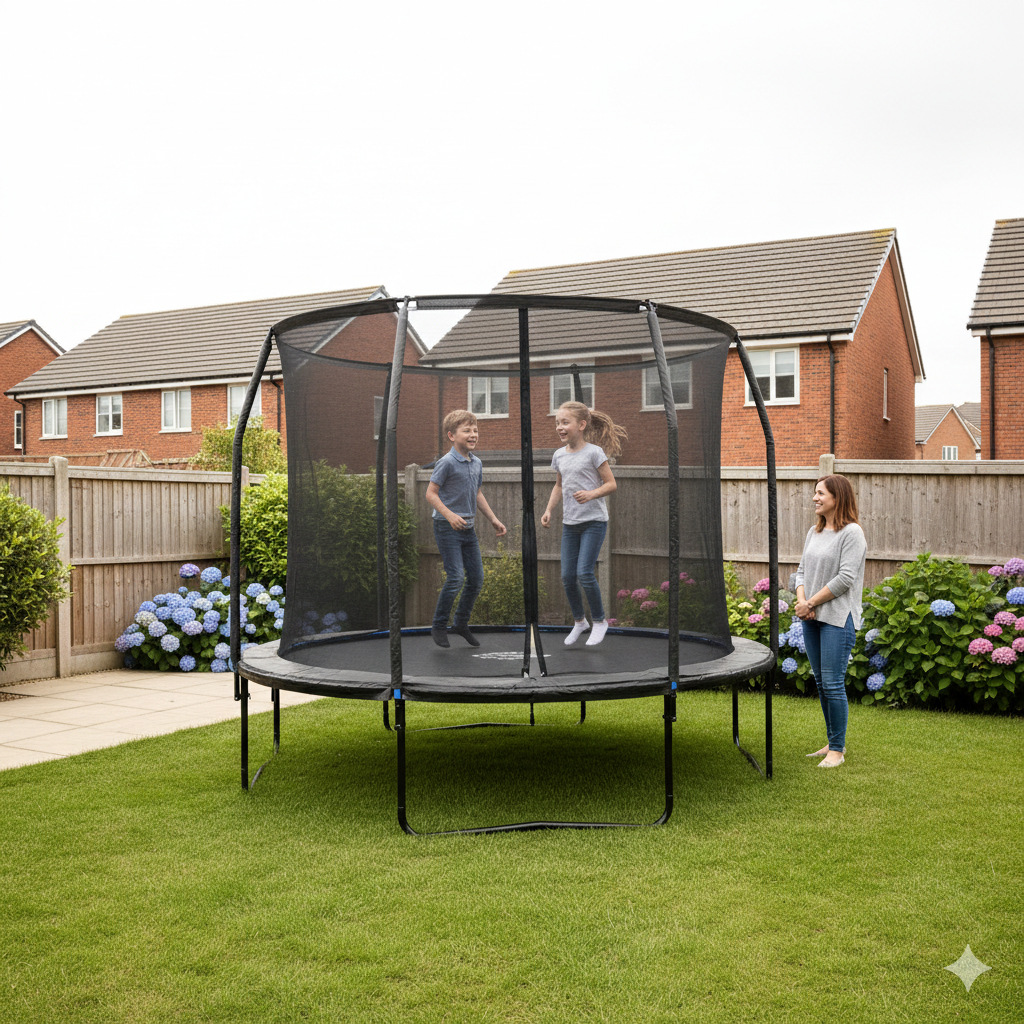
Modern trampolines designed for family use almost always include a safety net enclosure. This prevents the most serious accidents: falls off the edge.
Look for:
- Strong zip closure
- Poles padded along their full height
- Netting that sits inside the springs
- Secure attachment points
A properly enclosed trampoline turns a high-risk fall hazard into a contained play area.
2) Size Affects Safety (Not Just Fun)
It may sound counter-intuitive, but larger trampolines are often safer.
More space means:
- Children don’t drift toward edges as quickly
- Less collision risk
- More forgiving landings
- Room to regain balance
If your garden allows, a medium-to-large model usually offers the best safety margin.
3) Placement Is Critical
Where the trampoline sits matters just as much as what you buy.
Avoid placing it:
- Next to fences or walls
- Beside patios or hard surfaces
- Under low tree branches
- Near sheds, garden furniture, or play equipment
Ideally, it should sit on level grass with clear space all around.
If you’re planning a full play layout, thinking about zones rather than random placement helps prevent hazards and crowding.
4) Ground Surface Still Matters
Enclosures reduce fall risk, but accidents can still happen — especially with energetic children.
Grass is generally acceptable, but softer surfaces add reassurance:
- Bark chippings
- Rubber mulch
- Safety mats
- Artificial grass with padding
Guidance used for what you should put under other large play equipment applies here too.
The Biggest Real Risk: Multiple Jumpers
Ask any safety professional or experienced parent — this is the number one cause of injuries.
When two children bounce at different rhythms:
- One can be launched unexpectedly
- Landings become unpredictable
- Collisions are common
- Smaller children are at greater risk
Many manufacturers recommend one jumper at a time. In real life, siblings often share, but supervising this situation makes a significant difference.
Age Matters More Than Parents Expect
Trampolines designed for family gardens are generally intended for school-age children.
For younger children:
- Coordination is still developing
- Judging distance is harder
- Landing safely is less consistent
- Risk of awkward falls is higher
This doesn’t mean younger children can never use them — just that closer supervision and gentle play are important.
Weather and Wear: The Hidden Risks
In the UK, equipment degradation is a bigger issue than extreme use.
Over time, exposure to rain, frost, and sun can weaken:
- Netting
- Padding
- Springs
- Frame joints
A trampoline that felt solid when new can become unsafe if not checked regularly.
Quick inspections take minutes but prevent most problems.
Simple Safety Habits That Make a Huge Difference
You don’t need strict rules to keep things safe — just consistent common sense.
✔ Close the zip after entry
✔ Remove shoes, jewellery, or sharp objects
✔ Keep rough play in check
✔ Clear toys from the jumping surface
✔ Avoid flips unless trained
✔ Check equipment periodically
✔ Secure in windy weather
These habits quickly become automatic for children.
Are Budget Trampolines Less Safe?
Not necessarily — but quality differences matter.
Lower-cost models often compromise on:
- Padding thickness
- Net durability
- Frame strength
- Long-term weather resistance
However, a well-chosen budget trampoline can still be perfectly safe for everyday use.
The key is prioritising safety features over extras or brand names.
What About Teenagers?
Older children often use trampolines more energetically, but they also tend to have better coordination and body awareness.
Safety concerns shift from accidental falls to:
- Attempting tricks beyond ability
- Competitive bouncing with friends
- Structural stress from heavier users
Choosing a model with an appropriate weight limit is essential.
Psychological Benefits Often Overlooked
Safety discussions usually focus on physical risk, but trampolines provide significant positive outcomes too:
- Cardiovascular exercise
- Balance and coordination development
- Stress release
- Outdoor time away from screens
- Social play with siblings and friends
For many families, a trampoline becomes the most used item in the garden — far more than swings or slides.
How Safe Is “Safe Enough”?
No outdoor activity is risk-free. Cycling, football, climbing frames, and even running carry injury potential.
The realistic goal isn’t zero risk — it’s reasonable risk managed sensibly.
In most UK homes, a well-maintained enclosed trampoline on grass with basic supervision is considered a low-to-moderate risk activity, comparable to other garden play equipment.
Signs Your Trampoline Needs Attention
Replace or repair parts if you notice:
- Torn netting
- Exposed springs
- Loose or bent frame sections
- Missing padding
- Instability during use
- Water pooling on the mat
Ignoring small issues allows them to become bigger hazards.
Final Verdict: Should Parents Be Worried?
For most families, a garden trampoline is not something to fear — it’s something to manage thoughtfully.
When chosen carefully and used sensibly, trampolines are:
✔ Safe enough for everyday play
✔ Highly engaging for children
✔ Excellent for physical activity
✔ Long-lasting value for money
The biggest safety improvements come from simple actions: good placement, sensible supervision, routine checks, and encouraging safe play habits.
Done right, a trampoline becomes less of a risk and more of a reliable outlet for energy — the kind of garden feature children return to again and again.
🌿 Related Guides
If you’re planning a garden that keeps children active, challenged, and happily outdoors, these guides offer practical ideas for equipment, layout, and variety beyond a single trampoline.
About The Author – Andrew Marshall
Andrew Marshall is the creator of Simple Days Outside and a UK parent of three who regularly camps, walks, and explores outdoor activities with his family. His guides focus on practical gear, realistic family adventures, and simple ways to help families enjoy the outdoors across the UK. The recommendations on this site are based on real-world use, research, and the kind of equipment families actually rely on for weekend trips and everyday outdoor fun.