
Written by Andrew Marshall
UK parent of three sharing practical advice to help families enjoy camping, walking, garden play, and simple outdoor adventures across the UK.
Creator of Simple Days Outside.
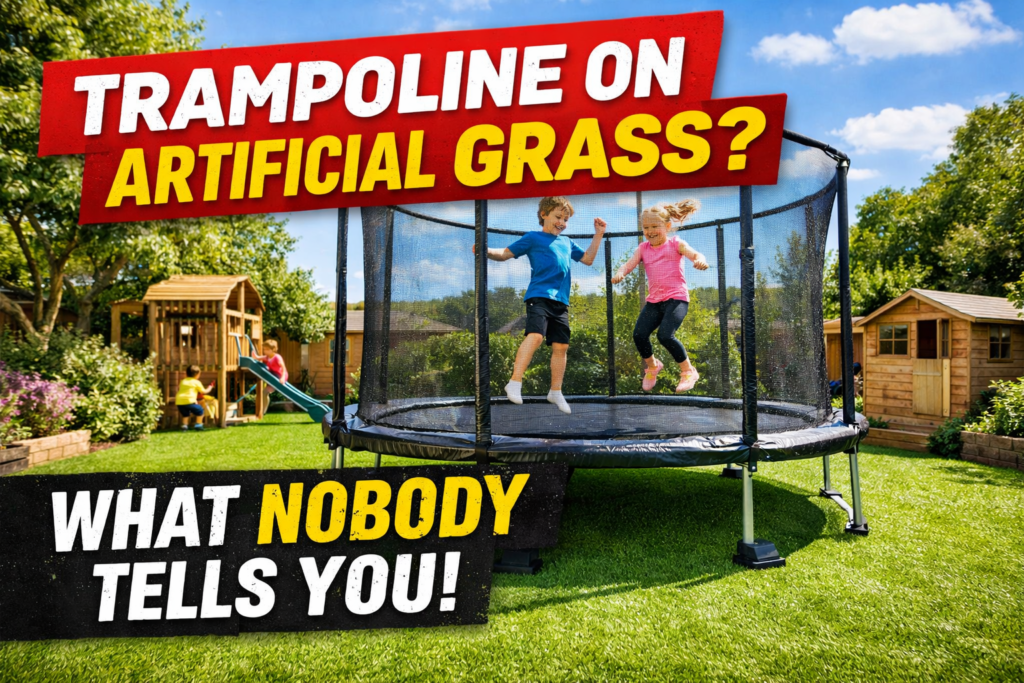
We made this decision ourselves when the kids were about seven and nine — artificial grass already down in the back garden, trampoline on the birthday list, and a nagging feeling that something might go wrong underneath it. Could you put a trampoline on artificial grass? Everyone online seemed to say yes — but nobody was very specific about the details.
After doing it, dealing with the aftermath, and talking to other parents who’d done the same, here’s what we actually found out. The stuff the product listings don’t mention and the garden centre staff don’t volunteer.
If you’re building out your garden for the kids, you can find more practical advice in our Garden and Outdoor Play Hub, including ideas for making the most of outdoor spaces whatever the weather.
Jump to a Section
The Short Answer
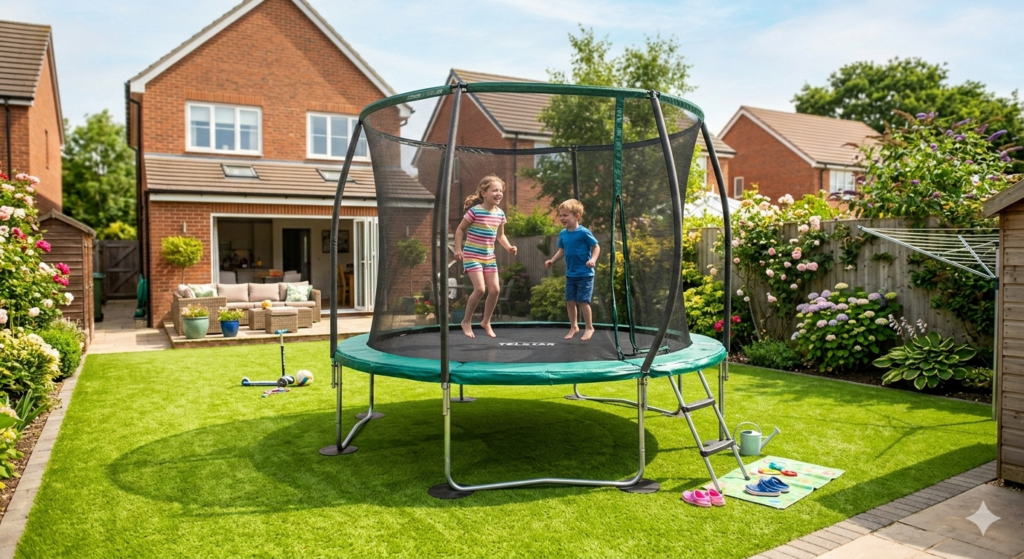
Yes, you can put a trampoline on artificial grass — but there are real things to consider before you do, and ignoring them can cost you money in repairs or replacement grass later.
The main concerns are:
- Legs sinking into or damaging the artificial grass backing
- Restricted drainage causing the area underneath to stay wet and develop mould or odour
- The grass flattening permanently under the legs over time
- Rubbing and wear from the frame during use
None of these are dealbreakers, but all of them are preventable if you know about them in advance.
| Surface | Drainage | Leg Damage Risk | Recovery After Moving | Safety Outside Enclosure |
|---|---|---|---|---|
| Artificial grass (well installed) | Good | Low with pads | Usually good | Better than hard surfaces |
| Artificial grass (poorly installed) | Poor | Medium-high | Unpredictable | Better than hard surfaces |
| Real grass | Excellent | Low | Excellent | Soft but turns muddy |
| Concrete / paving | N/A | High | None | Worst option |
| Decking | Poor | High | None | Hard surface |
| Bark / play chips | Good | Very low | Excellent | Best option |
A trampoline can safely sit on artificial grass as long as the lawn has a proper aggregate sub-base, good drainage, and protective pads under the legs to spread the weight. Without those things, trampolines can cause indentation, fibre wear, or drainage problems underneath the frame.
What Actually Happens Under a Trampoline on Artificial Grass
The drainage problem
Artificial grass drains through small holes in the backing layer. When a trampoline sits on top, the frame and legs don’t usually block the whole drainage area — but the cover, safety net, and general shade the trampoline creates means that patch of grass gets far less airflow than the surrounding area.
In a UK garden, that matters. We get enough rain that moisture builds up underneath trampolines even on real grass. On artificial grass, where there’s no soil absorbing water naturally, that moisture sits on the backing and sub-base and takes longer to clear.
Over time this can cause:
- A damp smell under the trampoline
- Mould or algae growth on the backing
- In poorly drained gardens, standing water that attracts insects
The fix is straightforward — make sure your artificial grass was installed with a proper compacted aggregate sub-base rather than directly onto soil, and that drainage holes in the backing are unobstructed. If you’re not sure how yours was laid, this is worth checking before the trampoline goes down.
Leg pressure and indentation
Trampoline legs are narrow and carry a significant amount of weight — the frame itself plus the dynamic load of kids bouncing. On artificial grass, that concentrated pressure pushes through the grass pile and onto the backing, and from there onto whatever is below.
On a properly installed artificial lawn with a firm aggregate sub-base, this is usually fine. The sub-base distributes the load and the legs don’t sink.
On artificial grass laid over soft soil, sand only, or an inadequate base, the legs can sink and create permanent indentations. When you eventually move the trampoline, those marks often don’t fully recover.
We moved ours after eighteen months and found four clear circles where the legs had sat. The grass around them was fine — but those spots had compressed noticeably. Worth knowing before you commit to a position.
Pile flattening and wear
The area directly under the trampoline gets no foot traffic, which sounds like it should be fine. In practice, the lack of use combined with constant shade means the pile can mat down and lose its upright texture.
The area immediately around the legs is the opposite problem — kids landing, jumping off, and running around the trampoline creates a high-wear zone that can look noticeably more worn than the rest of the lawn.
Trampoline mats or protective pads under the legs help with both issues. More on those below.
The Things That Actually Cause Damage
Sharp leg edges without caps or pads
Some trampolines — especially budget models — have legs with relatively sharp or rough edges at the base. On artificial grass, those edges act like a slow-motion cutter. Every time the trampoline moves slightly during use, the leg edges score the grass fibres around them.
Over a full summer of regular use, this can cause fraying and fibre damage in a circle around each leg that’s hard to repair.
Leg caps or rubber feet solve this immediately and cost almost nothing. If your trampoline didn’t come with them, they’re worth adding before it goes onto the grass.
Moving the trampoline while occupied or during use
The single fastest way to damage artificial grass with a trampoline is dragging it. The frame edge catches the fibres, pulls them out of the backing, and creates long streaks of damage.
Always lift, never drag — even a small adjustment. Sounds obvious, but in practice it’s the thing that catches people out when they’re trying to reposition it slightly.
Wind movement
A trampoline that isn’t properly anchored will move in wind. Even small movements repeatedly over time create wear patterns in the artificial grass underneath.
If you’re unsure what anchoring system works best, our guide on how to anchor a trampoline properly in windy UK gardens explains the most reliable options.
Trampoline anchor kits are inexpensive and genuinely important if your garden is exposed. This matters on real grass too, but on artificial grass the repeated friction causes surface damage that real grass would simply recover from.
How to Protect Your Artificial Grass
Use leg pads or base plates
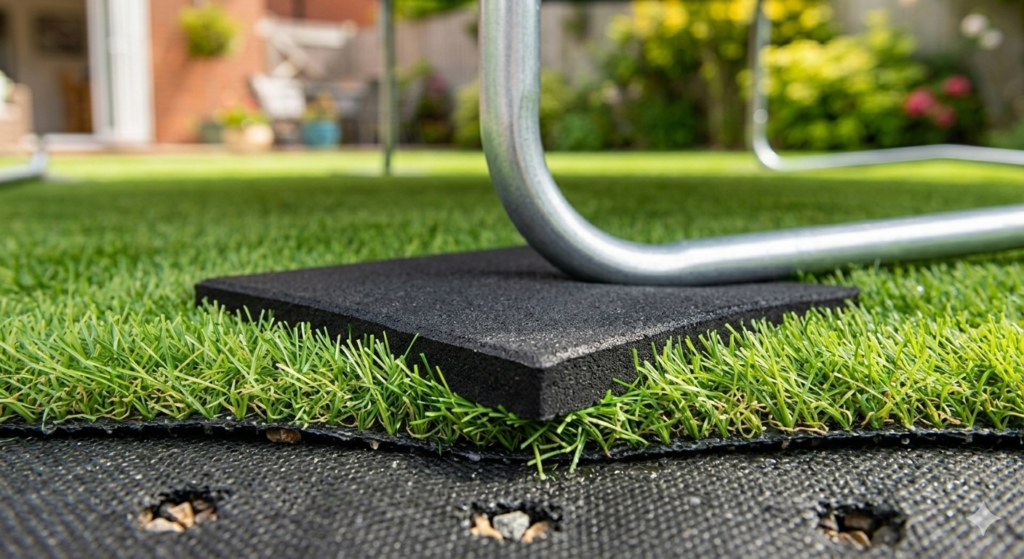
This is the most effective single thing you can do. Trampoline leg pads — sometimes called trampoline base protectors or leg cups — sit under each leg and distribute the weight over a larger surface area. They also stop the leg edge contacting the grass fibres directly.
Some people use rubber paving slabs or rubber matting squares under each leg instead. These work well, look more permanent, and are easy to lift and clean underneath periodically.
We used rubber matting under ours and it made a noticeable difference — when we eventually moved the trampoline, the grass under the mats had held up better than the surrounding area.
Lift and clean underneath regularly
Every few weeks during summer, it’s worth lifting the trampoline or at least moving it slightly so the grass underneath gets some airflow and light. This prevents the matting and mould issues mentioned above.
It sounds like a faff but in practice it takes about ten minutes and makes a real difference to how the grass underneath looks long-term.
Anchor it properly
A properly anchored trampoline doesn’t move in wind and doesn’t create friction wear on the grass. Ground anchors designed for trampolines are inexpensive, widely available, and straightforward to install through artificial grass into the sub-base below.
If your artificial grass is on concrete or paving beneath, anchoring becomes more complicated — in that case, trampoline sandbag weights that sit on the outside of the frame legs are an alternative.
Choose a flat, well-drained position
Trampoline manufacturers recommend a level surface for safety reasons, and that’s doubly true on artificial grass where a slope also encourages water to pool under the lower edge of the frame.
If you’re still deciding on the size, it’s also worth checking what size trampoline actually fits a typical UK garden before choosing a position.
If your garden has any slope at all, find the flattest area or consider whether levelling is worth doing as part of the installation. Water pooling under a trampoline on artificial grass is the scenario that causes the most long-term damage.
Does the Type of Artificial Grass Matter?
Yes — and this is something most articles skip over.
Pile height
Short pile artificial grass (under 25mm) tends to hold up better under trampolines than long pile. Long pile grass (35mm+) compresses more visibly under leg pressure and takes longer to recover after the trampoline is moved.
If you’re installing artificial grass specifically with a trampoline in mind, a shorter, denser pile is the more practical choice.
Backing quality
Cheap artificial grass often has a thinner, less robust backing layer. Under a trampoline, that backing takes most of the stress — from leg pressure, from moisture, and from any movement. A thicker backing with a good drainage perforation pattern holds up significantly better.
This isn’t an argument for spending a fortune, but if you’re choosing between two options at different price points and you know a trampoline is going on it, the backing quality is where the difference usually shows.
Installation quality matters more than the grass itself
We’ve seen artificial lawns hold up fine under trampolines for years and others that showed damage within one season. The single biggest variable wasn’t the grass — it was whether the sub-base was properly compacted and draining well.
A properly installed artificial lawn with a good aggregate sub-base, correct drainage fall, and weed membrane below it will handle a trampoline far better than even premium grass installed poorly.
What About Safety?
This comes up a lot and it’s worth being direct about it.
Artificial grass is not a soft landing surface. The bounce and fall safety of a trampoline depends almost entirely on the trampoline’s own safety enclosure, spring padding, and mat quality — not what’s on the ground outside it.
However, artificial grass is significantly more forgiving than paving, concrete, or decking if a child does fall outside the enclosure. It won’t prevent injury from a significant fall, but it’s a better surface than hard alternatives.
The key safety points for any trampoline surface:
- Always use a safety enclosure net
- Keep the spring cover padding in good condition
- Ensure the trampoline is level — more important on artificial grass than many people realise, as a tilted trampoline affects how children land
- Anchor the trampoline so it can’t move or tip in wind
None of this is artificial-grass-specific, but it’s worth saying clearly.
If you’re still comparing models, our guide to choosing a safe trampoline for a family garden explains which features matter most for UK families.
What to Buy Before the Trampoline Goes Down
These are the things worth sorting before installation rather than after you’ve noticed a problem.
Leg cups / base protectors — the single most important purchase. Sit under each leg, distribute weight, protect the grass fibres from direct contact.
Rubber matting squares — a sturdier alternative to leg cups. One square under each leg, easy to lift and clean underneath.
Ground anchor kit — essential for exposed gardens. Fits through artificial grass into the sub-base.
Sandbag weights — for trampolines on concrete or paving where ground anchors aren’t possible.
Frequently Asked Questions
Will a trampoline void the warranty on my artificial grass?
Most artificial grass warranties exclude damage caused by heavy objects, so technically yes — a trampoline could void warranty cover for the area beneath it. In practice, most suppliers are reasonable if damage is clearly from normal use. Check your specific warranty terms before installing.
Can I put a trampoline on artificial grass that’s on concrete?
Yes, but drainage becomes more important to manage, and you can’t use standard ground anchors. Use sandbag trampoline weights on the frame instead, and make sure water isn’t pooling on the concrete surface under the trampoline after rain.
How often should I move the trampoline to protect the grass?
Every four to six weeks in active use season is a reasonable frequency. Even moving it half a metre and back allows the grass underneath to recover.
What if I want to move the trampoline permanently — will the grass recover?
Usually yes, if the trampoline was on leg pads and installed on a good sub-base. The grass pile may need brushing back up with a stiff brush or lawn rake and may look slightly different for a few weeks, but it generally recovers to an acceptable level.
If legs were directly on the grass without protection and were there for several years, recovery is less predictable.
Is real grass better than artificial grass for trampolines?
In some ways, yes. Real grass recovers more naturally from indentation and doesn’t have the same drainage concerns. But real grass also turns to mud under heavy use, looks worn out after a summer of kids bouncing, and needs more maintenance around the trampoline edge. It’s genuinely a trade-off rather than one being clearly better.
What We’d Do
If we were starting over — artificial grass already down, trampoline to go on it — here’s exactly what we’d do:
Check the drainage first. Lift a corner or check the installation records to confirm there’s a proper aggregate sub-base below. If there isn’t, that’s the most important thing to sort before anything else.
Put rubber matting squares or leg cups under every leg before the trampoline goes on. This is inexpensive and saves the grass directly under the highest pressure points.
Anchor it properly from day one. Wind movement is easy to underestimate until you see how much a trampoline shifts in a decent gust.
Move it slightly every month through summer — takes ten minutes and keeps the grass underneath from matting and staying damp.
Beyond that, it works fine. Ours has been on artificial grass for a couple of years and the lawn still looks good. The things that would have caused problems — direct leg contact, no anchoring, no drainage checks — were all preventable with a bit of preparation upfront.
Already Got Damage? Here’s What to Do
If you’re reading this after the trampoline has been on the grass for a while and you’ve noticed flattened pile, indentations, or worn patches — here’s what actually helps.
Flattened pile: Use a stiff-bristled brush or lawn rake to work against the grain of the fibres and lift them back up. Do this when the grass is dry. It won’t fully restore very compressed areas but makes a noticeable difference on mild flattening.
Leg indentations: If the sub-base is solid these often partially recover on their own once the weight is removed. Brush the fibres up and give it a few weeks. Deep indentations where the backing has deformed permanently are harder to fix without cutting out and replacing that section.
Damp smell or mould underneath: Move the trampoline, brush off any visible mould with a stiff brush, and apply a diluted artificial grass cleaner or white vinegar solution. Let it dry fully in the open air before moving the trampoline back — and sort the drainage or airflow issue before you do.
Worn patches around the legs: Minor fibre wear is hard to repair invisibly. For small areas, some artificial grass suppliers sell repair kits with matching pile. For larger areas, a section replacement is the proper fix — most installers can do this without replacing the whole lawn.
For more outdoor family gear advice, garden play ideas, and product guides suited to UK families, visit our Garden and Outdoor Play Hub.
Related Garden Play Guides
If you’re planning a trampoline or building out a garden play area for your kids, these guides can help you choose safer equipment and make better use of the space you already have.
About The Author – Andrew Marshall
Andrew Marshall is the creator of Simple Days Outside and a UK parent of three who regularly camps, walks, and explores outdoor activities with his family. His guides focus on practical gear, realistic family adventures, and simple ways to help families enjoy the outdoors across the UK. The recommendations on this site are based on real-world use, research, and the kind of equipment families actually rely on for weekend trips and everyday outdoor fun.