

Written by Andrew Marshall
UK parent of three sharing practical advice to help families enjoy camping, walking, garden play, and simple outdoor adventures across the UK.
Creator of Simple Days Outside.
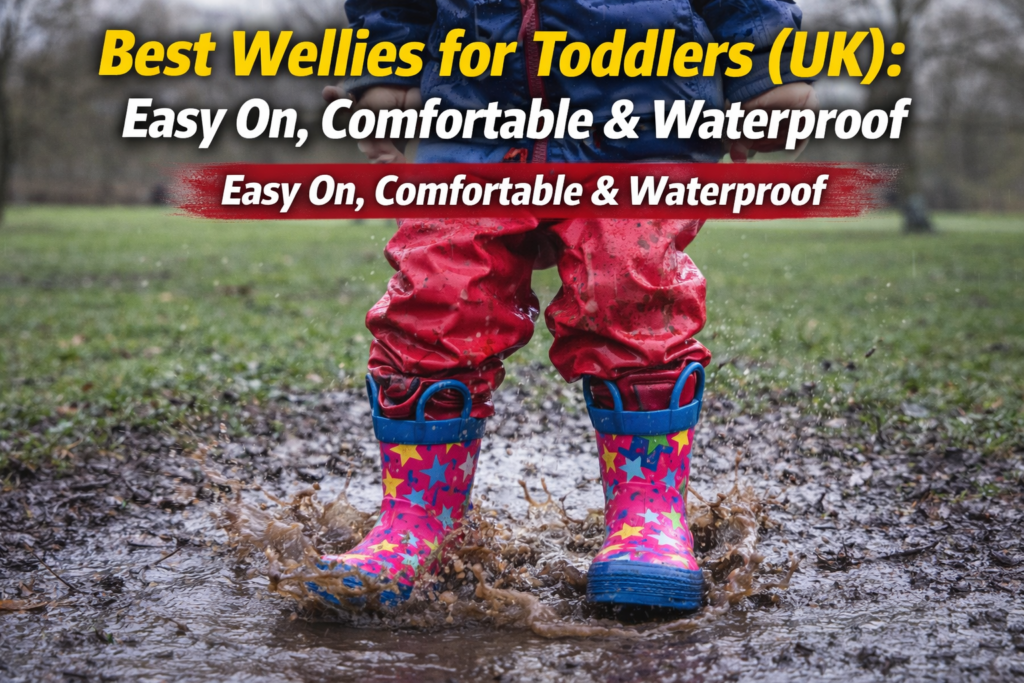
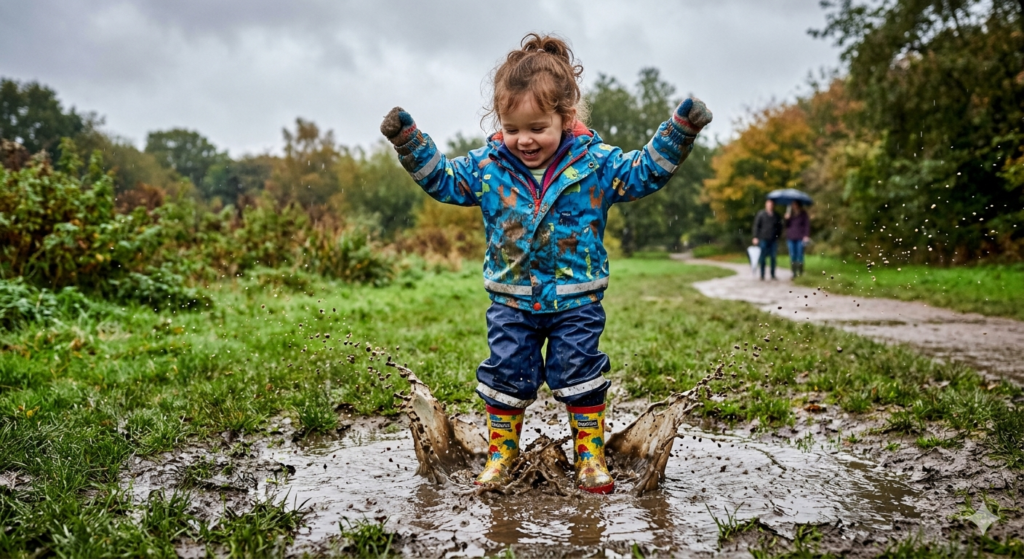
Toddlers and puddles have an almost magnetic relationship. The moment it rains, the moment there’s a muddy patch within a fifty metre radius, small children find it. Having a decent pair of wellies that actually fits, stays on, and is easy enough for a two year old to attempt themselves makes the whole thing considerably less stressful.
The tricky part with toddler wellies specifically — as opposed to older kids’ wellies — is that the requirements are different. Toddlers walk differently, their feet are softer and wider, they’re still developing balance, and they have a limited tolerance for anything stiff, heavy, or difficult to get on. A boot that works well for a seven year old can be actively problematic for a two year old.
We’ve worked our way through quite a few pairs across our three — including a genuinely terrible set that lasted exactly one loch-side walk before the sole started peeling and were quietly binned. What we learned is that for toddlers, soft and flexible beats structured every time. Everything else we use to keep the kids comfortable outdoors is in our Practical Outdoor Clothing & Comfort Hub.
What Makes a Good Toddler Welly
Soft, flexible construction
The single most important thing for toddlers specifically. Standard rigid rubber wellies force an unnatural gait on small children still learning to walk properly. A stiff welly works against a toddler’s natural foot movement rather than with it — they trip more, tire faster, and hate wearing them. Soft PVC, flexible rubber, or EVA material all allow the foot to flex naturally with every step.
Lightweight
Toddlers have small legs. Heavy boots exhaust them faster than the walk does, and a tired toddler in heavy boots is the first one to sit down on the path and refuse to move. The lighter the boot, the longer it stays on.
Easy-on design
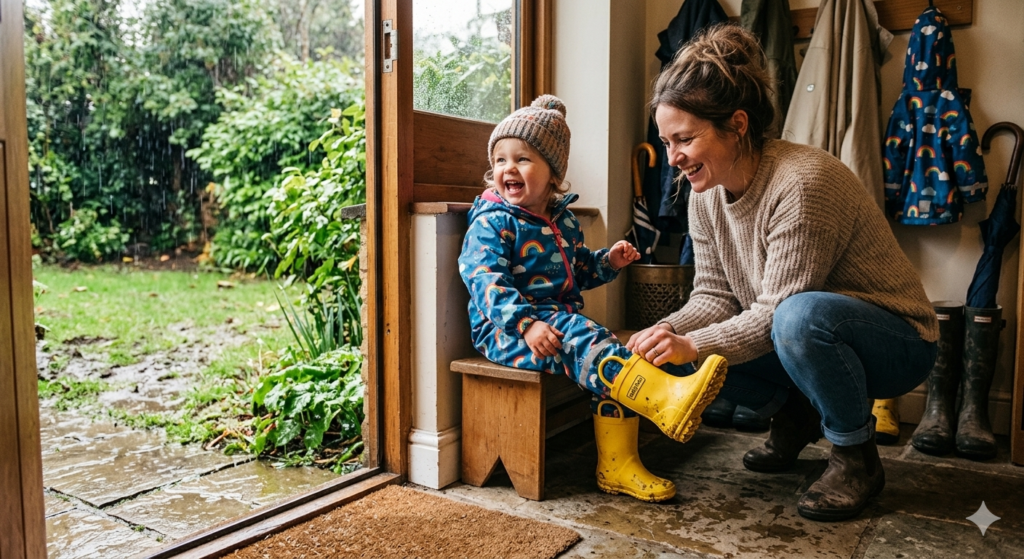
Wide openings, pull handles at the front and back, and flexible tops that don’t fight a small foot going in — these features make the difference between a boot a toddler can attempt independently and one that requires a wrestling match every time you leave the house. For toddlers working on independence, this matters more than almost anything else.
Low height
Standard kids’ wellies are often too tall for toddler legs — they restrict movement and make walking awkward. Boots designed specifically for toddlers sit lower on the leg, allowing a full natural range of motion. On a child whose gait is still developing, this is more important than most parents realise.
Non-slip sole
Wet grass, wet paving, puddle edges — toddlers are already less steady on their feet than older children. A deep-tread, textured sole reduces slips significantly and gives small children more confidence on uneven surfaces.
Warm lining for colder months
For autumn and winter use, a fleece or soft lining makes a meaningful difference. Toddlers often can’t articulate that their feet are cold — they just become unhappy and stop cooperating. Warm feet mean longer, more enjoyable outings. The same principle applies to everything above the ankle — how you layer kids for UK weather makes as much difference to a toddler’s comfort as the boots themselves.
Our Picks: Best Toddler Wellies on Amazon UK
1. Weishuo Baby Wellies — around £10–14
Best for: new walkers and very young toddlers — the softest, most flexible option on this list.
These are the wellies that come up repeatedly when parents of very young toddlers — eighteen months to three years — are looking for something that works for developing walkers. The soft PVC construction is genuinely flexible in a way that rigid rubber wellies aren’t, meaning a child still working out balance and gait isn’t fighting a stiff boot with every step.
They’re short enough on the leg not to restrict movement, lightweight enough that toddlers forget they’re wearing them after the first few minutes, and the wide opening with pull handles makes them achievable for small children attempting to dress themselves. The non-slip sole has good tread and the fit is consistently reviewed as true to size.
The removable insole makes cleaning after genuinely muddy visits considerably easier — more useful than it sounds until you’ve dealt with the contents of a Scottish forest floor in the bottom of a boot.
One honest note: the inner padding is minimal. For three-season use that’s fine. For cold winter days, pair with a warm toddler welly sock or thermal liner sock underneath.
Our youngest wore a version of this style from about eighteen months — flexible enough that they could actually walk rather than stomp around like a small rubber robot.
2. Grass & Air Kids Colour-Changing Wellies — around £22–26
Best for: toddlers who need convincing to wear wellies — the colour-change feature genuinely works as motivation.
Grass & Air is a British brand with a strong reputation for toddler wellies and the colour-changing feature is more than a gimmick. For toddlers who need encouragement to put wellies on, watching their boots transform when they hit a puddle is genuinely compelling — and a child who is interested in what their boots are doing is not thinking about pulling them off.
Practically, these are well-made boots. The 100% rubber outer is properly waterproof, the soft fleece lining keeps feet warm without bulk, and they’re available from infant size 3 all the way through size 13 — which means a pair bought for a small toddler can last through several growth stages. The free drawstring bag for carrying wet wellies home is a small but genuinely practical touch.
Sizing note: a number of reviewers report these come up slightly large. Check the size chart carefully and when between sizes go down rather than up.
On a dreich October morning at Beinn an Lochain or a grey forest walk through Glen Nant, anything that gets small children enthusiastically into their outdoor gear is worth having.
3. Mountain Warehouse Plain Kids Wellies — around £10–15
Best for: everyday nursery and park use — no-nonsense waterproofing at a price that makes replacing them mid-season painless.
Mountain Warehouse’s plain kids’ welly covers the basics without fuss. PVC outer, jersey lining, gripped sole, lightweight construction. For nursery runs, muddy park visits, and general toddler outdoor life, these do exactly what’s needed.
The lining is thinner than the Grass & Air and the construction is more basic — but for a toddler going through growth spurts and grinding through a pair every season, spending £12 rather than £24 makes the replacement decision easy.
When your toddler has outgrown their last pair mid-season and needs something before the weekend, these are the ones that arrive quickly and do the job without complaint.
4. Regatta Foxfire Kids Wellington Boots — around £16–22
Best for: toddlers doing proper outdoor walks on uneven ground — more grip and structure than soft PVC options.
The Regatta Foxfire is a step up in construction — a proper outdoor welly with deeper tread, a more protective upper, and a more durable build suited to real terrain rather than flat paths and park visits.
The sole tread is noticeably deeper than standard toddler wellies, which matters on coastal paths, loch-side tracks, and uneven ground where soft PVC options can feel unstable. The construction is also more durable for a full season of sustained outdoor use.
On a proper path above the treeline or along a rocky coastal track, these are the ones we’d want on small feet — the tread and structure make a genuine difference when the ground gets interesting.
Available in several colours and comes up true to size with enough room for a warm sock without feeling tight.
What About Neoprene-Lined Toddler Wellies?
Standard fleece or jersey-lined wellies are fine for three seasons, but for genuinely cold conditions — winter forest school sessions, frosty park mornings, outdoor nursery in November and December — neoprene-lined wellies make a noticeable difference.
Neoprene insulates even when wet, which standard fabric linings don’t. For a toddler standing in a cold puddle or sitting on wet ground — which is most toddlers, most of the time — that matters considerably more than it does for an older child who keeps moving.
Neoprene toddler wellies are available on Amazon UK from several brands and typically cost a little more than standard lined options. They’re worth considering as a dedicated winter pair rather than a year-round replacement — the lining is warmer than most toddlers need from March through October, but from October through February they make cold outdoor sessions genuinely more manageable.
What Toddlers Need That Older Kids Don’t
It’s worth being clear about why toddler-specific wellies matter rather than just buying small sizes of standard kids’ wellies.
Toddlers’ feet are proportionally wider and flatter than older children’s. Their arches haven’t fully developed, their gait is still maturing, and their balance is less certain. A boot built for a seven year old has a narrower fit, more rigid construction, and a longer leg — all of which work against a toddler’s natural movement rather than supporting it.
Boots that are too stiff cause toddlers to walk on their toes rather than heel-to-toe, which throws off balance and increases trips. Boots that are too long on the leg prevent the natural knee bend toddlers need to navigate uneven ground. Neither of these things matters as much for older, more confident walkers.
The practical result is predictable: a toddler in the wrong boot falls more, complains more, and pulls their wellies off within ten minutes.
Forest school and outdoor nursery have specific requirements worth knowing about. Many settings ask for wellies that come above the ankle to protect against nettles and rough ground, and that are sturdy enough for sustained outdoor use rather than occasional park visits. If your child’s nursery has a forest school programme, check whether they specify a minimum height or construction type — the Regatta Foxfire is typically the better fit for this than soft PVC options. Pairing with waterproof trousers that are easy enough for nursery staff to get on and off quickly is worth thinking about for forest school sessions too.
Getting the Right Size
Toddler feet grow fast — often half a size every two to three months in the early years. The temptation is to buy large to get more wear, but with wellies this backfires. A boot with too much room slides around on the foot and comes off easily, which is frustrating for a child trying to move independently.
The right fit has a thumb’s width of room at the toe — enough to wiggle, not enough to slide.
As a rough guide, UK toddler welly sizes typically follow this pattern:
18 months — roughly infant UK 4–5
2 years — roughly infant UK 5–6
2.5 years — roughly infant UK 6–7
3 years — roughly infant UK 7–8
3.5–4 years — roughly infant UK 8–9
These are approximate — children vary significantly and feet grow at different rates. When in doubt, measure rather than guess. Trace the foot on paper, measure heel to longest toe, and compare against the brand’s size chart. Always more reliable than ordering on age alone.
If buying for winter and planning to use toddler welly socks or thermal liners, factor in a little extra room for that layer. Pairing the right wellies with thermal base layers underneath makes a significant difference on colder outings — warm legs and warm feet together keep toddlers outside and happy considerably longer.
For toddlers who are serious about getting muddy — which is most of them — a toddler puddle suit over the top of everything turns wet outdoor play from a laundry problem into a non-event. Wellies and a puddle suit together mean a toddler can sit in a puddle and walk back to the car without anyone getting upset about it.
Keeping Wellies on a Toddler Who Hates Wearing Them
Some toddlers simply resist wellies — pulling them off at the first opportunity regardless of how well they fit. A few things genuinely help.
Letting them choose the colour or design. This sounds trivial but works reliably — a child who picked their own wellies is significantly more likely to keep them on. The Grass & Air colour-changing wellies are particularly useful here — a toddler watching their boots transform in every puddle is actively engaged with wearing them.
Warm socks underneath. Cold, uncomfortable feet are a common reason for welly removal that parents don’t always identify. A pair of warm toddler welly socks under wellies makes a noticeable difference in how long boots stay on in colder months.
Welly clips or welly straps are worth knowing about — they attach to the welly top and clip to a belt loop or waistband, physically preventing the boot coming off. They look slightly comical but work extremely well for determined welly-removers and are genuinely popular with parents of one and two year olds.
Shorter sessions initially. If a toddler isn’t used to wellies, starting with ten-minute park outings before expecting them to wear boots all morning gives them time to adjust without the experience becoming a battle.
Caring for Toddler Wellies
A few simple habits extend welly life significantly.
Rinse off mud after every walk — dried mud cracks flexible PVC and rubber faster than wet mud does. Salt and grit from coastal or loch-side paths are particularly hard on materials — a quick rinse after beach days makes a real difference, the same way it extends the life of waterproof jackets and trousers.
Dry naturally away from radiators. Direct heat damages both PVC and rubber, degrading the material and causing it to become brittle faster than regular outdoor use would.
Store upright. Wellies left on their side develop a crease at the ankle that becomes a weak point over time. Also worth knowing: flexible PVC becomes stiffer in very cold temperatures — wellies stored in a cold garage or car boot overnight will be noticeably harder to get on first thing on a cold morning. Bringing them indoors the night before a winter walk saves a lot of early-morning fuss.
Frequently Asked Questions
What size wellies does an 18-month-old need? Roughly infant UK 4 or 5, but measure rather than guess — toddler feet vary significantly between children. Trace the foot on paper and measure heel to longest toe against the brand’s size chart. Age is a starting point, not a guarantee.
Are toddler wellies different from regular kids’ wellies? Yes, in ways that matter. Toddler wellies are shorter on the leg, softer and more flexible in construction, and wider in the foot to accommodate the naturally broader, flatter shape of a toddler’s foot. Putting a small child in a standard kids’ welly that’s just a smaller size restricts movement and makes walking noticeably more difficult.
What socks should toddlers wear with wellies? A warm toddler welly sock rather than a standard cotton sock. Cotton holds moisture against the skin — in cold conditions this makes feet cold faster and increases discomfort. A wool blend or thermal sock keeps feet warmer, drier, and more comfortable. For winter, a longer sock that comes above the welly top adds extra warmth at the calf.
Can toddlers wear wellies all day? For shorter outings, yes. For a full day of walking, standard rubber or PVC wellies aren’t ideal — they don’t support the developing foot the way a walking boot does and can become uncomfortable over longer distances. For full-day outdoor activities or longer trails, consider toddler waterproof walking boots instead.
My toddler’s wellies keep falling off. What do I do? Almost always a sizing issue — the boot is too big. Try the next size down. If fit genuinely isn’t the problem, welly straps are a practical solution that physically connects the boot to the child’s waistband. They work well for persistent welly-removers and are widely available on Amazon UK.
My toddler has wide feet — which wellies fit best? Soft PVC options like the Weishuo tend to accommodate wider feet better than rigid rubber styles because the material gives slightly. Neoprene-lined wellies are also often noted as fitting well for wider-footed children. When in doubt, check individual brand reviews specifically for width comments before ordering.
Which Wellies Should You Buy?
For very young toddlers — under about two and a half and still developing their walking — the Weishuo is the pick. Soft, light, flexible, and sized for early walkers. At this age, freedom of movement matters more than durability.
For toddlers who resist wearing wellies, Grass & Air earns its higher price. The colour-changing feature solves a real problem and the quality backs it up.
For everyday nursery and park use where cost matters and growth is fast, Mountain Warehouse covers the essentials reliably at a price that makes replacing them straightforward.
For toddlers doing real outdoor walks on uneven ground — forest paths, coastal tracks, proper terrain — the Regatta Foxfire adds the grip and structure that makes a difference once the path gets interesting.
For winter specifically, add a pair of neoprene-lined toddler wellies to the rotation. The warmth difference on genuinely cold days is significant enough to justify having both.
Whatever you choose, the most important thing is getting them outside. A toddler in any waterproof boot — even an imperfect one — will have a better morning at the park than one whose wellies are still in a bag waiting for the perfect conditions. Get the boots on. The puddles will do the rest.
Related Guides
About The Author – Andrew Marshall
Andrew Marshall is the creator of Simple Days Outside and a UK parent of three who regularly camps, walks, and explores outdoor activities with his family. His guides focus on practical gear, realistic family adventures, and simple ways to help families enjoy the outdoors across the UK. The recommendations on this site are based on real-world use, research, and the kind of equipment families actually rely on for weekend trips and everyday outdoor fun.