

Written by Andrew Marshall
UK parent of three sharing practical advice to help families enjoy camping, walking, garden play, and simple outdoor adventures across the UK.
Creator of Simple Days Outside.
Last Updated: 24th March 2026
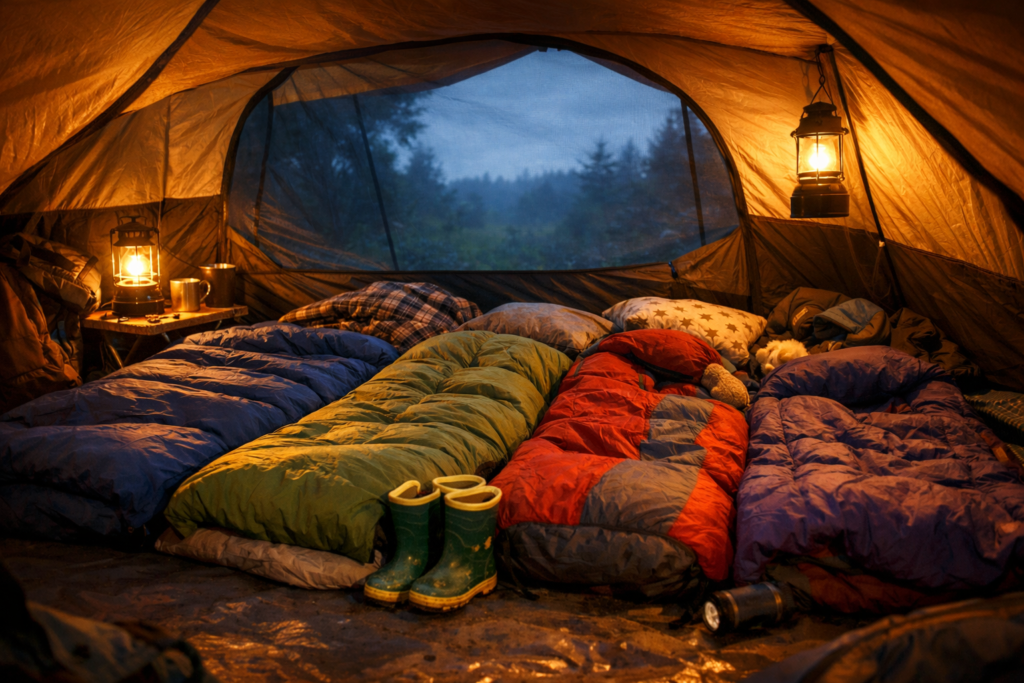
The first time we camped as a full family — all five of us squeezed into a tent at Loch Lomond with a forecast that turned optimistic somewhere around midnight — the thing that saved the night wasn’t the tent or the sleeping mats. It was the sleeping bags. Two of the kids were warm and slept through. One wasn’t, and didn’t. That child was in a bag rated for the temperature but sized too large — all that extra space at the feet was cold air his body was trying to heat all night without success. That one miserable night taught me more about sleeping bag selection than anything else had managed to — and it’s the same lesson that comes up in almost everything we’ve learned about getting family camping kit right from the start.
Getting this right for a family is genuinely straightforward once you know what to look for — but those things matter, particularly on a west coast Scottish night where the temperature does whatever it wants regardless of what the forecast said. For more on making the most of family camping trips, the Family Camping & Short Trips section of the site covers kit, destinations, and everything in between.
What to Know Before You Buy
Three-Season Means More Than You Think
Three-season means spring, summer, and autumn — which in Scotland covers roughly April through October, though “roughly” is doing a lot of work there. A clear June night in Argyll can drop to 5°C or below. A September weekend at Loch Lomond can feel like November. A bag rated for three seasons in UK conditions needs to genuinely handle single-figure temperatures, not just cope with them on paper.
The key number to look for is the comfort temperature rating — the temperature at which a standard adult woman feels neither too hot nor too cold in the bag. It’s the more conservative of the ratings and therefore the more useful one for families, particularly for children who tend to sleep colder than adults. A bag with a 0°C comfort rating doesn’t guarantee comfort at 0°C regardless of everything else — it means that’s the point it was certified to in controlled conditions. In a damp tent on a west coast Scottish site, give yourself a degree or two of margin on top of whatever the forecast says.
Shape Matters More for Children Than Adults
Mummy bags are thermally efficient — they taper to reduce dead air space — but they’re restrictive, particularly for children who move around in their sleep. Rectangular bags give more room to move and are considerably easier for children to get in and out of independently, which matters more than you’d think at 11pm when someone needs the toilet. The trade-off is slightly less thermal efficiency, but for family car camping where weight isn’t a concern, the extra comfort is worth it for most children.
Synthetic or Down for UK Family Camping?
For most family camping in the UK, synthetic insulation is the smarter choice. It performs when damp — tent condensation on a Scottish night is a genuine issue, not a theoretical one — it’s easier to wash, and it costs significantly less than down. Down is lighter and compresses better, which matters for backpacking. For camping where the sleeping bag travels in the boot of a car, synthetic is the sensible starting point for every member of the family. If you’re still working out what else needs to go in that boot, the full family camping kit list is worth checking before your first trip — it’s easy to forget the things that seem obvious until you’re on site without them.
Fitting Matters as Much as the Temperature Rating
This is the point most buying guides miss, and it’s the one that cost us a miserable night at Loch Lomond. A sleeping bag too long for a child creates excess dead air space at the feet that the child’s body has to heat all night rather than sleeping. A properly fitting bag makes a bigger difference to how warm a child actually sleeps than upgrading the rating by one level. It’s also why children need different bags from adults — not just smaller versions, but bags sized correctly for their actual height.
The Best Sleeping Bags for UK Family Camping
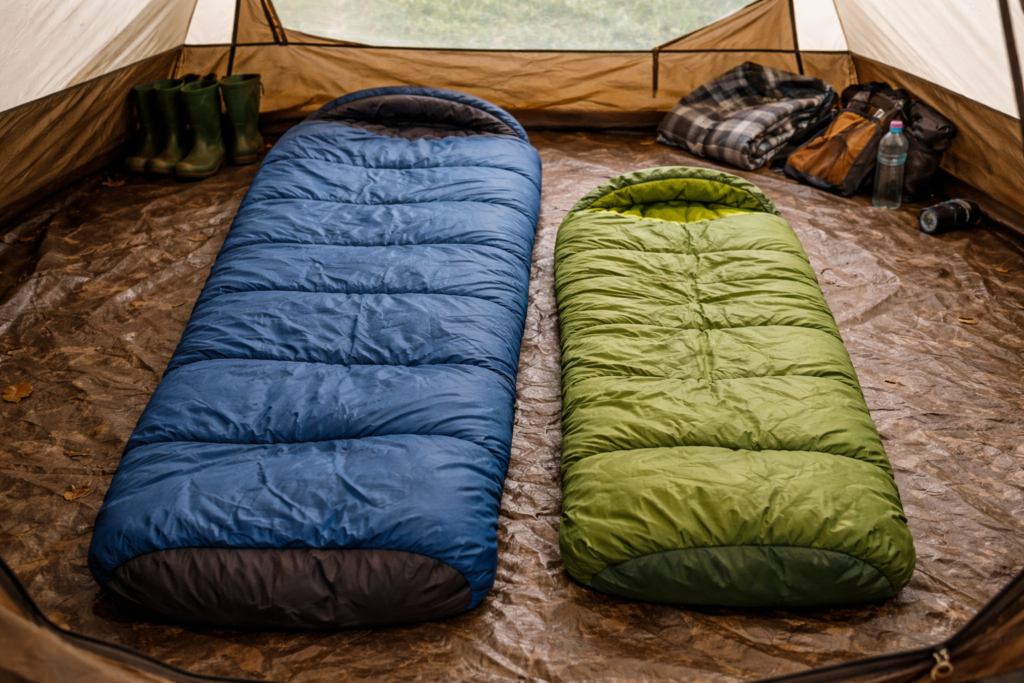
1. Vango Nitestar Alpha 250 — Adults and Older Teens
Best for: adults and teenagers wanting a reliable three-season bag that handles real UK conditions
The Vango Nitestar Alpha 250 is the sleeping bag I’d point most adults towards for UK three-season camping without hesitation. It’s DofE recommended — which tells you something about its reputation for reliability with young people camping in challenging UK conditions — and the Alpha insulation performs consistently even when the tent has dampened slightly from overnight condensation.
The mummy shape is more comfortable than most mummy bags because the Alpha lining is genuinely soft — it doesn’t have that slightly clammy feel cheaper synthetics sometimes produce. The 3D hood with drawcord closure keeps warmth around your head on colder nights, and the zip baffle stops cold air bleeding through the zip line — a detail that separates a decent sleeping bag from a genuinely good one.
We’ve used the Nitestar on Loch Lomond camping trips where the overnight temperature dropped lower than the forecast suggested, and it performed exactly as you’d want — warm enough at the low end of three-season use, not unbearably hot on milder summer nights when you crack the zip open slightly. It’s the bag I keep coming back to for adults in the family because it hasn’t let anyone down yet.
One honest caveat: the pack size is larger than a premium down bag at a similar temperature rating. For car camping this is irrelevant. If you’re walking any significant distance to a pitch, that’s worth knowing before you commit.
2. Quechua Arpenaz 0°C Cotton Sleeping Bag — Adults
Best for: adults who find mummy bags uncomfortable, couples camping together, and anyone prioritising comfort over pack size
My dad has used the Arpenaz 0°C for the last two seasons and won’t hear a word against it. He’s a rectangular bag person — never got on with the restrictive feel of a mummy bag — and the cotton lining is what sold him immediately. It breathes differently to polyester, regulating temperature more naturally across the night rather than building up heat in one spot, and for someone who runs warm it makes a genuine difference to sleep quality.
The 0°C comfort rating makes it the warmest option on this list and genuinely suitable for late September or October camping in the UK — the kind of nights when you’re grateful for every gram of insulation. The full zip means you can open it completely and use it as a duvet on milder nights, which is a useful flexibility for the unpredictable range of temperatures a British autumn can throw at you across a single weekend.
The zip-together system is the feature that gets used most in our family camping setup. Two Arpenaz bags joined create a double — useful for couples who’d rather share warmth than maintain two separate sleeping environments on a cold night. Our kids think this is the most exciting camping feature in existence and have campaigned to zip theirs together on every trip since they found out it was possible.
One honest caveat: at 2.8kg this is emphatically a car camping bag. It packs large and it’s heavy. If you’re walking more than a short distance from your car to the pitch, the Vango is the better choice. If you’re driving to the campsite and settling in for a few nights, the Arpenaz 0°C is one of the most comfortable night’s sleeps available in a sleeping bag at this price point.
3. Quechua Arpenaz 10°C Sleeping Bag — Adults and Teens, Spring and Summer
Best for: spring and summer camping, families just starting out, and anyone camping in milder conditions
A friend lent me his Arpenaz 10°C for a weekend trip to Loch Venachar last summer — he uses it for his kids’ first camping trips and swears it’s all you need for a mild Scottish summer night. Honest verdict after that weekend: he’s right, with conditions. Lighter than the 0°C version, easier to stuff back into its bag in the morning, and perfectly comfortable for a July or August trip where the overnight temperature stays above 10°C. For those conditions it’s a sensible, affordable option that doesn’t feel like a compromise.
Comfort rated to 5–10°C, this is the right choice for the warmer half of the three-season window — late spring through to early autumn on the evenings when you’re not worrying too hard about the overnight forecast. The convertible design gets used more than expected — fully unzipped it becomes a blanket, which suits children who like the option to throw it half off in the night without fully unzipping and going through the whole getting-back-in process.
One honest caveat: the margin isn’t there for the cold snaps that arrive without warning in the UK. Camping regularly from April or into October, or anywhere in Scotland where nights can be unpredictable, the 0°C version or the Vango 250 is the safer choice. But for summer family camping as a genuine budget-friendly starting point, this does exactly what it says on the label.
4. Vango Nitestar Alpha 250S — Older Children and Teens
Best for: children roughly aged 10–15 who’ve outgrown kids bags but aren’t ready for a full adult size
The 250S is the shorter version of the Nitestar Alpha — the S denoting a reduced length that fits users up to 170cm. Our eldest is in that territory now, at the age where a kids bag is clearly too small but a full adult bag swamps him completely. The 250S solves that problem without compromise — same DofE-recommended Alpha insulation as the adult version, same quality construction, properly sized for someone who isn’t quite adult-shaped yet.
That fit difference matters more than most people account for. On a cold October camping weekend on the Argyll coast last year, the difference between him in the 250S and a younger sibling in an adult bag that was too long was obvious by morning — properly fitted bag, warm child, slept through; oversized bag, cold child who’d spent half the night trying to heat excess air rather than sleeping. That trip was in a six-man tent which gave everyone enough room to spread out properly — how much tent space a family of five realistically needs is something worth thinking about before booking a pitch.
The mummy shape suits older children and teenagers better than younger ones — they’re capable of getting in and out independently, they tend to stay in the bag rather than kicking out of it, and they appreciate the thermal efficiency on genuinely cold nights. The Polair lining is soft against skin and the machine-washable construction is a practical feature for any bag used regularly by a child who doesn’t always come back from camping in the same condition they left in.
5. Eurohike Snooze 300 — Budget Option for Families Needing Multiple Bags
Best for: families on a budget who need to kit out multiple children, summer camping, and backup bags
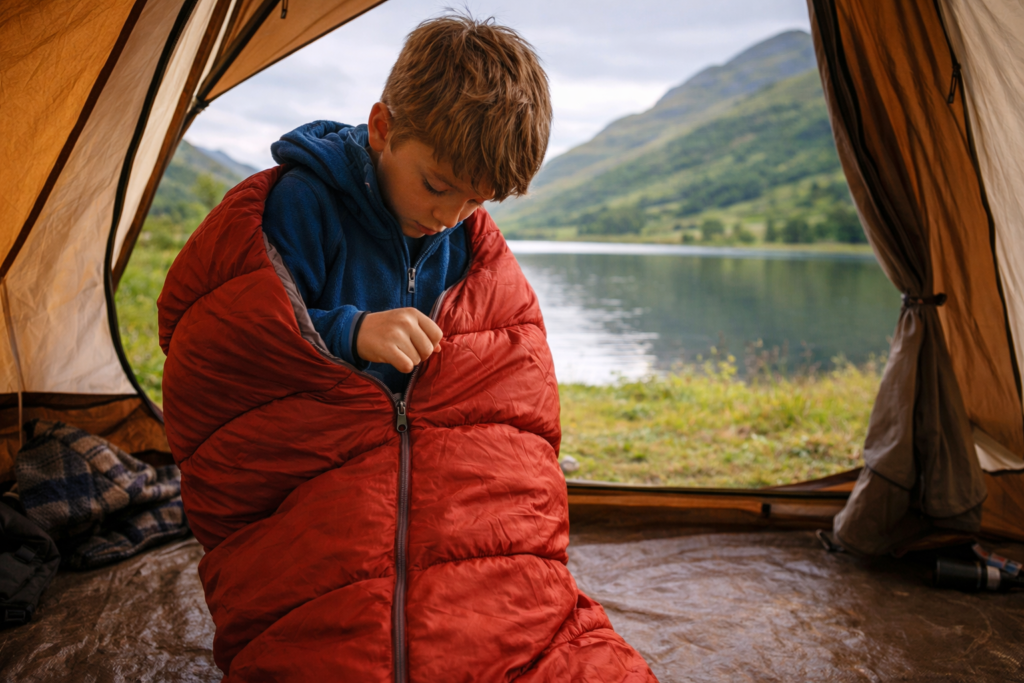
When you’ve got three kids and need sleeping bags for all of them simultaneously, the economics of buying quality bags across the board can be genuinely painful. The Eurohike Snooze 300 is the honest answer to that problem — a decent budget three-season bag that performs well for spring and summer camping without requiring a significant outlay per bag.
The rectangular shape suits children well — easy to get in and out of, room to move, and no feeling of confinement for kids who are new to sleeping in bags rather than beds. It handles UK spring and summer camping reliably, and the construction is solid enough for regular family use rather than falling apart after two trips, which matters when you’re buying multiples and don’t want to be replacing them all after one season.
The honest caveat is temperature — this isn’t a bag for a cold October weekend or a trip where the overnight forecast is unpredictable. The margin isn’t there for low single figures. For summer camping on well-serviced campsites where nights stay reasonable — the kind of Loch Lomond summer trips where the main problem is keeping the kids quiet past 10pm rather than keeping them warm — it earns its place in the kit bag reliably and at a price that makes kitting out a whole family manageable. A solid summer workhorse for children who’ll grow out of it before they need anything warmer.
What We’d Actually Pack for a Family of Five
If I were starting completely fresh — five of us, west coast Scotland, camping from April through to October — here’s what I’d actually buy rather than what I’d theoretically recommend.
For the two adults, one Vango Nitestar Alpha 250 each. Proven in Scottish conditions, warm enough for the whole three-season range, packable enough that they fit in the car without a game of Tetris. The Arpenaz 0°C cotton is tempting for the comfort factor — my dad swears by his and I can see why — but the pack size tips it toward a second choice for trips where we’re fitting five people’s kit into one car.
For the eldest, the Vango 250S is a straightforward decision — the right size, the right rating, the same quality as the adult bag. The October Argyll coast trip settled that one for good.
For the younger two, the Eurohike Snooze 300 for summer trips, with an upgrade to something warmer planned as they get bigger and we camp later into the season. Budget bags for children who’ll grow out of them in two years makes more financial sense than buying premium kit that won’t fit before they’re old enough to appreciate it.
A sleeping bag liner for every bag, without exception — it’s the single most cost-effective addition to any family camping sleep system, adds warmth, protects the bag, and washes easily between trips. Beyond sleeping bags, the one-night camping packing plan is useful for keeping the boot manageable when you’re fitting five people’s kit into one car — it strips everything back to what actually gets used.
FAQ
What temperature sleeping bag do I need for UK camping?
For three-season UK camping — spring through to autumn — a comfort rating of 0°C to 5°C gives genuine flexibility across the whole range. A 10°C rated bag is fine for summer but starts to feel marginal in early spring or late autumn, particularly in Scotland where overnight temperatures can be significantly lower than the daytime suggests. When in doubt, go warmer — you can always unzip.
Are mummy bags or rectangular bags better for children?
Rectangular bags are generally better for younger children — easier to get in and out of independently, less restrictive, and more forgiving of the wriggling that children do overnight. Older children and teenagers manage mummy bags well and benefit from the extra thermal efficiency. The Vango 250S suits that older age group specifically because it combines a proper mummy shape with a length that actually fits.
Do children need a different sleeping bag from adults?
Yes — children sleep colder than adults and need a bag rated lower than the expected overnight temperature. Fit matters as much as rating — a bag too large for the child creates cold spots at the feet that the child’s body has to heat overnight. That’s exactly what happened on that first Loch Lomond family trip and it’s the lesson that informs every sleeping bag recommendation on this list.
Is down or synthetic better for UK family camping?
Synthetic is the more practical choice for most UK family camping. It maintains warmth when damp, it’s easier to wash, and it costs significantly less — all of which matter when buying multiple bags for a family. Down is better in dry conditions but the UK camping environment rarely guarantees that, particularly on the west coast.
How do I keep children warm in a sleeping bag overnight?
A self-inflating sleeping mat underneath them matters as much as the bag itself — ground cold conducts upward and a poor mat undermines even a well-rated bag. A sleeping bag liner adds warmth without the cost of a higher-rated bag. A kids thermal base layer to sleep in rather than daytime clothes makes a noticeable difference on cold nights. And make sure the bag fits — too much excess length means the child is heating cold air all night rather than sleeping.
Can sleeping bags be zipped together?
Some bags are designed for this — both Quechua Arpenaz models have compatible zips that allow two bags to join into a double. For couples on cold nights this is genuinely useful and gets used regularly in our setup. For children, joining bags creates too much air space for a small body to heat effectively.
How often should I wash a family camping sleeping bag?
After every trip for heavily used bags, every two to three trips otherwise. A sleeping bag liner reduces how often the main bag needs washing by acting as a barrier between the bag and the user. Most synthetic bags are machine washable at 30°C — always follow the manufacturer’s instructions and use a specialist sleeping bag wash to protect the insulation over time rather than standard detergent.
Related Guides
About The Author – Andrew Marshall
Andrew Marshall is the creator of Simple Days Outside and a UK parent of three who regularly camps, walks, and explores outdoor activities with his family. His guides focus on practical gear, realistic family adventures, and simple ways to help families enjoy the outdoors across the UK. The recommendations on this site are based on real-world use, research, and the kind of equipment families actually rely on for weekend trips and everyday outdoor fun.