

Written by Andrew Marshall
UK parent of three sharing practical advice to help families enjoy camping, walking, garden play, and simple outdoor adventures across the UK.
Creator of Simple Days Outside.
If you’ve started shopping for a family tent, you’ve probably had this moment:
One tent is £229.
Another is £879.
They both sleep four or five people.
They both claim to be waterproof.
So… what exactly are you paying for?
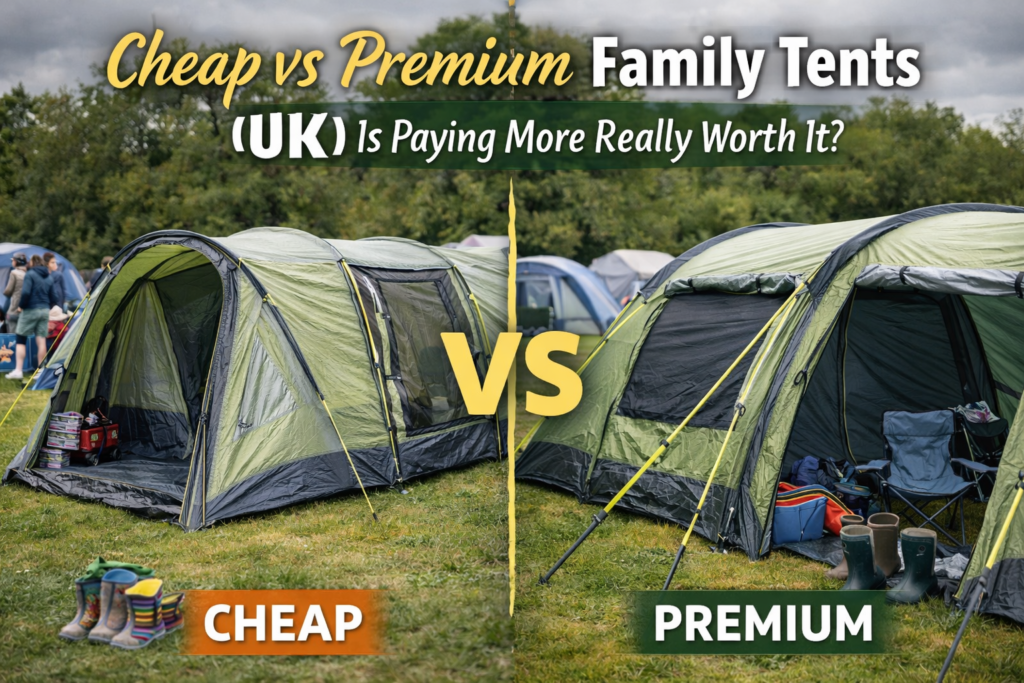
For UK families planning short weekend camping trips, this isn’t about status or having the “best” setup on the campsite. It’s about comfort, reliability, and whether your tent quietly does its job when the weather turns slightly British.
Because it usually does.
Let’s break this down calmly and practically — what actually changes as you move from budget to premium, and whether that extra money genuinely improves family camping weekends.
👉 In This Guide
First: What “Cheap” and “Premium” Really Mean
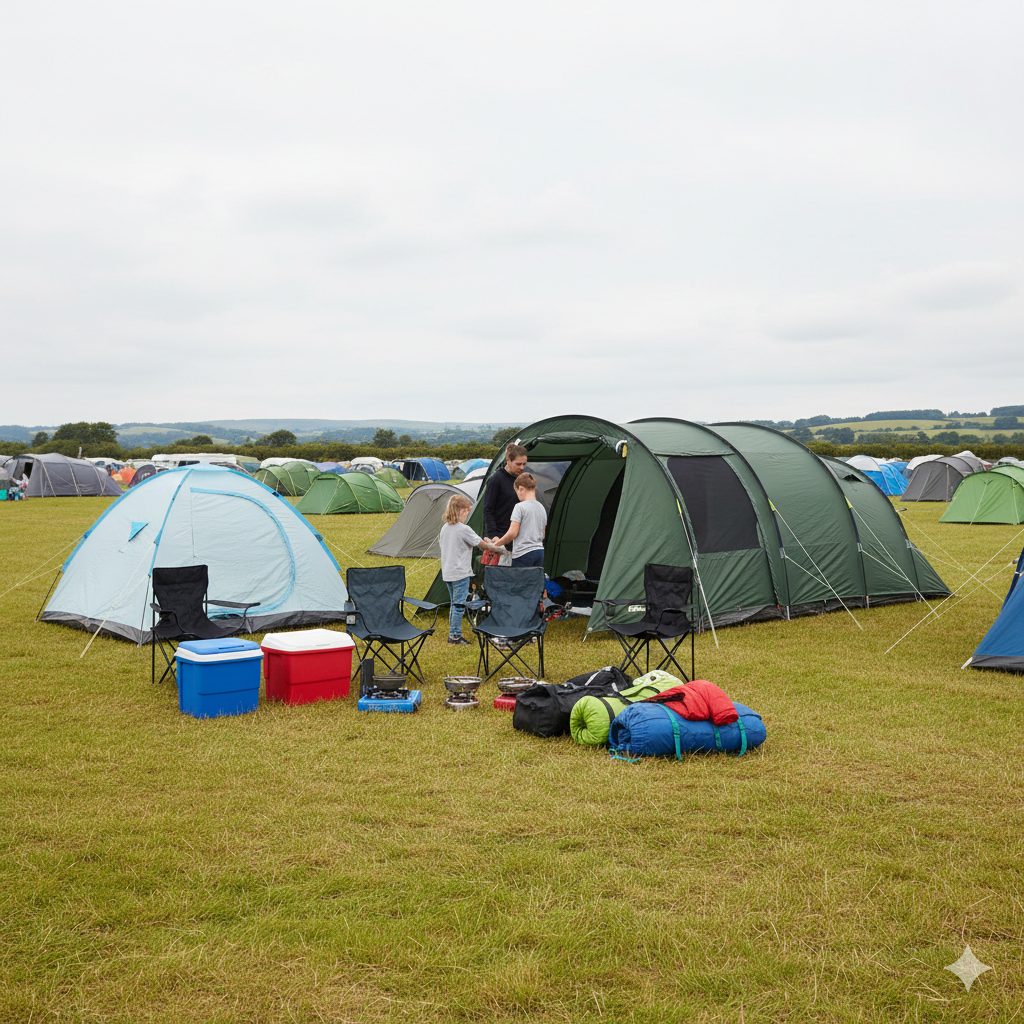
In the UK family camping market, rough brackets look like this:
- Budget family tents: £150–£350
- Mid-range tents: £350–£700
- Premium tents: £700–£1,200+
Both budget and premium tents can be:
- Pole tents
- Air (inflatable) tents
- Tunnel style
- Multi-room layouts
So the price difference isn’t just about shape or sleeping capacity.
It’s mostly about materials, durability, and comfort details.
What You Typically Get With a Budget Family Tent
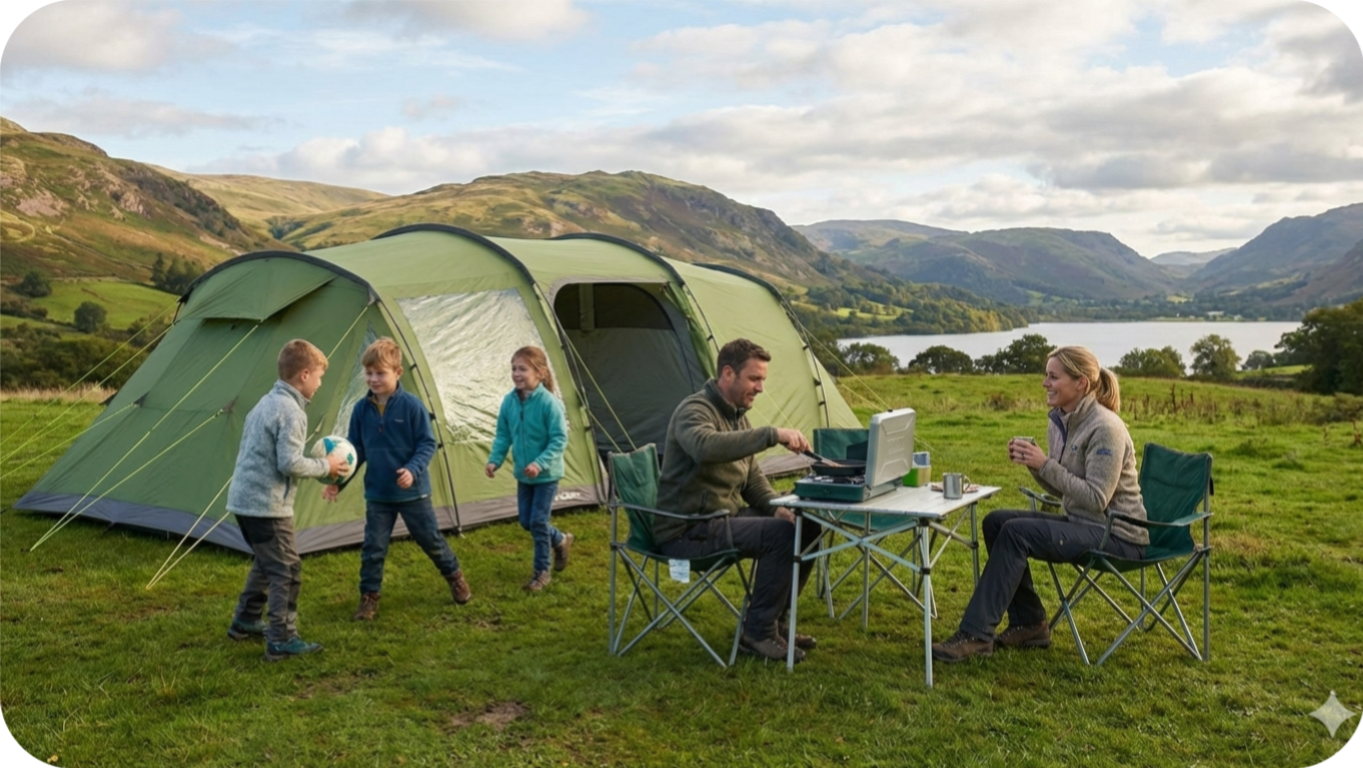
Let’s be clear — budget tents are not automatically “bad”. Many families happily use them for summer weekends for years.
But they usually cut costs in predictable ways.
1. Lighter Fabric
Cheaper tents often use thinner flysheet materials.
That can mean:
- Lower waterproof ratings
- Slightly more movement in wind
- More condensation inside on damp mornings
On a calm July weekend in the Midlands, this may not matter at all.
On a breezy coastal pitch in Northumberland, you may notice more flapping and noise overnight.
That doesn’t mean failure — just less refinement.
If you’re mostly camping short term and packing light with basic family camping sleeping bags, this may never become an issue.
2. Basic Bedroom Features
Budget tents often skip things like:
- Proper blackout linings
- Adjustable ventilation panels
- Full-height living space
If you’ve ever tried to get a child back to sleep at 5am in June, blackout bedrooms suddenly feel less like a luxury and more like a useful feature.
Premium models are more likely to include darkened pods designed specifically for families.
3. Standard Pole or Beam Systems
In cheaper pole tents, fibreglass poles are common.
In cheaper air tents, inflatable beams may be slightly lighter weight than premium equivalents.
Both can work perfectly well. But in stronger wind, they may feel slightly less rigid than reinforced systems.
If you’re unsure whether inflatable or traditional suits your family better, our guide on Air Tent vs Pole Tent for Families: Which Is Easier for Weekend Camping? explains how setup stress differs between the two.
What You’re Paying For in Premium Family Tents
When you move into premium territory, the changes are usually subtle rather than dramatic.
1. Heavier-Duty Materials
Premium tents often include:
- Thicker flysheets
- Higher hydrostatic head ratings
- Reinforced seams
- Stronger guying systems
This often translates into:
- Quieter nights in wind
- Better resistance during prolonged rain
- A generally more “solid” feel
It’s not that budget tents collapse — it’s that premium tents tend to feel calmer in unsettled weather.
2. Better Sleep Environment
Higher-end family tents frequently include:
- Darkened sleeping pods
- Improved airflow systems
- More generous pod sizing
If you’re using proper double sleeping bags for camping or larger self-inflating mats, the extra internal space can feel noticeably more comfortable.
Sleep quality often matters more than the tent label.
3. Improved Living Space Design
Premium tents often feel slightly more thought-through:
- Higher head height
- Larger windows
- Better internal dividers
- More usable storage pockets
If you bring things like camping tables and chairs inside during rain, that extra room can make the difference between cosy and cramped.
Does Premium Mean Easier Setup?
Not necessarily.
A more expensive tent doesn’t automatically go up faster.
Ease of pitching depends on:
- Design
- Whether it’s an air or pole model
- Tent size
- Familiarity
In fact, some large premium tents take longer simply because they’re bigger.
Often, choosing the right size makes more difference than choosing the highest price bracket. If you’re unsure about space requirements, our guide on What Size Tent Does a Family of 4 (or 5) Really Need? can help you avoid overspending on unnecessary scale.
How Often Are You Camping?
This is the question that usually settles it.
Camping Once or Twice a Year?
If your family:
- Camps mainly in summer
- Stays one or two nights
- Chooses sheltered family sites
A well-reviewed budget or mid-range tent is usually completely fine.
You may never push it hard enough to notice premium upgrades.
Camping Several Times a Year?
If camping becomes regular — across spring, summer, maybe early autumn — differences in materials and build quality become more noticeable.
Repeated packing, pitching, and exposure to rain test fabric and structure over time.
Premium materials tend to age better.
UK Weather: The Honest Reality
Let’s be realistic — UK camping rarely guarantees clear skies.
Premium tents often cope slightly better with:
- Sustained rain
- Gusty evenings
- Cooler overnight temperatures
But campsite choice can matter just as much.
A sheltered pitch on grass often reduces stress more than fabric thickness alone. Our Family Campsite Checklist (UK): 12 Things to Check Before You Book can help you avoid exposed sites that test any tent, premium or budget.
Weight & Storage at Home
Premium tents are often heavier.
That means:
- More lifting in and out of the car
- Larger packed size
- More storage space required at home
If you’re already managing bedding, food, and things like a cool box for camping, extra bulk may not feel like a benefit.
For short weekend trips, practicality often wins.
The Emotional Factor: Peace of Mind
There’s also a psychological element.
Some parents feel reassured knowing they’ve invested in something robust and long-lasting.
Others are perfectly happy with a sensible mid-range option and prefer to spend the savings elsewhere.
Neither approach is wrong.
When Paying More Usually Makes Sense
Paying for a premium tent often makes sense if:
- You camp regularly
- You use exposed or coastal sites
- You value darker sleeping areas
- You want long-term durability
- Budget comfortably allows it
Over several seasons, those small upgrades can reduce minor frustrations.
When a Budget Tent Is Completely Enough
A budget tent is often suitable if:
- You camp occasionally
- Mostly in summer
- On sheltered family sites
- You’re still testing whether camping suits your family
Many families never feel the need to upgrade.
So… Is Paying More Really Worth It?
For most UK families doing short weekend camping trips, the honest answer is:
It depends on frequency and expectations.
A premium tent can feel sturdier, darker, and calmer in unsettled weather.
A well-chosen budget or mid-range tent can still provide a completely enjoyable weekend base.
Spending more doesn’t automatically create better memories.
Choosing the right size, practising setup at home, and staying warm overnight usually matter more than price alone.
If camping becomes something your family genuinely loves, upgrading later is always an option.
If you’re planning a relaxed family camping break, our Family Camping & Short Trips guide covers the essential gear, simple setups, and realistic advice for weekends away with kids — without overpacking or stress.
For general guidance on camping safety and preparation in the UK, families can also refer to advice from the Camping and Caravanning Club, which offers practical tips for safe and comfortable outdoor stays.
🏕️ Not Sure Yet? These Guides Can Help
If you’re still weighing up tent options or planning your first few family trips, these guides break things down in simple, practical terms — from choosing the right size to making weekend camping feel easier overall.
About The Author – Andrew Marshall
Andrew Marshall is the creator of Simple Days Outside and a UK parent of three who regularly camps, walks, and explores outdoor activities with his family. His guides focus on practical gear, realistic family adventures, and simple ways to help families enjoy the outdoors across the UK. The recommendations on this site are based on real-world use, research, and the kind of equipment families actually rely on for weekend trips and everyday outdoor fun.