

Written by Andrew Marshall
UK parent of three sharing practical advice to help families enjoy camping, walking, garden play, and simple outdoor adventures across the UK.
Creator of Simple Days Outside.
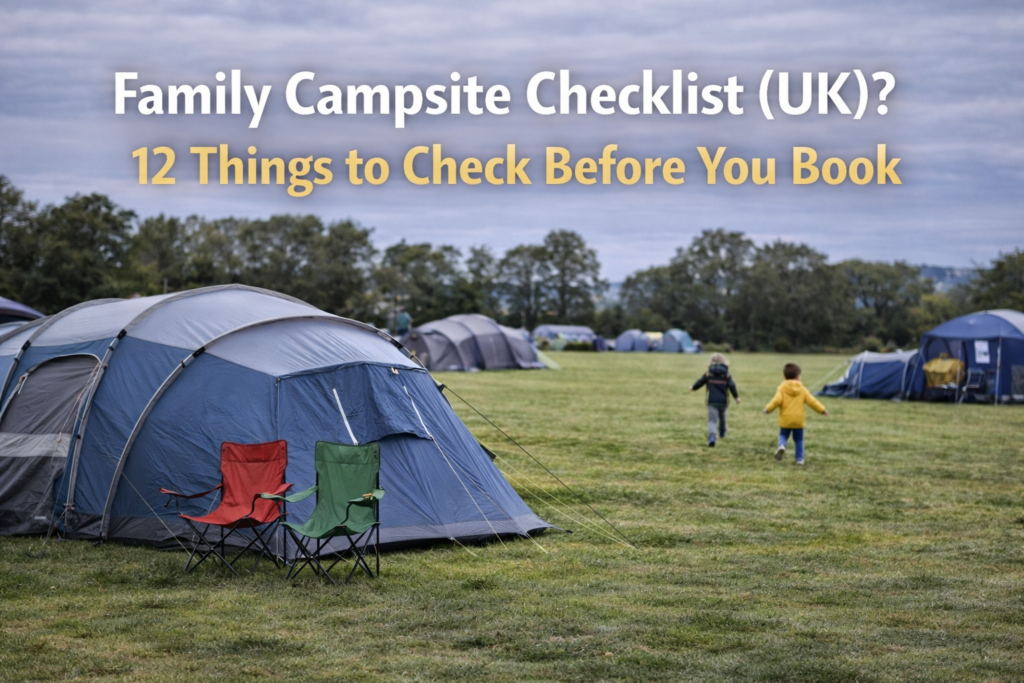
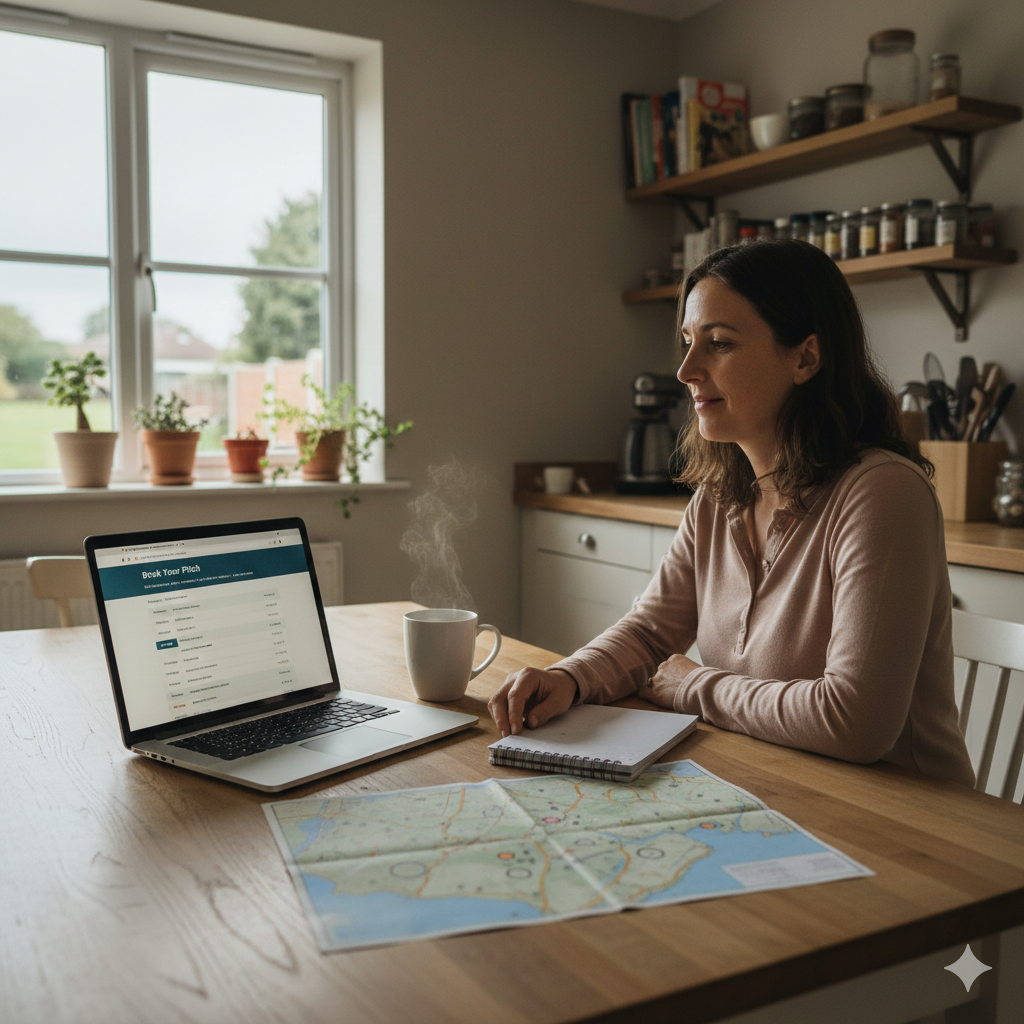
Booking a family campsite feels easy.
The photos look green. The sunset looks peaceful. The reviews seem “mostly good”. You think, How different can campsites really be?
Then you arrive.
The toilets are further than expected. The pitch slopes slightly downhill. The wind doesn’t stop all night. The “family-friendly atmosphere” includes three large tents playing music until 11pm.
Most family camping stress doesn’t come from packing the wrong gear.
It comes from booking the wrong site.
Before you confirm your next UK campsite, here are 12 things that genuinely matter — especially when you’re camping with children.
👉 In This Guide
1. How close are the toilets, really?
With adults, distance is mildly inconvenient.
With children, distance becomes urgent.
Before booking, look at:
- campsite maps (if available)
- review comments mentioning facilities
- whether toilets are central or clustered
- whether they’re open all night
If you’ve got younger kids, close facilities can completely change the tone of your stay.
2. Are pitches flat — or “rustic”?
A slightly sloped pitch doesn’t look dramatic in photos.
It feels dramatic at 3am when everyone’s sliding gently towards one corner of the tent.
Look for wording like:
- “level pitches”
- “hardstanding options”
- “well-drained grass”
If the site is described as “natural meadow”, check recent reviews for comments about uneven ground.
If you’ve invested in a larger family setup, protecting it also matters. A tent footprint groundsheet underneath your tent helps on rough or mixed terrain and keeps the base cleaner and drier.
If you’re still deciding on your setup, our guide to What Size Tent Does a Family of 4 (or 5) Really Need? (UK Guide) explains how footprint, guy ropes, and layout affect the space you’ll realistically need on most UK pitches.
3. What’s the actual pitch size?
Standard pitch doesn’t always mean spacious.
If you’re bringing a larger tent, check:
- pitch dimensions
- whether guy ropes extend beyond the footprint
- if cars sit on the pitch or separately
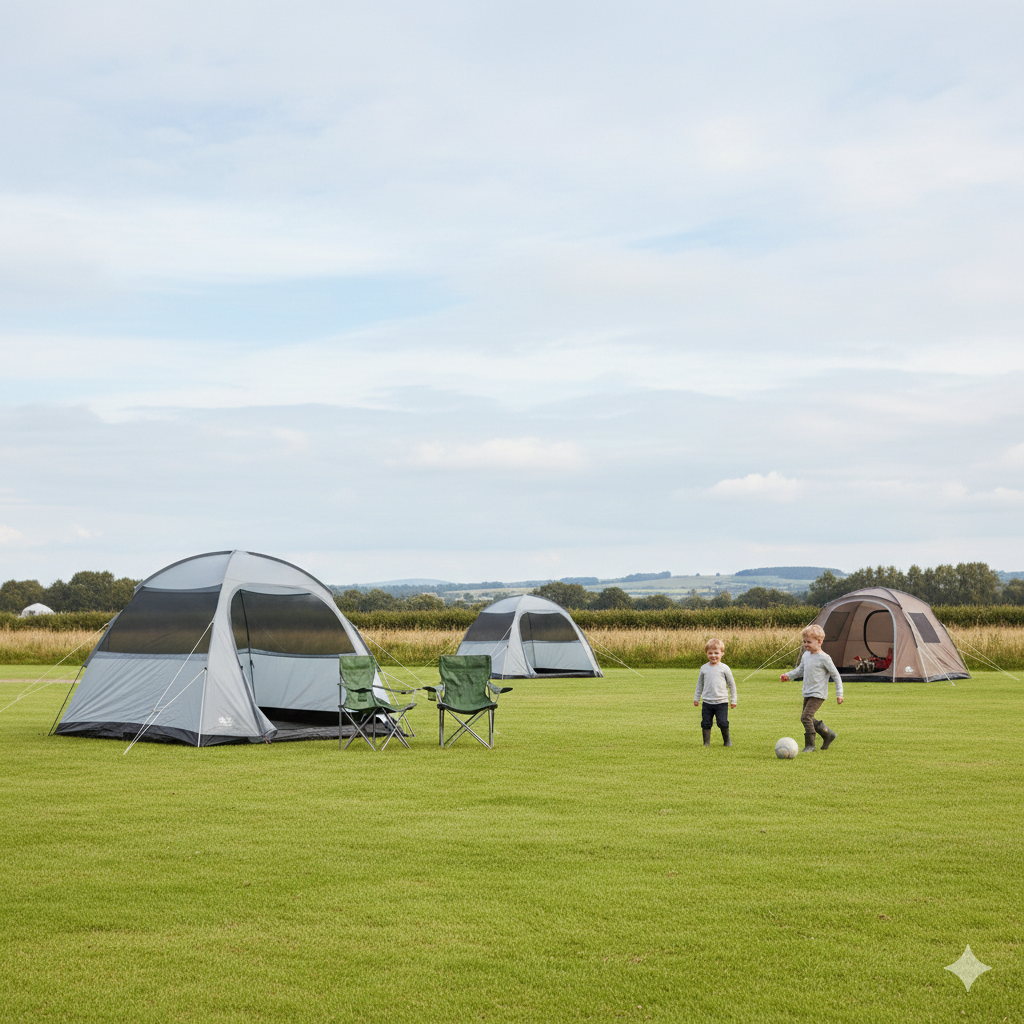
Families using a 6–8 person tent often need more room than they expect — especially if you want space for chairs or a small picnic area.
Feeling cramped between other tents can make everything feel busier than it needs to be.
For shorter breaks especially, choosing the right design can make a big difference — our Best Easy-to-Pitch Family Tents (UK) for Quick Weekend Set-Up guide looks at family tents that balance space with practicality.
4. Are cars allowed next to the pitch?
This is one of the biggest practical questions for families.
If cars aren’t allowed on pitches:
- How far is parking?
- Are trolleys available?
- Is access easy with children?
If parking is remote, bringing a camping trolley cart can make unloading far less stressful — especially for one-night stays when you don’t want multiple trips.
5. What’s the noise level after dark?
Not every campsite has the same atmosphere.
Some are lively and social. Some are quiet and structured. Some are effectively outdoor party zones.
Look for:
- stated quiet hours
- staff presence mentioned in reviews
- comments about noise management
Families often appreciate sites that actively enforce calm evenings — especially with younger children.
If it’s your first time booking as a family, First-Time Family Camping in the UK: What No One Tells You (And How to Prepare) covers the smaller details that often catch parents out — including choosing sites that suit your family’s pace.
6. How exposed is the site to wind?
In the UK, wind matters.
Hilltop sites can be beautiful — and relentlessly breezy.
Check:
- satellite views (are there trees or shelter?)
- reviews mentioning wind
- whether pitches are exposed or hedged
If you’re booking a more open site, a simple windbreak for camping can help create a calmer, sheltered area outside your tent.
7. Is electric hook-up available (and do you need it)?
Not every family needs electric hook-up — but it can make short stays easier.
If you plan to use low-wattage lighting, charge devices, or run small appliances, check:
- whether hook-up is included or extra
- where the connection point is on the pitch
- cable length requirements
If you book electric hook-up, you’ll need a electric hook up cable 25m in most UK campsites — shorter cables can be limiting depending on pitch layout.
8. Where are the water taps?
On some sites, taps are right by each pitch.
On others, they’re shared between rows.
If water isn’t nearby, bringing a water carrier container saves multiple trips and makes washing up or cooking easier.
It’s a small detail that can make campsite life much smoother.
9. What are the shower facilities actually like?
You don’t need luxury spa showers.
But you do want:
- hot water
- reasonable cleanliness
- manageable queues
- family-friendly layouts
Reviews usually tell the real story here. If several mention “great facilities” or “well maintained”, that’s reassuring.
10. Is there safe space for children to move?
Family camping works best when children can move around safely.
Look for:
- open grassy areas
- playgrounds
- limited vehicle movement
- clear internal roads
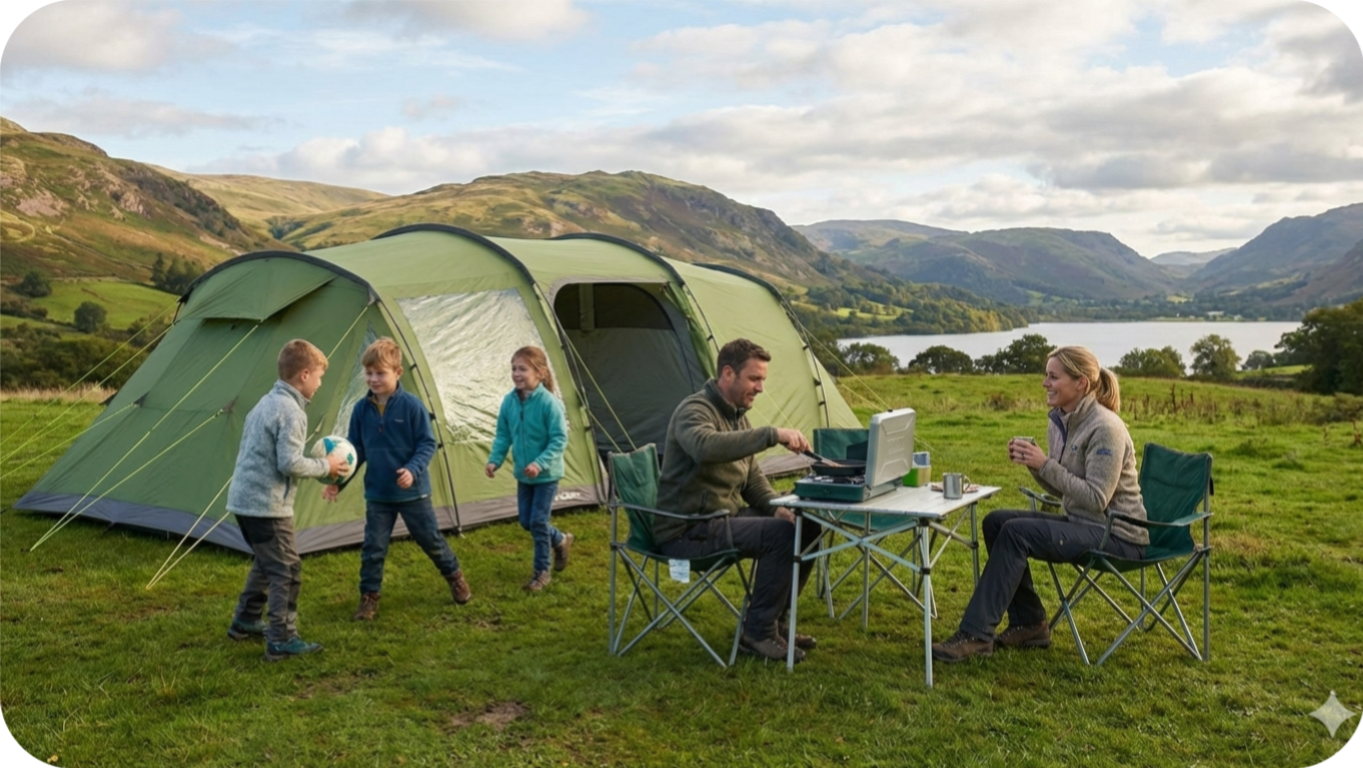
A campsite that feels contained and safe lets parents relax rather than constantly hover.
11. What’s nearby — realistically?
Even if you plan to stay mostly on-site, it helps to know what’s close by.
Is there:
- a beach within short driving distance?
- woodland walks?
- a village shop?
- a café?
Even knowing there’s somewhere for emergency milk or a short outing can reduce stress before you even arrive.
For practical beach and water safety advice when camping near the coast, families can check guidance from the RNLI (Royal National Lifeboat Institution), which offers clear, family-friendly safety information for UK beaches.
12. What’s the ground surface like?
Grass? Gravel? Hardstanding?
Each has pros and cons.
Gravel drains well but can be tough on tent bases. Grass feels softer but can get muddy. Hardstanding is practical but requires appropriate pegs.
If reviews mention difficult ground, packing tent pegs for hard ground can save frustration during setup.
The small comfort details people overlook
When choosing a campsite, people focus on scenery.
But comfort often comes from smaller details.
For example:
- A tent carpet can make a family tent feel warmer and more homely on cooler pitches.
- A picnic blanket waterproof backing makes sitting outside more comfortable when grass is damp.
- Clear site maps on arrival make finding your pitch smoother — keeping booking emails in a waterproof folder helps at check-in.
None of these are dramatic upgrades. They’re small friction-reducers.
A quick reality check before booking
Before you click confirm, ask:
- Would I feel comfortable here if it rains?
- Would I feel safe letting my kids explore?
- Are the facilities close enough for early mornings and late evenings?
- Is the pitch big enough for our tent?
- Does the overall atmosphere suit our family?
If the answer to most of those is yes, you’re probably choosing well.
Author Insight
I’ve learned the hard way that the campsite you choose pretty much decides how the whole trip feels. You can pack brilliantly, bring the right tent, organise meals like a pro — but if your pitch is sloped, miles from the toilets, or next to a group who think 10:30pm is “early”, everything suddenly feels harder than it needs to be. On the flip side, a well-chosen, family-friendly site makes even basic camping feel easy. So for first trips especially, I always tell people: choose simple over impressive. You can save the dramatic cliff-top adventure for when everyone’s a bit more confident — and sleeping through the night.
Calm takeaway
The best UK family campsite isn’t the most remote or scenic.
It’s the one that:
- fits your tent comfortably
- feels safe and manageable
- has accessible facilities
- and matches your family’s experience level
Check the practical details before you book, and you’ll remove most of the stress before the trip even begins.
And that’s usually the difference between “We’ll definitely do this again” and “That was… an experience.”
If you’re planning a relaxed family camping break, our Family Camping & Short Trips guide covers the essential gear, simple setups, and realistic advice for weekends away with kids — without overpacking or stress.
🌿 Related Guides
More Family Camping Guides
If you’re planning ahead, these guides can help you feel more confident before you book and pack — especially for shorter UK breaks with children.
About The Author – Andrew Marshall
Andrew Marshall is the creator of Simple Days Outside and a UK parent of three who regularly camps, walks, and explores outdoor activities with his family. His guides focus on practical gear, realistic family adventures, and simple ways to help families enjoy the outdoors across the UK. The recommendations on this site are based on real-world use, research, and the kind of equipment families actually rely on for weekend trips and everyday outdoor fun.