

Written by Andrew Marshall
UK parent of three sharing practical advice to help families enjoy camping, walking, garden play, and simple outdoor adventures across the UK.
Creator of Simple Days Outside.
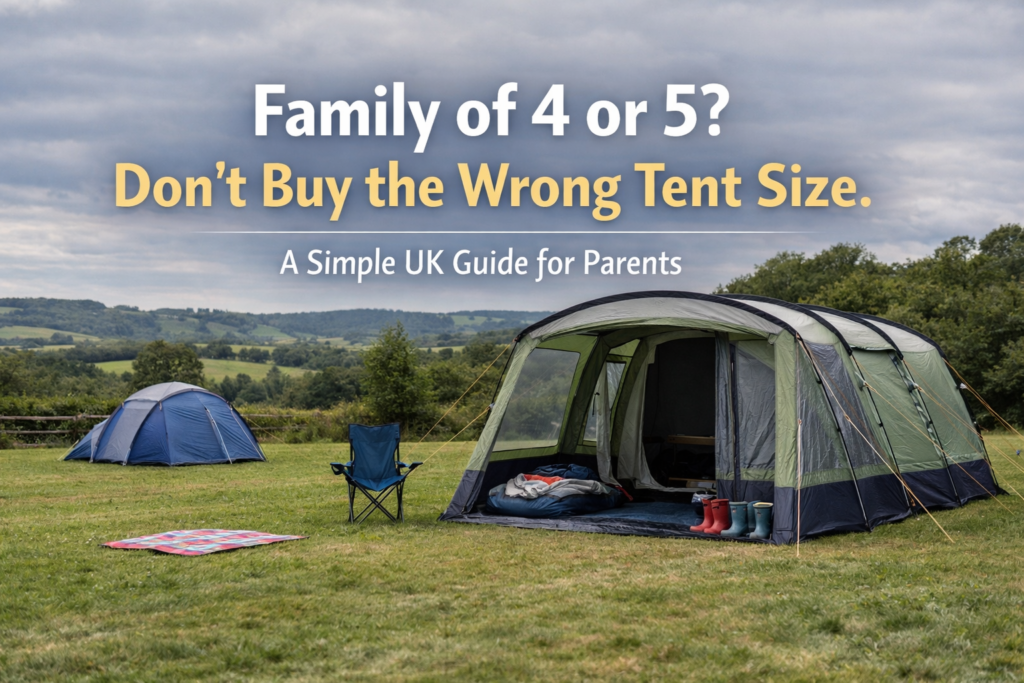
Buying a family tent sounds like an easy job… until you’re stood on a campsite with two kids asking for snacks, one adult trying to read instructions in the wind, and the sudden realisation that a “4-person” tent means “4 people if nobody brings luggage, pillows, or emotions”.
Tent sizing is one of the most common ways families accidentally buy the wrong thing. Not because they’re clueless — but because the labels on tents are usually based on best-case packing, not real family camping in the UK.
This guide keeps it simple. By the end, you’ll know what size tent a family of 4 or 5 actually needs, what features matter most in UK weather, and how to avoid the classic “we’re all sleeping on top of each other” situation.
👉 In This Guide
Why “4 person” rarely means “family of 4”
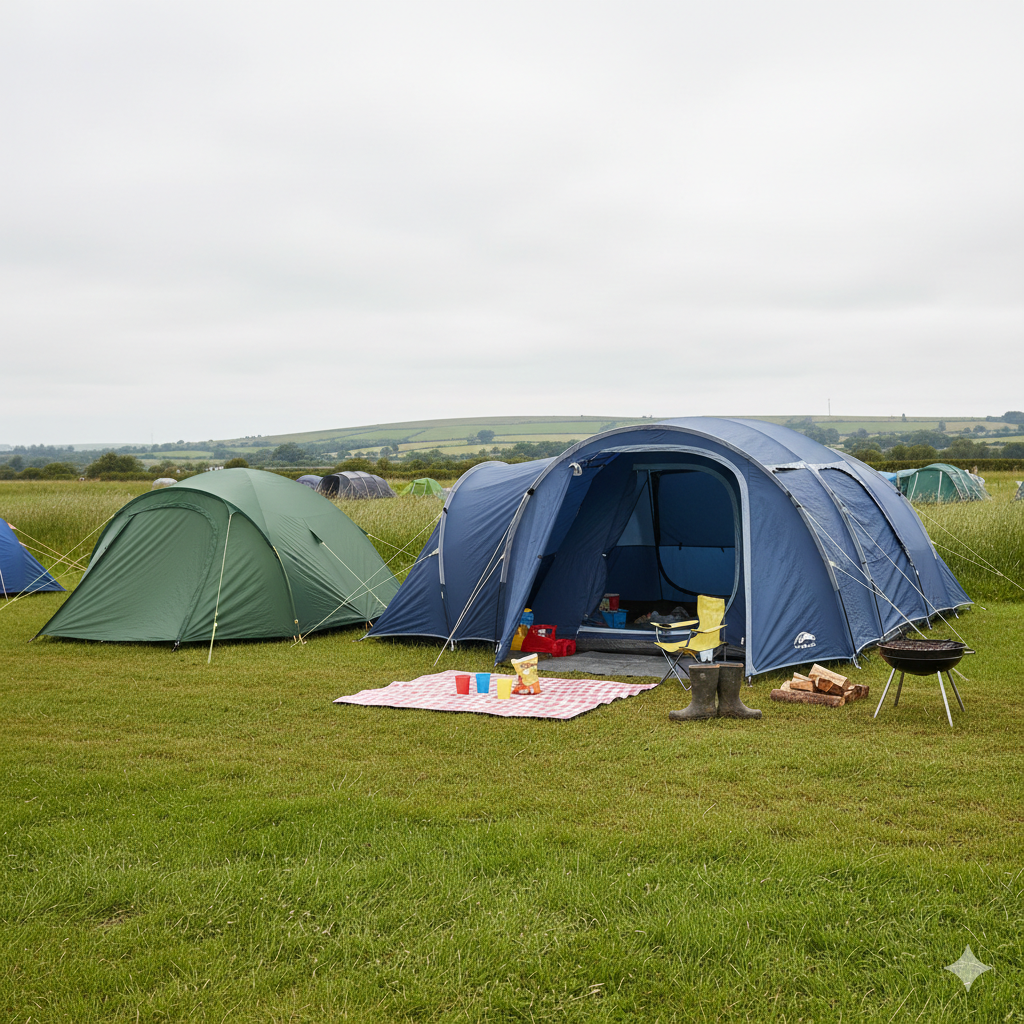
Most tent capacity ratings are based on how many standard sleeping mats can fit side-by-side on the floor.
That assumes:
- everyone sleeps neatly in a rectangle
- you don’t keep bags inside
- nobody needs to get up for a wee in the night
- and your children don’t rotate 90 degrees while asleep (they do)
So in real life, a 4-person tent used by a family of four often feels tight — especially if you’re using air beds or you want your gear inside with you.
A helpful rule that works for UK family camping is:
- Most families of 4 are happiest in a 6 person tent
- Most families of 5 are happiest in an 8 person tent (or a very roomy 6–7 with a proper living area)
It sounds like sizing up “too far”… until the weather turns and you’re trying to keep everything dry.
Step 1: Think about what your camping trips really look like
Tent size isn’t just about how many people sleep inside. It’s about how you live in it when the UK does its usual thing.
Weekend trips in decent weather
If you’re doing one or two nights and you’re out most of the day, you can sometimes get away with less internal space — especially if you’re happy leaving most gear in the car.
But even then, you still want sleeping space that doesn’t feel claustrophobic.
“Normal UK camping” (rain is always possible)
Most family camping in the UK includes at least one moment where you think: Right… we’re going to be inside for a bit.
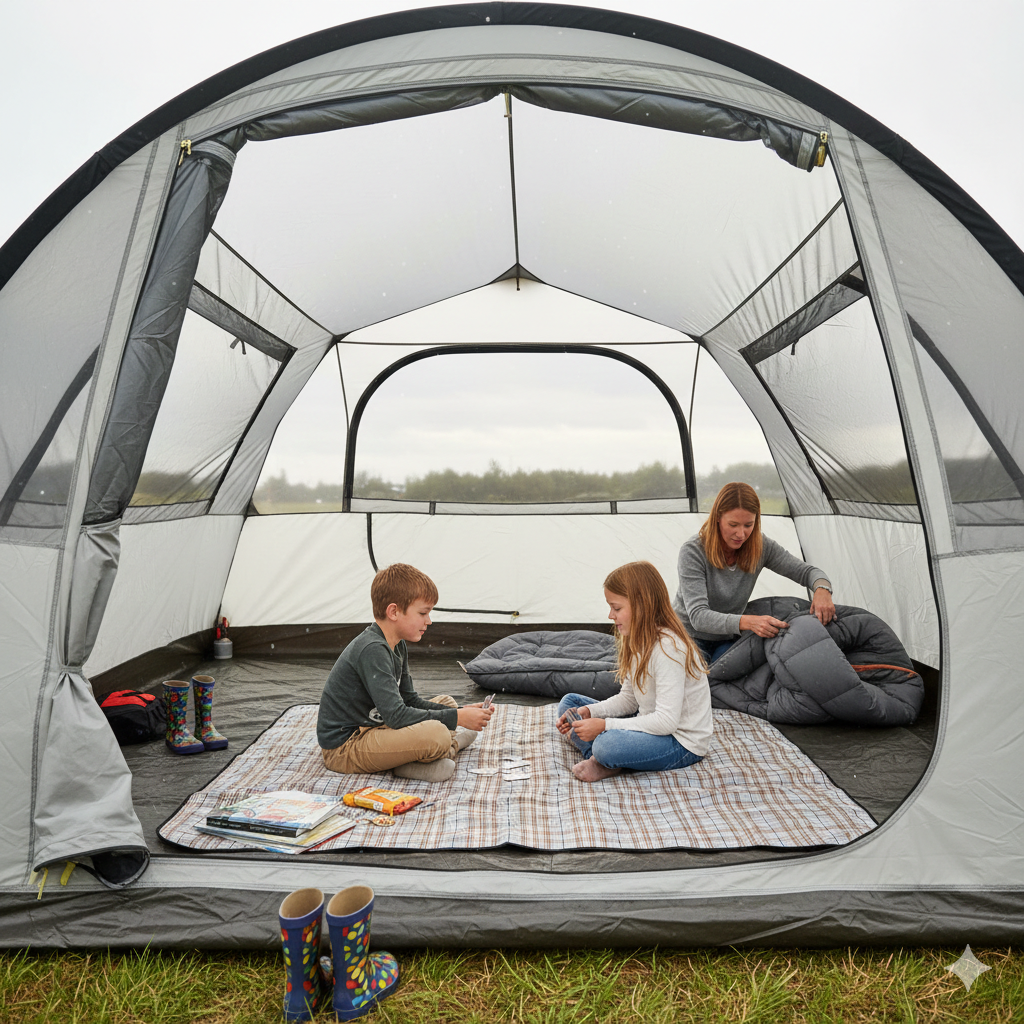
That’s where tents with a porch or living area are worth their weight in gold, because they give you a place for wet coats, shoes, and bags — without turning the sleeping area into a damp storage cupboard.
A simple addition that makes rainy arrivals less stressful is a tent porch groundsheet, because it stops the porch becoming a muddy slip-and-slide.
Longer trips (3+ nights)
The longer you’re away, the more you appreciate being able to stand up, move around, and keep things organised. A slightly larger tent can genuinely make the trip feel calmer — especially at bedtime and first thing in the morning.
If you’ve ever tried to find a clean hoodie in a pile of bags while a child announces they “need the toilet NOW”, you’ll understand.
Step 2: Your sleeping set-up changes the size you need
This is the bit many parents don’t realise until it’s too late. Two tents can both be “6 person” but feel completely different depending on what you sleep on.
If your family sleeps on mats
Camping sleeping mats are space-efficient and make it easier to fit people into a bedroom area without it feeling ridiculous. If you pack light and your kids are still little, you may manage with a smaller tent than someone using big inflatable beds.
If your family sleeps on air beds
Inflatable camping air beds are comfy, but they take up a lot of floor space — and the shapes don’t always fit tent bedrooms neatly.
A common family-of-four setup is one double plus two singles, and that often pushes you towards a larger bedroom area or a tent with a better layout.
If you’re relying on air beds, it’s worth checking you can actually fit what you plan to use, rather than assuming it’ll work because the label says “6”.
If you’re bringing a toddler or travel cot
If you’ve got a toddler, a travel cot for camping can be a game-changer for sleep (and your sanity). But it also eats up space quickly, so you’ll want a tent with a larger sleeping compartment or a flexible layout.
Step 3: The real comfort upgrade is living space, not “more person rating”
For families, the best tents aren’t just bigger. They’re better designed.
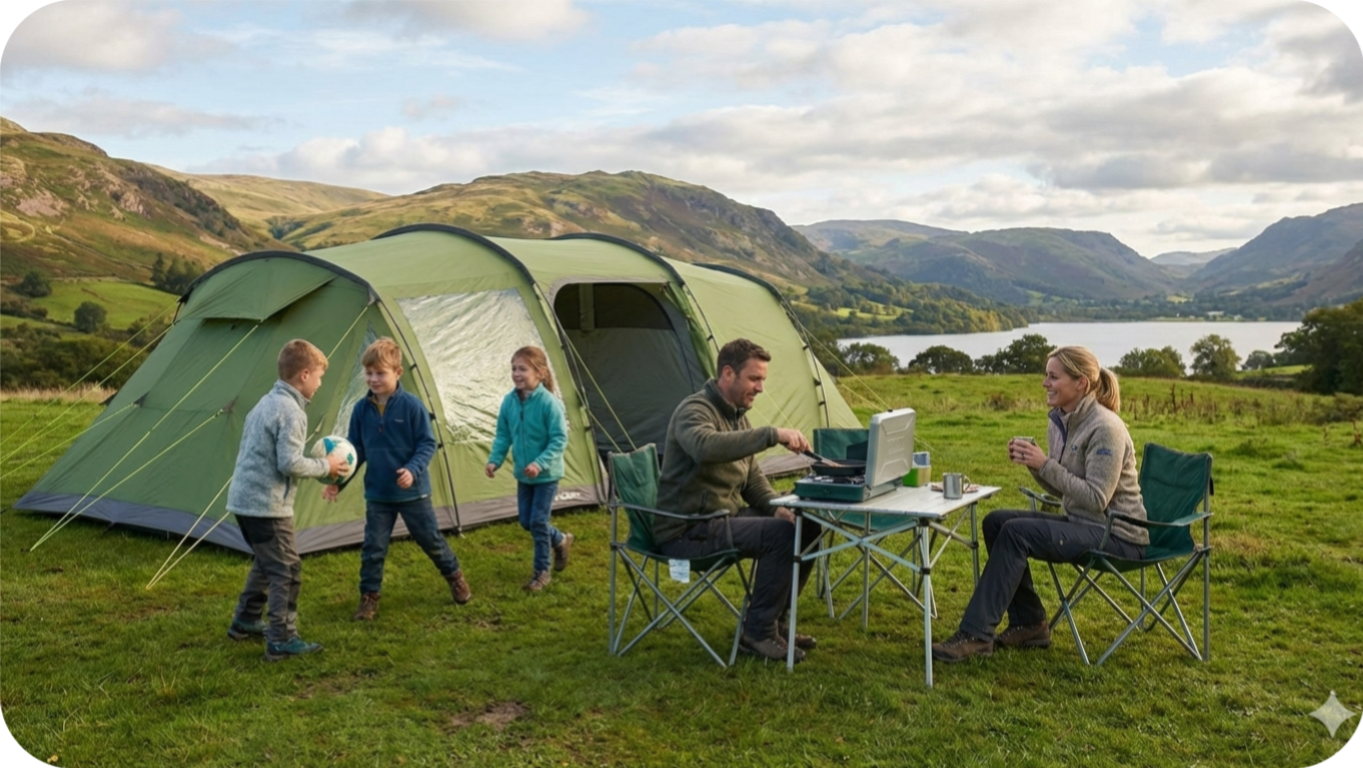
A tent with a proper living area means:
- you can keep bags inside when it rains
- you can get changed without performing yoga
- you can sit down for five minutes with a cuppa while the kids play
- you’re not stepping over everything just to get to bed
In UK weather, a living area is what turns a tent from “somewhere we sleep” into “a base that actually works”.
A small but genuinely useful add-on here is a camping hanging organiser — it stops the inside turning into a constant hunt for torches, wipes, socks, and the one thing someone can’t sleep without.
The size most families of 4 actually need
Here’s the honest breakdown, based on real family use rather than marketing.
4-person tent
Usually too tight for a family of four if you want:
- comfort
- gear inside
- air beds
- or any kind of rainy-day breathing room
5-person tent
Can work for:
- short summer weekends
- families who pack light
- younger kids
- and people who don’t mind leaving most gear in the car
But it can still feel squeezed if the weather turns.
6-person tent
This is the sweet spot for most UK families of four because it gives you:
- more realistic sleeping room
- space for bags and shoes
- a layout that’s less stressful at bedtime
- and often a porch/living area in family tent designs
For most families of 4, a 6-person tent is the comfortable, sensible choice.
If your kids wake up at sunrise the moment it gets light, it’s also worth considering a blackout tent style — it won’t make them sleep till noon, but it can make mornings less brutal.
The size most families of 5 actually need
With five people, the jump in comfort usually comes from both size and layout.
6-person tent
A 6 can work for five if:
- the bedroom areas are generous
- the living space is good
- the kids are small
- and you’re not trying to fit huge air beds
But it often feels like you’re right on the limit.
8-person tent
An 8-person tent is where most families of five start to feel like camping is actually doable without constant reshuffling.
It usually gives you:
- more realistic sleeping space
- better living space
- and often two sleeping compartments (which helps with bedtime, naps, and “he’s touching my side” arguments)
For most families of 5, an 8-person tent is the easiest, least stressful choice.
“Won’t a bigger tent be harder to put up?”
Sometimes a little, but it depends on the style.
Many family tents are designed to be straightforward with colour-coded poles and simple layouts. And inflatable family tents can be quick once you’ve done it once or twice — especially if you use an electric air pump.
Also, it’s worth remembering: even if a bigger tent takes 10 minutes longer to pitch, it can save you loads of hassle for the rest of the weekend.
Trying to manage kids in a cramped tent is rarely the “easier” option.
The most common tent sizing mistakes (and how to avoid them)
Buying the exact capacity
A “4-person” for four often feels tight. A “5-person” for five often feels impossible. Sizing up is normal for families.
Forgetting where wet stuff goes
In the UK, wet shoes and coats need a place. Without a porch/living area, that place becomes your sleeping space.
A camping doormat or simple ground mat at the entrance can help keep the inside cleaner, especially with kids running in and out.
Not checking bedroom dimensions
Some tents have bedrooms that are technically large enough… but shaped in a way that doesn’t fit your sleeping setup properly.
Underestimating how much gear families bring
Even “light packers” end up with a lot once you factor in snacks, spare layers, toiletries, toys, and bedding.
A few waterproof dry bags can help if the weather turns or if you want to keep clothes protected inside the porch area.
Quick cheat sheet: what size should readers choose?
If a parent wants a simple, low-stress answer, it’s usually this:
- A family of 4 will normally be happiest in a 6 person tent, ideally with a porch or living area.
- A family of 5 will normally be happiest in an 8 person tent, ideally with two sleeping compartments and a decent living space.
And if the choice is between two sizes? Most parents don’t regret going bigger — they regret going too small.
Author Insight
The biggest difference between “camping was hard work” and “camping was actually nice” is usually space.
Not luxury. Not expensive gadgets. Just enough room that you’re not constantly moving things around.
When you’ve got kids, you want bedtime to be smooth, mornings to be manageable, and rainy moments not to turn into a miserable huddle. A slightly bigger tent helps all of that, without needing you to be an experienced camper.
And if nothing else, it stops you having the classic family camping moment where someone says: “Who brought all this stuff?”
(Answer: all of you. Every time.)
🛏️ Make Bedtime (and Packing) Easier
Once you’ve chosen the right tent size, the next two things that make the biggest difference are sleeping comfort and knowing exactly what to bring.
If you’re still deciding on sleep setups, our guide to the Top 5 Best Camping Beds for Kids (UK) breaks down what actually works for family trips — without taking up half the tent.
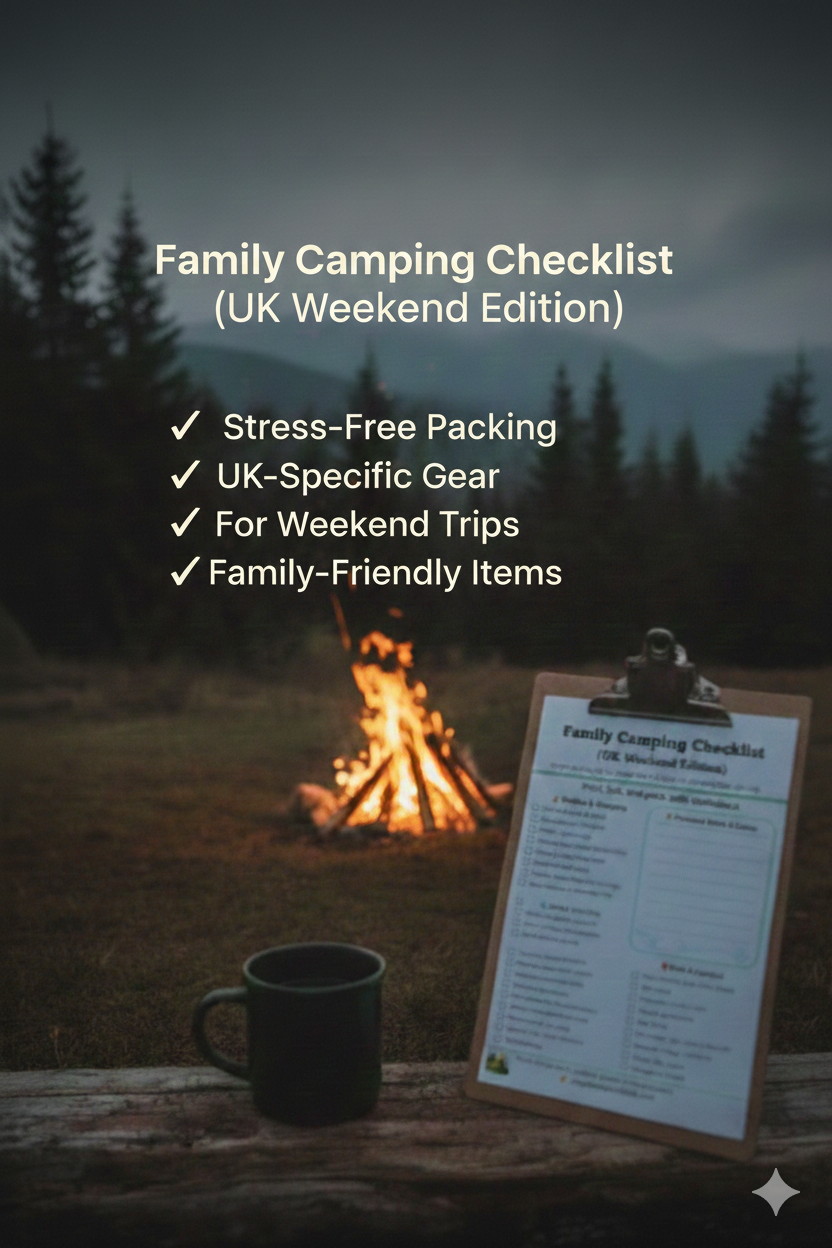
And before you start packing, the Family Camping Checklist: What You Actually Need (UK) keeps things simple and realistic, so you don’t overpack… or forget something important.
Getting those two sorted often makes the tent decision feel much easier.
CSo… What Size Tent Should You Actually Choose?
If you strip away the marketing labels and think about real UK family camping — bags, rain, tired kids, early sunrises and all — the answer becomes much clearer.
For most families:
- If there are 4 of you, a 6 person tent gives you the breathing room that turns camping from “tight but manageable” into genuinely comfortable.
- If there are 5 of you, an 8 person tent usually gives you the space you’ll be thankful for by night two.
You’re not buying extra space for luxury.
You’re buying it for easier bedtimes, calmer mornings, somewhere dry to sit if the weather turns, and fewer little irritations that.
Camping with children doesn’t need to be cramped to count as an adventure.
If you’re choosing between two sizes and unsure?
Most parents never regret going slightly bigger. They often regret going slightly too small.
If you’re planning a relaxed family camping break, our Family Camping & Short Trips guide covers the essential gear, simple setups, and realistic advice for weekends away with kids — without overpacking or stress.
Related Family Camping Guides
Planning a short camping trip with the kids? These practical guides cover the key things families think about before and during a weekend away — helping you feel more prepared and less overwhelmed.
About The Author – Andrew Marshall
Andrew Marshall is the creator of Simple Days Outside and a UK parent of three who regularly camps, walks, and explores outdoor activities with his family. His guides focus on practical gear, realistic family adventures, and simple ways to help families enjoy the outdoors across the UK. The recommendations on this site are based on real-world use, research, and the kind of equipment families actually rely on for weekend trips and everyday outdoor fun.