

Written by Andrew Marshall
UK parent of three sharing practical advice to help families enjoy camping, walking, garden play, and simple outdoor adventures across the UK.
Creator of Simple Days Outside.
Planning your first proper family walk can feel like preparing for something far more serious than it really is. You want everyone to be warm, fed, comfortable, and safe — but you also don’t want to lug a giant rucksack while pushing a buggy, carrying coats, or answering a hundred questions about when the next snack stop is.
The reassuring truth is this: most successful UK family walks don’t come down to specialist equipment or military-level planning. They come down to sensible clothing, easy food, a few comfort items, and realistic expectations about how children actually behave outdoors.
This guide is part of our Family Walking & Easy Hiking hub, where we share simple ways to help UK families enjoy the outdoors without stress or over-planning.
Whether you’re heading to a country park, woodland loop, coastal path, reservoir trail, or gentle hill route, here’s what you genuinely need — and what you can confidently leave at home.
👉 In This Guide
👉 In This Guide
What a “First Family Walk” Actually Looks Like in the UK
If your mental image of hiking comes from glossy photos of sunny mountain trails, it helps to reset expectations.
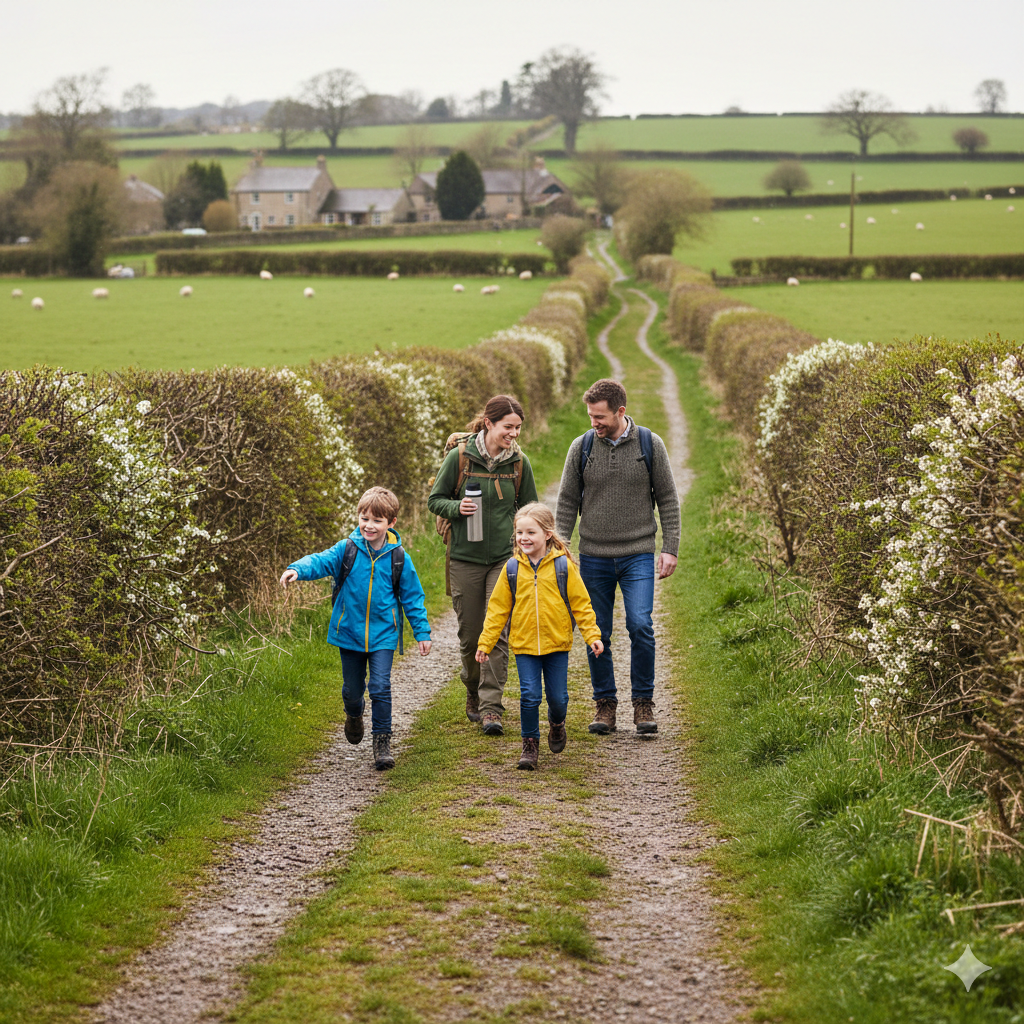
A typical first family walk in Britain usually involves:
- Mixed terrain — gravel paths, mud, grass, roots, puddles
- Unpredictable weather (even on “dry” days)
- Slow progress with frequent stops
- Snack breaks every 20–40 minutes
- Toilet challenges
- Detours to look at sticks, bugs, or dogs
- Occasional refusal to walk further
It is not a fitness challenge. It’s an outdoor outing.
Children walk in bursts. They sprint, stop, explore, sit down, and then suddenly find energy again.
If you’re unsure how far is realistic, our guide to How Far Can Kids Walk? (Realistic UK Distance Guide by Age) explains typical distances that keep things positive rather than exhausting.
A good mindset is:
You’re planning an experience, not completing a route.
Clothing Essentials
In the UK, clothing can make or break a walk faster than anything else you pack.
Dress for “Changeable,” Not for “Today”
Even when the forecast looks calm, conditions can shift quickly:
- Wind on exposed paths
- Cool damp air in woods
- Sudden drizzle
- Strong sun between clouds
Layering lets you adapt without carrying bulky items.
A simple setup:
- Comfortable base layer (T-shirt or long sleeve)
- Warm mid layer (fleece, jumper, hoodie)
- Lightweight outer layer
A packable waterproof kids jackets for light rain option is often all that’s needed for short outings.
Avoid heavy winter coats unless it’s genuinely cold — children overheat easily when moving.
Footwear: Comfort Beats “Hiking Style”
You don’t need expensive boots for beginner trails, but footwear must be:
- Comfortable
- Secure
- Grippy
- Broken in
New shoes can cause blisters surprisingly fast.
Trainers are usually fine for parks and dry paths, but muddy or uneven routes benefit from sturdier options. Our guide to Best Kids Walking Shoes for Summer (UK Lightweight Options) explains what works well for typical family walks.
Spare Socks — Tiny Item, Huge Impact
Wet feet turn happy walkers into miserable ones almost instantly.
Common causes of soggy socks:
- Long grass
- Mud patches
- Puddles
- Unexpected rain
- Sweat
A dry pair can reset comfort completely. Pack them in a small waterproof bag.
Expect Temperature Swings
Children often feel cold when stopping and hot when moving.
Light layers that can be stuffed into a bag are far more useful than one heavy coat nobody wants to carry.
Food & Drinks
If clothing keeps kids comfortable, snacks keep them cooperative.
Many experienced parents quietly admit that food planning matters more than route planning.
Snacks That Prevent Meltdowns
Choose foods that are:
- Familiar and liked
- Easy to eat outdoors
- Not too messy
- Energy-dense
Reliable options include:
- Sandwiches or wraps
- Fruit (bananas, apples, grapes)
- Crackers or breadsticks
- Cheese portions
- energy snack bars for kids
- Small treats
Regular small snack stops work better than one big break.
Hydration Without Hassle
Even on cool days, walking dehydrates children more than normal play.
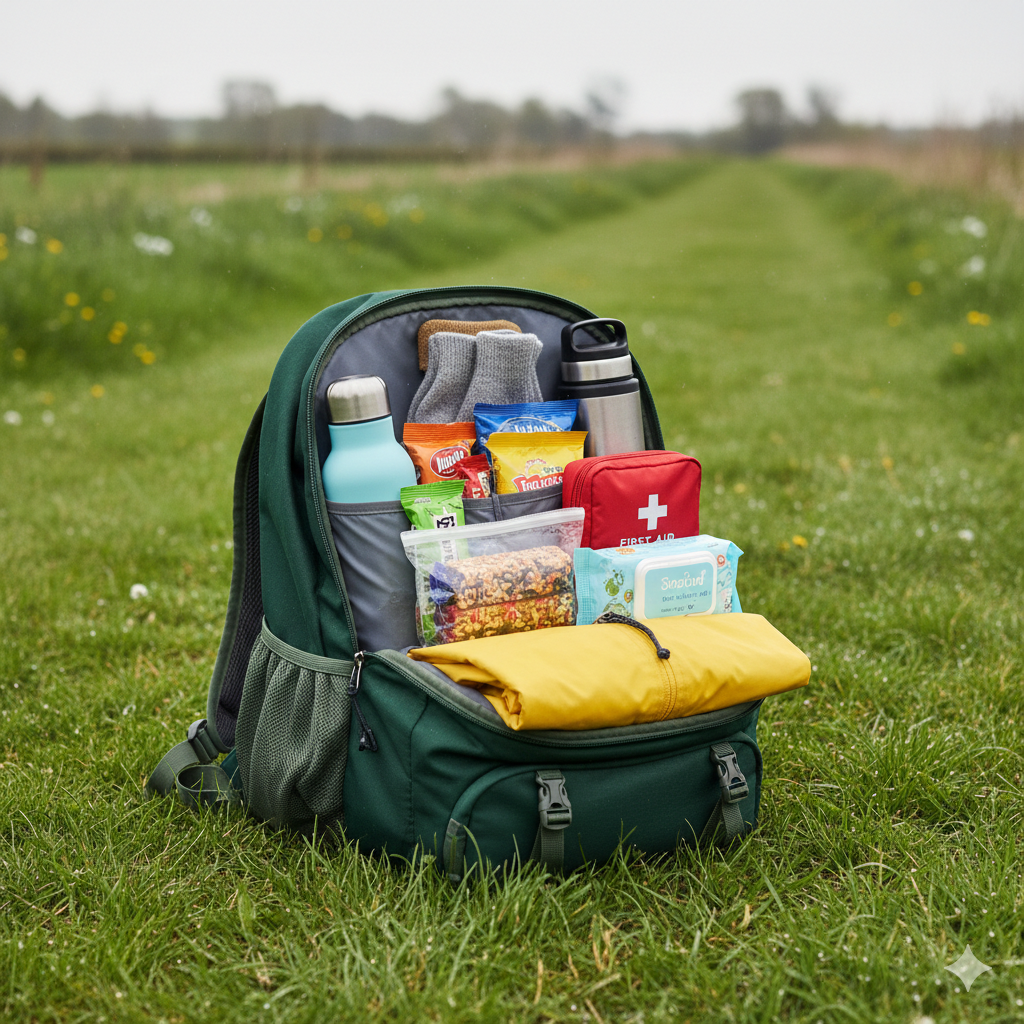
Each person should carry or have access to water. Individual insulated water bottles for children are helpful because kids can drink independently.
Rough guide for a 2–3 hour walk:
- Younger children: 300–500 ml
- Older children: 500–750 ml
- Adults: 500 ml–1 litre
Keep It Light
You don’t need a full picnic setup unless that’s the main goal of the trip.
Heavy cool bags quickly become uncomfortable to carry and rarely justify the effort for short walks.
Comfort & Safety Items
These small items rarely get used — but when they are needed, they feel invaluable.
Basic First Aid
A tiny compact first aid kit for families is enough. Focus on minor issues:
- Plasters
- Antiseptic wipes
- Blister protection
- Pain relief (if appropriate)
No need for bulky medical supplies.
Wet Wipes and Tissues
These solve more problems than almost anything else you can pack:
- Dirty hands
- Muddy knees
- Sticky food mess
- Minor scrapes
- Emergency toilet situations
They weigh almost nothing and often save the day.
Small Towel
A microfibre travel towel is surprisingly versatile:
- Drying hands or faces
- Cleaning mud
- Sitting on damp surfaces
- Drying playground equipment
- Emergency spill control
Microfibre versions pack down very small.
Sun Protection (Even When Cloudy)
UV exposure happens year-round.
Consider packing:
- Sunscreen
- Sun hats
- Sunglasses for sensitive eyes
Coastal paths and open countryside can be surprisingly bright.
Emergency Warm Layer
Always carry one extra warm item per child, even in summer.
Sweaty children cool down quickly during breaks.
Navigation & Practical Bits
You don’t need advanced skills, but a little preparation prevents unnecessary stress.
Phone + Backup Battery
Your phone handles:
- Navigation
- Photos
- Emergency contact
- Parking payments
- Weather checks
Battery drain increases in cold weather and poor signal areas.
A small power bank for phones provides peace of mind for very little extra weight.
Know the Basics of Your Route
Before leaving home, check:
- Distance and terrain
- Estimated time
- Facilities (toilets, café, parking)
- Exit points if you need to turn back
Many UK routes are poorly signposted.
Parking and Payment Surprises
Always check:
- Whether payment is required
- If machines accept cards
- Whether you need an app
- Time limits
Few things ruin a walk faster than worrying about parking fines.
Allow More Time Than You Think
Children slow everything down — in a good way.
Plan extra time for:
- Exploring
- Rest stops
- Snacks
- Unexpected detours
Rushing creates pressure and frustration.
Choosing the Right Bag
For a short family walk, one comfortable adult backpack is usually enough.
Older children often enjoy carrying their own small bag — a lightweight kids daypack for walking can help them feel involved without overloading them.
If you’re unsure what size or style works best, our guide to Best Family Walking Backpacks for Day Trips covers beginner-friendly options.
Keep children’s packs light. Comfort is far more important than independence.
What NOT to Pack (Common Overpacking Mistakes)
Most first-time walkers bring far too much.
You can safely leave behind:
- Full spare outfits for everyone
- Large blankets
- Heavy toys
- Big cool boxes
- Cooking equipment
- Multiple pairs of shoes
- Bulky “just in case” items
- Large cameras or gadgets
Overpacking leads to:
- Back pain
- Slower walking
- Frustration
- Less enjoyment
- Early fatigue
Ask yourself:
Will this solve a likely problem in the next 3 hours?
If not, it probably stays home.
Author Insight: What Makes a First Walk Successful
Distance rarely determines whether a walk feels successful.
Mood does.
Children remember:
- Whether they were hungry
- Whether they were comfortable
- Whether they had fun
- Whether adults seemed stressed
Frequent snacks, relaxed pacing, and time to explore create positive experiences far more reliably than pushing for a specific destination.
Turning back early isn’t failure — it’s smart planning. Finishing while everyone still feels good builds confidence for future walks.
Final Thoughts: Keep It Simple, Keep It Positive
Your first family walk doesn’t need to be perfect. It just needs to be manageable.
You’ll learn quickly what your children actually need, what they ignore, and what makes the biggest difference to comfort and enjoyment.
Focus on:
- Appropriate clothing
- Easy food and water
- A few practical comfort items
- Realistic expectations
Everything else is optional.
With the right basics in place, a 2–3 hour UK trail can feel relaxed, confidence-building, and genuinely enjoyable — the kind of day that makes everyone more willing to go again.
And that’s the real goal: not one perfect walk, but the start of many simple outdoor days together.
📚 Related Walking Guides for Families
About The Author – Andrew Marshall
Andrew Marshall is the creator of Simple Days Outside and a UK parent of three who regularly camps, walks, and explores outdoor activities with his family. His guides focus on practical gear, realistic family adventures, and simple ways to help families enjoy the outdoors across the UK. The recommendations on this site are based on real-world use, research, and the kind of equipment families actually rely on for weekend trips and everyday outdoor fun.