

Written by Andrew Marshall
UK parent of three sharing practical advice to help families enjoy camping, walking, garden play, and simple outdoor adventures across the UK.
Creator of Simple Days Outside.
If you’ve ever planned a “nice family walk” only to hear “My legs don’t work anymore” after ten minutes, you’re not alone.
Children don’t measure distance the way adults do. They measure walks in snacks, interesting sticks, puddles, dogs spotted, and how long it’s been since someone carried them.
So how far can kids actually walk — without tears, bribery, or emergency piggybacks?
The honest answer depends on age, terrain, weather, motivation, and mood (especially mood). But there are realistic ranges that work for most families on typical UK trails — country parks, woodland paths, coastal routes, canals, and gentle hills.
This guide will help you plan walks that feel achievable and enjoyable, rather than endurance tests disguised as “fresh air.” For more guides on other walking aspects see our hub page Family Walking & Easy Hiking
👉 In This Guide
What “Distance” Really Means on a Family Walk
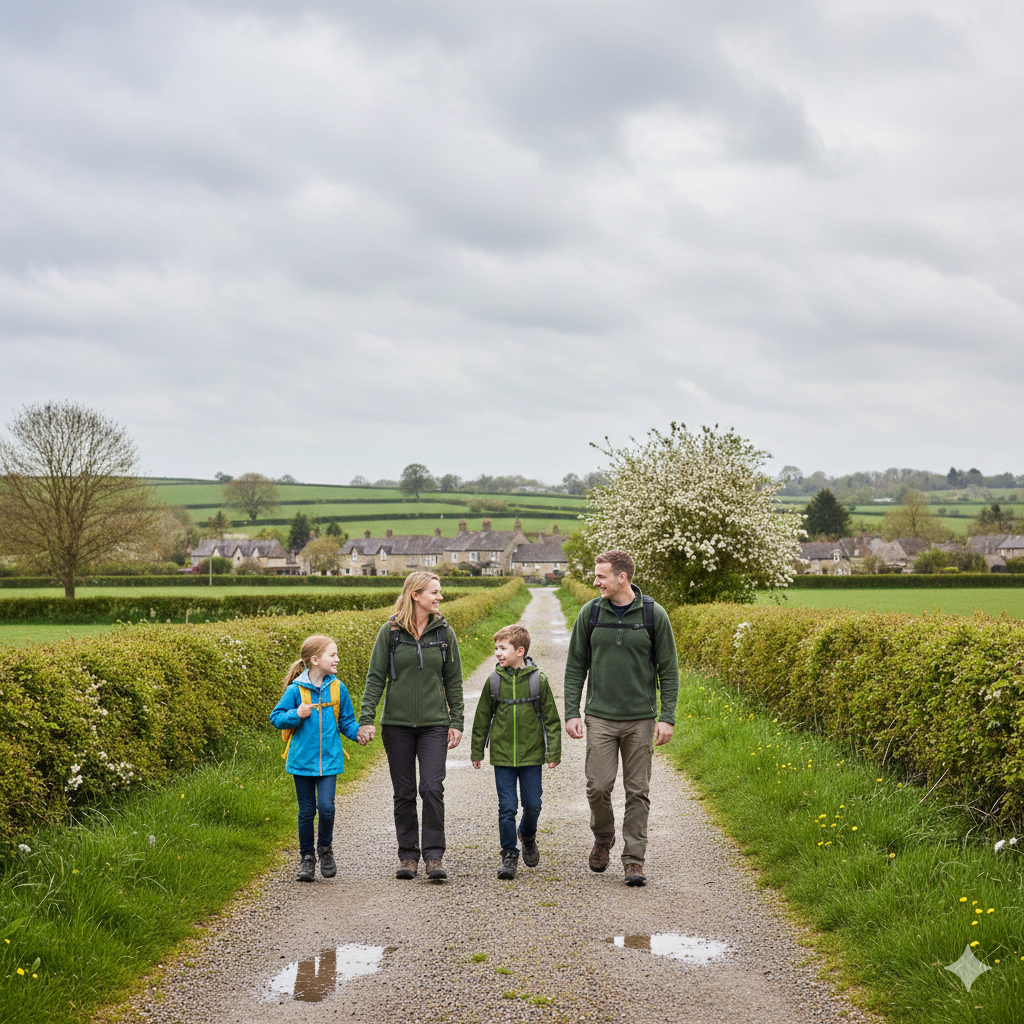
When adults say “It’s only three miles,” children hear “We will walk forever.”
In the UK, distance is only part of the story. A flat gravel path is very different from:
- Muddy woodland tracks
- Rocky coastal paths
- Stiles and gates
- Long grass
- Gentle hills that don’t feel gentle to small legs
- Wind and drizzle (the classic British combo)
Frequent stops also matter. A walk with playground breaks, picnics, or wildlife spotting will take far longer than a continuous march.
Think of family walking as time-based rather than distance-based.
Toddlers (2–3 Years)
Typical realistic distance:
👉 0.5–1 mile (0.8–1.6 km)
Some toddlers will happily toddle further… right up until they suddenly refuse to move.
At this age, walking is more about exploration than travel.
Expect:
- Random zig-zagging
- Frequent stopping
- Sitting down for no reason
- Picking up every stone on the path
- Sudden fatigue
You’ll almost certainly need a backup plan.
What Helps Toddlers Walk Further
- Very short routes with loops
- Interesting surroundings (animals, water, trees)
- Plenty of snack breaks
- Lightweight footwear
- Opportunities to ride in a buggy or carrier
Comfortable shoes matter hugely here — stiff or heavy footwear will end the walk fast. Boots designed for little walkers, like those in our guide to Top 5 Walking Boots for Toddlers (UK – Lightweight & Comfy Picks), prioritise flexibility over hardcore support.
Reality Check
If your toddler walks half a mile and enjoys it, that’s a win.
Anything beyond that is a bonus.
Preschoolers (4–5 Years)
Typical realistic distance:
👉 1–2 miles (1.6–3.2 km)
This is often the sweet spot where kids want to walk independently but still tire quickly.
They can manage longer distances than toddlers, but motivation matters enormously.
A five-year-old chasing ducks can walk surprisingly far. The same child on a dull gravel path? Not so much.
What Helps at This Age
- Clear destinations (lake, café, playground)
- “Treasure hunt” style games
- Short rest stops
- Comfortable trainers or lightweight boots
Choosing the right footwear becomes more important as distances increase. If you’re unsure what works best for mixed UK terrain, our guide to Trainers vs Walking Boots for Kids (UK): What’s Actually Better? breaks down when each option makes sense.
Early Primary (6–8 Years)
Typical realistic distance:
👉 2–4 miles (3–6.5 km)
Many children in this age group can handle proper family walks — as long as the pace is relaxed.
They’re capable of endurance but still prone to sudden energy crashes.
You may notice a pattern:
- Enthusiastic start
- Slight complaining
- Second wind
- Dramatic declaration of exhaustion near the end
Snack timing becomes crucial.
Older Primary (9–11 Years)
Typical realistic distance:
👉 3–6 miles (5–10 km)
At this stage, many kids can walk distances similar to adults on easy terrain.
However, hills, rough ground, or bad weather still reduce endurance significantly.
This is also when kids often enjoy carrying their own small backpack — which can increase enthusiasm but also fatigue if overloaded.
A well-fitted pack designed for family outings, like those in our guide to Best Family Walking Backpacks for Day Trips (UK), keeps weight manageable and comfortable.
Motivation Matters More Than Fitness
Children this age respond well to:
- Challenges (“Let’s reach that hilltop”)
- Responsibility
- Navigation involvement
- Photo missions
- Wildlife spotting
Boredom is the biggest enemy, not tired legs.
Teens (12+ Years)
Typical realistic distance:
👉 5–10+ miles (8–16 km)
Physically, many teens can match adult walking ability. Emotionally… results may vary.
Some will happily trek all day. Others will question your life choices every 500 metres.
At this age, the limiting factors are usually:
- Interest level
- Social dynamics
- Weather tolerance
- Phone battery percentage
If they’re engaged — photography, exploring, chatting, or listening to music — they often walk far without noticing.
Terrain Makes a Huge Difference
A flat canal towpath is not the same as a muddy woodland loop.
Distances should be adjusted for:
- Hills and elevation
- Surface conditions
- Obstacles (stiles, rocks, roots)
- Wind exposure
- Weather
Rough rule:
👉 Difficult terrain can reduce effective distance by 25–50%
Weather Changes Everything
A sunny spring day and a cold windy one produce very different results.
UK-specific factors include:
- Mud after rain
- Slippery leaves in autumn
- Cold damp air that saps energy
- Strong coastal winds
- Sudden showers
Proper clothing and footwear keep kids comfortable enough to continue.
Lightweight breathable options — like those highlighted in Best Kids Walking Shoes for Summer (UK Lightweight Options) — can prevent overheating on warm days, which is a surprisingly common reason children give up early.
The Snack Factor (Very Scientific)
More snacks = more walking.
Children burn energy quickly on uneven ground, and hunger often shows up as irritability long before they say they’re hungry.
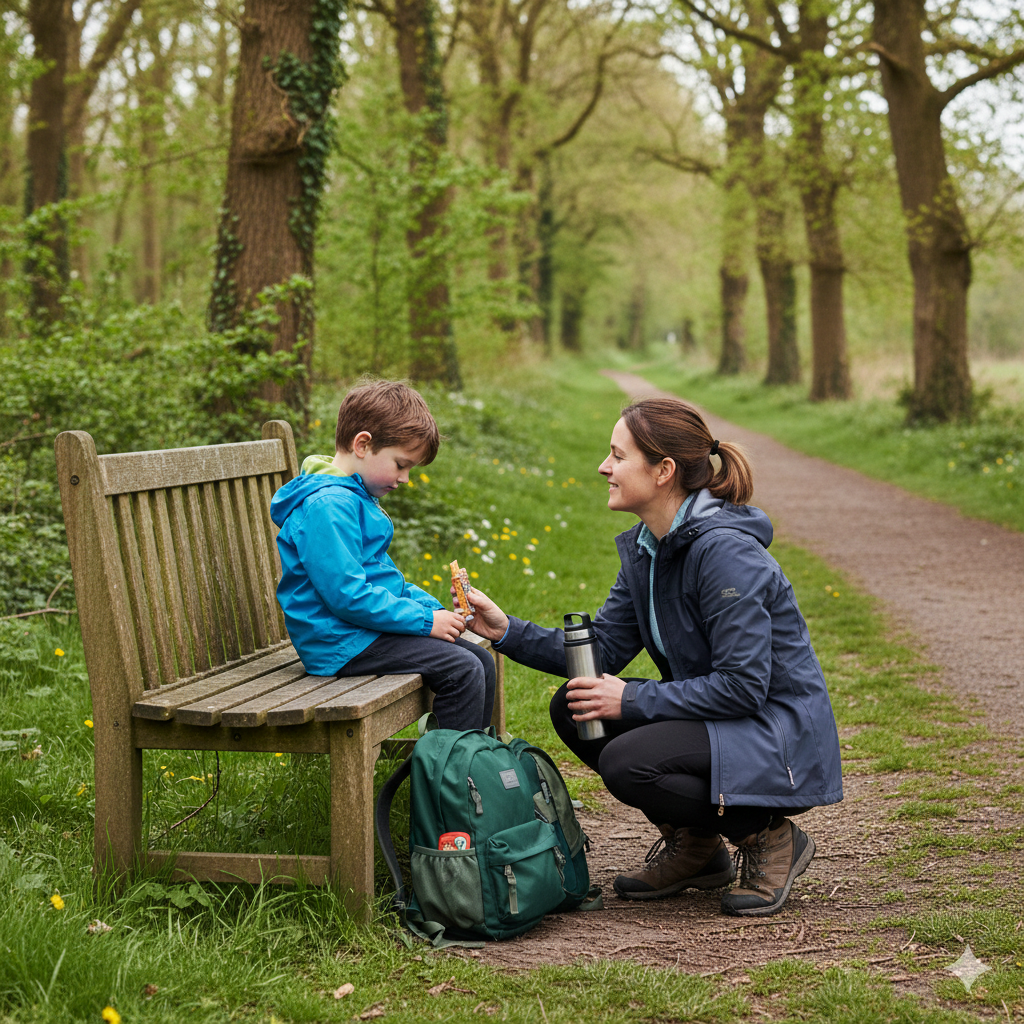
Small, frequent snack breaks are far more effective than one large picnic stop.
Many experienced parents quietly plan walks around food.
Pacing Matters More Than Distance
Adults often walk too fast for children.
A sustainable family pace usually includes:
- Slower speed
- Regular pauses
- Time to explore
- Opportunities to run ahead safely
If children feel rushed, they tire sooner and enjoy the experience less.
Signs It’s Time to Turn Back
Watch for:
- Persistent complaining
- Tripping more often
- Slowing dramatically
- Irritability or tears
- Refusing snacks or drinks
- Requests to be carried
Turning back early isn’t failure — it’s good judgement.
Pushing too far can create negative associations with walking that last much longer than the memory of the extra distance.
Building Distance Over Time
Walking endurance grows surprisingly quickly with positive experiences.
A simple progression:
- Short, fun walks with plenty of breaks
- Slightly longer routes with a clear destination
- Adding mild hills or varied terrain
- Longer outings with picnic stops
Confidence matters as much as physical ability.
What About Carrying Kids?
Even strong walkers have off days.
Options include:
- Child carriers
- Piggyback rides (briefly… hopefully)
- Rest stops
- Shortcuts back to the start
Planning routes with exit points or loops reduces pressure.
Planning Your First Proper Walk
If you’re unsure where to begin, starting with a short, well-planned outing makes a huge difference. Our guide First Family Walk? What to Pack for a 2–3 Hour UK Trail covers the essentials that keep outings comfortable without overpacking — but planning goes beyond what’s in your bag.
For a first proper walk, look for routes that are:
- Clearly marked and easy to follow
- Mostly flat or gently sloping
- Circular (so you don’t face a long return slog)
- Close to parking or facilities
- Interesting enough to hold children’s attention
Country parks, reservoir paths, canal towpaths, National Trust properties, and well-maintained woodland trails are ideal starting points. These usually offer a balance of nature, accessibility, and escape routes if energy levels drop faster than expected.
Timing also matters. Late morning or early afternoon often works best — kids are fed, awake, and not yet overtired. Avoid starting too late in the day, when small problems can feel bigger simply because everyone is tired.
It also helps to build “mini goals” into the walk:
- “Let’s reach that bridge”
- “Snack stop at the bench”
- “We’ll turn back at the big tree”
This keeps children focused on manageable milestones rather than an abstract distance.
Most importantly, give yourself permission to adapt. Turning back early, shortening the route, or stopping for longer breaks doesn’t mean the walk failed — it means you responded to what your family actually needed.
Good preparation doesn’t just make walks easier — it makes them calmer, more enjoyable, and far more likely to become something everyone wants to do again.
Author Insight: Kids Remember Feelings, Not Miles
Ask adults about childhood walks and they rarely remember distances.
They remember:
- Feeding ducks
- Climbing rocks
- Getting muddy
- Finding a great stick
- Hot chocolate afterwards
The most successful family walks end with children feeling proud, happy, and willing to go again.
Finishing while everyone still has energy beats pushing to an arbitrary distance every time.
Final Thoughts: Plan for Success, Not Exhaustion
So how far can kids walk?
Less than you hope on a bad day.
More than you expect on a good one.
Start small, keep it fun, and build gradually.
With the right expectations, suitable footwear, sensible pacing, and plenty of snacks, family walks become one of the easiest ways to spend time outdoors together — no extreme adventures required.
And if the day ends with muddy shoes, tired legs, and a happy child asleep in the car on the way home… you probably judged the distance perfectly.
Related Walking Guides for Families
About The Author – Andrew Marshall
Andrew Marshall is the creator of Simple Days Outside and a UK parent of three who regularly camps, walks, and explores outdoor activities with his family. His guides focus on practical gear, realistic family adventures, and simple ways to help families enjoy the outdoors across the UK. The recommendations on this site are based on real-world use, research, and the kind of equipment families actually rely on for weekend trips and everyday outdoor fun.