

Written by Andrew Marshall
UK parent of three sharing practical advice to help families enjoy camping, walking, garden play, and simple outdoor adventures across the UK.
Creator of Simple Days Outside.
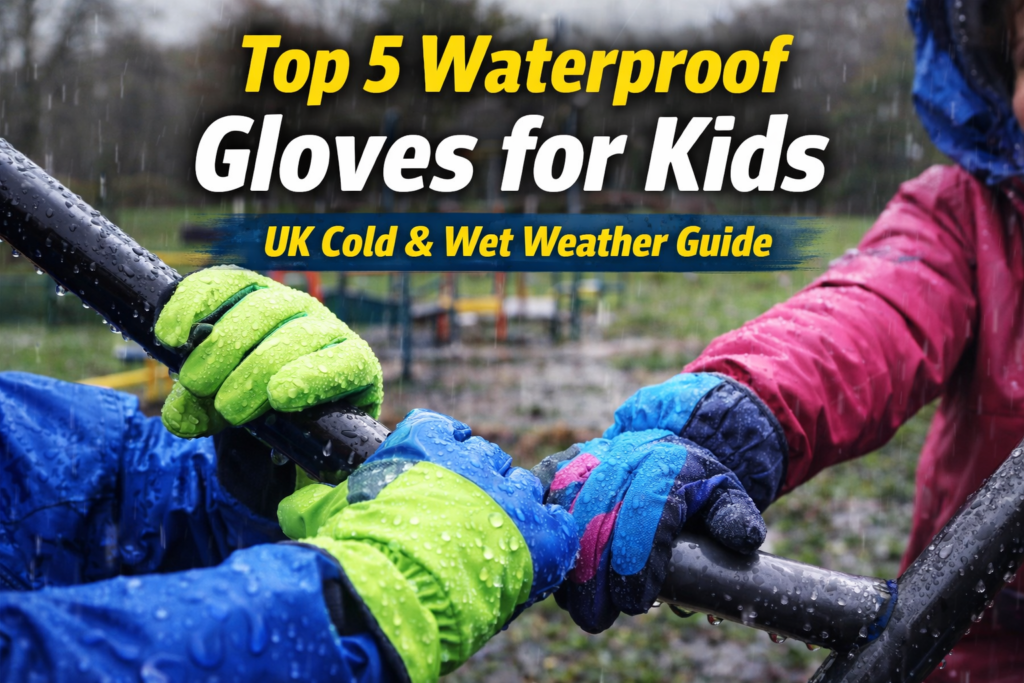
Cold, wet hands can ruin a perfectly good family walk faster than almost anything else. If you’ve ever taken kids out in typical UK winter weather — drizzle, wind, damp playgrounds, muddy fields — you’ll know exactly how quickly gloves get soaked.
And once children’s gloves get wet, the day usually goes downhill quickly. Cold fingers, constant complaints, and gloves getting pulled off every few minutes.
The good news is that a decent pair of proper waterproof kids gloves makes a huge difference. The right pair keeps hands warm, stops water soaking through, and usually stays on better too.
After trying quite a few pairs over the years for muddy walks, winter playground trips, and cold beach days, the main thing I’ve learned is this: cheap gloves that aren’t actually waterproof rarely last more than 10 minutes in British weather. Everything else we use to keep the kids comfortable outdoors is in our Practical Outdoor Clothing & Comfort Hub. We’ve tested this repeatedly on west coast walks where drizzle turns to horizontal rain without warning — the difference between a decent waterproof glove and a cheap knit one is usually about fifteen minutes.
What Makes a Good Waterproof Glove for Kids?
A lot of gloves are described as “water resistant”, but that’s not the same as waterproof.
For real UK weather, you want gloves that combine a few important features:
A Proper Waterproof Outer Layer
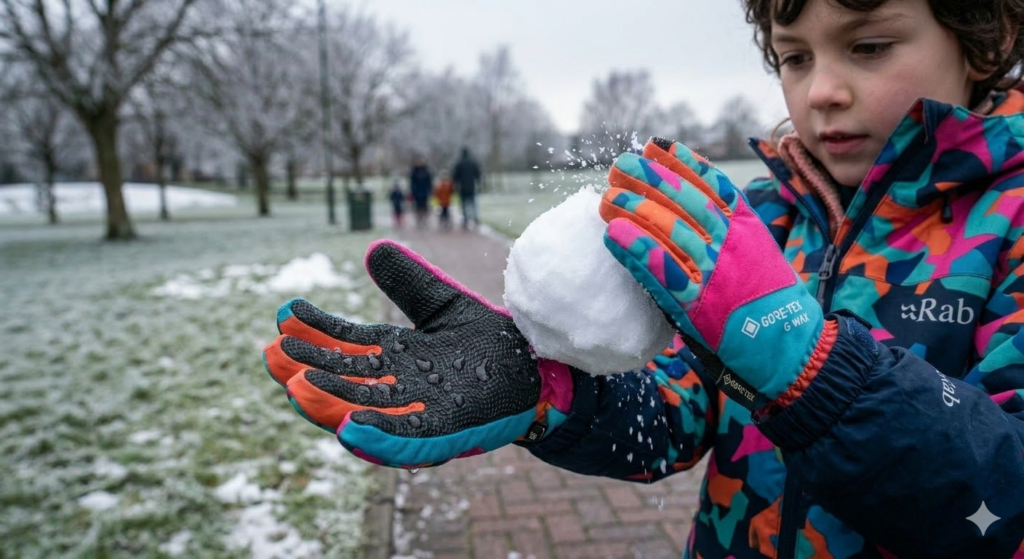
Most good winter gloves use a waterproof membrane or coated fabric that prevents rain or snow soaking through.
Many winter gloves designed for skiing or snow play are naturally good choices because they’re built to deal with wet snow and freezing temperatures.
Insulation
Cold hands often come from damp gloves, but insulation matters too. Look for fleece lining or thermal insulation inside the glove.
Long Cuffs
Short gloves allow water to drip inside sleeves. Longer cuffs that sit over jacket sleeves work much better for kids.
Wrist Straps or Elastic
Kids move around constantly, so gloves without a secure wrist strap often fall off or let water sneak in.
Grip on the Palm
Rubber or textured palms help kids hold things properly — climbing frames, bikes, walking sticks, or even just playground equipment.
One thing I’ve noticed with children’s gloves is that fit matters more than anything else. The same is true when choosing a kids waterproof jacket — fit and construction matter far more than the price tag. Gloves that are too big tend to get soaked faster because the cuffs open up and let rain in.
Our Top 5 Waterproof Gloves for Kids (Amazon UK)
Below are five solid options that work well for typical UK weather — wet walks, winter school runs, playground time, and family days outdoors.
1. OutdoorMaster Kids Ski & Snow Gloves – around £10-£12
These are a really reliable all-round choice for cold and wet weather.
They’re designed for snow sports, but that actually makes them perfect for damp UK winters. The waterproof outer layer combined with thermal insulation keeps hands warm even when kids are playing outside for longer periods.
Best for younger children or anyone who needs maximum warmth — the insulation is noticeably heavier than the others on this list.
Why they work well
- Waterproof and windproof outer fabric
- Warm fleece lining
- Adjustable wrist strap to stop water getting in
- Anti-slip palm grip
The longer cuff is particularly helpful. It sits over jacket sleeves nicely, which stops rain running down into the glove — something that happens a lot with shorter gloves.
Our kids have worn ski-style gloves on walks where the rain came in sideways off the loch and their hands stayed genuinely dry — that’s the standard you want.
For general outdoor play, winter walks, and school runs, these are a very dependable option.
2. Vernerth Kids Ski Gloves – Waterproof Thermal Gloves – around £6-£8
These are a great budget-friendly waterproof option that still performs well in wet conditions.
They use a waterproof outer shell combined with a fleece-style lining that helps keep hands warm without making the gloves overly bulky.
Best budget pick — performs above its price point and flexible enough that kids actually keep them on.
Key features
- Waterproof outer material
- Thermal fleece lining
- Adjustable cuff strap
- Anti-slip palm surface
One thing I like about this style of glove is that they’re quite flexible, which helps kids actually keep them on. Some heavily insulated gloves feel stiff and end up being pulled off constantly.
For everyday winter use, these are surprisingly good value.
3. Kids Waterproof Thermal Sports Gloves – around £6-£8
These are more lightweight waterproof gloves that work well for milder winter weather or active kids.
They’re less bulky than ski gloves but still offer a waterproof outer layer and thermal lining.
Best for active older kids who cycle or play sports — the touchscreen fingers are a genuine bonus for older children with phones.
Why they’re useful
- Waterproof and windproof fabric
- Touchscreen-compatible fingers
- Flexible design for sports and cycling
- Good grip on the palm
These tend to work well for slightly older kids who are riding bikes, playing football, or just don’t like chunky gloves.
They’re not as insulated as ski-style gloves, but for damp playground weather they’re often perfect.
These are the ones our older two tend to prefer — they don’t like the bulk of ski gloves and these are flexible enough that they actually keep them on.
4. Origem Kids Ski Gloves – around £11-£14
These are a good mid-range waterproof winter glove that balances warmth, durability, and comfort.
They’re particularly good if you need gloves that can cope with colder conditions as well as wet weather.
Best mid-range pick — the wrist strap is the most secure of the five and the one least likely to let rain in at the cuff.
Highlights
- Waterproof shell with thermal insulation
- Adjustable wrist strap
- Reinforced palm grip
- Soft inner lining for warmth
What stands out with these gloves is how well they stay on. The wrist strap and elastic cuff keep the glove snug, which helps stop rain getting inside.
That might sound like a small thing, but it’s surprisingly important when kids are climbing, running, and generally moving nonstop.
5. Ponceau Kids Waterproof Ski Gloves – around £10
These are another affordable pair that work well for everyday winter use.
They follow the classic ski-glove design with a waterproof shell, warm lining, and longer cuff.
Best for younger children who pull gloves off — lighter weight means better tolerance for toddlers and early school age.
Key features
- Waterproof outer fabric
- Warm fleece insulation
- Adjustable wrist strap
- Non-slip palm
For typical UK winter weather — damp mornings, muddy park trips, wet playground equipment — these are more than capable.
They’re also lightweight enough that younger kids usually tolerate wearing them for longer.
Gloves vs Mittens for Kids
One question parents often ask is whether gloves or mittens are better.
Both have advantages.
Mittens
- Warmer because fingers share heat
- Often more waterproof
- Better for younger children
Gloves
- Easier for climbing and gripping
- Better for bikes and playground equipment
- More comfortable for older kids
For toddlers and younger children, mittens usually win. For the same age group, layering underneath makes as much difference as the outer glove — warm hands start with warm arms. For older kids who want to climb, cycle, or use their hands more easily, gloves tend to work better.
Our youngest was in mittens until about four — beyond that, gloves won out because they could actually use their hands on climbing frames without taking them off.
Getting the Right Size
Sizing varies significantly between brands and it matters — gloves that are too big let rain in at the cuff and are the first thing kids pull off. Most children’s gloves are sized by age, but age ranges can be wide. A better guide is to measure from the tip of the middle finger to the base of the palm — most product listings include a size chart based on this measurement. When between sizes, go smaller rather than larger for better waterproofing at the cuff.
Tips for Keeping Kids’ Gloves Dry Longer
Even good waterproof gloves benefit from a bit of care.
A few simple habits make them last longer.
Let Them Dry Properly
Hang gloves somewhere warm after use. Stuffing them into bags or coat pockets leaves them damp.
Avoid Radiators
Very hot drying can damage waterproof coatings.
Use Waterproof Spray
A quick spray with a DWR reproofer every few months extends waterproofing significantly — the same products used for waterproof jackets work on gloves too
Have a Spare Pair
This is something I learned the hard way on family days out. Having a spare pair in the car or backpack can save a lot of complaining.
Salt and mud from coastal or loch-side walks can degrade waterproof coatings faster than normal rain — rinse gloves in clean water after particularly mucky days
Which Pair Should You Buy?
A good pair of waterproof gloves might seem like a small thing, but it genuinely makes outdoor time with kids more enjoyable.
Cold, wet hands are usually the first thing that ends a walk early. When gloves actually stay dry, kids tend to stay happier outside for much longer.
For typical UK conditions — drizzle, damp playgrounds, muddy parks, winter beach trips — ski-style waterproof gloves tend to work best. They’re built to deal with wet weather and usually last longer than thin knit gloves.
If you’re choosing just one pair, go for something with:
- a waterproof outer layer
- warm lining
- adjustable wrist strap
- longer cuffs
Those features make a noticeable difference once the weather turns properly cold and wet.
Related Guides
About The Author – Andrew Marshall
Andrew Marshall is the creator of Simple Days Outside and a UK parent of three who regularly camps, walks, and explores outdoor activities with his family. His guides focus on practical gear, realistic family adventures, and simple ways to help families enjoy the outdoors across the UK. The recommendations on this site are based on real-world use, research, and the kind of equipment families actually rely on for weekend trips and everyday outdoor fun.