

Written by Andrew Marshall
UK parent of three sharing practical advice to help families enjoy camping, walking, garden play, and simple outdoor adventures across the UK.
Creator of Simple Days Outside.
Waterproof jackets and trousers are essential for outdoor life in the UK. Whether you’re hiking coastal paths, camping with the kids, or caught in a sudden downpour on a weekend walk, reliable waterproof gear makes the difference between a great day outdoors and a miserable one.
But once you get home, many people aren’t sure how to dry waterproof clothing properly. Unlike normal fabrics, waterproof jackets and trousers rely on special membranes and coatings that can be damaged by poor drying methods or excessive heat.
This guide forms part of our wider collection of practical outdoor clothing advice for family adventures and weekend camping trips, helping parents keep their gear working properly in real UK conditions.
Done correctly, drying waterproof clothing helps protect breathable fabrics, prevents mildew and odours, and keeps jackets performing properly in wet weather. Below you’ll learn the safest ways to dry waterproof gear, when tumble drying is safe, and how to avoid damaging waterproof coatings.
👉 In This Guide
Quick Answer: How Should You Dry Waterproof Clothing?
The safest way to dry waterproof jackets and trousers is air drying in a well-ventilated space.
Most outdoor brands recommend:
- Hanging garments on a wide hanger
- Leaving zips and pockets open
- Allowing air to circulate around the fabric
- Avoiding direct heat sources like radiators
Some waterproof jackets can also be tumble dried on low heat if the care label allows it. Gentle heat can help reactivate the Durable Water Repellent (DWR) coating that helps rain bead off the fabric.
If you’re unsure, air drying with good airflow is always the safest option.
Why Waterproof Clothing Needs Special Care
Most waterproof jackets and trousers use a layered fabric system.
Typically this includes:
- Outer fabric (protective shell)
- Waterproof membrane (blocks rain)
- Inner lining (comfort layer)
Understanding how these layers work also helps when choosing outdoor gear for children, where comfort, breathability and waterproof ratings all matter.
The outer fabric is usually treated with a Durable Water Repellent (DWR) coating. This treatment makes rain bead up and roll off the surface rather than soaking into the fabric.
When waterproof clothing is dried incorrectly, several problems can occur:
- Waterproof coatings can weaken
- Fabrics can warp or melt under high heat
- Breathability can decrease
- Water may start soaking into the outer layer
That’s why drying methods matter.
The Biggest Drying Challenge With Waterproof Gear
Waterproof fabrics behave differently from normal clothing.
Because the outer layer is designed to repel water, moisture often sits on the surface or inside seams and folds, rather than absorbing evenly into the fabric.
This means:
- Jackets can feel dry but still contain moisture inside seams
- Pockets, cuffs, and zips trap water
- Thick outdoor fabrics take longer to dry than expected
If waterproof clothing is packed away too soon, trapped moisture can lead to musty smells or even mildew.
Step One: Shake and Vent Your Gear
Before drying your jacket or trousers, start with a quick preparation step.
When you return from a trip:
- Shake off excess rainwater
- Open all zips and pockets
- Loosen cuffs and drawcords
- Turn the garment inside out briefly if soaked
This improves airflow and helps moisture escape more easily.
Best Method: Air Dry Waterproof Jackets and Trousers
For most situations, air drying is the safest and easiest method.
How to Air Dry Properly
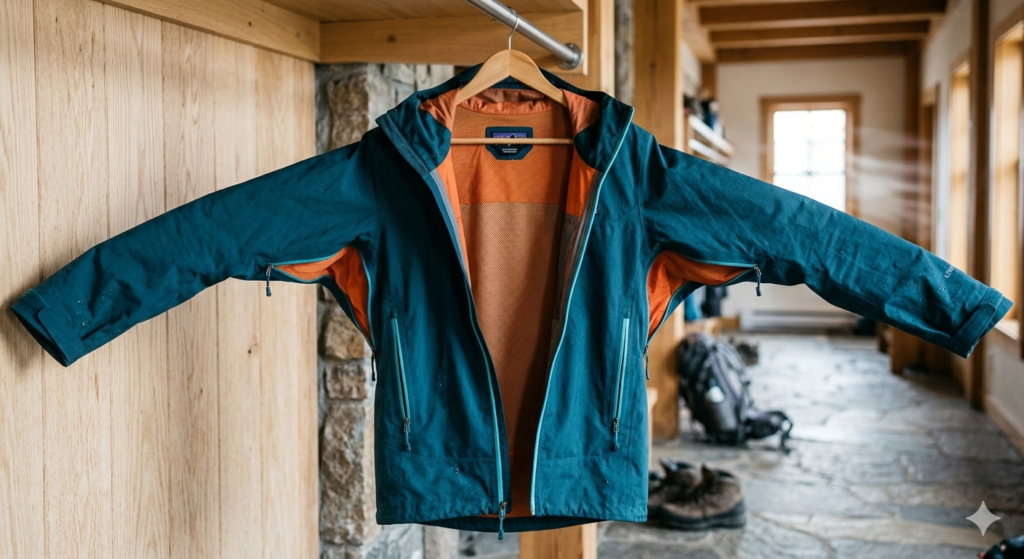
Hang the jacket or trousers on a wide hanger or clothes rail so the fabric can breathe.
Good locations include:
- A well-ventilated hallway
- Utility room
- Covered outdoor area
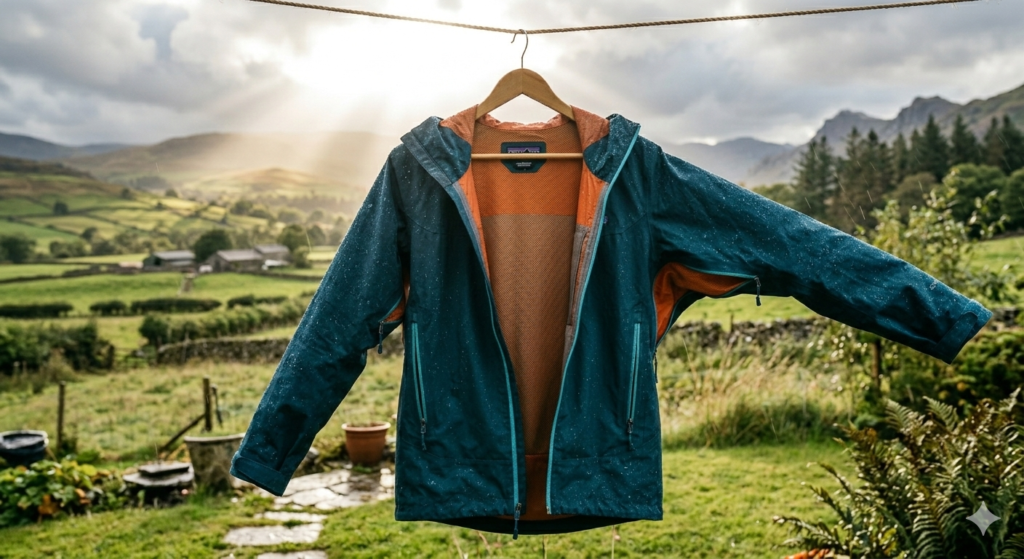
- Garden washing line on dry days
If you’re drying outdoor clothing inside during colder months, small changes to airflow and room setup can help fabrics dry much faster without increasing heating costs.
Avoid cramped spaces where airflow is poor.
If possible:
- Leave zips open
- Spread sleeves out
- Allow air to circulate freely
Most waterproof garments will dry within 4–12 hours depending on conditions.
Drying Waterproof Gear After Heavy Rain
If your clothing was soaked during a hike or camping trip, drying may take longer.
Extra tips:
- Hang items separately (not touching other clothes)
- Turn them inside out halfway through drying
- Check cuffs, seams, and pockets for trapped moisture
These areas are usually the slowest to dry.
Can You Use a Tumble Dryer for Waterproof Clothing?
This is one of the most common questions outdoor users ask.
The answer: sometimes — but only with care.
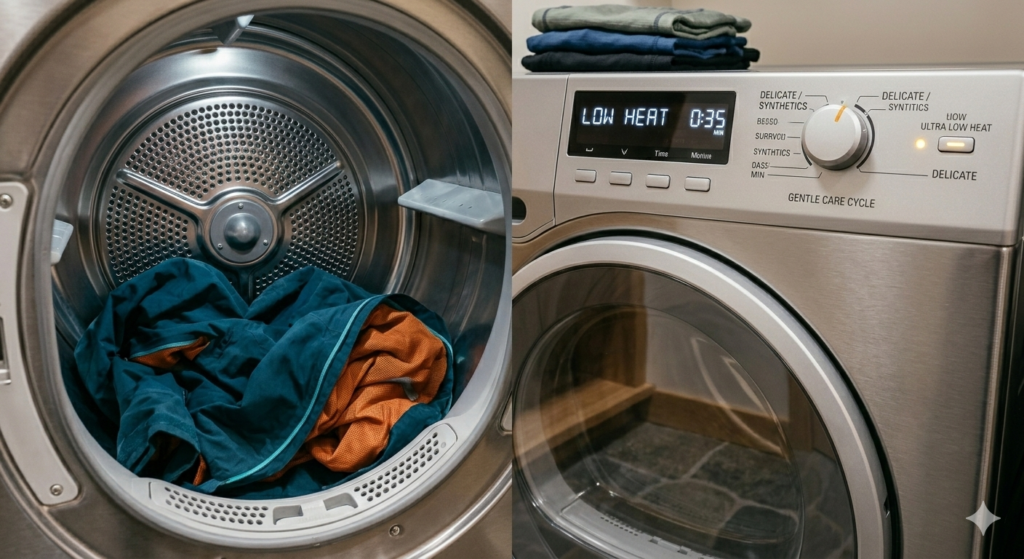
Many waterproof garments can be tumble dried on a low heat setting.
In fact, gentle heat can help reactivate the Durable Water Repellent coating on some jackets.
However, always check the care label first.
When Tumble Drying Is Safe
You can usually tumble dry waterproof clothing if:
- The label allows it
- The dryer is set to low heat or synthetic setting
- The garment is mostly dry already
A short 10–20 minute cycle is usually enough.
When You Should NOT Tumble Dry
Avoid tumble drying if:
- The label says “air dry only”
- The garment contains glued seams sensitive to heat
- The jacket uses delicate lightweight membranes
- The dryer only has high heat settings
High heat can damage waterproof fabrics or melt synthetic components like seam tape.
If you’re unsure, air drying is always the safest choice.
Why Gentle Heat Can Help Waterproof Jackets
Over time, the outer fabric of waterproof gear can begin to “wet out” — where rain stops beading and instead spreads across the surface.
This doesn’t necessarily mean the jacket is leaking, but it does reduce breathability.
Gentle heat from a tumble dryer can revive the DWR coating, helping water bead on the surface again.
Many outdoor brands recommend occasional low-heat tumble drying after washing to restore performance.
When Drying Can Actually Improve Waterproof Performance
Many outdoor jackets gradually lose their ability to make water bead on the surface. This is often called “wetting out.”
When this happens, rain spreads across the outer fabric instead of forming droplets.
Drying the jacket correctly can sometimes restore performance.
Gentle tumble drying (when allowed by the label) helps reactivate the DWR coating, which is designed to repel water.
If water still doesn’t bead after drying, it may be time to:
- Wash the jacket using a specialist outdoor cleaner
- Apply a DWR reproofing treatment
- Follow with a short low-heat tumble dry to activate the treatment
This simple maintenance step can dramatically extend the life of outdoor waterproof gear.
Protecting Waterproof Fabrics From Heat Damage
Waterproof outdoor gear contains synthetic materials that can deform under high heat.
This is particularly important with children’s outdoor clothing, which often uses lighter fabrics designed for comfort and flexibility.
To avoid damage:
- Never use hot tumble dryer settings
- Keep clothing away from radiators or fires
- Avoid direct contact with heaters
- Don’t use irons unless the manufacturer explicitly allows it
Extreme heat can cause coatings to degrade or fabrics to warp.
Drying Waterproof Trousers
Waterproof trousers often dry faster than jackets because they contain less fabric and fewer layers.
Well-designed waterproof trousers also allow better airflow and movement, which helps them dry faster after wet walks or muddy school runs.
However, some areas still trap moisture.
Pay particular attention to:
- Waistbands
- Pocket linings
- Reinforced knee panels
- Ankle cuffs
Turning trousers inside out halfway through drying can help these areas dry completely.
How to Dry Waterproof Gear When Camping
Sometimes gear needs to dry before you even get home.
If you’re camping or travelling:
- Hang jackets inside the tent vestibule
- Use guy lines or washing lines around camp
- Lay garments across tent poles or chairs
Even partial drying overnight helps prevent damp gear from staying wet for days.
Just avoid placing clothing directly on campfires or stoves.
Preventing Musty Smells in Outdoor Gear
If waterproof clothing is stored while damp, it can develop a musty smell.
Damp smells usually happen when moisture gets trapped inside fabric fibres rather than fully drying out.
To prevent this:
- Always dry gear fully before packing away
- Store jackets in breathable wardrobes rather than sealed bags
- Allow occasional airing between trips
If gear does develop odours, washing with a specialist outdoor cleaner followed by proper drying usually solves the issue.
Storing Waterproof Jackets and Trousers
Once dry, store waterproof clothing properly so it stays ready for the next trip.
Good storage practices include:
- Hanging jackets rather than compressing them
- Avoiding tightly packed storage boxes
- Keeping gear in cool, dry areas
Long-term compression can weaken fabric performance over time.
Why Is My Waterproof Jacket Still Wet After Drying?
Sometimes waterproof clothing feels damp even after hanging for hours. This usually happens because moisture hides in certain areas.
Common places water gets trapped:
- Pocket linings
- Seam tape
- Hood folds
- Elastic cuffs
- Reinforced panels
If a jacket still feels damp:
- Turn it inside out
- Hang it somewhere with better airflow
- Check pockets and seams
- Leave it longer than expected
Waterproof fabrics can take longer to dry than normal clothing, especially after heavy rain.
Final Thoughts
Waterproof jackets and trousers are designed to handle harsh weather, but they still need the right care after a wet trip.
Drying them properly protects waterproof coatings, prevents odours, and ensures they continue performing well in the rain. In most situations, simple air drying with good airflow works perfectly.
Occasional low-heat tumble drying can help restore water repellency on some garments, but always check the care label first.
With a little attention after each outing, your waterproof gear will stay comfortable, breathable, and ready for the next adventure — whatever the UK weather decides to do.
Related Guides for Outdoor Clothing Care
If you’re building a reliable outdoor clothing setup for UK weather, these guides help you choose gear that stays warm, dry, and comfortable for family adventures.
About The Author – Andrew Marshall
Andrew Marshall is the creator of Simple Days Outside and a UK parent of three who regularly camps, walks, and explores outdoor activities with his family. His guides focus on practical gear, realistic family adventures, and simple ways to help families enjoy the outdoors across the UK. The recommendations on this site are based on real-world use, research, and the kind of equipment families actually rely on for weekend trips and everyday outdoor fun.