

Written by Andrew Marshall
UK parent of three sharing practical advice to help families enjoy camping, walking, garden play, and simple outdoor adventures across the UK.
Creator of Simple Days Outside.
Dressing children for UK weather can feel like a constant guessing game.
One minute it’s bright sunshine, the next it’s cold wind and drizzle — and somehow they still end up either sweaty, shivering, or both. Unlike adults, kids rarely regulate temperature well. They run, stop, sit on damp grass, forget hats, and refuse coats at the worst possible moment.
This guide is part of our Practical Outdoor Clothing & Comfort hub, where we share straightforward advice to help families stay warm, dry and comfortable during real UK conditions.
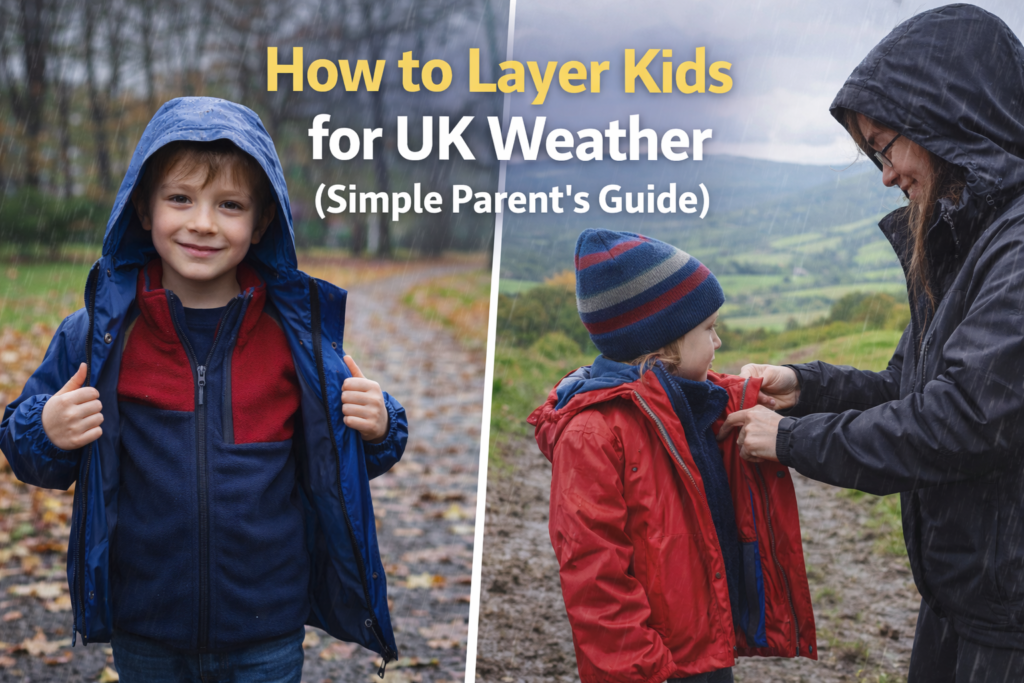
Instead of relying on one bulky outfit that only works in one temperature, layering gives you flexibility. You can add warmth when needed, remove it when activity increases, and keep children comfortable across changing weather. Below is a simple, parent-friendly approach that works for school runs, park trips, countryside walks and everyday outdoor play.
👉 In This Guide
Why Layering Beats “One Big Coat”
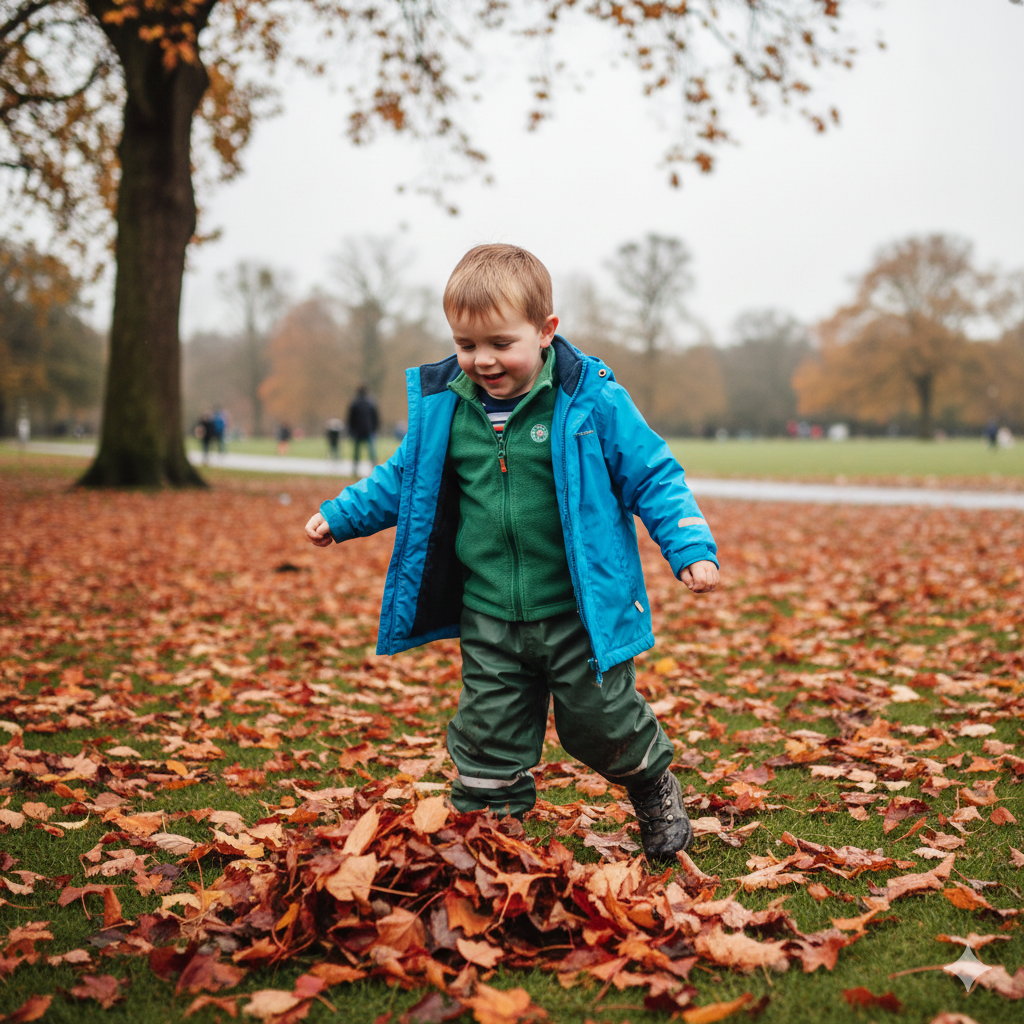
A single heavy coat might feel warm at first, but it quickly becomes uncomfortable once children start moving.
Layering works because it traps warm air between clothing while still allowing flexibility.
Benefits of layering:
- Prevents overheating during active play
- Allows quick adjustments as weather changes
- Dries faster if one layer gets damp
- Reduces bulk and restriction
- Keeps children comfortable for longer
It also means you don’t need to buy separate outfits for every season.
The Three-Layer System (Made Simple)
Outdoor brands talk about technical layering systems, but you don’t need specialist gear to make it work.
For everyday UK use, think:
Base Layer → Mid Layer → Outer Layer
1️⃣ Base Layer — The Temperature Regulator
This is the layer closest to the skin.
Its job isn’t to provide heavy warmth — it’s to manage moisture and keep body temperature stable.
Good base layer options include:
- Long-sleeve cotton tops (for everyday use)
- Thermal tops in colder weather
- Leggings or thermal trousers
- Lightweight vests
Avoid thick fabrics that trap sweat. Damp fabric next to skin quickly leads to chills when children stop moving.
On cold days, a kids thermal base layer set can make a noticeable difference without adding bulk.
For milder conditions, a simple long-sleeve top is usually enough.
2️⃣ Mid Layer — The Warmth Layer
The mid layer provides insulation by trapping warm air.
This is the layer you’ll adjust most often throughout the day.
Common mid-layer options:
- Fleece tops or hoodies
- Lightweight insulated jackets
- Sweatshirts
- Thin jumpers
Fleece is particularly useful because it stays warm even if slightly damp and dries quickly.
If your child runs hot, choose a lighter mid layer and rely more on the outer shell for wind protection.
A lightweight fleece jacket for kids is one of the most versatile items you can own — useful across multiple seasons.
3️⃣ Outer Layer — The Weather Shield
The outer layer protects against wind, rain and cold air.
This is where waterproofing and durability matter most.
A good outer layer should:
- Block wind effectively
- Repel or withstand rain
- Allow some breathability
- Fit comfortably over other layers
A reliable waterproof jacket makes the entire system work. If you’re choosing one, our guide to Best Kids Waterproof Jackets explains which styles hold up in real conditions.
For wet ground or puddle-heavy environments, waterproof trousers are equally important — especially for younger children who sit or kneel during play. The guide to Best Waterproof Trousers for Children covers practical options that keep legs warm and dry without restricting movement.
Why Wind Is Often the Real Problem
In the UK, wind chill can make mild temperatures feel surprisingly cold.
Even on dry days, exposed areas like beaches, hilltops and open parks can strip warmth quickly.
That’s why a windproof outer layer often matters more than insulation alone.
Children who feel cold in a jumper may feel comfortable immediately once a waterproof shell blocks the wind.
Adjusting Layers for Activity Levels
Kids don’t move at a steady pace.
They sprint, stop, climb, sit, then sprint again.
Plan for these transitions.
When They’re Running Around
Remove a layer before they overheat.
Overheating leads to sweating, which later causes chills.
When They Stop Moving
Add a layer early — before they complain of cold.
Children often don’t recognise temperature changes until they’re already uncomfortable.
The “Start Slightly Cool” Rule
If a child feels perfectly warm standing still, they’ll probably overheat once active.
Starting slightly cool (not cold) is often ideal.
Within minutes of play, body heat increases.
Layering for Rainy Days
Rain changes everything.
Wet clothing loses insulating ability quickly, especially cotton.
For wet conditions:
- Prioritise waterproof outer layers
- Use quick-drying mid layers like fleece
- Avoid thick cotton hoodies as the outermost layer
A kids waterproof over-trousers layer is especially useful for muddy parks, forest trails and school playgrounds after rain.
Coastal and Windy Conditions
Beach days in the UK can feel colder than inland temperatures suggest.
Salt air, wind and damp sand combine to pull heat away quickly.
Layering strategy for coastal trips:
- Light base layer
- Warm mid layer
- Fully windproof outer shell
Having a dry spare layer ready in a bag can transform the experience — especially if children get wet paddling.
Cold but Dry Weather
On crisp winter days without rain, insulation becomes more important than waterproofing.
You can use:
- Thermal base layer
- Thick fleece or insulated mid layer
- Windproof jacket
Waterproof trousers may not be necessary unless ground conditions are wet.
What About Changing Robes?
Changing robes aren’t everyday clothing, but they can be useful in specific situations:
- After swimming
- At windy beaches
- During outdoor sports
- Standing still in cold conditions
They’re essentially a wearable blanket with waterproof protection.
If you’re considering one, the guide to Top Outdoor Changing Robes & Dry Robes explains when they’re worth the investment.
Common Layering Mistakes Parents Make
❌ Too Many Thick Layers
Multiple bulky items restrict movement and trap moisture.
Thin layers usually perform better than one heavy one.
❌ Ignoring Legs and Feet
Cold legs can chill the whole body.
Waterproof trousers, warm socks and proper footwear matter as much as jackets.
❌ No Spare Layers
UK weather changes quickly. A small backpack with extra items can save the day.
A waterproof kids backpack cover helps keep spare clothing dry during sudden showers.
❌ Dressing for the Car, Not the Destination
Children often feel warm leaving the house but cold once exposed to wind or rain.
Always think about where you’re going, not just the journey there.
Layering for School Runs vs Outdoor Adventures
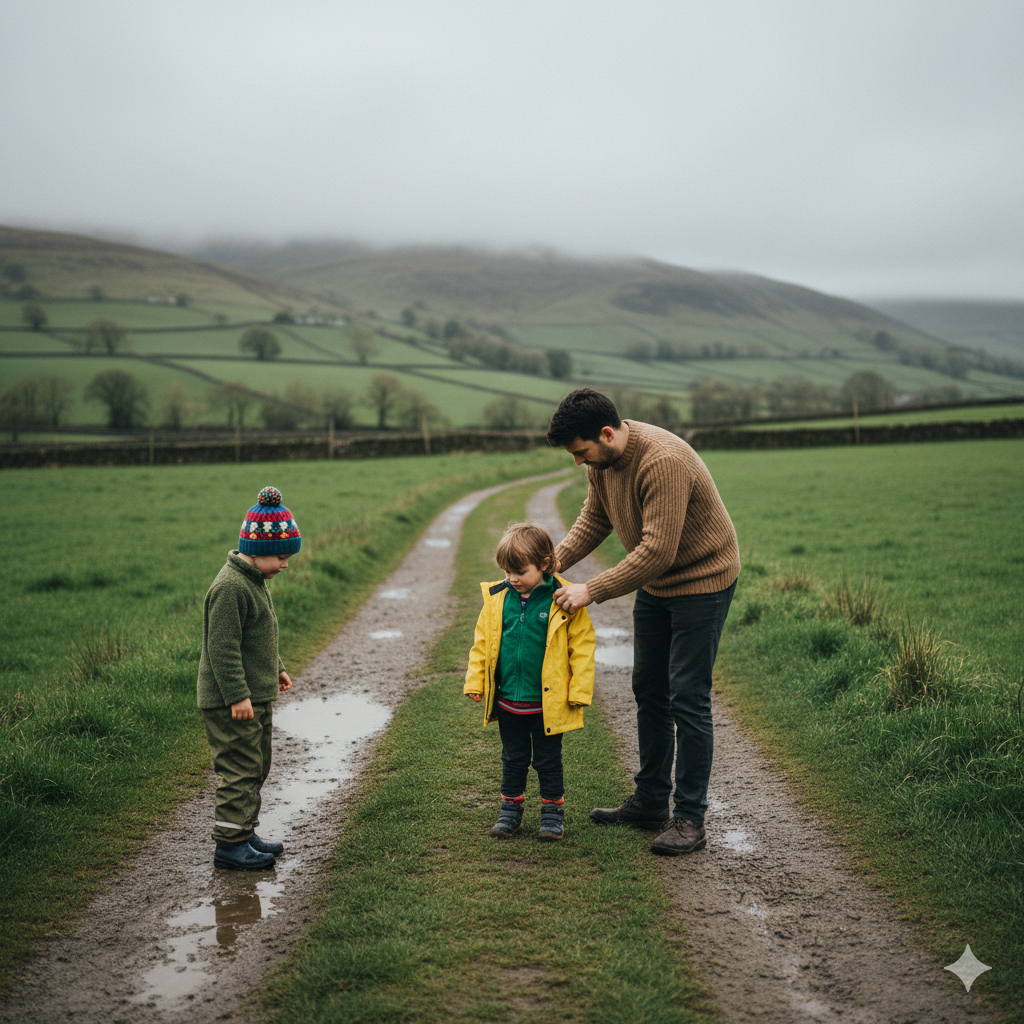
You don’t need a complex system for everyday use.
School Runs
- Base: Normal clothing
- Mid: Jumper or fleece
- Outer: Waterproof jacket
Park Trips
Add waterproof trousers and spare layers if conditions are damp.
Day Trips or Walks
Full three-layer system plus extras in a bag.
How to Tell If Your Child Is Comfortable
Rather than relying on complaints, check:
- Neck temperature (should feel warm, not sweaty)
- Hands (cold hands don’t always mean cold body)
- Behaviour (irritability often signals discomfort)
Children rarely say “I’m overheating.” They just become cranky or restless.
Building a Simple, Versatile Kit
You don’t need dozens of outfits.
A small set of mix-and-match items works best:
- 2–3 base layers
- 2 mid layers of different warmth
- 1 reliable waterproof jacket
- Waterproof trousers for wet seasons
This covers most UK conditions year-round.
Final Thoughts: Layering Is About Flexibility, Not Perfection
There’s no single “correct” outfit for UK weather.
Conditions change, activity levels vary, and every child is different.
Layering works because it gives you options.
Add warmth when needed. Remove it when not. Keep children dry, comfortable and able to enjoy being outdoors.
Once you get used to the system, dressing for unpredictable weather becomes much less stressful — and far more effective than guessing with one heavy coat.
Related Guides for Outdoor Clothing & Comfort
If you’re building a reliable outdoor wardrobe for your family, these guides cover the most important gear for wet, cold and changeable UK conditions.
About The Author – Andrew Marshall
Andrew Marshall is the creator of Simple Days Outside and a UK parent of three who regularly camps, walks, and explores outdoor activities with his family. His guides focus on practical gear, realistic family adventures, and simple ways to help families enjoy the outdoors across the UK. The recommendations on this site are based on real-world use, research, and the kind of equipment families actually rely on for weekend trips and everyday outdoor fun.