

Written by Andrew Marshall
UK parent of three sharing practical advice to help families enjoy camping, walking, garden play, and simple outdoor adventures across the UK.
Creator of Simple Days Outside.
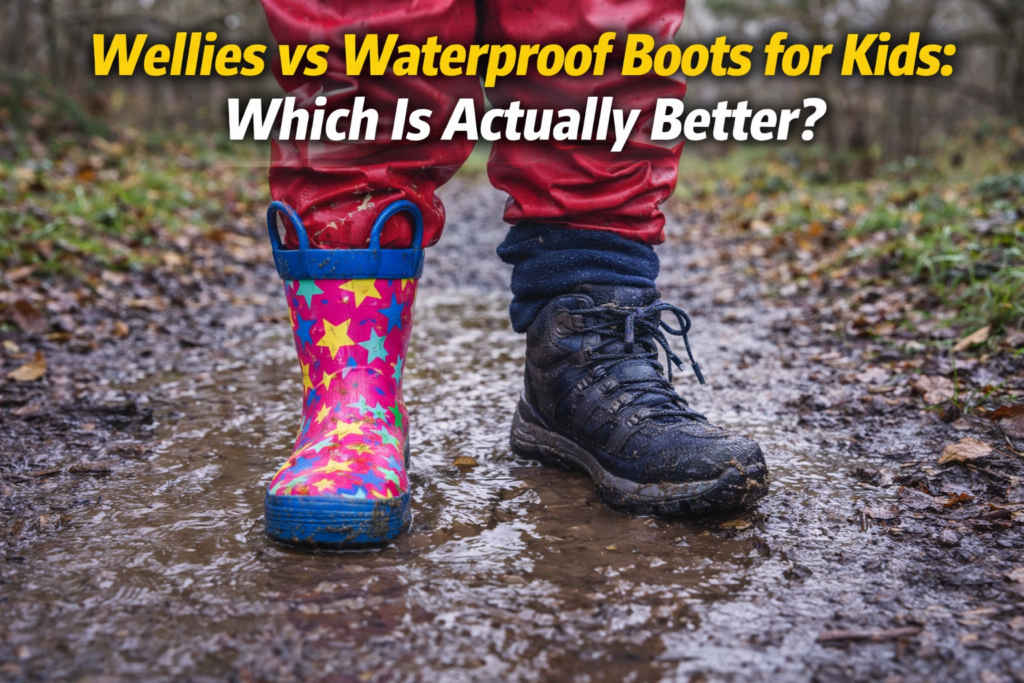
Most families end up owning both eventually — and once you understand what each does well, it’s obvious why. Wellies and waterproof walking boots solve different problems. Buying the wrong one for the wrong situation leads to cold, wet, uncomfortable children and walks that end earlier than they should.
The question isn’t really which is better. It’s which is right for what you’re doing.
We have both in our house — multiple pairs of each, spread across three kids at different ages and sizes. After years of west coast Scottish weather, loch-side paths, muddy forest trails, and beach days that turn into rock pool expeditions, we’ve worked out exactly when each one earns its place. Everything else we use to keep the kids comfortable outdoors is in our Practical Outdoor Clothing & Comfort Hub.
The Fundamental Difference
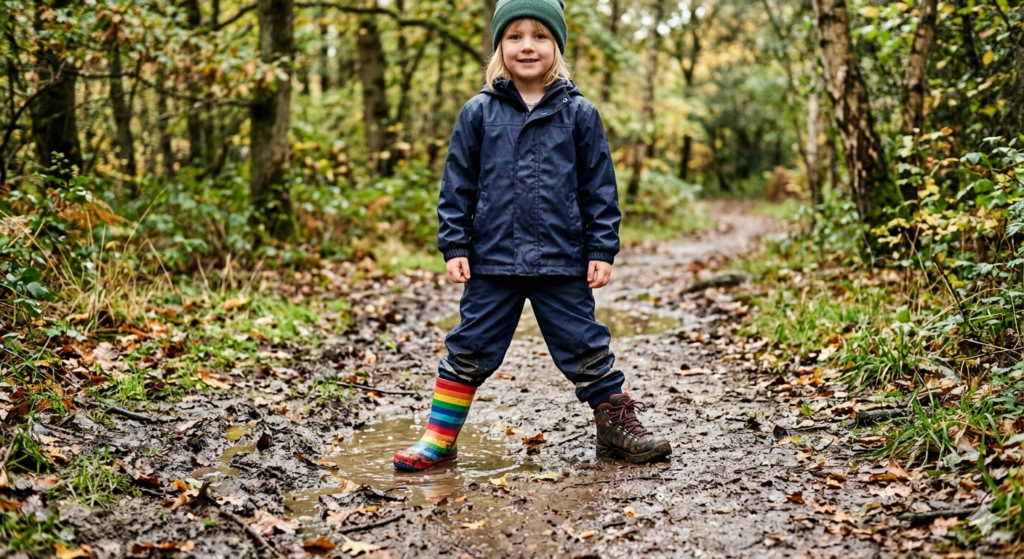
Wellies are waterproof from the ground up. They’re designed to keep water out in wet, muddy, standing-water conditions — puddles, boggy ground, stream edges, muddy fields. They do this job brilliantly. What they don’t do is support the foot, allow natural gait on uneven terrain, or breathe. They’re a sealed rubber environment.
Waterproof walking boots are built for movement on varied terrain. They have ankle support, breathable waterproof membranes, cushioned midsoles, and grip designed for trails rather than flat ground. They keep feet dry in rain and wet grass but aren’t designed to wade through puddles or boggy mud — water over the ankle collar gets in regardless of the membrane quality.
Understanding that difference makes every other decision in this guide straightforward.
When Wellies Win
Puddles, mud, and standing water
Wellies are fully waterproof to the top of the boot. Nothing gets in from below or the sides. For any situation involving actual water — puddles, boggy ground, muddy fields, shallow stream crossings — kids’ waterproof wellies are the only sensible choice. A walking boot’s waterproof membrane is rendered irrelevant the moment water comes over the ankle collar.
Short trips and easy ground
School runs, park visits, garden play, quick beach walks on flat ground — any situation where the walk is brief, the terrain is flat, and the primary requirement is simply keeping feet dry. Wellies are easy on and off, require no lacing, and can be rinsed clean in seconds.
School use
For everyday school use — wet grass on the field, puddles in the playground, damp mornings — wellies are the right daily choice from reception through to the point where children are walking significant distances. School wellies are worth knowing about as a distinct category — simpler, more durable, and often cheaper than outdoor wellies because they’re built for repeated daily use rather than occasional outdoor adventures.
Younger children
For toddlers and younger children who spend more time in puddles than on paths, wellies are the right daily choice. The waterproofing they provide — complete, reliable, from sole to top — matters more at this age than ankle support or trail grip. Our Best Wellies for Toddlers guide covers the specific options worth buying for younger children.
Nursery and forest school
Many nursery and forest school settings specifically require wellies — they’re easier for staff to manage, fully waterproof for outdoor play sessions, and less likely to cause problems if children sit or kneel in wet conditions. Pairing with waterproof trousers for kids that staff can manage quickly is worth thinking about for forest school sessions too.
Coastal and loch-side splashing
Any situation where children are likely to step into water deliberately — rock pooling, paddling at loch edges, playing on wet sand near the tide line — wellies provide protection that no walking boot can match. A waterproof boot that gets half-filled with seawater is considerably less useful than a welly.
When Waterproof Boots Win
Walks longer than an hour
Walking boots are built for sustained movement. The cushioned midsole, shaped footbed, and ankle support make a significant difference over distance compared to a flat rubber welly. On walks longer than about an hour, the difference in how far children will go without complaining is noticeable. Our youngest will happily add another mile in proper boots where wellies would have resulted in a sit-down protest thirty minutes earlier.
Uneven terrain
Forest paths with roots, coastal tracks with loose stone, hillside trails with any ascent or descent — terrain like this needs grip designed for it and ankle support that wellies simply can’t provide. A child in kids’ waterproof walking boots on a wet rocky descent is significantly more stable than one in wellies with a flat sole.
When blisters are a concern
Wellies worn for long distances cause blisters at the heel and ankle because the foot slides inside the boot with every step. A properly fitted walking boot with the right socks holds the foot in place. If your child is prone to blisters, our guide to stopping kids getting blisters covers exactly what makes the difference — and proper boots are a significant part of it.
Cold, dry winter days
Waterproof walking boots with a breathable membrane keep feet significantly warmer than rubber wellies on cold dry days because they allow moisture — sweat — to escape. A foot in a rubber welly on a cold day is sitting in its own moisture. A foot in a breathable boot stays drier and therefore warmer. Pairing boots with kids’ welly socks or proper thermal base layers underneath completes the cold weather kit and makes a genuine difference to how long children stay comfortable.
For families who want boot performance on genuinely wet terrain, kids’ gaiters are worth knowing about. They fit over the boot and lower trouser leg, sealing the gap that allows water in during stream crossings or boggy ground. They extend a boot’s effective waterproofing significantly without switching to wellies — useful for older children doing proper walks in typically wet Scottish or Welsh conditions where boots are right for the terrain but the weather is relentlessly damp.
Older children on proper walks
From about five or six onwards, children doing real walks on real terrain benefit meaningfully from boots over wellies. Duke of Edinburgh territory, longer family hiking days, mountain paths — these require proper footwear. Our Waterproof Boots for Kids Under £40 guide covers the options worth buying at this stage.
The breaking-in barrier
One reason families default to wellies even when boots would serve better is that wellies require no breaking in. New walking boots feel stiff and unfamiliar, and a child who has only worn wellies will notice the difference immediately. The answer isn’t to avoid boots — it’s to wear them on a few short outings before longer walks, letting the flex points soften and the foot adjust. A boot that’s had four or five hours of easy wear is a completely different experience to a boot worn for the first time on a full day out.
The Scenarios — A Direct Comparison
School run on a wet morning Wellies. Easy on, easy off, keeps feet dry on wet pavements and grass. This is non-negotiable in our house — boots on a wet school run means a lacing argument at 8:15am that nobody wins.
Hour-long park walk in autumn Either works, but boots are more comfortable for the child and provide better grip on wet grass. Wellies are fine if the path is flat and the child is young.
Half-day forest trail with some ascent Boots. The ankle support, grip, and cushioning make a real difference over this distance on mixed terrain. The path above Glenbranter taught us this the hard way — two children in wellies, one descent on wet rock, two children on their backsides. Boots for anything with a hill from then on.
Full-day family walk on proper terrain Boots, without question. Wellies on a full day’s walking with any elevation will result in blisters, sore ankles, and an unhappy child well before the end.
Rock pooling or loch-side play Wellies. The moment feet are going anywhere near water deliberately, boots are the wrong choice regardless of how good the membrane is.
Muddy field or boggy ground Wellies. A walking boot in genuinely boggy ground gets waterlogged the moment the ankle is submerged. Wellies keep feet dry regardless.
Camping weekend with mixed activities Both. We always pack both now — boots for walking days, wellies for everything else. The overlap in use is almost zero once you’re actually doing it.
Winter playground Wellies with a warm lining, or insulated boots if the playground involves significant walking. Cold feet end outdoor sessions faster than almost anything else — the right kids’ waterproof gloves on the same days help too.
Forest school or outdoor nursery Wellies. Most settings require them specifically for the full waterproofing they provide at ground level.
The Fit Question
Fit matters differently for each type.
Welly fit — the main issue is buying too large. A welly with too much room slides around on the foot, causes blisters on any distance, and is the first thing children pull off. The right fit has a thumb’s width at the toe and feels snug rather than loose. The right kids’ walking socks worn underneath make a significant difference to both warmth and fit inside a welly.
Boot fit — more nuanced and more important. A walking boot that’s too large causes heel blisters on descents. Too small creates pressure blisters at the toes. With a walking sock on, toes should wiggle freely but not slide forward, and the heel should not lift when walking. Boot fit is worth checking at the start of every season — children’s feet grow faster than most parents track.
For both types, what goes on the feet underneath matters more than most parents realise. Our Best Kids Walking Socks for UK Weather guide covers exactly what to look for and why cotton socks in either type of footwear cause more problems than the boots themselves.
The Cost Question
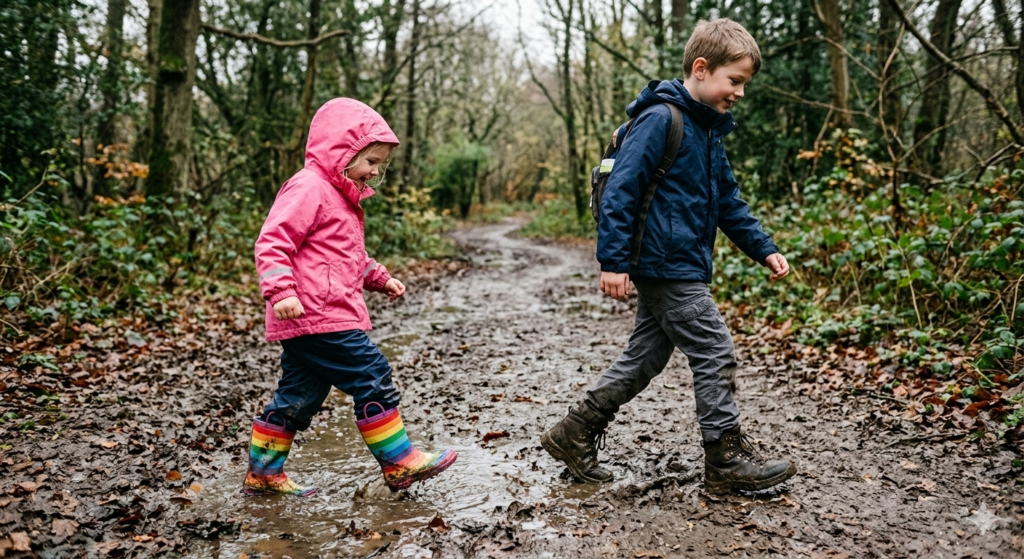
Wellies are cheaper to replace and need replacing more often — children grow out of them quickly and the construction doesn’t last for years the way a good boot does. Budget wellies under £25 are genuinely adequate for most families most of the time. Our Best Kids Wellies Under £25 guide covers the options worth buying.
Waterproof walking boots cost more and are worth spending a little more on — fit and waterproofing quality genuinely affect performance. A cheap boot with poor waterproofing defeats the purpose entirely. That said, good kids’ boots under £40 exist and perform well for everyday UK family walking without needing to be expensive to be effective.
For most families, the practical split is: spend less on wellies, spend a bit more on boots, and replace wellies more often without guilt.
When to Buy Each
Timing purchases makes sense given how quickly children grow.
Wellies are worth buying at the start of autumn — September and October are when school runs and park visits get wet and muddy, and having a new pair ready for the season means not discovering a split sole on the first rainy morning. Budget wellies bought in late August are one of the more reliable back-to-school investments a UK parent can make.
Walking boots are worth buying in late winter or early spring — February and March — ahead of the family walking season. Buying then gives time to break boots in on shorter outings before committing to longer spring and summer walks. A boot bought in March and worn on three or four short outings before the Easter holidays is properly broken in by the time longer walks start.
For both, measuring feet at the start of each season before buying is more reliable than assuming last year’s size still fits. Children’s feet grow at different rates and it’s easy to miss a full size change over winter.
Can You Hand Wellies and Boots Down Between Children?
Wellies generally can be handed down between children — rubber doesn’t degrade significantly with normal use, and as long as the sole is intact and the boot holds its shape, a younger sibling wearing an older one’s wellies is perfectly reasonable. Check for sole separation and any cracking at the ankle flex point before passing on.
Walking boots are a different matter. A boot that has been worn regularly moulds to the shape of the first child’s foot — the midsole compresses in specific places, the upper creases at the flex points, and the fit changes accordingly. Passing these to a second child means they’re wearing a boot shaped for someone else’s foot, which affects both comfort and blister risk.
The general rule: hand down wellies freely, be cautious with boots. If boots are being handed down, check that the midsole hasn’t compressed significantly — press a thumb into the insole and if it doesn’t spring back, the cushioning is gone and the boot isn’t worth passing on regardless of how good it looks on the outside.
What to Wear Underneath
The boot or welly is only part of the equation. What goes underneath affects warmth, comfort, and how long children are willing to stay outside.
For both types, avoid cotton socks — they absorb moisture and don’t release it, leaving feet cold and damp faster than any other single factor. A wool blend or synthetic kids’ hiking sock makes a meaningful difference in both wellies and boots.
For cold days, thermal base layers underneath clothing and warm socks inside boots or wellies work together to keep children comfortable for significantly longer. Warm legs and warm feet solve most of the “I want to go home” problem on cold outdoor days.
Waterproof trousers for kids over the top complete the wet weather kit — wellies keep feet dry but waterproof trousers prevent the soaked legs that happen when children kneel, sit, or walk through long wet grass.
For children who specifically need boot performance in very wet conditions, kids’ waterproof socks are worth knowing about. These are worn inside walking boots and provide a waterproof layer around the foot itself — meaning a boot that gets water in through the ankle collar still keeps feet dry. Not necessary for most family walks, but a legitimate solution for anyone regularly walking in wet terrain where wellies would be too limiting.
Do You Actually Need Both?
For most UK families with children who spend any time outdoors regularly — yes. The two types genuinely don’t overlap enough for one to replace the other.
If you can only have one pair initially, base the decision on age and primary use:
Under three years old — wellies. Children this age spend more time in puddles than on paths and the mobility advantages of boots are minimal at this stage.
Three to five years — still probably wellies as the primary pair, with boots becoming worthwhile once walks extend beyond an hour on varied terrain.
Five and above — boots become the priority for any child doing regular walks, with wellies retained for wet play, school, and garden use.
The crossover age varies by child and family. Some five year olds are still happiest in wellies for everything. Some three year olds are doing proper walks and would benefit from boots earlier. Use the activity rather than the age as the deciding factor.
Frequently Asked Questions
Can kids wear wellies for hiking? For short, easy hikes on flat ground, yes. For anything over an hour with any ascent or descent on uneven terrain — no. Wellies don’t support the ankle on uneven ground, cause blisters over distance, and don’t have the grip that trail surfaces require. Walking boots are the right choice for proper hiking regardless of age.
Are waterproof boots actually waterproof? They’re waterproof against rain and wet grass but not against submersion. A waterproof membrane keeps water out when the boot is in wet conditions at ankle height or below. Step into a puddle deeper than the ankle collar and water gets in. For any situation involving actual water, wellies are the correct choice.
Are wellies bad for kids’ feet? For occasional use they’re fine. For sustained daily wear as the primary footwear — walking significant distances in wellies every day — the flat sole, lack of arch support, and absence of cushioning isn’t ideal for developing feet. Short outings, school runs, outdoor play: no problem. Regular long walks and full outdoor days: walking boots serve children’s feet better. The concern isn’t occasional welly use — it’s using wellies as a substitute for proper footwear on activities they’re not designed for.
What age should kids have their first walking boots? When they start doing walks longer than about an hour on mixed terrain — typically somewhere between four and six, but activity-dependent rather than strictly age-dependent. A five year old doing short flat walks doesn’t need boots. A four year old regularly doing hour-long forest trails would benefit from them.
My child refuses to wear boots — what do I do? Usually a comfort issue — boots that are stiff, heavy, or haven’t been broken in feel unpleasant compared to softer wellies. Make sure new boots have several short outings before longer walks to soften at the flex points. Lighter boots are also more likely to be tolerated — weight makes a significant difference to how willing children are to wear unfamiliar footwear.
Can the same socks work for both wellies and walking boots? Yes. A good kids’ walking sock works well in both. The main thing to avoid is cotton socks in either type of footwear — the moisture retention causes cold feet in wellies and blisters in boots.
Which Should You Buy First?
If you’re starting from scratch, buy wellies first for children under four and boots first for children over five who are doing regular walks. For children in between, the activity decides — if they’re mostly doing park runs and school, wellies first. If they’re regularly out on trails for more than an hour, boots first.
For most UK families doing a mix of both, owning one pair of each per child is the practical answer — they genuinely don’t overlap enough for one to replace the other, and the cost difference between a decent pair of budget wellies and a decent pair of kids’ boots is small enough that having both makes more sense than compromising on either.
The worst outcome is a child in the wrong footwear for what they’re doing. Wellies on a long hill walk and boots in a bog both end the same way — a miserable child and an early return to the car.
Related Guides
About The Author – Andrew Marshall
Andrew Marshall is the creator of Simple Days Outside and a UK parent of three who regularly camps, walks, and explores outdoor activities with his family. His guides focus on practical gear, realistic family adventures, and simple ways to help families enjoy the outdoors across the UK. The recommendations on this site are based on real-world use, research, and the kind of equipment families actually rely on for weekend trips and everyday outdoor fun.