
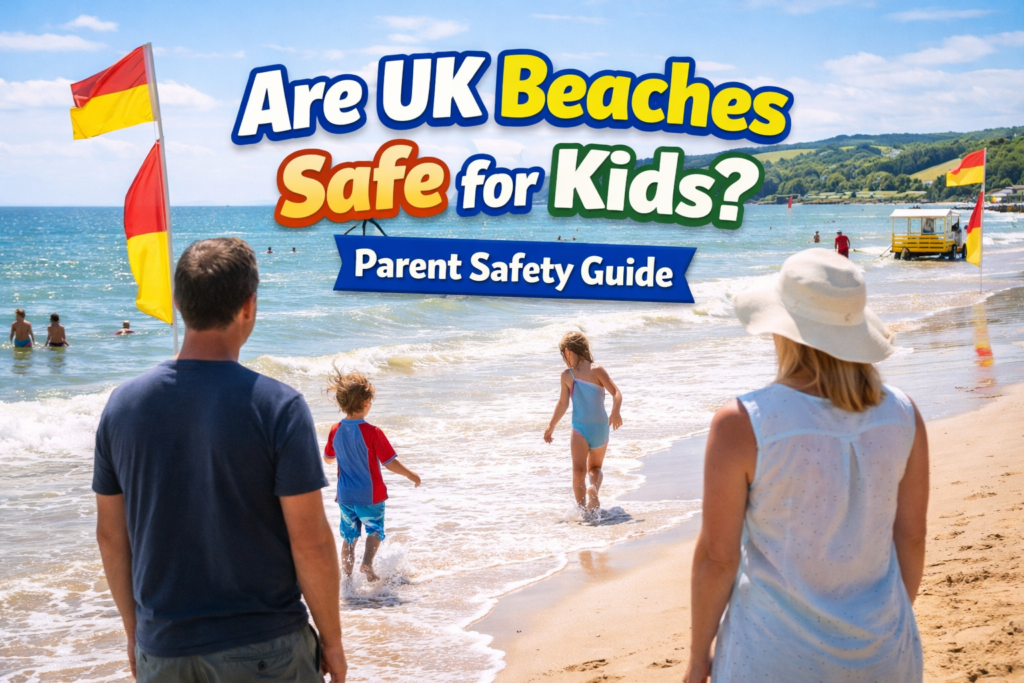
A day at the seaside is one of the classic British family experiences — buckets and spades, paddling in the shallows, ice cream on the promenade, and tired children asleep in the car on the way home. But UK beaches aren’t controlled environments. Conditions can change quickly, hazards aren’t always obvious, and what looks calm from the car park can feel very different at the water’s edge.
If you’re planning a coastal trip, it helps to understand the basics of staying safe around water, tides, and weather — especially with children. This guide forms part of our wider collection of family beach and summer outdoor advice, designed to help parents enjoy the coast with confidence rather than worry.
Most beaches are perfectly safe if you know what to look for and how to prepare. This guide focuses on the real risks families encounter — not to scare you, but to help you avoid the situations that actually lead to accidents, near-misses, or stressful days.
👉 In This Guide
🏖️ The Biggest Risks at UK Beaches (That Catch Families Off Guard)
Many dangers aren’t dramatic — they’re subtle and easy to underestimate.
🌊 Cold Water Shock
Even on hot days, UK sea temperatures are often between 12–18°C. Sudden immersion can trigger:
- Gasp reflex (involuntary inhale)
- Panic breathing
- Loss of muscle control
- Rapid exhaustion
Children are particularly vulnerable because they lose heat faster.
Encourage gradual entry, keep swims short, and prioritise warming up immediately afterwards.
Authoritative guidance from the RNLI explains why sudden immersion is dangerous even for strong swimmers.
🌀 Rip Currents
Rip currents don’t look dramatic — often just a calm-looking channel moving out to sea.
Signs may include:
- A gap in breaking waves
- Darker water
- Foam or debris moving seaward
- Sand being pulled offshore
Teach older children the key rule:
If you can’t touch the bottom — don’t go further.
What Should Kids Actually Do If Pulled Seaward?
Many guides say “don’t panic” — but children need simple instructions.
Teach older kids this easy rule:
- Float on your back
- Keep your face up
- Raise one arm to signal for help
- Move sideways only if able
- Do NOT swim directly toward shore against the current
Even confident swimmers can become exhausted quickly in cold water, so floating is usually the safest first action.
Practising floating in calm water before visiting the sea can build confidence.
🌬️ Wind (The UK Beach Hazard Nobody Talks About)
Rain rarely ruins a beach day. Wind does.
Strong coastal winds can cause:
- Rapid chilling after swimming
- Blowing sand in eyes and food
- Flying objects (tents, toys, umbrellas)
- Difficulty hearing children
Wind also amplifies waves and makes supervision harder.
🧱 Hidden Hazards Underfoot
What looks like soft sand can conceal:
- Rocks or shingle
- Broken shells
- Sharp objects
- Sudden drop-offs
- Slippery algae on groynes
Water shoes can make a huge difference for nervous children or rocky beaches.
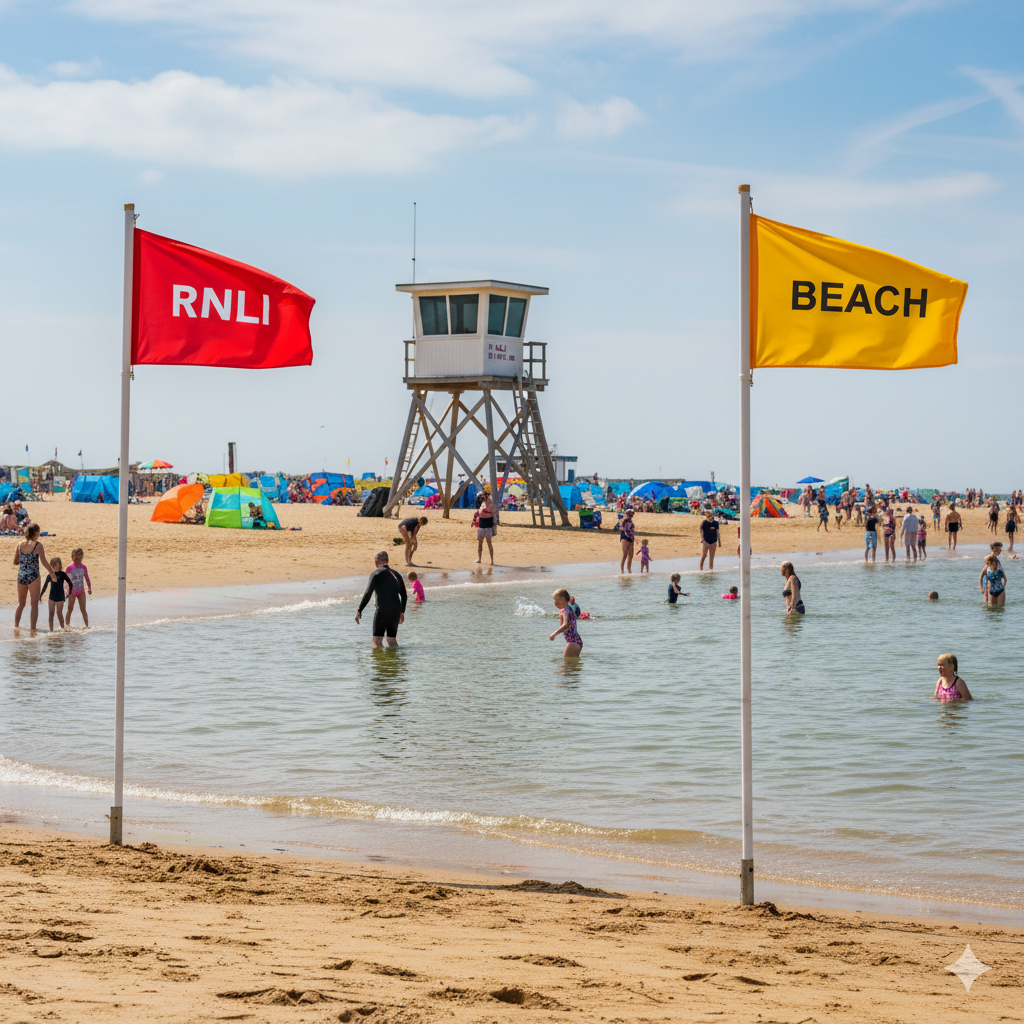
🚩 Lifeguards and Flags: Your First Safety Check
Whenever possible, choose a lifeguarded beach.
During peak season, many popular beaches are patrolled by RNLI lifeguards.
What the Flags Mean
- Red & yellow flags — safest area for swimming
- Red flag — dangerous conditions, do not enter water
- Black & white flags — for surfboards/watercraft, not swimmers
Always position your family base near the flagged zone.
You can check lifeguard coverage in advance via the RNLI website.
🧭 Check the Tide Before You Go (Seriously)
UK tides can change dramatically within hours.
At some beaches:
- The sea can retreat hundreds of metres
- Sandbanks appear and disappear
- Water can return surprisingly quickly
- Safe play areas can become cut off
Being stranded on a sandbank or rocks is rare — but it does happen.
Use tide times from sources like the Met Office or local harbour sites.
A simple rule for families:
👉 Arrive as the tide is going out or near low tide for maximum safe play space.
If you’re visiting an unfamiliar area, it’s worth checking whether the location is recognised as a safe place for swimming before you go. Conditions can vary significantly even between nearby beaches.
🧒 Age Matters: Safety Looks Different at Each Stage
Babies & Toddlers
Main risks:
- Cold exposure
- Waves knocking them over
- Sand ingestion
- Sun exposure
Keep them in very shallow water or dry sand areas, and maintain constant arm’s-reach supervision.
Younger Children (4–7)
Biggest issues:
- Overconfidence near water
- Running into waves
- Losing sight of parents
- Rapid fatigue in cold water
Bright swimwear helps visibility enormously.
Older Kids & Pre-Teens
New risks emerge:
- Swimming beyond safe zones
- Peer pressure
- Exploring rocks or cliffs
- Attempting jumps into water
Clear boundaries are essential.
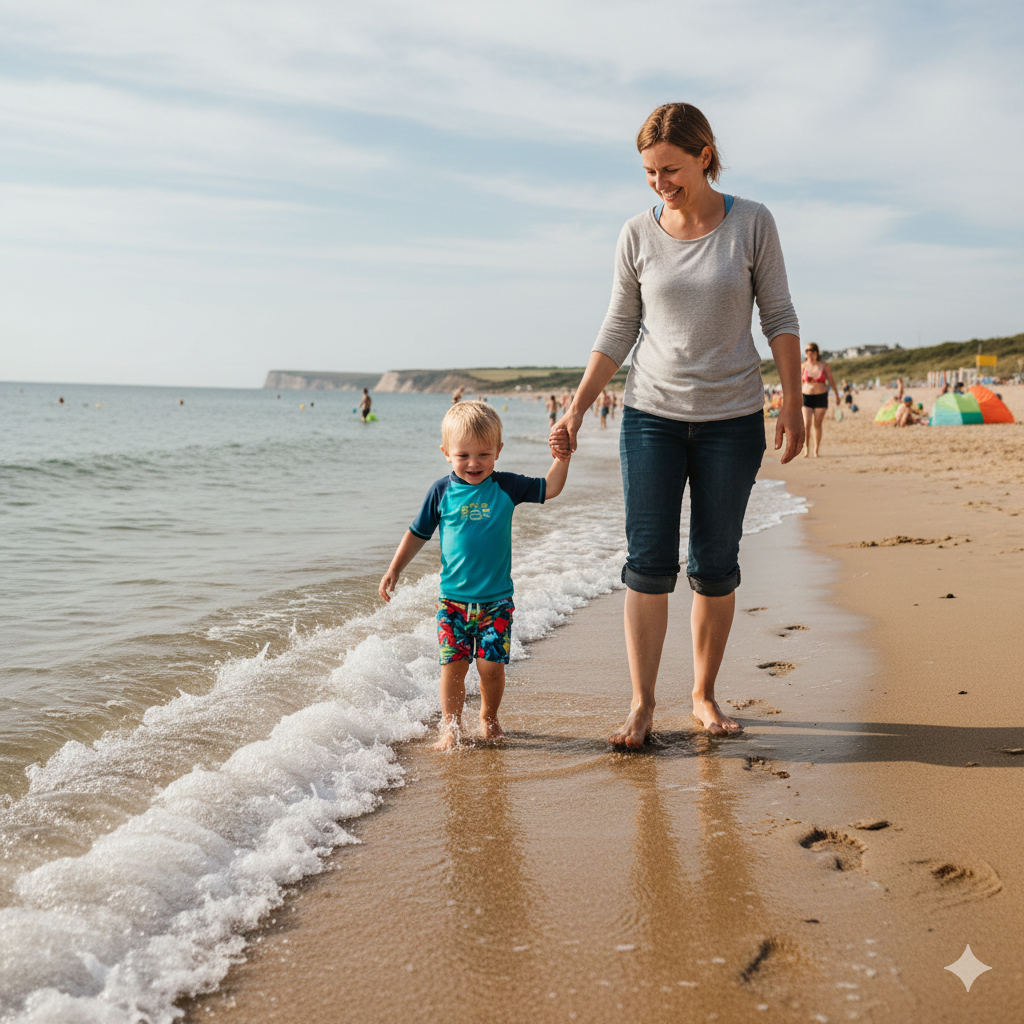
🌊 Small Waves Can Still Knock Children Over
UK waves don’t need to be dramatic to be dangerous.
Even knee-deep water can knock children off balance, especially:
- Backwash pulling them seaward
- Sloping beaches
- Uneven sand underfoot
- Unexpected larger waves
Teach children to:
- Face incoming waves
- Bend knees slightly
- Stay close to adults
- Avoid turning their back on the sea
Holding hands in shallow surf is often safer than allowing independent play.
☀️ Sun Safety (Even When It Doesn’t Feel Sunny)
Cloud cover doesn’t eliminate UV exposure. Reflection from sand and water can increase it.
Protect children with:
- High-SPF sunscreen
- Hats
- UV rash vests
- Regular shade breaks
Shade is one of the easiest ways to prevent overheating and exhaustion on bright days. Many families find that a lightweight beach shelter or windbreak dramatically improves comfort and makes it easier to stay longer.
Wind can mask how much sun you’re actually getting.
🥶 How to Warm Kids Safely After Swimming
Cold, tired children are more prone to accidents.
Bring:
- Dry towels (more than one)
- Warm layers or hoodies
- Poncho towels for quick changes
- Warm drinks if possible
Encourage regular warm-up breaks rather than long continuous swims.
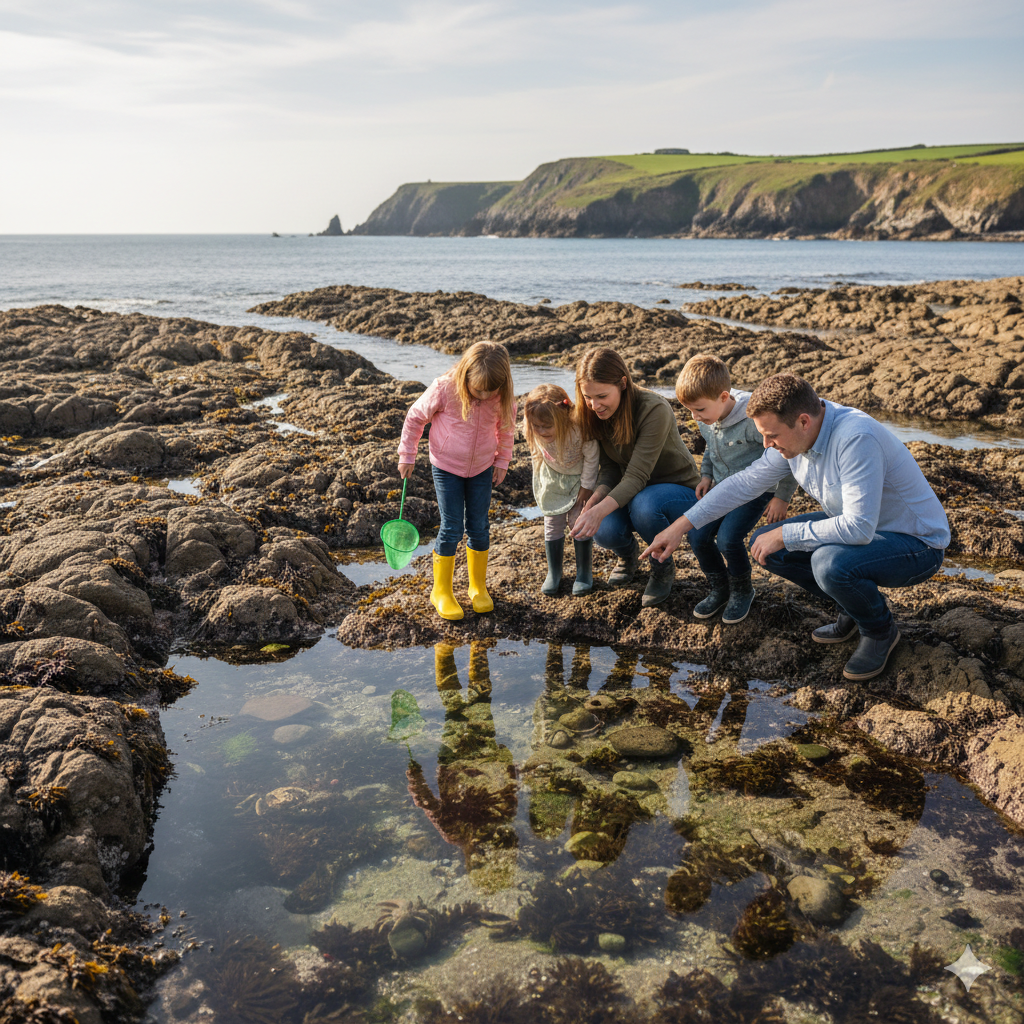
🪨 Cliffs, Groynes, and Rock Pools
These areas are fascinating for children — and where many minor injuries occur.
Watch for:
- Slippery seaweed
- Sharp barnacles
- Falling rocks
- Unexpected waves
- Deep water channels
Rock pooling is safest on calm days at low tide.
🧺 Comfort = Safety (Tired Kids Make Risky Choices)
Many incidents happen late in the day when children are cold, hungry, or overstimulated.
If you’re unsure what’s worth bringing and what just adds weight, a simple checklist of what to take to the beach with kids can prevent most last-minute stress.
Bring:
- Plenty of water
- High-energy snacks
- Warm layers
- Dry towels
- Spare clothes
A sheltered base dramatically improves comfort and reduces risky wandering.
🧭 Choosing a Family-Friendly Beach
Not all beaches are equal.
Look for:
✔ Sandy, gently sloping shore
✔ Lifeguards in season
✔ Toilets nearby
✔ Easy access (not steep cliffs)
✔ Clear visibility across the beach
✔ Parking within reasonable distance
Avoid beaches known for strong surf unless you’re experienced.
🧠 Teach Kids Simple “Beach Rules” Before Arrival
Children cope better when expectations are clear.
Useful rules include:
- Stay where you can see the base
- No going into water without an adult
- Stop when called immediately
- Don’t climb cliffs or rocks without permission
- Tell someone before leaving the area
These sound obvious, but rehearsing them matters.
👀 What to Do If You Lose Sight of Your Child
Beaches are wide, noisy, and visually busy — children can disappear from view surprisingly fast.
Before arriving, agree on a simple plan:
- Identify a visible landmark near your base (preferably something tall or big – tell your child this is the meeting point.
- Take a quick photo of your child in their outfit that day
- Teach them to approach a lifeguard or another family if lost
- Consider writing your phone number on their wrist or a wristband
Most missing-child incidents are resolved quickly, but preparation reduces panic.
❤️ The Truth: Most Beach Days Are Safe
UK beaches aren’t inherently dangerous — they’re simply natural environments.
With:
- Awareness
- Preparation
- Supervision
- Common sense
they can be among the most rewarding outdoor experiences for families.
Millions of safe visits happen every year.
🏆 Quick Parent Safety Checklist Before You Leave
Ask yourself:
- Is the beach lifeguarded today?
- What are the tide times?
- How strong is the wind forecast?
- Do we have shade and warm layers?
- Are the kids confident swimmers?
- How crowded will it be?
If the answers feel reassuring, you’re likely set for a great day.
Final Thought
Children don’t need zero risk — they need managed risk in a supportive environment.
The seaside offers freedom, adventure, and connection with nature that indoor attractions simply can’t replicate.
Prepared parents don’t eliminate danger — they prevent surprises.
And when surprises are removed, beach days become what they’re meant to be: joyful, memorable, and wonderfully tiring for everyone involved.