
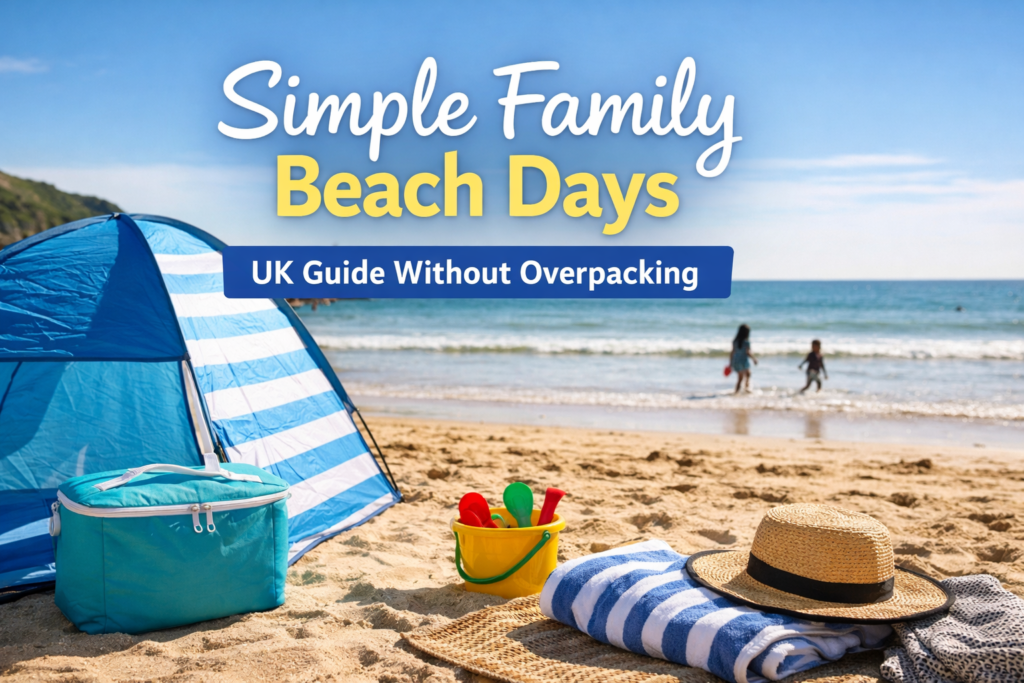
A simple family beach day in the UK is absolutely possible.
But it only feels simple when you stop trying to prepare for every possible disaster.
Most stressful beach trips don’t fall apart because of the weather.
They fall apart because parents overpack, overplan and overstay.
This guide is part of our Summer Fun & Water hub, where we share practical ways for UK families to enjoy beaches, lakes and outdoor swimming safely and simply.
If you want a relaxed beach day — not a logistical operation — here’s how to do it properly.
Start With a 5-Minute Plan (Before You Touch a Bag)
Before you load the car, take five minutes to check:
- Tide times
- Wind speed (not just temperature)
- Parking distance
- Toilet availability
- How long you’re actually staying
That’s it.
In the UK especially, tide and wind matter more than sunshine. A beach that looks enormous at low tide can shrink dramatically within hours. A mild 19°C day with 20mph wind can feel freezing once the kids are wet.
Most beach stress is prevented before you even leave the house.
Choose the Right Beach (Facilities Beat Scenery)
Instagram beaches are not always family beaches.
For younger children, prioritise:
- Easy parking (short walk = less carrying)
- Toilets nearby
- Lifeguards in peak season
- Gradual shoreline rather than steep drop-offs
- Sandy entry points over sharp stones
Be realistic about your region too. Cornwall behaves differently from Northumberland. Some Scottish beaches look stunning but have strong currents and cold water even in mid-summer.
Council websites usually show:
- Tide charts
- Parking details
- Seasonal lifeguard dates
- Dog restrictions
Two minutes of checking can save two hours of stress.
Wind Is the Real UK Problem
Heat rarely ruins UK beach days.
Wind does.
Strong coastal wind means:
- Sand in eyes and snacks
- Towels blowing away
- Cold toddlers after paddling
- Frustrated parents
If it’s breezy, a pop-up beach shelter or lightweight beach windbreak can make a huge difference (we cover practical setups in Best Pop-Up Beach Shelters & Windbreaks for Families (UK).
Position it low and stable. Face the opening away from the wind. Don’t overcomplicate it.
If the forecast shows strong gusts and exposed coastline, consider choosing a more sheltered beach or shortening your stay.
Manage Expectations (Especially With Younger Kids)
A realistic beach day with toddlers or primary-age children might be:
- 60–120 minutes
- A paddle
- A snack
- Some digging
- Home before overtired chaos
And that’s successful.
The idea that a “proper” beach day must last all afternoon is what creates meltdowns.
Shorter visits build positive associations. Long, overextended ones build exhaustion.
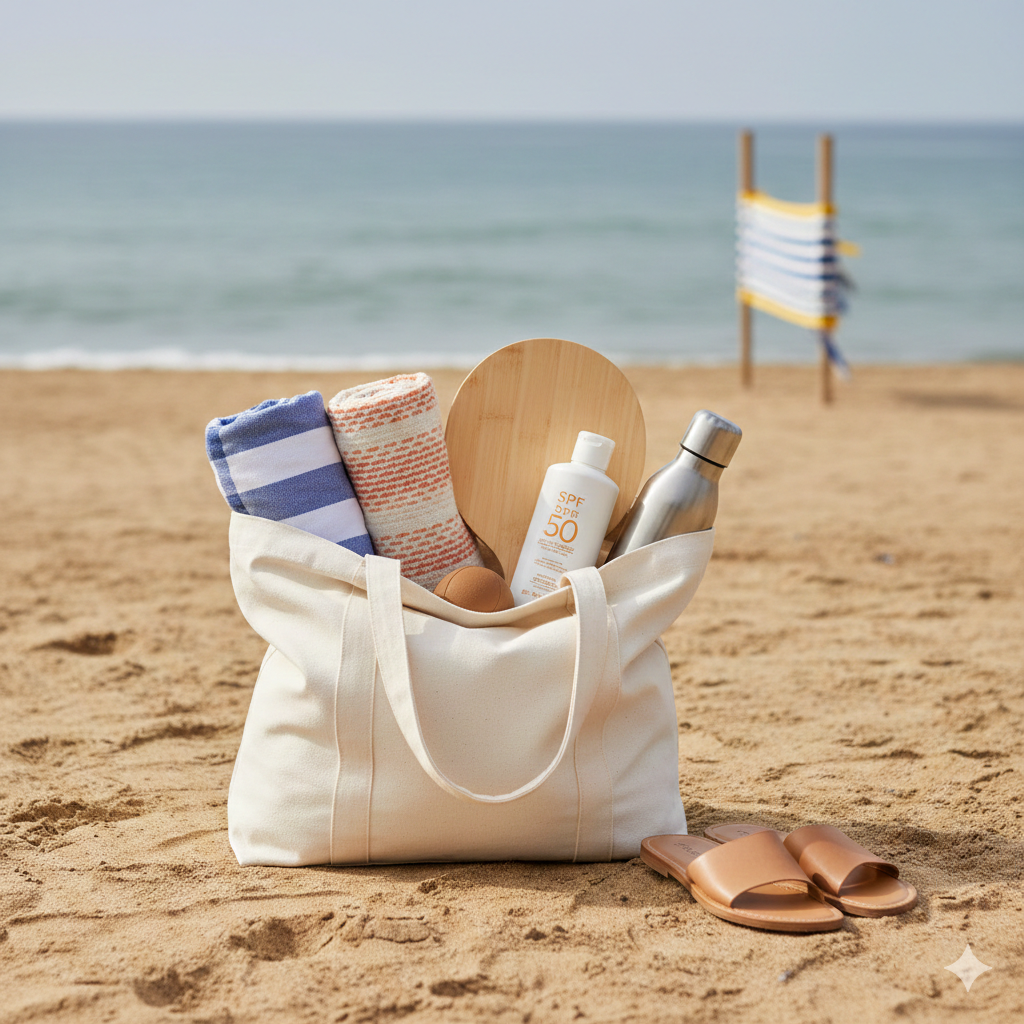
What to Pack (The Minimalist Family List)
If you can’t carry everything in one trip from the car, you’ve probably packed too much.
Here’s what actually matters.
Essentials
- Large quick-dry beach towels (microfibre shakes sand off more easily)
- Kids UV swim tops
- Swimwear
- One change of clothes per child
- Sun cream (even on cloudy days)
- Hats
- Plenty of water
- Simple snacks
- A small insulated cooler bag
- A compact beach picnic blanket
That covers 90% of situations.
Useful Extras (Depending on Beach & Parking)
- A waterproof dry bag for keys and phones
- A foldable beach wagon if the walk from parking is long
If you want a fuller breakdown without going overboard, see What to Take to the Beach With Kids (UK Parent Packing List) for a practical checklist you can skim before leaving.
What You Can Leave at Home
This is where most parents go wrong.
You do not need:
- A full picnic setup with cooking gear
- Every inflatable you own
- Multiple outfit changes “just in case”
- Heavy furniture
- A massive toy collection
Children usually end up:
- Digging
- Splashing
- Eating
- Running
- Then getting tired
One bucket and spade is enough.
Too many toys create more mess, more arguments and more packing at the end.
Simple beats impressive.
Plan Around UK Weather (Not Holiday Weather)
UK beaches are unpredictable.
You might have:
- Bright sunshine and strong wind
- Cloud cover with intense UV
- Warm air but very cold water
Pack layers rather than assuming heat. A lightweight hoodie can be more valuable than an extra swimsuit.
Also check:
- School holiday peak times
- Bank holiday crowding
- Car park closing times (many council sites close gates earlier than you expect)
Arriving earlier in the day usually means calmer conditions and easier parking.
Keeping Kids Safe at UK Beaches (Without Overthinking It)
You don’t need a safety manual. Just clear basics.
Cold Water Shock
Even in July, UK sea temperatures are low. Encourage gradual entry rather than running dives.
Rip Currents
Stick to lifeguarded beaches where possible during peak season. Teach children to float and signal if in trouble rather than fight currents.
Windburn & UV
Cloud does not block UV. Wind makes you underestimate exposure. Reapply sun cream regularly.
Hydration
Sea air dehydrates quickly. Bring more water than you think you’ll need.
Clear Supervision Boundaries
Pick a visual marker:
“That rock.”
“That flag.”
“That lifeguard post.”
Clear rules are easier for children to follow than vague warnings.
The One-Bag Rule
Here’s a simple filter:
If each adult carries one manageable bag, you’re probably within reason.
If you need multiple trips before even reaching the sand, simplify.
The easier the setup, the easier the pack-down.
And pack-down is when most parents feel exhausted.
When to Leave (The Most Underrated Skill)
The best beach days often end slightly earlier than planned.
Leave before:
- Hunger turns into irritability
- Wind picks up significantly
- Kids are shivering after swimming
- Everyone is overtired
Ending on a positive note means your children will want to go again.
That’s how beach days become part of family life — not something you dread organising.
If You Want to Add One Activity
Once you’ve mastered simple beach days, you can layer in extra activities like paddle boarding on calm water. If that’s something you’re considering, our guide to Best Family Paddle Boards for Beginners (UK Lakes & Lochs Guide) focuses on stable, beginner-friendly options suited to UK conditions.
But remember — that’s optional.
The foundation is always simplicity.
A Simple Beach Day Philosophy
Pack for comfort, not contingency.
Plan for wind, not fantasy sunshine.
Stay shorter than you think you should.
And accept that someone will complain about sand at some point — that’s normal.
The goal isn’t perfection.
It’s fresh air, movement, laughter, and getting home without feeling drained.
When you strip it back, UK beach days are easier than we make them.
Simple beats impressive.
And in the UK, a calm two-hour beach visit with happy kids is far better than an overpacked marathon.
Check the tide. Watch the wind. Pack light.
That’s how you win the beach.
Make the Most of Your Summer Days Out
If you’re building confidence with simple beach days, these practical UK guides will help you plan smarter, pack lighter and enjoy more time outdoors with less stress. Each one focuses on realistic family conditions — not perfect holiday scenarios.