How Cold Is UK Sea Water? Month-by-Month Temperatures for Families (Full UK Guide)
If you’ve ever promised the kids a swim at the seaside only to discover the water feels freezing — even on a hot day — you’re not alone. UK sea temperatures vary hugely by location, and a beach in northern Scotland can feel dramatically colder than one in southern England at the same time of year.
For families, knowing what to expect helps you plan properly: whether it’s a paddling-only day, a quick dip day, or one where wetsuits and hot drinks make all the difference. This guide breaks down typical month-by-month sea temperatures across the whole UK, grouped so wherever you live — Scotland, Wales, Northern Ireland, or England — you can estimate how the water will feel.
If you’re planning water days with children this season, it helps to understand what conditions to expect and how to stay comfortable. This guide forms part of our wider collection of family beach and water-activity ideas for the UK, designed to help you choose the best options for warm-weather fun.
👉 In This Guide
🌡️ Why UK Sea Water Stays Cold
Several factors keep our seas chilly year-round:
Northern latitude (less intense sunlight)
Deep surrounding oceans that retain cold
Strong tides mixing warm and cold water
Frequent winds cooling the surface
Slow seasonal warming and cooling
Cooler North Sea conditions on eastern coasts
Even during heatwaves, sea temperatures lag far behind air temperatures.
📍 UK Sea Temperatures by Region (Family Ranges)
These are typical coastal temperatures near the shore, not exact daily readings. Shallow sunny bays can feel warmer, while windy or overcast conditions feel colder.
👉 Typical Irish Sea conditions — moderate but rarely warm.
🌊 Mid West UK
(Wales coast + Northern Ireland — Irish Sea west side)
Month
Typical Temp
Jan
7–9°C
Feb
7–8°C
Mar
7–9°C
Apr
8–11°C
May
10–13°C
Jun
12–16°C
Jul
14–18°C
Aug
15–19°C
Sep
14–18°C
Oct
12–16°C
Nov
10–13°C
Dec
8–11°C
👉 Often slightly warmer than the Lancashire side of the Irish Sea.
🌊 South East UK
(Eastern & South-Eastern England — Kent, Sussex, Essex, East Anglia)
Month
Typical Temp
Jan
6–8°C
Feb
6–7°C
Mar
6–8°C
Apr
8–11°C
May
10–14°C
Jun
14–18°C
Jul
17–20°C
Aug
18–21°C
Sep
17–19°C
Oct
14–17°C
Nov
11–14°C
Dec
8–11°C
👉 Usually among the warmest UK waters in peak summer.
🌊 South West UK
(South-Western England — Cornwall, Devon, Dorset)
Month
Typical Temp
Jan
8–10°C
Feb
8–9°C
Mar
8–9°C
Apr
9–11°C
May
11–13°C
Jun
13–16°C
Jul
15–18°C
Aug
16–19°C
Sep
16–18°C
Oct
14–16°C
Nov
12–14°C
Dec
10–12°C
👉 Mild winters but slightly cooler summers than the southeast.
🏖️ When Is the Sea Warmest in the UK?
Across most regions:
👉 Late July → Early September
Typical peak temperatures:
Northern Scotland: 12–16°C
Irish Sea coasts: 15–19°C
Southern England: 17–21°C
Water often remains warmest into September even when air temperatures fall.
🧊 What These Temperatures Actually Feel Like
For comparison:
Heated swimming pool: ~28°C
Mediterranean summer sea: 24–28°C
Typical UK summer sea: 14–20°C
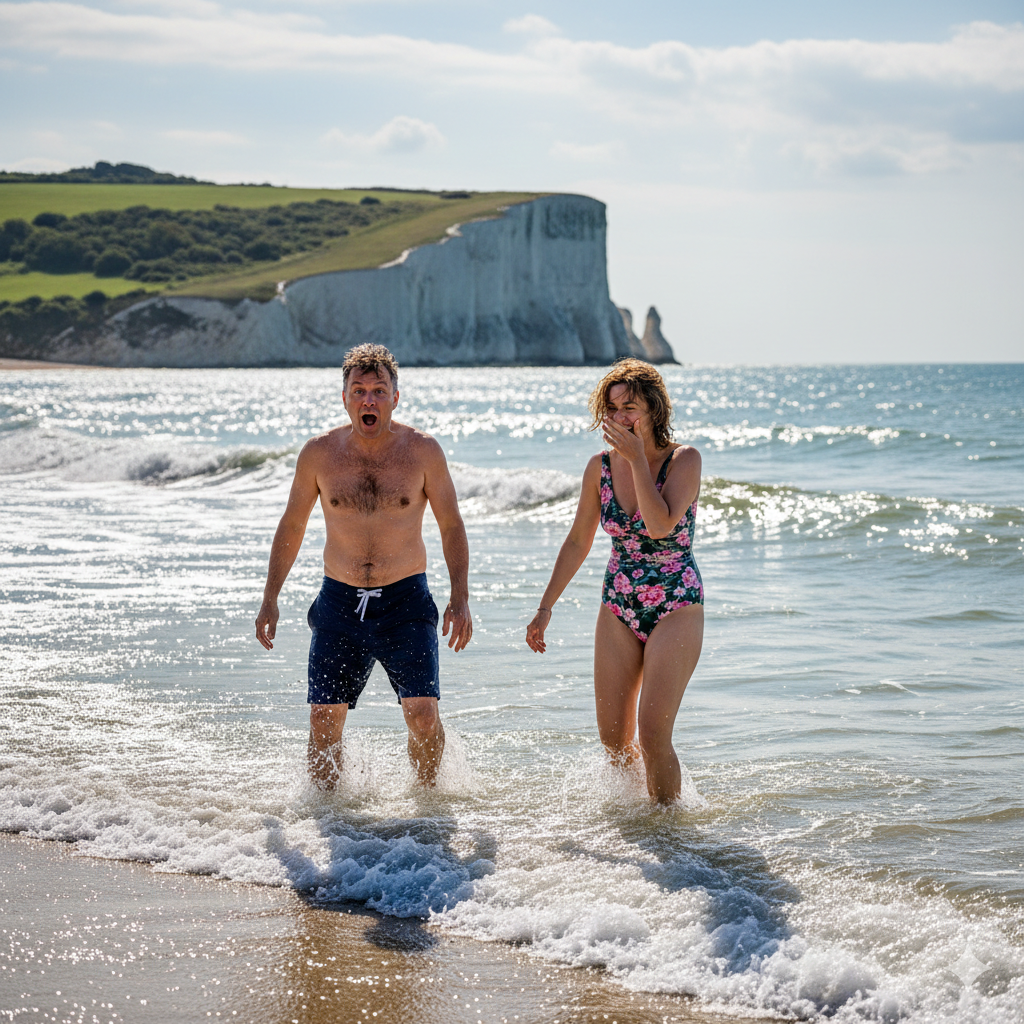
That’s why the first step into the water often feels shocking.
⚠️ Cold Water Shock — The Real Risk
Sudden immersion in water below about 15°C can cause:
Involuntary gasp reflex
Rapid breathing
Panic
Loss of coordination
Children should always enter gradually.
Encourage them to:
✔ Walk in slowly ✔ Splash torso first ✔ Keep early swims short ✔ Warm up immediately afterwards
Even confident swimmers are affected.
Understanding basic open-water safety will help you feel far more confident letting children swim in natural conditions.
🧒 How Children Usually Handle UK Sea Temperatures
Babies & Toddlers
Lose heat very quickly
Best suited to paddling
Need constant supervision
Younger Children
Initial shock → quick adaptation
May not realise they’re getting too cold
Older Kids & Teens
More tolerant of cold
Likely to swim further
Still tire quickly
🌬️ Wind Can Matter More Than Water Temperature
Air conditions dramatically affect comfort.
Strong wind:
Increases heat loss
Makes wet skin feel freezing
Shortens swim time
Makes warming up harder
A calm 17°C day can feel warmer than a windy 20°C day, especially if you have a sheltered base or windbreaker to escape the breeze between swims.
🧺 How Families Make Sea Swimming More Comfortable
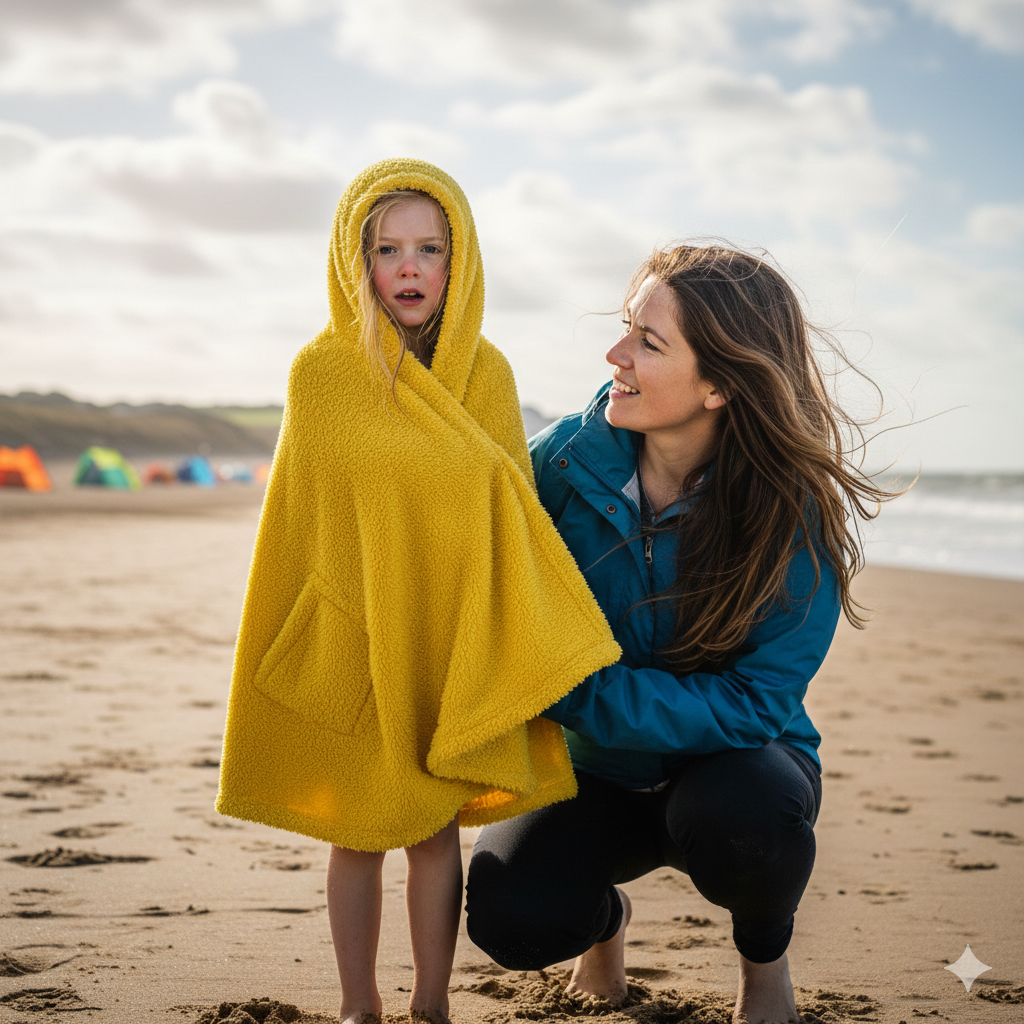
Bring multiple towels
Pack warm layers or hoodies
Use poncho towels for quick changing
Take frequent warm-up breaks
Choose sheltered beaches when possible
Short dips often work better than long swims.
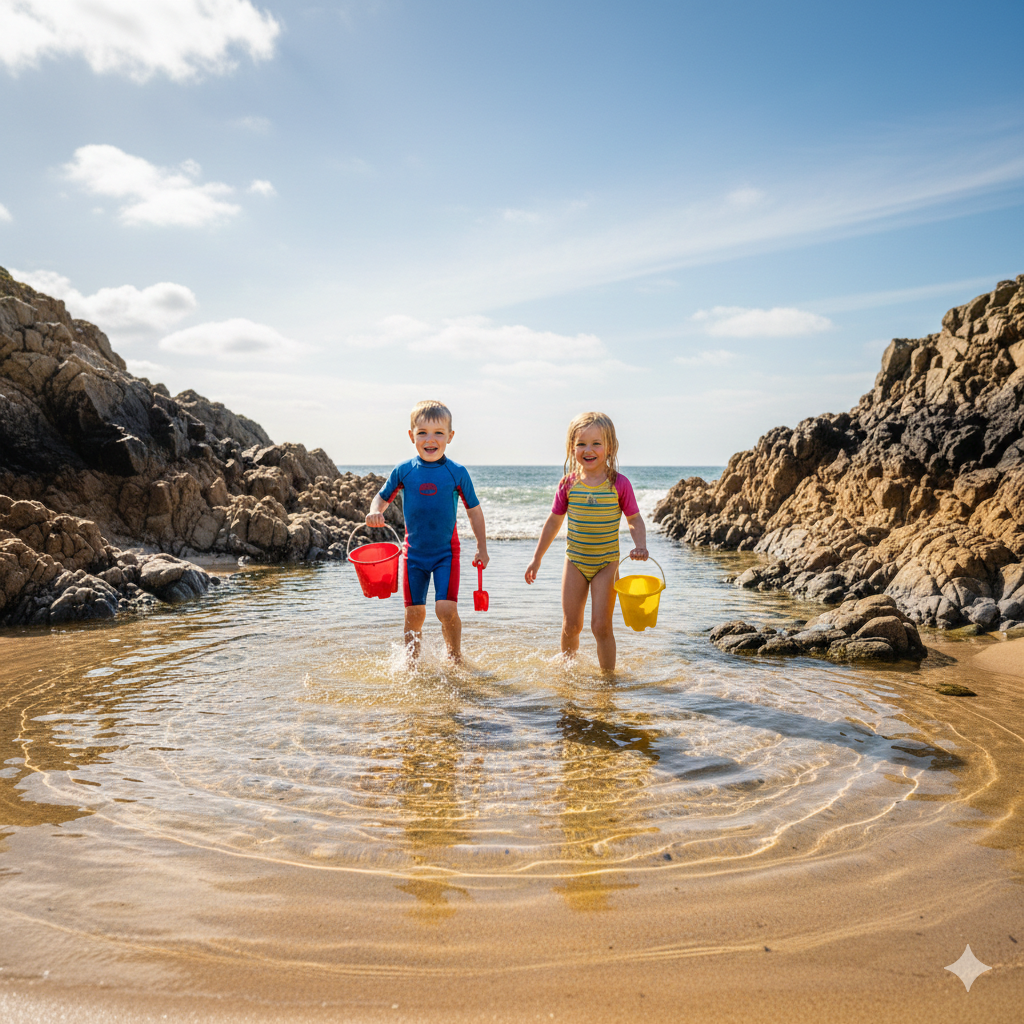
Shallow tidal pools and sheltered bays can warm significantly in sunshine, sometimes feeling far warmer than the open sea. These spots are ideal for younger children or cautious swimmers.
🏊 Do You Need a Wetsuit?
Not essential — but very helpful for children who want to stay in longer.
Wetsuits can:
✔ Reduce cold shock ✔ Extend time in the water ✔ Increase confidence ✔ Protect against wind chill
Many UK families use short wetsuits even in summer.
❤️ The Honest Truth: Kids Usually Care Less About the Cold
Adults hesitate — children often run straight in.
With regular warm-up breaks and supervision, sea play can be safe and hugely enjoyable even in typical UK temperatures.
🏆 Quick Family Temperature Guide
Use this simple rule of thumb:
Below 10°C: Very cold — paddling only
10–14°C: Short dips possible
15–17°C: Typical UK summer swimming
18–21°C: Warm by British standards
Above 21°C: Rare but very comfortable
🌤️ Is Today Warm Enough for a Swim?
If you don’t know the exact temperature, use this quick guide:
Kids happy paddling: Air warm + calm wind
Short swims likely: Air warm + sunny + sheltered beach
Comfortable swimming: Several warm days in a row + light wind
Cold despite sunshine: Strong wind or recent cold weather
Local weather and wind often matter more than the number alone.
On cooler days, many families find that alternative water options at home or inland can be more enjoyable than forcing a cold sea swim.
Final Thought
UK sea water will probably never feel tropical, but it doesn’t need to. With realistic expectations, preparation, and sensible limits, family beach swimming can be refreshing, safe, and full of great memories wherever you are in the country.
Often, the best seaside days aren’t about the temperature — they’re about the laughter, the waves, and the adventure of being outdoors together.