

Written by Andrew Marshall
UK parent of three sharing practical advice to help families enjoy camping, walking, garden play, and simple outdoor adventures across the UK.
Creator of Simple Days Outside.
Last Updated: April 2026
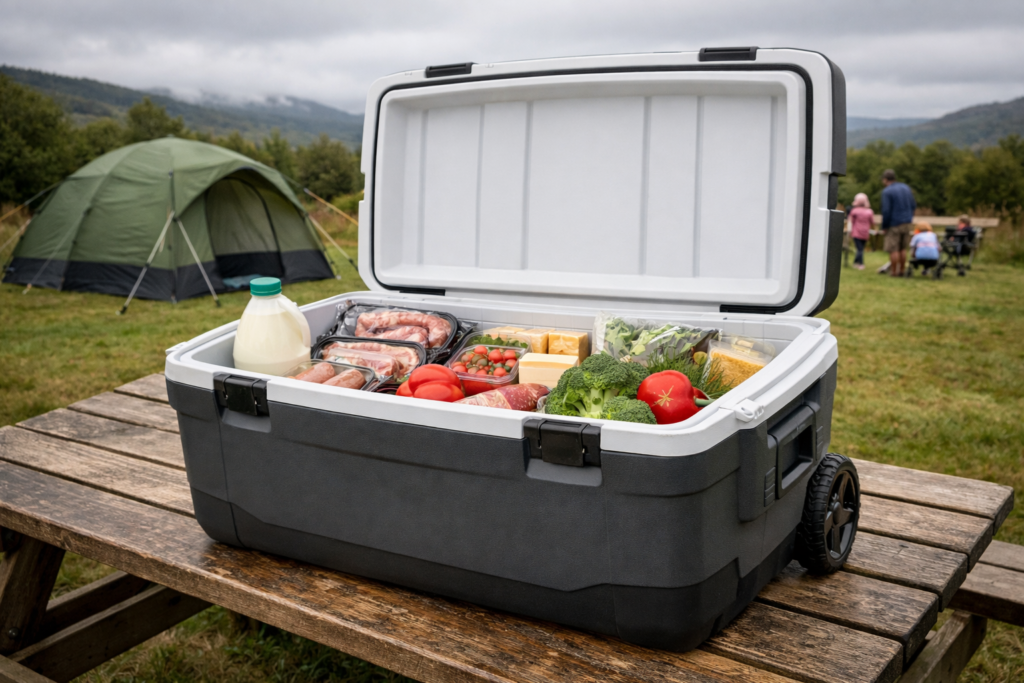
There’s a particular kind of frustration that only UK family camping produces — standing in front of an open cool box on day two of a three-day trip, looking at a slightly warm block of cheddar and some suspiciously tepid milk, realising the cool box you grabbed from the garage hasn’t kept pace with the weather. It’s not even that warm. It’s just a Tuesday afternoon in August in Scotland, barely 18 degrees, and somehow the food is warm.
A good cool box solves this quietly and completely. Food stays cold, milk stays drinkable, the evening sausages haven’t been sitting at an ambiguous temperature since noon. For a family camping for a long weekend — Friday evening to Monday morning — you need a box that keeps a genuine chill for at least three days without a restock of ice on Saturday afternoon.
This covers the cool boxes worth buying for UK family camping, what actually determines how long they keep food cold, and the habits that make any cool box perform significantly better than the instructions suggest.
More family outdoor kit across the Family Camping hub — worth a look if you’re building the full kit list for the season.
What Actually Determines How Long a Cool Box Keeps Things Cold
Understanding what makes a cool box work well is worth a few minutes before the product recommendations — because the most expensive box in the world performs poorly if used wrong, and a decent mid-range box performs remarkably well if treated correctly.
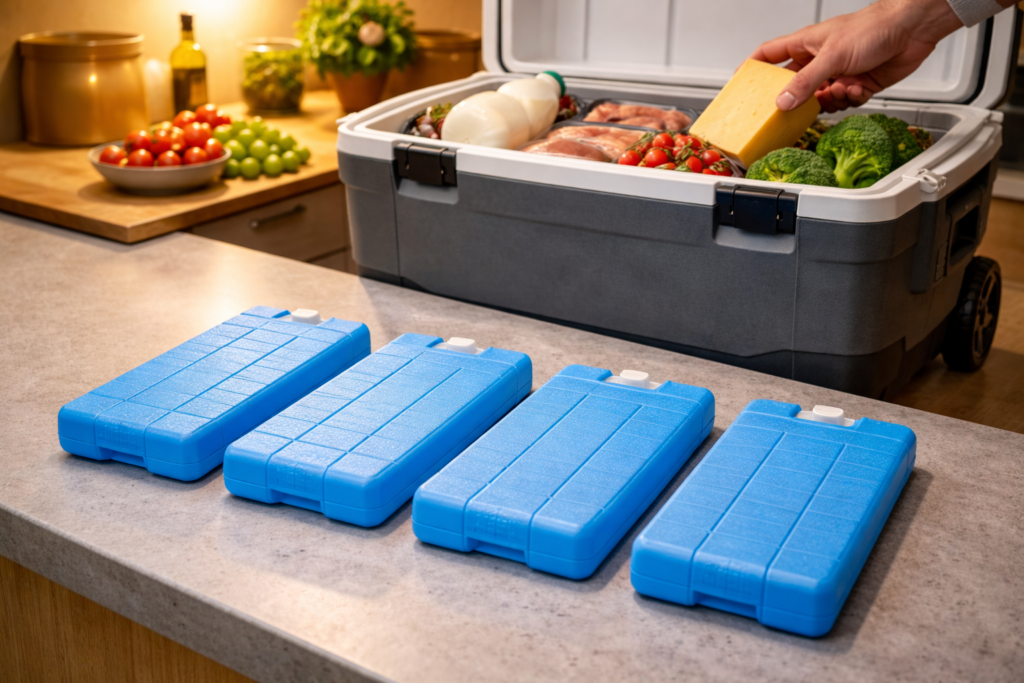
Insulation thickness and pre-cooling. All quality cool boxes use polyurethane foam — PU foam — injected into the walls and lid. The thicker the foam, the longer the box holds temperature. This is why there’s a meaningful performance gap between budget cool boxes and proper camping-grade ones. But the insulation only does its job properly if the box starts cold. Fill it with ice packs the night before departure, let it cool down overnight, and pack your food into an already-cold box the morning you leave. A cool box that hasn’t been pre-cooled starts at ambient temperature — around 20°C in a warm car — and has to overcome that thermal mass before it can chill anything. On a trip to Loch Lomond last July, pre-cooling the box overnight meant the milk was still properly cold on Monday morning. Same box, same ice packs, completely different result from the previous trip where it had been packed warm. It’s one of those details that nobody mentions before a first family camping trip but makes a genuinely noticeable difference from the first night.
Food safety matters here too. The threshold for safe food storage is 5°C or below — the same as a domestic fridge. Meat, dairy, and cooked food in particular need to stay below this throughout the trip. A properly pre-cooled box with quality freeze packs achieves this reliably for the first two to three days. After that, or in genuinely hot weather, it’s worth checking the temperature before eating anything that matters.
Ice packs, not loose ice. Reusable freeze blocks maintain their temperature longer than loose ice, don’t create a pool of water that soaks everything in the bottom of the box, and can be refrozen between trips. A family of four camping for three nights needs at minimum four freeze packs — more in genuinely warm weather. Loose ice looks impressive when you first pack the box and disappoints by Saturday morning. Keep the lid closed as much as possible: every time it opens, warm air replaces cold air inside, which is the fastest way to shorten effective cooling time.
Size and shade. A cool box that’s too large and half-empty is actually less efficient than a full smaller box — the air gap inside warms faster than solid food or ice packs. For a family of four on a long weekend, 40–55 litres is the right range. Position the box in shade throughout the trip: every degree of ambient temperature it has to fight against reduces effective cooling time meaningfully. In April, September, or October — when UK camping is perfectly good but temperatures rarely break 15°C — the cool box problem almost solves itself. A shaded box with freeze packs in those conditions will outlast a five-day camping trip without difficulty.
The Cool Boxes Worth Buying
Coleman Xtreme 50QT Wheeled Cool Box — Best Overall for UK Families
Coleman has been making outdoor kit for over a hundred years and the Xtreme range is the product line that justifies the reputation. The 50QT is 47 litres of internal capacity — right in the sweet spot for a family of four — with PU full foam insulation in both the body and lid, wheels and a telescopic steel handle for moving it around the campsite, a drain plug at the base for emptying without tipping, and a lid strong enough to support 113kg as an impromptu seat when there aren’t enough chairs.
Ice retention is rated at four days, which in real UK camping conditions — a box pre-cooled overnight and reasonably managed — holds up honestly. The wheels and telescopic handle are what elevate this over the standard Coleman Xtreme models without wheels. A fully loaded 47L cool box weighs considerably more than an empty one and being able to roll it from the car boot to the pitch rather than carrying it is a genuine practical advantage, particularly if the pitch isn’t directly beside the car. The Coleman Xtreme cool box HDPE plastic construction is UV-resistant, handles rough treatment without showing damage, and the snap-lock lid seal keeps cold in consistently across a long weekend.
The honest note: achieving maximum four-day performance requires a significant quantity of ice per Coleman’s own guidelines — around 13kg — which eats meaningfully into usable storage space. In practice, with quality freeze blocks rather than loose ice, most families get solid three-day performance with full usable capacity. Use freeze packs, pre-cool the box, and the four-day claim becomes realistic rather than theoretical.
Once the cool box is sorted, working through everything else your family needs to pack before the trip prevents the kind of gaps that only show up on Friday evening at the campsite.
Outwell Fulmar 60L — Best for Bigger Families and Longer Trips
Outwell is a Danish outdoor brand with a strong reputation in the UK camping market and the Fulmar 60L earns its place as the box for families who want to stop compromising on what they eat at the campsite. At 60 litres it accommodates a family of five or six’s full weekend food supply, or a family of four’s provisions for a full week, without having to choose between the sausages and the milk. It stands 1.75L bottles upright, which matters when packing for multiple people.
The high-density PU foam insulation keeps contents cold for up to five days with ice blocks — the best passive performance of any box on this list. Strong fold-flat handles, a drain valve for easy emptying, and a secure lid mechanism. On a five-day trip to Argyll last summer, the Fulmar kept everything including fresh meat properly cold until the final morning with four freeze blocks and sensible lid management. That’s the difference between planning meals that require fresh ingredients and planning meals around what survives two days without proper refrigeration.
The trade-off is size. A 60L cool box fully loaded is heavy and takes meaningful boot space. For families with an estate car or SUV who camp regularly, this is a non-issue. For families where boot space is tight on a fully-loaded family camping trip, the Coleman 47L or Vango 45L is the more practical choice.
Vango Pinnacle Wheelie 45L — Best Mid-Range Value
Vango is one of the most trusted names in UK camping gear and the Pinnacle Wheelie 45L consistently earns the value recommendation in the cool box category. The high-density polyethylene exterior is notably tougher than it looks on the product page — HDPE construction rather than the standard ABS plastic used by cheaper alternatives, which is the same material used in the Coleman Xtreme and gives it a similar level of impact resistance at a lower price point. PU foam insulation, up to 100 hours of cooling retention — four-plus days with good management — wheels, telescopic handle, integrated cup holders, and a tap-style drain at the base.
At 45 litres it holds a genuine family weekend’s food supply and the tight lid seal maintains temperature consistently. The seal design on the Pinnacle is worth noting specifically — it’s one of the things that separates it from cheaper wheeled cool boxes where the lid seal loosens after a season of use. We’ve used a Vango cool box on west coast Scotland trips where the car gets loaded and unloaded multiple times across a week and the build quality shows in how it holds up to that kind of use. The Vango Pinnacle cool box is the one to recommend to families who want comparable performance to the Coleman at a more accessible price.
The honest note: the cup holders on the lid are slightly shallow — standard cans sit in them fine but don’t feel fully secure on an uneven picnic table. A minor point on an otherwise well-designed box.
Outwell Fulmar 30L — Best Compact Option for Smaller Families or Short Trips
For a family of three, or a family of four doing a one or two-night trip where the full 45–60L box is more than actually needed, the Outwell Fulmar 30L hits the right balance. Same Outwell build quality as the 60L — high-density PU foam, drain valve, secure lid, solid fold-flat handles — at a size that fits across the back seat of most family cars without difficulty and doesn’t demand an estate to transport it.
At 30 litres it fits enough for a family’s weekend food with careful packing, holds 1.75L bottles upright, and delivers up to four days of cooling with ice blocks. UK reviewers specifically mention it performing reliably even when the car interior temperature rises significantly during a warm day — the insulation is doing genuine work rather than just slowing the inevitable. For families just starting out with camping who aren’t sure yet whether the full-size box is justified, the Fulmar 30L is an honest starting point that doesn’t feel like a compromise. When the camping frequency builds up and the 30L starts feeling tight, the step up to the 60L is straightforward — same brand, same behaviour, just more space.
Vango E-Pinnacle 30L Electric Cool Box — Best for Families on Electric Hookup
Most UK campsite bookings with electric hookup are paid for and then underused. The Vango E-Pinnacle is the cool box that makes the hookup fee worth paying. It runs on 230V mains from a campsite hookup or 12V from the car cigarette lighter socket and uses thermoelectric cooling to maintain the interior at up to 16°C below ambient temperature. In a typical UK summer that means genuinely fridge-cold temperatures as long as it’s plugged in — the kind of cold where you stop checking whether the milk is still okay and just trust it.
Plug it into the mains at home the night before departure and it arrives at the campsite already cold. Plug it into the hookup on arrival and it maintains temperature for the entire stay without ice packs, without management, and without the three-day countdown that a passive cool box creates. The thermoelectric system is quiet — no compressor noise overnight — and has no moving parts to fail after a few seasons of use. At 30 litres it’s sized for a family that wants fridge-cold food without the bulk of a larger electric unit.
The honest note: thermoelectric cooling is dependent on ambient temperature in a way compressor cooling isn’t. Above 30°C it cools less effectively because the temperature differential it’s working against is larger. For typical UK camping weather this isn’t a real-world issue. For families who camp in southern Europe during summer, a compressor model would be the better long-term investment.
Getting the Most From Any Cool Box
A few habits that consistently extend cool box performance beyond what most families experience on the first trip.
Reusable freeze blocks significantly outperform loose ice. The standard camping freeze blocks available on Amazon UK cost a few pounds each, refreeze between trips, and don’t create the pool of water that loose ice produces. Four good-quality 400ml freeze blocks outperform twice the volume of loose ice because they maintain their temperature longer and don’t saturate the food at the bottom of the box.
Pack food cold, not ambient. Food that goes into the cool box straight from the fridge stays cold longer than food packed at room temperature. The cool box maintains temperature — it doesn’t create it. Everything that can come out of the fridge the morning of departure should do so, into a box that’s been pre-cooled overnight.
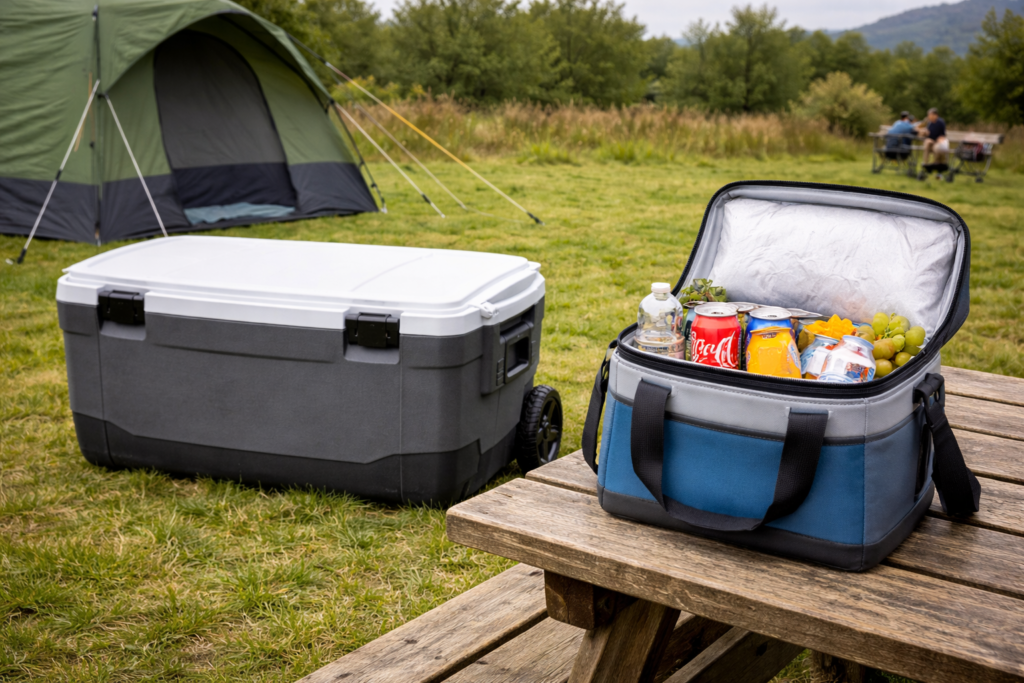
A separate drinks cool bag is the single most impactful habit for a family. Children opening and closing the main cool box every time they want a drink is the fastest way to warm everything inside it. A small insulated cool bag lives beside the main box, holds drinks and snacks for the day, and gets opened as many times as needed while the main box stays sealed for meal ingredients. On a warm summer afternoon this change alone extends main box cold retention by several hours. It also means the children have their own supply to access without adult supervision over every cold drink — a separate but genuine camping quality-of-life improvement.
If you’re planning a short first trip with the kids, a practical packing plan for one night away helps you work out what actually needs to come out of the fridge the morning you leave.
Clean and dry thoroughly after every trip. Residual moisture inside a cool box breeds mildew and smell that transfers to food on the next trip. After every trip, remove the drain plug, rinse with clean water, and leave open to air dry completely before storing with the lid propped open. A cool box stored closed with any residual moisture inside develops a smell within a few weeks that a single rinse won’t shift.
The same principle applies to the rest of your camping kit — drying and storing everything properly after a trip is the difference between kit that lasts a decade and kit that needs replacing every few seasons.
Which Box for Your Family
Family of four on a long weekend, car camping, boot space reasonable — Coleman Xtreme 50QT. The right capacity, genuine four-day performance with freeze packs, wheels that earn their place on a loaded campsite.
Family of five or six, longer trips, or a family that wants to cook from fresh ingredients without the daily temperature anxiety — Outwell Fulmar 60L. The five-day performance and the capacity change what’s possible to eat at the campsite.
Family of four wanting solid performance at a lower price — Vango Pinnacle Wheelie 45L. Comparable performance to the Coleman, HDPE construction, better value.
Family of three, or a family doing one or two-night trips where the larger box is overkill — Outwell Fulmar 30L. Same Outwell quality in a size that fits anywhere.
Families on electric hookup sites who want to stop thinking about food temperature entirely — Vango E-Pinnacle 30L. Plug it in, forget about it, eat properly cold food all weekend.
Related Guides
About The Author – Andrew Marshall
Andrew Marshall is the creator of Simple Days Outside and a UK parent of three who regularly camps, walks, and explores outdoor activities with his family. His guides focus on practical gear, realistic family adventures, and simple ways to help families enjoy the outdoors across the UK. The recommendations on this site are based on real-world use, research, and the kind of equipment families actually rely on for weekend trips and everyday outdoor fun.