

Written by Andrew Marshall
UK parent of three sharing practical advice to help families enjoy camping, walking, garden play, and simple outdoor adventures across the UK.
Creator of Simple Days Outside.
Last Updated: April 2026
We arrived at a campsite near Loch Lomond one August evening with a bag of charcoal and a couple of disposable BBQs, only to be told at the gate that the site had banned them the previous season following a fire incident on a neighbouring pitch. Cue a scramble through the boot for the camping stove that had been shoved in the back as a backup, and dinner about forty minutes later than anyone wanted.
That experience summarises the core problem with the disposable BBQ as a family camping plan in 2026 — not that they’re inherently terrible, but that the situation around them in the UK has changed significantly enough that assuming they’re fine is increasingly a gamble. The campsite that permitted them freely three years ago may have changed its rules. The national park you’re heading into may have banned them outright. And even where they are permitted, they’re doing a fundamentally different job from a camping stove — which means asking “which is better” is partly the wrong question.
This covers what each option genuinely offers, where things stand with UK rules and restrictions, and where most UK families end up after thinking it through properly.
More family camping kit recommendations across the Family Camping hub — including stoves, cook sets, and everything else worth bringing on a short trip.
What’s Changed for Disposable BBQs in the UK
It’s worth starting here because the landscape has shifted substantially since 2020 and anyone who hasn’t camped recently may be working from assumptions that no longer hold.
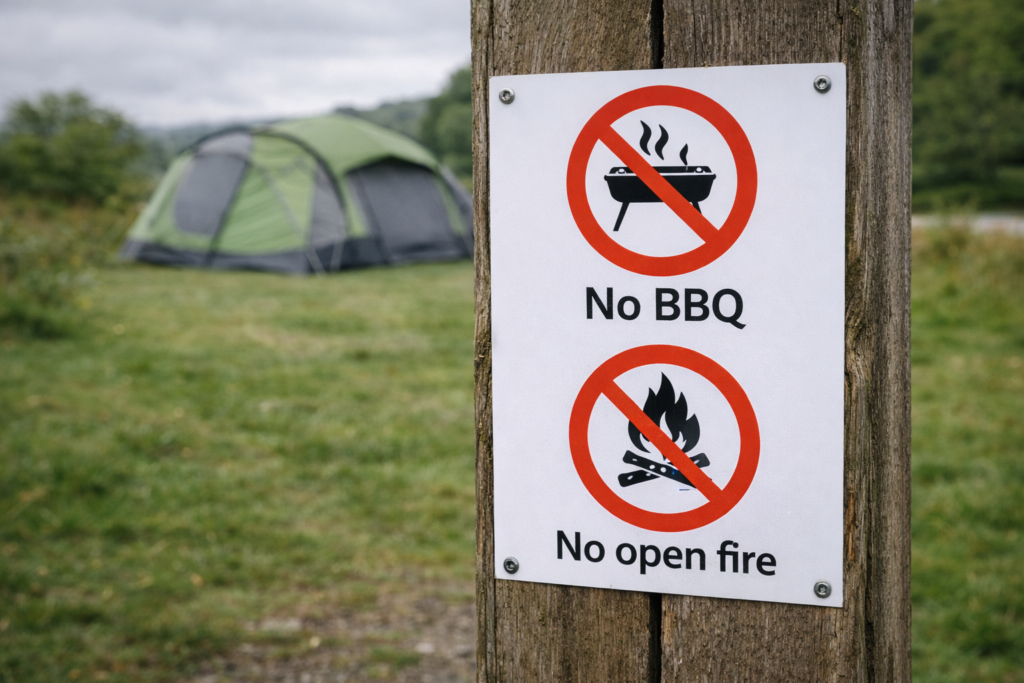
Waitrose and Aldi removed disposable BBQs from all their stores nationally. The Cairngorms National Park banned them outright — along with open campfires — from April to September each year, with fines of up to £500. The New Forest is a complete no-BBQ zone regardless of type. Brighton and Hove Council banned them on all council land. Dorset, the Peak District, and numerous other local authorities have followed with their own restrictions. The general direction of travel across the UK is toward restriction, particularly anywhere with heathland, peat, or dry grassland.
As a Scottish family who camps regularly in the Cairngorms and across the west coast, the fire risk isn’t an abstract policy concern. The 2025 wildfire season was genuinely serious across Scottish moorland — terrain that looks invulnerable to fire in a wet spring becomes a different proposition entirely by late July in a dry year. The Cairngorms ban feels proportionate rather than excessive when you’ve seen what a dry hillside looks like in August.
The technical reasons behind these bans are worth understanding. Temperatures inside a disposable BBQ reach over 600°F during use. The charcoal takes up to 48 hours to cool completely after the flame appears to be out — embers can reignite when disturbed and travel up to a mile in wind. Peat can ignite and burn underground for days or weeks, re-emerging well away from the original source. This isn’t precautionary language — it’s the specific reason the New Forest National Park gives for their total ban.
The practical point for families planning a UK camping trip: check the campsite’s specific rules before assuming disposable BBQs are permitted. Many sites that haven’t introduced an explicit ban have signs asking campers to raise them off the ground on stands, which somewhat defeats the purpose of a disposable unit. BBQ and fire rules are just one of twelve things worth confirming before you book a UK campsite — several others have caught families out on arrival in ways that are easily avoided.
What a Disposable BBQ Actually Offers
With the restrictions context established, there’s a genuine case for disposable BBQs in the right circumstances and it’s worth being honest about it rather than dismissing them entirely.
They cost between £3 and £6 at a petrol station or supermarket. No equipment ownership, no cleaning, no storage between trips, no knowledge of gas canisters. For a family doing a single night away for the first time, working out whether they enjoy camping before investing in anything, a disposable BBQ is a rational choice.
The cooking experience is genuinely different from a gas stove — and this matters. Charcoal grilling produces flavour that no gas ring replicates regardless of price. There’s something specific about sausages over coals on a summer campsite evening with children who’ve spent the day at a beach or on the water that a camping stove just doesn’t recreate. We’ve used disposable charcoal BBQs on beach camping trips in Argyll where the fire risk was low, the site permitted them, and the evening justified it — and it was the right call. The charred edges on the chicken, the smell, the whole ritual of it. A gas ring on a picnic table is functional. Coals on a summer evening are something else.
The limitations are equally real. A disposable BBQ cannot boil water. It cannot make the morning porridge, the children’s hot chocolate, or the bacon and eggs when everyone wakes up cold before the charcoal is ready. It takes 20–30 minutes to reach cooking temperature from lighting. It requires dry, still conditions to perform well — a wet evening or a persistent wind significantly degrades the experience. Once lit it burns until it burns out; there is no “turn it down” option.
For families camping in any UK weather other than peak summer, a disposable BBQ as the sole cooking method is a genuinely risky strategy. The UK camping season regularly delivers cool mornings, wet afternoons, and breezy evenings — all conditions where charcoal underperforms or is unusable, and where hot food and hot drinks become necessary rather than optional.
What a Camping Stove Actually Offers
A camping stove does different things and does most of them considerably better for everyday family camping use.
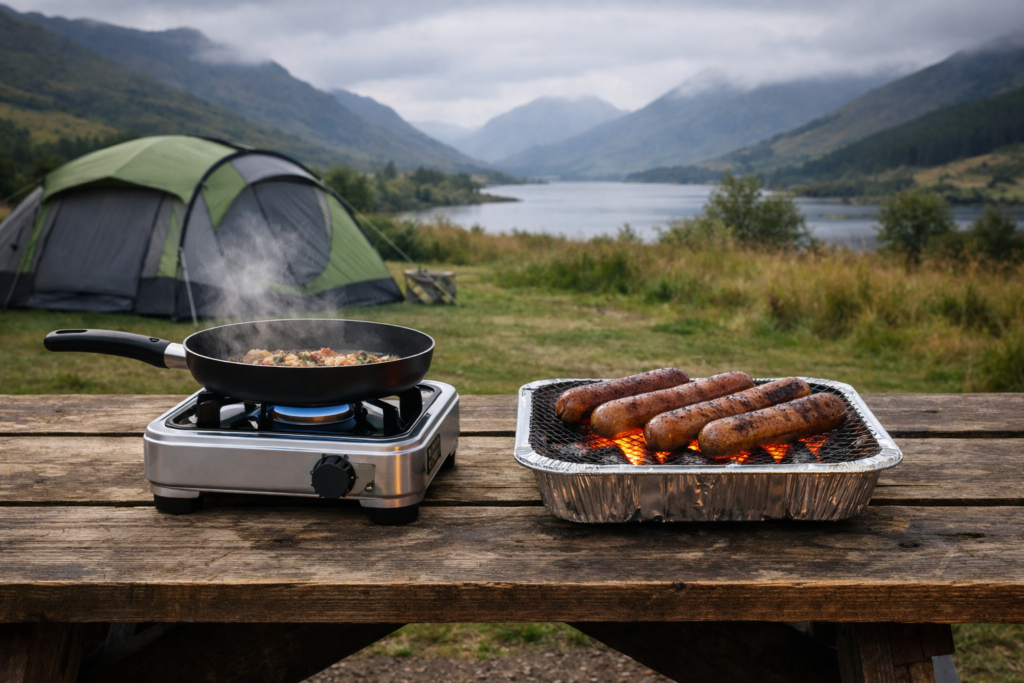
Instant heat on demand is the feature that earns a camping stove its place on every trip, regardless of what else you bring. The first morning at a campsite when the children wake up cold and ask when breakfast is happening — a gas stove answers that question in under ten minutes. Porridge, scrambled eggs, the kettle for tea. A disposable BBQ needs 25 minutes of charcoal preparation before it produces any cooking heat at all, by which point children’s patience has usually worn through.
A Campingaz Camp Bistro costs around £25–30, fits in a bag, lights with a piezo igniter, and handles everything a family wants to cook on a short trip. That’s the entry point — a single-burner that does the job. For families cooking proper meals rather than just heating things, a two-burner setup opens up simultaneous cooking: pasta boiling on one ring, sauce on the other, kettle going while the main course finishes. For families choosing a first stove or upgrading, the stoves worth buying for UK family camping covers the full range from compact single burners to double-ring setups.
Temperature control is the capability that disposable BBQs simply don’t have. Gas allows you to turn the flame up, turn it down, and turn it off. You can simmer a sauce, keep something warm, or cut the heat entirely if something is cooking faster than expected. This sounds like a small thing until you’ve tried to prevent scrambled eggs from burning on charcoal — at which point it becomes the most important feature in outdoor cooking.
A camping stove handles UK weather considerably better than charcoal. Most quality camping stoves continue working in rain — you position the stove under the tent awning or in the shelter of the car on the picnic table. A separate camping stove windshield costing a few pounds handles moderate winds without the flame going out. Wind that extinguishes charcoal makes a camping stove marginally slower to boil water. These are meaningfully different outcomes on a typical Scottish coastal evening.
The upfront cost is the real comparison point that most families don’t run the maths on. A decent single-burner camping stove costs £20–35. A camping gas cartridge costs around £3–5 and lasts a full weekend of reasonable family use. A disposable BBQ costs £3–6 per trip and covers one evening’s cooking. Across four camping weekends the stove and its cartridges cost around £45–55 total. Four disposable BBQs plus whatever cooking they couldn’t cover cost considerably more and delivered less overall. The stove pays for itself within a single season for most families who camp more than twice.
The Third Option Worth Knowing About
For families who camp primarily on electric hookup sites — and the majority of UK organised campsites offer hookup pitches — there’s a third option that most disposable-vs-stove comparisons miss entirely.
An electric camping grill or hotplate on a powered pitch removes both the gas logistics and the charcoal fire risk simultaneously. You plug it in, it heats up in minutes, you cook on it, you clean it. No cartridges to manage, no fire safety considerations beyond the normal ones that apply to any cooking appliance. A camping electric grill on a hookup pitch is the option that makes the disposable BBQ genuinely unnecessary for any family camping regularly on organised sites.
It doesn’t replace a gas stove for campsites without hookup — and wild camping in Scotland or anywhere without power access means gas is still the answer. But for the significant proportion of UK family camping that happens on organised sites with electric hookup, it’s worth knowing the option exists.
When a Disposable BBQ Makes Sense
There are specific situations where a disposable BBQ is the more appropriate choice.
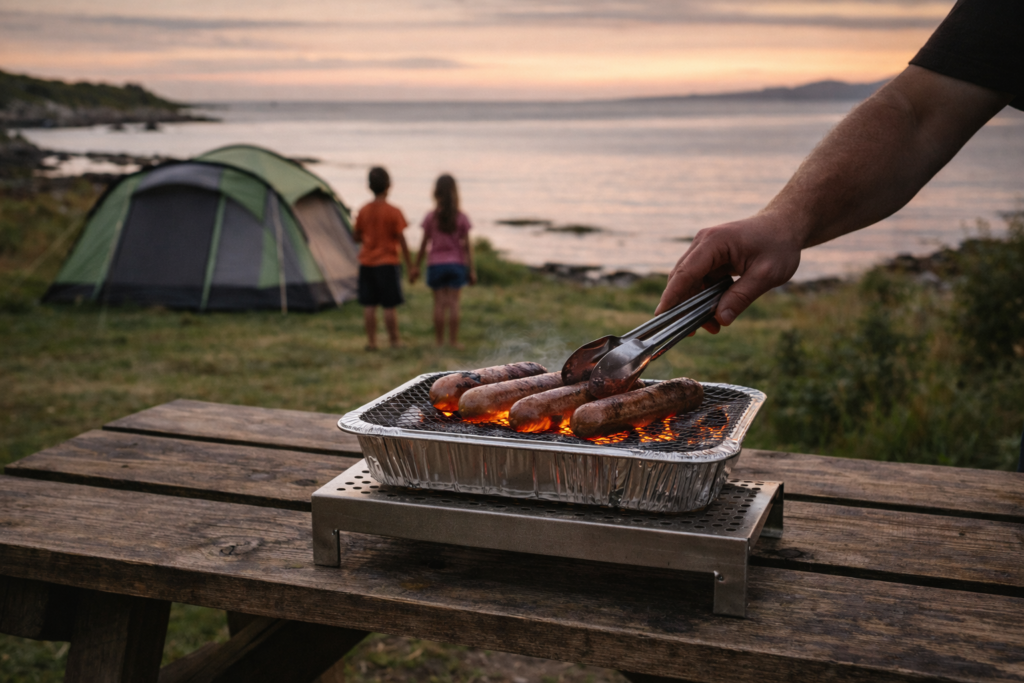
A single summer evening at a coastal or beach campsite that explicitly permits them, in still conditions, with a stand to raise it off the grass — the specific experience of sausages over coals with children who’ve spent the day in the sea is genuinely worth preserving. It requires checking the rules first, raising the unit properly, and allowing proper cooling time before disposal. In this scenario a disposable BBQ is doing something a gas stove cannot.
A genuinely one-off trip where no camping equipment will be kept. If someone is trying camping once and won’t be doing it again, buying a £25 stove to sit in the garage for five years doesn’t make practical sense.
As a supplement to a camping stove rather than a replacement. On a warm evening at a site that permits them, running a disposable BBQ for the grilled food while the camping stove handles the side dishes and the kettle is the best of both. The stove is the reliable functional core, the BBQ is the optional summer treat. If you’re building the full camp kitchen setup, the cooking sets worth buying alongside a camping stove covers the pots and pans that complete the picture.
When a Camping Stove Is the Clear Choice
For the majority of UK family camping trips — particularly anywhere in Scotland, Wales, or the upland and coastal locations where families with outdoors interests tend to go — a camping stove is the more practical, more versatile, and increasingly the only legally permitted option.
Any trip to a Scottish national park between April and September means a camping stove isn’t just preferable but required. Disposable BBQs are banned in the Cairngorms with real enforcement and real fines. Similar restrictions apply across other Scottish landscapes and the direction of policy is clearly toward extending rather than relaxing them. This isn’t a technicality — it’s a genuine fire risk in an area that matters.
Any trip where the weather is uncertain — which is any trip to most of the UK camping locations that make UK camping worth doing. A camping stove works in rain, works at 7am before children have had breakfast, and works in the conditions that make the landscape look the way it does. A disposable BBQ requires conditions that the UK provides occasionally rather than reliably.
Any trip longer than one night where you need to feed everyone three times a day. A single disposable BBQ covers one evening’s cooking. A gas cartridge covers the entire trip including every breakfast, every lunch, and every evening meal across a long weekend for a family of four.
The Honest Verdict
At the campsite gate on that Loch Lomond trip, fumbling for the backup stove while the children asked about dinner, it became fairly clear that the disposable BBQ had stopped being the right default answer for family camping in Scotland. Not because they’re useless — they’re not — but because the conditions under which they work well have narrowed considerably as the rules have tightened and the weather has become less reliably cooperative with charcoal.
A camping stove is what a family who camps regularly in the UK actually needs. A disposable BBQ is a pleasant addition on the specific summer evenings when everything lines up — warm weather, a permitted site, still air, and an appetite for proper grilled food rather than gas-cooked food. Both at the same time, with the stove handling everything the BBQ cannot, is the practical answer most regular UK family campers end up at eventually.
For a first trip, for a beach evening, for a summer night at an appropriate coastal site: the disposable BBQ earns its place. For everything else: the camping stove wins by such a clear margin that it’s not really a comparison.
What to Check Before You Go
Check the campsite’s specific rules on open flames, charcoal, and disposable BBQs before every trip. Rules have changed significantly across UK campsites in the last three years and a policy from 2021 may not reflect current practice. A quick email or phone call prevents arriving with charcoal that can’t be used.
Check the local fire risk status if you’re heading to any area near heathland, moorland, or peat. During dry spells additional restrictions beyond the campsite’s own rules may apply from the local authority or national park. In Scotland in particular this matters — the landscape is worth protecting, and the restrictions exist because they need to.
If this is your first time camping with the family, there’s a lot that doesn’t get mentioned before the first trip — fire and BBQ rules being one of the less obvious ones.
Related Guides
About The Author – Andrew Marshall
Andrew Marshall is the creator of Simple Days Outside and a UK parent of three who regularly camps, walks, and explores outdoor activities with his family. His guides focus on practical gear, realistic family adventures, and simple ways to help families enjoy the outdoors across the UK. The recommendations on this site are based on real-world use, research, and the kind of equipment families actually rely on for weekend trips and everyday outdoor fun.