
Written by Andrew Marshall
UK parent of three sharing practical advice to help families enjoy camping, walking, garden play, and simple outdoor adventures across the UK.
Creator of Simple Days Outside.
Last Updated: 20th March 2026
The sizing charts you’ll find on most bike retailer websites give you a wheel size based on age. They’re a starting point — but they’re not the whole answer, and buying purely by age is one of the most common reasons a child ends up on a bike that doesn’t suit them.
I’ve bought bikes the wrong size. My oldest got a bike that was too big and was so wobbly on it that he ended up going back to his older smaller bike just to feel confident again. That wasn’t a failure — it was useful information. Once he’d built his confidence properly on the right size, he loved graduating to bigger bikes and rode them brilliantly. But getting there required going back a step first, and that taught me more about kids bike sizing than any chart ever did. If you’re still at the very beginning of the journey and deciding between a balance bike and stabilisers first, that decision matters more than most parents realise.
I’ve also stood in Halfords and Dales Cycles watching my kids try bikes before buying, which is always time well spent. And the single most useful thing I’ve worked out across three children is this — the right size depends not just on how tall the child is, but on how confident they already are on a bike.
If you’re building up your child’s outdoor kit alongside a new bike, the Garden & Outdoor Play hub covers everything from garden games to outdoor gear worth having.
Why Age Charts Miss the Point
Every kids bike retailer publishes an age-to-wheel-size chart. Age 4-6: 16 inch. Age 6-9: 20 inch. Age 9-12: 24 inch. And so on. These charts exist because they’re easy to publish and easy to search for — not because age is a reliable indicator of what bike a child needs.
The problem is that age tells you very little about the two things that actually matter: how tall the child is, and how confident they are on a kids bike. Two 8 year olds can be 15cm apart in height. The same child at the same height can be a nervous beginner or a confident trail rider. The right bike for each of those situations is different, and an age chart doesn’t tell you which one you’re dealing with.
Height is a much better starting point than age. Inside leg measurement is better still. But confidence level is the variable that most parents overlook entirely — and it’s the one that makes the biggest difference to whether a child actually enjoys riding the bike you’ve bought them.
The Confident Child vs the Nervous Child — The Distinction Nobody Talks About
This is the thing I wish someone had told me before I bought bikes for three kids, because it changes the sizing decision completely.
If a child is nervous, unsure on a bike, or still building basic skills — fit them on the correct size or even a touch smaller. Both feet flat on the ground, saddle low, nothing intimidating about the reach to the handlebars. A child who feels in control of their bike builds confidence faster. A child on a bike that’s even slightly too big — where they’re stretching to reach the floor or the handlebars feel far away — will tense up, ride badly, and start to think they’re just not a bike person. They’re not bad at riding. The bike is wrong for them right now.
My oldest is the clearest example of this. He got a bike that was slightly too big and within a few sessions he was so wobbly and unsure that he wanted his old smaller bike back. We let him go back to it. No pressure, no forcing it. Big flat open spaces, encouragement, running alongside him again just like the early days. Once the confidence came back on the right size bike, the transition to a bigger one happened quickly and he loved it — rode it with real enthusiasm and pride from day one because he was ready for it. Starting on the right foundation — whether that’s a balance bike or a correctly fitted first pedal bike — is what makes that confidence come faster.
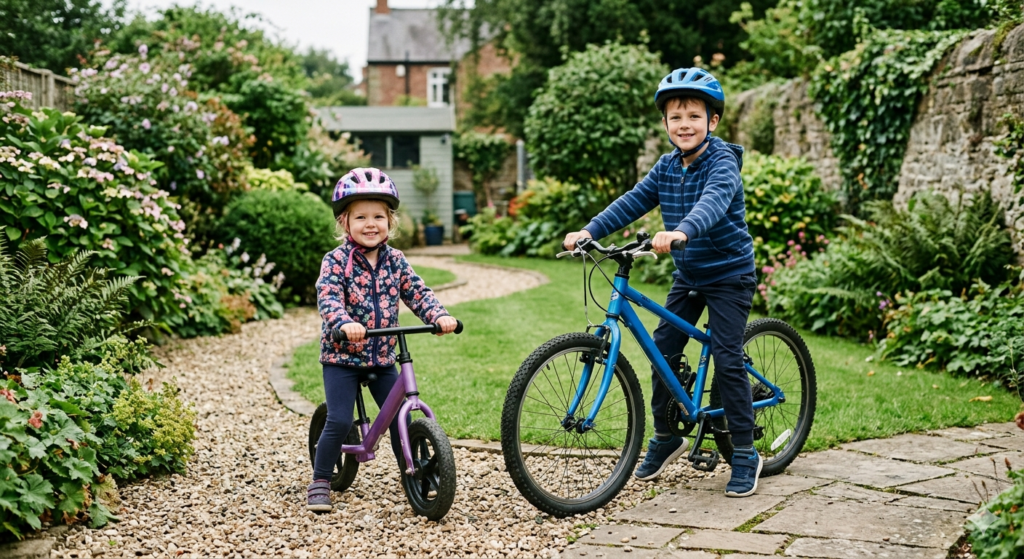
If a child is already confident — riding regularly, comfortable with balance, not thinking about the basics anymore — you can go slightly bigger knowing they’ll grow into it. Confident riders tend to enjoy a bigger bike. There’s something about being on a bike that feels that bit more capable and grown-up that makes them ride with more enthusiasm. The key is knowing which child you’re dealing with before you buy.
The Measurements That Actually Matter
Forget age. These are the three measurements worth taking before you buy anything.
Height — measure standing flat-footed against a wall. This gives you the rough wheel size bracket to start from.
Inside leg — measure from the floor to the crotch with a body measuring tape. This determines standover clearance — the gap between the top tube and the child’s inseam when standing flat-footed over the bike. For a child still building confidence you want 2-3cm of clearance minimum. For an off-road or trail bike you want more — 4-5cm — because the child will be putting a foot down regularly on uneven ground.
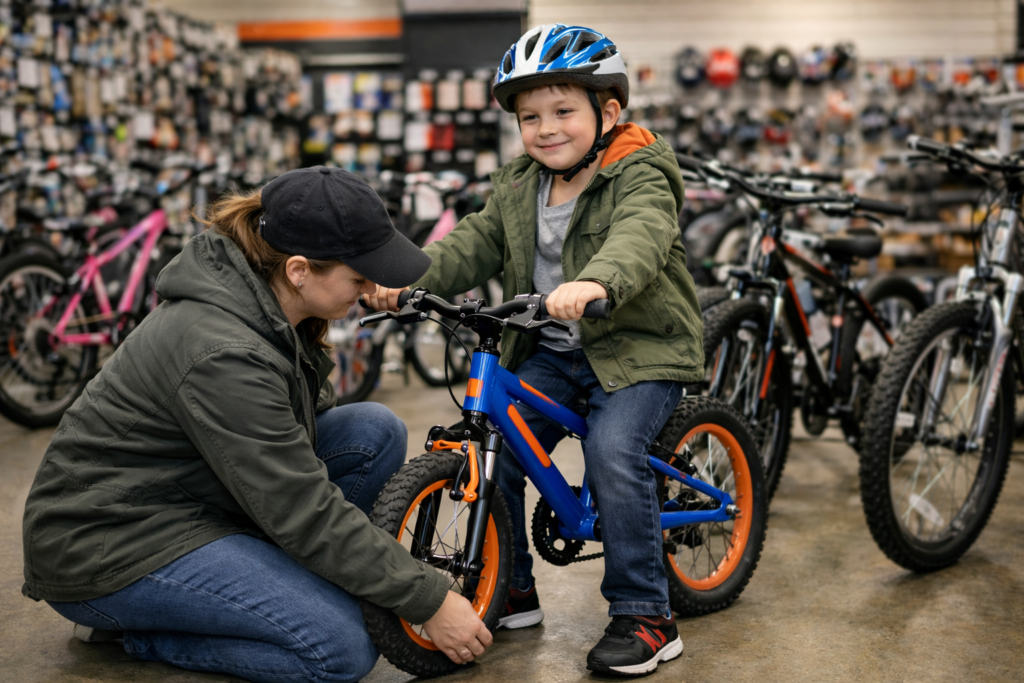
Reach — how far the child needs to stretch to reach the handlebars comfortably. They should be able to reach with a slight bend in the elbows — not stretching forward, not cramped into a hunch. This one is harder to measure at home and honestly just go to the shop if you can — the reach is the one thing you can’t properly assess from a table. Halfords and Dales Cycles both have floor models you can try, and five minutes in store is worth more than any online size guide for getting this right.
UK Kids Bike Size Guide by Height
This table uses height rather than age as the primary reference because it’s more reliable.
| Child Height | Wheel Size | Typical Age Range |
|---|---|---|
| 85–100cm | 12 inch | 2–4 years |
| 95–110cm | 14 inch | 3–5 years |
| 105–120cm | 16 inch | 4–6 years |
| 115–135cm | 20 inch | 5–8 years |
| 125–145cm | 24 inch | 7–11 years |
| 135–155cm | 26 inch | 9–13 years |
| 145cm+ | 27.5 / 29 inch | 11+ years |
A few things worth knowing about this table:
The age ranges overlap significantly — that’s intentional and reflects reality. A tall 7 year old and a short 9 year old might both be on a 24 inch wheel. That’s fine.
If your child’s height puts them between two wheel sizes — for a confident rider go larger, for a less confident rider go smaller and prioritise fit.
The 26 inch category is particularly wide because it spans a big range of body sizes and confidence levels. A nervous 9 year old and a confident 12 year old could both technically fit a 26 inch wheel, but how that bike should be set up would be quite different.
The “They’ll Grow Into It” Trap
Every parent has thought it. The bike fits now but feels like it’ll be outgrown in a season. Go up a size, get more value out of the purchase, job done.
I’ve done this. It works — but only for the right child.
For a confident rider who’s already comfortable on their current size, a slightly larger bike is something they adapt to quickly and genuinely enjoy. They feel like they’ve been given a proper upgrade. The extra inch or two of wheel doesn’t faze them because they’re not thinking about the bike — they’re thinking about where they’re riding.
For a nervous or less experienced rider, that same decision backfires almost every time. The bike feels big, putting their feet down feels less secure, the reach to the handlebars is slightly too far, and every one of those small discomforts compounds into a child who just doesn’t want to ride. You end up with an expensive bike that barely gets used.
If you’re unsure which category your child falls into — err on the side of correct fit. A season on a well-fitted bike builds the confidence that makes the next size up an exciting upgrade rather than a daunting one.
What to Do If You’ve Already Bought the Wrong Size
This happens to most parents at some point. The bike arrives, it looks fine, and then the child gets on it and something’s not right. Here’s what to do depending on the situation.
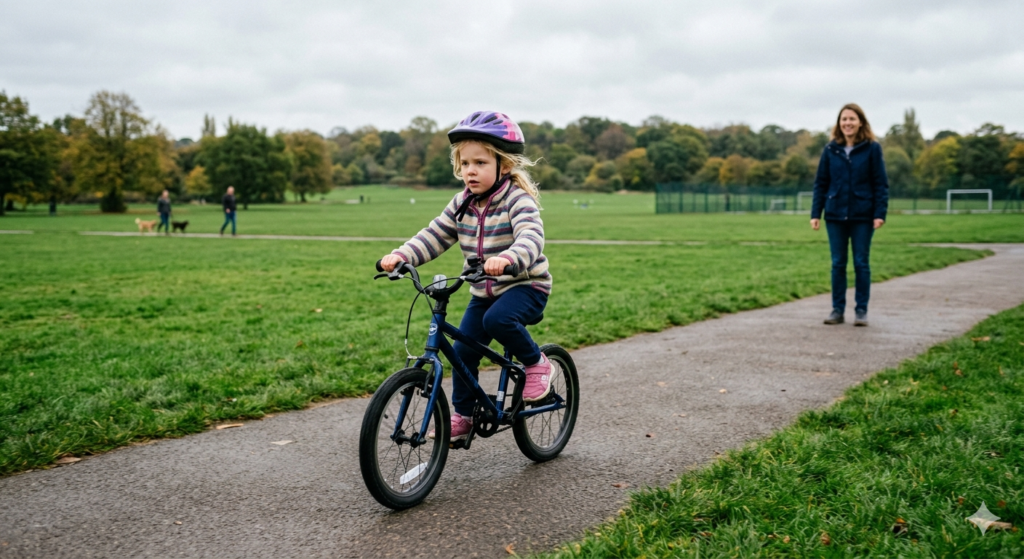
If the bike is too big — don’t force it. Lower the saddle as far as it goes, bring the handlebars as close as possible, and find the biggest flattest open space you can. A car park, a playing field, anywhere with no obstacles, no hills, no pressure. Go back to basics. Run alongside them again just like the early days. Encouragement matters more than technique at this point. The goal is getting the child feeling in control of the bike, even if it’s slightly big for them.
If after a few sessions they’re still wobbly and unhappy, go back to the previous size. There’s no failure in that. My oldest went back to his smaller bike and came back to the bigger one when he was ready — and when he did come back to it he rode it properly from day one. The confidence built on the smaller bike carried over.
If the bike is too small — easier to manage. In the short term a child can ride a slightly small bike without losing confidence. Start the exchange or second-hand sale process and move them up sooner rather than later.
If the fit is close but not quite right — saddle height adjustment and handlebar position can often close the gap. Try both before deciding the bike is the wrong size entirely. A bike multi-tool covers all the adjustments you’ll need and is worth keeping in the garage permanently.
Saddle Height — The Most Overlooked Adjustment
A lot of parents set the saddle once and never touch it again. It should be checked every few months as the child grows.
For a child still learning or building confidence — saddle low enough that both feet touch the ground flat-footed. This feels secure and allows them to put a foot down quickly without thinking about it. Getting the pedalling right doesn’t matter yet — confidence does.
For a child who’s already riding confidently — saddle height should allow a slight bend in the knee at the bottom of the pedal stroke. One foot touching the floor on tiptoe is fine at this stage. The efficient position makes a real difference on longer rides and hills and it’s worth getting right once a child is past the early stages.
The sign that the saddle needs raising: knees coming up too high on the upstroke, or the child rocking side to side. Both mean the saddle is too low for their current leg length.
The sign the bike has been outgrown entirely: saddle at maximum height and their leg still isn’t fully extending on the downstroke. At that point no adjustment fixes it — it’s time for the next size up.
A kids bike saddle replacement is worth considering if the existing one is uncomfortable — a child who finds the saddle uncomfortable will find reasons not to ride.
Handlebar Height and Reach
Handlebars get less attention than saddle height but they matter, particularly for younger children.
A child reaching too far forward will ride with weight too far forward, making steering twitchy and descents more frightening than they need to be. A child cramped with handlebars too close will struggle to steer smoothly and won’t be able to shift their weight back properly.
Most kids bikes have some handlebar height adjustment. A small tweak — bringing the handlebars slightly closer or slightly higher — can transform how a nervous rider feels on the bike. I’ve seen it make the difference between a child who looks tense and one who looks relaxed within the same session.
Adjustable stem risers are inexpensive and give you more flexibility to fine-tune the position as the child grows without replacing the whole handlebar setup.
A kids bike helmet is also worth checking fits correctly every time you check the bike fit — children’s heads grow and a helmet that fitted last year may not fit this year. A helmet that doesn’t fit properly isn’t doing its job.
Balance Bikes — Sizing Matters Here Too
Balance bikes are often treated as one-size-fits-all starter bikes, but sizing matters just as much here as on pedal bikes.
The critical measurement for a balance bike is seat height versus inside leg. The child should be able to sit on the saddle with both feet flat on the ground and a slight bend in the knee — not stretching, not cramped. If they’re stretching to reach the floor the whole point is undermined. They can’t push and glide confidently if they’re not in contact with the ground properly — and a young child on a balance bike that’s too big is a nervous child, for exactly the same reason an older child is nervous on an oversized pedal bike.
Most balance bikes come in 10 inch and 12 inch wheel sizes. The 10 inch suits smaller children from around 18 months to 3 years. The 12 inch suits 2-5 year olds depending on height. When in doubt between the two, size down.
When to Move Up a Size
Knowing when the current bike has been outgrown is as important as getting the initial size right.
The clearest signs it’s time for the next size up:
Saddle is at maximum height and their leg isn’t fully extending on the downstroke. No adjustment left.
They’re cramped reaching the handlebars even with the stem adjusted.
They’re asking for a bigger bike and riding with more confidence than the current one can keep up with — asking for steeper terrain, faster speeds, a bike more like their friends’. When a child starts asking, they’re usually ready. For children who’ve caught the bug properly and are ready for proper trails, choosing the right trail bike at that point is the next decision worth getting right.
Don’t wait until all these signs are present simultaneously. One or two together is enough to start looking.
Trying Before Buying — When It’s Worth the Trip
Online shopping is convenient and often cheaper. For kids bikes, trying in a shop before buying is worth considering in a few specific situations.
If the child is between sizes — trying both back to back in a shop takes five minutes and gives you a definitive answer that no chart can.
If the child is nervous or has had confidence knocked by a previous bike — seeing them on the bike in the shop tells you immediately whether it feels right. A child who sits on the right bike and looks relaxed is noticeably different from one who looks uncertain.
If you’re spending £200+ — at that price the fit needs to be right. Halfords and Dales Cycles both have good floor models and helpful staff for sizing. Decathlon is also worth a visit — their Rockrider range has floor models across all sizes.
For a £80 starter bike with a returns policy, ordering online is perfectly reasonable. Once they’re past the first bike stage and ready for stabilisers or a proper pedal bike, getting the spec right matters as much as the size.
A kids bike lock is worth picking up at the same time as the bike — easy to forget until the first time they want to leave it somewhere.
Buying Second-Hand — Sizing Checks Matter More Here
Second-hand is genuinely good value for kids bikes from quality brands — children outgrow them quickly and the bikes often have plenty of life left. For second-hand locally, Gumtree filtered to within 5 miles is the most reliable source — you get to see the bike in person, check the fit on your child before committing, and avoid the risk of buying something that looks fine in photos but isn’t right when it arrives.
The previous child may have been riding it slightly too small or too large, with the saddle set at the wrong height. Don’t assume the listed wheel size tells you everything. Take the measurements — inside leg, standover clearance, reach — and check them against your child directly.
What to check before buying second-hand: suspension fork moves freely if it has one, brake pads have life remaining, gears shift cleanly through all speeds, frame has no cracks particularly around the head tube and bottom bracket. A five-minute check covers all of it.
A kids bike puncture repair kit is worth picking up alongside any second-hand purchase — older bikes are more likely to need one sooner rather than later.
FAQs
My child is between sizes — which do I choose? Confident rider who’s already comfortable on their current size — go up. Less confident, still building skills, or returning to riding after a gap — go down and prioritise fit. A child on the right size bike builds confidence faster than one on a bike they’re supposed to grow into. Once the confidence is there, the bigger size becomes an exciting upgrade rather than something they’re struggling with.
What if my child is tall for their age? Size by height not age. A tall 7 year old on a 20 inch wheel when their height puts them in the 24 inch bracket will be cramped and uncomfortable regardless of what the age chart says. Use the height table and ignore the age column entirely.
Can my child use a bike with the saddle all the way down? For a young child still learning to balance — yes, both feet flat on the ground is exactly right. As confidence builds, raise the saddle gradually toward the efficient pedalling position. Don’t rush it — confidence first, efficiency second.
How long should a kids bike last before sizing up? Most children move up a wheel size every 1-3 years depending on how fast they’re growing. Check the saddle height every few months — when it’s at maximum and the leg isn’t extending properly on the downstroke, it’s time to look at the next size up.
My child got a bike that’s too big and now doesn’t want to ride — what do I do? Go back to basics. Lower the saddle as far as it goes, find a big flat open space, and run alongside them again like the early days. Encouragement and no pressure. If after a few sessions they’re still uncomfortable, go back to the previous size — there’s no failure in that. Confidence built on the right size bike carries over when you come back to the bigger one. My oldest did exactly this and when he came back to the bigger bike he rode it properly from day one.
Is it worth buying adjustable bikes that grow with the child? Some brands offer bikes with adjustable geometry that extend their useful life. For a child who rides regularly and you want to invest properly, worth considering. For a child who rides occasionally, a standard well-fitted bike at the correct size is usually better value.
The Honest Call
Get the size right for who the child is now — not who you hope they’ll be in six months.
A well-fitted bike builds confidence. Confidence makes riding enjoyable. Enjoyment is what turns a child into a rider rather than someone who tried bikes for a bit and stopped.
If they’re confident already, a slightly generous size is a good call — they’ll grow into it quickly and love the feeling of riding something more capable. If they’re still finding their feet, fit them correctly and let the confidence come naturally. The upgrade to the next size is much more exciting when they’re ready for it — and when they are ready, they’ll tell you.
Watching a child who’s been nervous on a bike suddenly click into riding confidently is one of those small moments that stays with you. Getting the size right is usually most of the reason it happens.
Related Guides
About The Author – Andrew Marshall
Andrew Marshall is the creator of Simple Days Outside and a UK parent of three who regularly camps, walks, and explores outdoor activities with his family. His guides focus on practical gear, realistic family adventures, and simple ways to help families enjoy the outdoors across the UK. The recommendations on this site are based on real-world use, research, and the kind of equipment families actually rely on for weekend trips and everyday outdoor fun.