

Written by Andrew Marshall
UK parent of three sharing practical advice to help families enjoy camping, walking, garden play, and simple outdoor adventures across the UK.
Creator of Simple Days Outside.
Last Updated: 24th March 2026
If you’ve been researching camping gear recently and kept seeing the phrase “camping quilt” without being entirely sure what one is or why anyone would choose it over a sleeping bag, you’re not alone. It’s a question that comes up regularly among families who are a few trips into camping and starting to wonder whether there’s a better way to sleep outdoors than the standard setup.
The honest answer is: it depends entirely on how your family camps, how old your children are, and what kind of sleeper each person is. This isn’t a case where one option is clearly better. But understanding the difference makes the decision straightforward. For more on getting family camping kit right from the ground up, the Family Camping & Short Trips section covers everything from tents to packing plans in one place.
What Is a Camping Quilt?
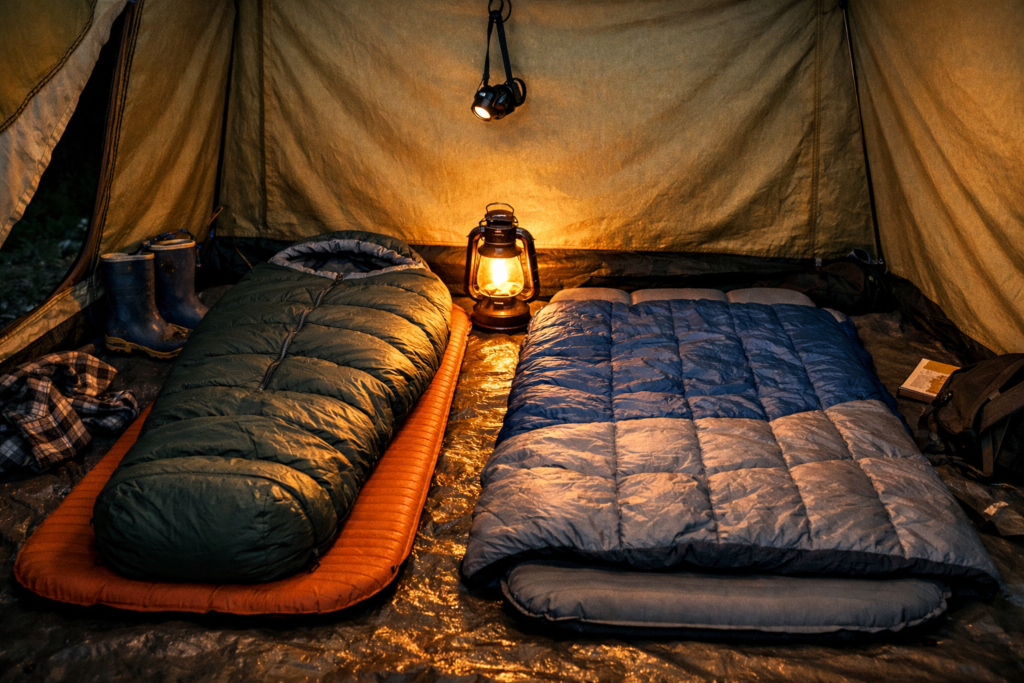
A camping quilt is essentially a sleeping bag with the back removed. Instead of a fully enclosed bag that wraps around you on all sides, a quilt covers the top of you like a blanket — usually with some way of attaching it to a sleeping mat underneath to stop it sliding off in the night.
The logic is straightforward. The insulation underneath you in a sleeping bag — the part between your body and the mat — gets compressed by your weight and loses almost all of its thermal value. You’re not sleeping on warm insulation, you’re sleeping on flat, compressed fill that does very little. The sleeping mat beneath you is what actually keeps you insulated from the ground. So the argument goes: why carry all that underside insulation if it isn’t doing anything useful?
Quilts strip out that wasted material, making them lighter, more packable, and — for people who sleep warm or move around a lot — often more comfortable than being zipped into a bag.
What Is a Sleeping Bag?
A sleeping bag is a fully enclosed insulated shell designed to surround the sleeper on all sides. You climb in, zip it up, and it retains the heat your body produces within that enclosed space. Most have hoods that seal around the head on colder nights, and the better ones have baffles and draught tubes to stop cold air entering through the zip.
For most people in the UK, sleeping bags are the default for camping — and there are very good reasons for that. They’re familiar, intuitive, widely available, and they work reliably across a range of temperatures without requiring much thought or adjustment. You get in, zip up, go to sleep.
The Key Differences
Weight and pack size
Quilts are generally lighter and pack smaller than a sleeping bag with an equivalent temperature rating. For backpackers this matters enormously. For families driving to a campsite and unloading from a car boot, it’s a much smaller consideration — though if you have four or five sleeping bags to pack, the cumulative size difference becomes noticeable.
Temperature regulation
Sleeping bags retain heat efficiently because the enclosed design traps warm air and prevents cold draughts. Quilts are more adjustable — you can stick a foot out, open a side, or bunch it differently depending on how warm you are. For people who run hot or sleep restlessly, this flexibility is genuinely useful. For people who run cold or sleep still, the draught risk of a less enclosed system is a real downside.
On a cold Scottish night — and May and September in Argyll can surprise you with how cold they get overnight — a well-fitted sleeping bag provides more reliable warmth for children specifically. Children are less able to manage their own temperature regulation and less likely to adjust a quilt correctly when they’re half asleep.
Comfort and space
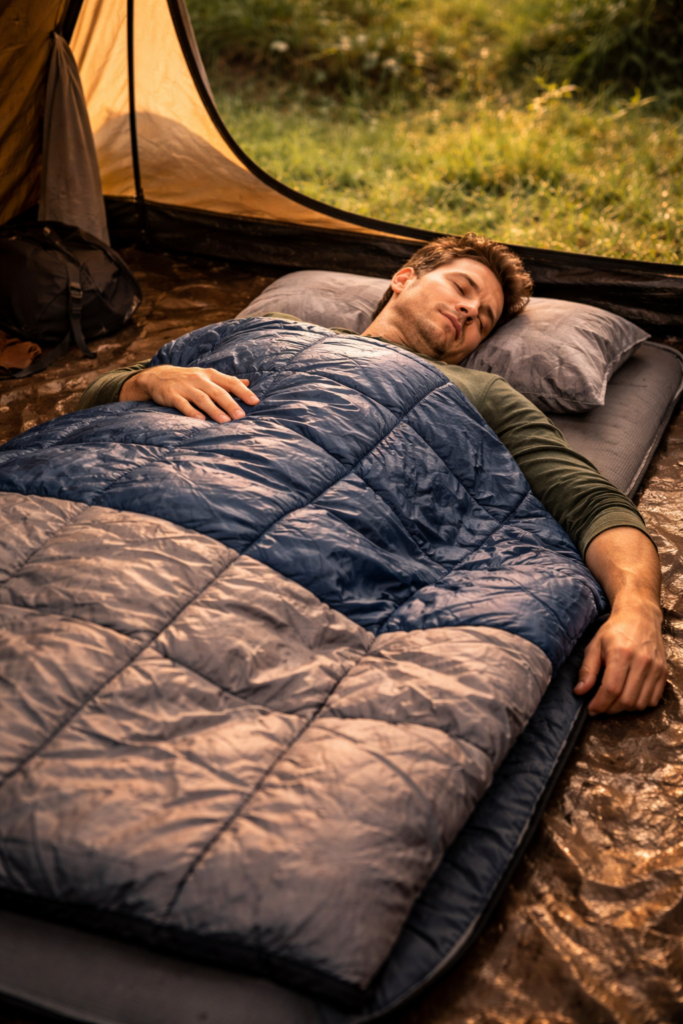
Many adults find quilts more comfortable than sleeping bags because they feel less confined. If you’re someone who spends the night fighting the constraints of a mummy bag, a quilt eliminates that entirely. You’re essentially sleeping under a duvet, which for many people is simply more natural.
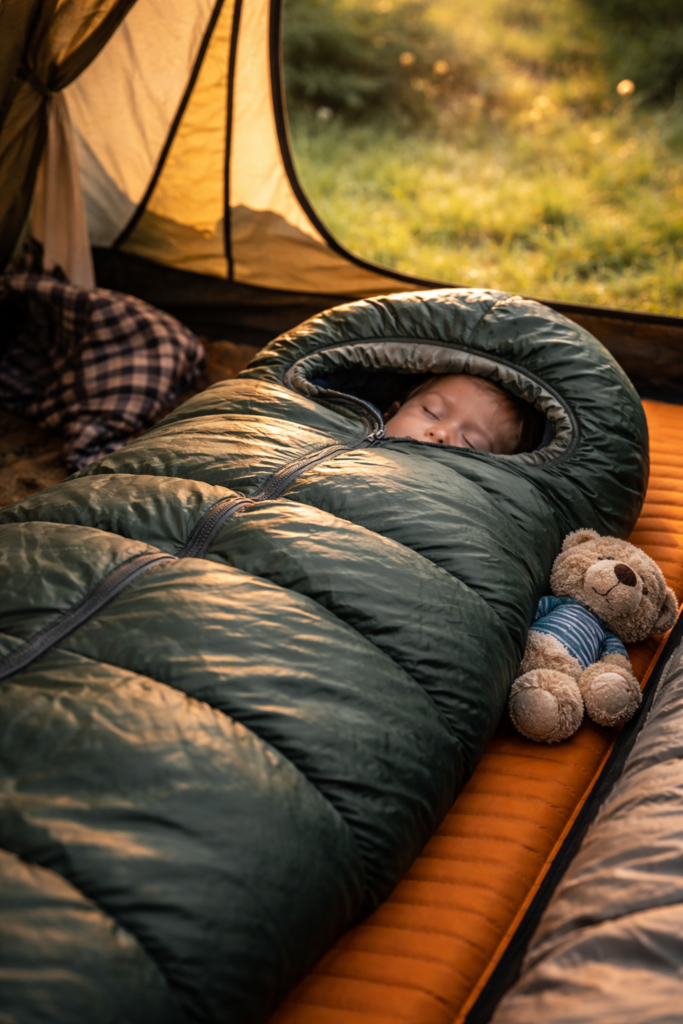
For children, the picture is more complicated. Younger children tend to move around significantly overnight — rolling, kicking, wriggling — and a quilt that gets dislodged at 2am means a cold child by 4am. A sleeping bag stays with the child regardless of how much they move.
Price
Decent camping quilts tend to be more expensive than equivalent sleeping bags, particularly at the entry level. The budget end of the sleeping bag market is well served — there are good quality options for children and adults at accessible prices. Budget camping quilts are harder to find and the cheaper ones often don’t perform as well as a mid-range sleeping bag at the same price point.
Setup and ease of use
Sleeping bags require almost no setup — unroll, climb in, zip up. Quilts generally need attaching to a sleeping mat with straps or clips to function properly, and getting that right takes a little practice. For families setting up camp with tired children in fading light, the simplicity of a sleeping bag is a genuine practical advantage.
Which Works Better for Families With Young Children?
For families with children roughly aged three to ten, sleeping bags are the clearer choice in almost every situation.
Children move around more than adults in their sleep. They’re less able to adjust their own cover when it shifts. They run colder than adults and benefit from the enclosed warmth of a properly fitted bag. And for younger children especially, the familiar enclosed feeling of a sleeping bag is closer to being tucked in at home — which helps with actually getting them to sleep in the first place.
There’s also the practicality of getting children in and out independently. A sleeping bag with a child-friendly zip is something a five-year-old can manage for a midnight toilet trip. A quilt with mat attachment straps is not.
Our camping setup for the younger two involves sleeping bags without question — if you’re still working out which bags to go for, the full breakdown of family sleeping bag options covers the three-season UK options worth considering across different ages and budgets. The couple of times we’ve experimented with a lighter quilt arrangement for the children it hasn’t gone well. Cold children wake up, cold children are unhappy, and unhappy children at 3am in a tent is the kind of experience that makes you very committed to whatever prevented it in the first place.
Where Quilts Start to Make Sense for Families
As children get older — roughly ten and above — and particularly once they’re camping regularly enough to have strong preferences about their own kit, quilts become worth considering.
Older children and teenagers who run warm, sleep still, and find sleeping bags restrictive may genuinely prefer a quilt. The flexibility to regulate temperature, the lighter pack for trips that involve carrying kit, and the more comfortable sleep experience for certain kinds of sleepers are all real benefits at that age. If you’re at the point of thinking seriously about kit for older children specifically, the kids sleeping bag options worth considering includes the Eurohike Youth which sits at the transition point between junior and adult sizing — and is the age group where the quilt question first becomes genuinely relevant.
For adults in the family, the case for a quilt is stronger still — particularly for anyone who consistently finds sleeping bags uncomfortable, overheats easily, or does any camping that involves walking to the pitch. My partner switched to a lightweight quilt for solo adult camping trips and finds it significantly more comfortable than a mummy bag. For family car camping trips where the kids are involved, we keep the sleeping bags for reliability.
The sweet spot for quilts in a family context is probably: adults who are experienced campers and know their own sleep preferences, older children who have demonstrated they sleep relatively still, and any camping situation where pack weight genuinely matters.
UK Weather — Does It Change the Calculation?
Worth addressing specifically because the UK’s camping climate is different from the warm, dry conditions where quilts became popular in hiking culture.
Quilts were largely developed and popularised in the context of summer backpacking where overnight temperatures are more predictable. UK camping — particularly in Scotland, Wales, and the north of England — involves more variable overnight temperatures, higher humidity, and a much higher chance of tent condensation from rain and damp air.
In those conditions, a sleeping bag’s enclosed design provides more reliable warmth than a quilt because there’s less opportunity for cold draughts to enter when the insulation around you is continuous. A quilt on a damp, cold September night in the Highlands requires more active management to stay warm — pulling it tighter, adjusting the mat attachment, tucking the edges under. Most children and many adults don’t want to manage their cover at 3am.
For UK family camping specifically, sleeping bags are the more forgiving choice for more of the year.
A Quick Word on Sleeping Mats
Whichever option you choose, the sleeping mat underneath is as important as what’s on top of you — possibly more so. Ground cold conducts upward efficiently, and a poor mat undermines even a well-rated sleeping bag or quilt. A self-inflating sleeping mat with a decent R-value is worth prioritising before upgrading either the bag or the quilt. It’s the part of the sleep system that makes the biggest difference to whether children sleep comfortably through the night, and it’s the piece most families underestimate on their first few trips.
What We’d Actually Recommend
If you’re new to family camping and still building the kit list from scratch, what you actually need for a first family camping trip is worth reading alongside this — it puts the sleeping system question in context of everything else you’re figuring out at the same time.
For most UK families camping with children — particularly with children under ten, and particularly in Scotland or anywhere with variable overnight temperatures — sleeping bags are the right choice. Reliable, familiar, child-appropriate, and broadly forgiving of the conditions UK camping throws at you.
For adults who camp regularly and know they run warm, find sleeping bags restrictive, or do any trips where pack weight matters, a quilt is worth trying. The Horizon Hound GR-20 is frequently recommended for UK conditions — down fill with a hydrophobic treatment that handles damp better than untreated down. For a reliable mid-range sleeping bag that covers the whole family camping season, the Vango Nitestar Alpha 250 remains the pick we come back to.
The honest version of this for most families: start with sleeping bags for everyone, get comfortable with camping as a family activity, and revisit the quilt question once you know your own preferences and your children’s sleep patterns well enough to make an informed call.
FAQ
What is a camping quilt exactly?
A camping quilt is an insulated blanket designed for outdoor use — essentially a sleeping bag with the underside removed. It covers you from the top rather than enclosing you entirely, and usually attaches to a sleeping mat with straps to prevent it shifting overnight.
Are camping quilts warmer than sleeping bags?
Not inherently — warmth depends on the insulation quality and temperature rating of the specific product rather than the format. Sleeping bags tend to be more reliable in cold or variable conditions because the enclosed design prevents draughts. Quilts can feel warmer for people who overheat in sleeping bags because they’re easier to ventilate.
Can children use camping quilts?
Older children who sleep relatively still and camp regularly can use quilts successfully. For children under about ten — particularly those who move a lot overnight — sleeping bags are more practical. A quilt that shifts off a sleeping child at 2am means a cold child by morning, which tends to end the night badly for everyone in the tent.
Are camping quilts suitable for UK weather?
They work, but they require more active management in the variable, damp conditions common across UK camping — particularly in Scotland and northern England. Sleeping bags are more forgiving in those conditions because there’s no opportunity for cold draughts to enter through an open edge. For summer camping in mild conditions quilts work well. For spring and autumn UK camping, especially with children, sleeping bags are the more reliable choice.
How much do camping quilts cost compared to sleeping bags?
Good quality camping quilts tend to start higher than equivalent sleeping bags — the budget end of the quilt market is thinner and cheaper options often don’t perform as well as a mid-range sleeping bag at the same price point. Expect to pay £80–£150 for a decent entry-level quilt, compared to £40–£80 for a good quality three-season synthetic sleeping bag.
Do I need a special sleeping mat if I use a camping quilt?
A good sleeping mat is important regardless of whether you use a bag or quilt — but it’s particularly important with a quilt because the mat is doing all the insulation work underneath you. Look for a mat with an R-value of 3 or above for three-season UK camping. The mat matters more than most people realise — it’s the part of the sleep system that most directly prevents cold from conducting upward through the tent floor.
Can you use a camping quilt in a family tent?
Yes — there’s nothing about a family tent that prevents quilt use. The consideration is more about the sleepers than the tent. Adults in a family tent who want to try a quilt can do so independently of what the children are using. Many families run a mixed setup — quilts for adults, sleeping bags for children — which works perfectly well once you know your own preferences.
Related Guides
About The Author – Andrew Marshall
Andrew Marshall is the creator of Simple Days Outside and a UK parent of three who regularly camps, walks, and explores outdoor activities with his family. His guides focus on practical gear, realistic family adventures, and simple ways to help families enjoy the outdoors across the UK. The recommendations on this site are based on real-world use, research, and the kind of equipment families actually rely on for weekend trips and everyday outdoor fun.