

Written by Andrew Marshall
UK parent of three sharing practical advice to help families enjoy camping, walking, garden play, and simple outdoor adventures across the UK.
Creator of Simple Days Outside.
Last Updated: 24th March 2026
The temptation when camping in the UK — particularly if you’ve been caught out by a cold night before — is to pack for every conceivable temperature and end up with a boot full of kit you don’t need and no room for anyone’s wellies. We’ve been there. The first few family camping trips involved packing what felt like the entire contents of the airing cupboard, most of which came home unused and slightly damp from being in a cold car boot all weekend.
Staying warm camping in the UK isn’t about packing more. It’s about packing the right things and understanding a few principles that make a genuine difference to how warm you actually sleep and feel on site. Once those click into place, you end up packing less and sleeping better. For everything else on making family camping work, the Family Camping & Short Trips section covers kit, destinations, and planning from the ground up.
Understand the Real Cold Risks Before You Pack
Most people think about staying warm camping in terms of what they wear and sleep in. That’s part of it — but the bigger risks are less obvious and understanding them changes what you prioritise.
Ground cold is the main one. Cold conducts upward through the tent floor faster than it comes through the sides or the sleeping bag. A child lying on a thin mat on a cold September night in Scotland will be cold by midnight regardless of how good the sleeping bag is, because the warmth their body generates is being lost downward faster than the bag can compensate. The sleeping mat is more important than most people account for — more on this below.
Dampness is the second one. UK camping involves humidity, condensation, and the occasional wet night in a way that dry continental camping simply doesn’t. A sleeping bag that picks up moisture from tent condensation — which happens more often than you’d think even without rain — loses insulation efficiency. Wet clothes and damp kit make everyone feel colder than the temperature alone would suggest. We noticed this properly on a May trip to the Argyll coast where it hadn’t rained a drop but everything still felt slightly damp by morning from the overnight air coming off the water.
Wind is the third one. A calm night at 8°C is manageable. An 8°C night with wind cutting through a tent that isn’t well pegged out is a different experience entirely. Where you pitch matters — a sheltered spot behind a hedge, a wall, or a natural rise makes a measurable difference to how cold the night feels.
Sort the Sleeping System First
Everything else in this article matters less than this section. The sleeping system — sleeping bag, sleeping mat, and what you wear inside both — determines whether everyone wakes up warm or whether you spend the night lying awake counting the minutes until it’s light enough to start packing up.
The Sleeping Mat
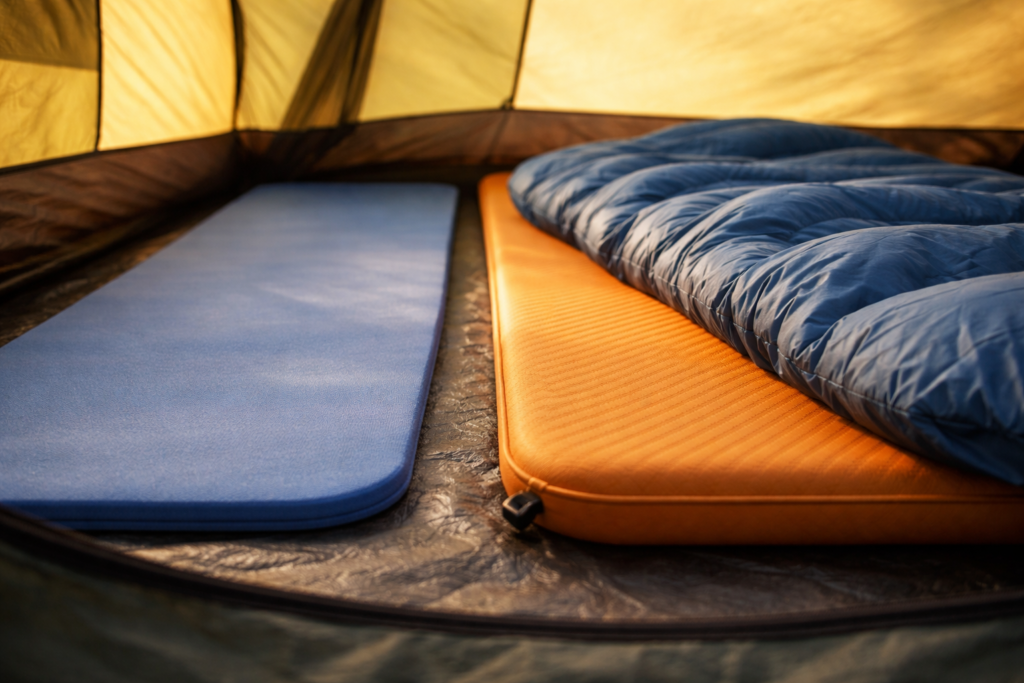
A self-inflating sleeping mat with a decent R-value is the most important piece of kit most families underinvest in. R-value measures how well a mat resists heat transfer to the ground — the higher the number, the better it insulates. For three-season UK camping, look for an R-value of 3 or above. For spring and autumn camping in Scotland, 4 or above is a more comfortable margin.
We were using basic foam roll mats for the first two seasons — the kind that compress down to nothing and feel like sleeping on a yoga mat. Upgrading to self-inflating mats made a more immediate difference to sleeping comfort than any other kit change we made before or since. The difference on a cold night is stark once you’ve experienced both.
The Sleeping Bag
For three-season UK camping — spring through autumn — a sleeping bag with a comfort rating of 0°C to 5°C gives you genuine flexibility. That comfort rating is the temperature at which the bag was tested for a standard adult woman in a relaxed position — use it as your working reference but give yourself a couple of degrees of margin for UK conditions, which tend to be damper than controlled test environments.
Children need bags rated lower than the overnight temperature allows — they sleep colder than adults and a bag that’s perfectly comfortable for a parent will often leave a child cold. We learned this the hard way on a Loch Lomond trip where one of the kids was in a bag that seemed well rated on paper but was too large — all that extra space at the feet was cold air his body couldn’t heat. Correct fit matters as much as rating. If you’re still working out which bag suits which member of the family, the full breakdown of sleeping bag options for UK camping covers the three-season range across adults and children in one place.
What to Wear Inside
One layer — a thermal base layer top and bottoms — is enough for most conditions. Overdressing causes sweating, and damp clothing from sweat then makes you colder when the moisture cools. On genuinely cold nights, add a fleece jacket over the base layer and a hat. Wool or synthetic materials work far better than cotton — cotton holds moisture, which in a sleeping bag on a cold night is the last thing you want.
Thermal hiking socks worn overnight make a noticeable difference to sleep quality — cold feet are disproportionately uncomfortable and warming them up once you’re already in the bag takes a long time. We keep a dedicated pair per person that live in the camping bag and never get used for anything else. It sounds like a small thing until you’ve spent a night trying to warm up cold feet inside a sleeping bag at 2am.
Layer Properly for Daytime and Evening
The layering system used in walking and hiking applies equally well to family camping — and once you understand the principle you can pack far less than you think you need.
Base layer — close to the skin, moisture-wicking, keeps sweat away from your body. Merino wool or synthetic fabrics. Worn all day and slept in if needed.
Mid layer — insulating, traps warm air. A fleece jacket is the most versatile option for family camping — light, dries quickly, and works as everything from a camp layer to a rough pillow stuffed into a stuff sack. One per person is enough.
Outer layer — wind and waterproof. For UK camping this is non-negotiable. A waterproof jacket that packs small covers the rain, the wind off a loch on an exposed campsite, and the cold that cuts through everything else when the temperature drops in the evening.
The key principle is that you can regulate temperature through the day by adding and removing layers, which means you don’t need multiple heavy options for different scenarios — you need the right three layers that work together. We’ve done entire spring camping weekends in Argyll on three layers each and never been cold, which would have seemed impossible before we understood this properly.
Evenings specifically — the temperature on a campsite often drops more sharply at sunset than people expect. Getting the fleece and outer layer on before you feel cold rather than after is the habit that makes evening camp time genuinely comfortable. By the time you’re shivering it takes longer to warm back up than if you’d layered up twenty minutes earlier.
Keep the Tent Warm — or Rather, Stop It Getting Cold
You cannot heat a tent the way you heat a room — and attempting to do so with any kind of combustion heater creates safety risks that simply aren’t worth it. What you can do is reduce the rate at which the tent loses warmth, which amounts to the same thing in practice.
Pitch in a sheltered spot. A hedge, a dry-stone wall, a slight hollow — anything that breaks the wind on the prevailing side makes a meaningful difference. Most campsites have more and less sheltered pitches and it’s worth arriving with enough time to choose. We once pitched in what looked like a perfectly fine open spot on a Loch Lomond site and spent the night listening to the tent sides flexing in the wind, which wasn’t the peaceful night we’d planned.
Close the vents appropriately. Most family tents have adjustable ventilation. The instinct is to close everything on a cold night — but some ventilation is important to reduce condensation, which builds up from breath and body heat and then drips back onto sleeping bags. The balance is a small amount of ventilation to manage condensation without allowing cold draughts through.
Use a tent footprint or groundsheet. An additional layer between the tent floor and the ground adds insulation and reduces the rate at which ground cold transfers upward. Not all tents come with one and they’re often overlooked — but on a cold early-season pitch the difference is noticeable.
Dry gear before bedtime. Wet waterproofs, damp towels, and wet wellies all contribute moisture to the tent air, which increases condensation and makes the interior feel colder and clammier. Keep wet gear in the tent porch if possible. If wet gear is a consistent problem after UK trips, drying a tent and wet camping kit properly after you get home is worth understanding — damp kit packed away still damp causes problems that compound across multiple trips.
One thing we do on every camping trip that makes a real difference: before getting into sleeping bags, we take five minutes to shake out and briefly air the bags, check that ground mats are fully inflated, and make sure no wet kit has crept into the sleeping area during the day. It sounds trivial and takes almost no time, but it means everyone starts the night in a dry, properly set up sleep system rather than discovering at 11pm that something is damp or flat.
Keep Children Warm Specifically
Children lose heat faster than adults relative to their body size — more surface area, less mass, less ability to generate and retain warmth efficiently. The same principles apply but with less margin for error.
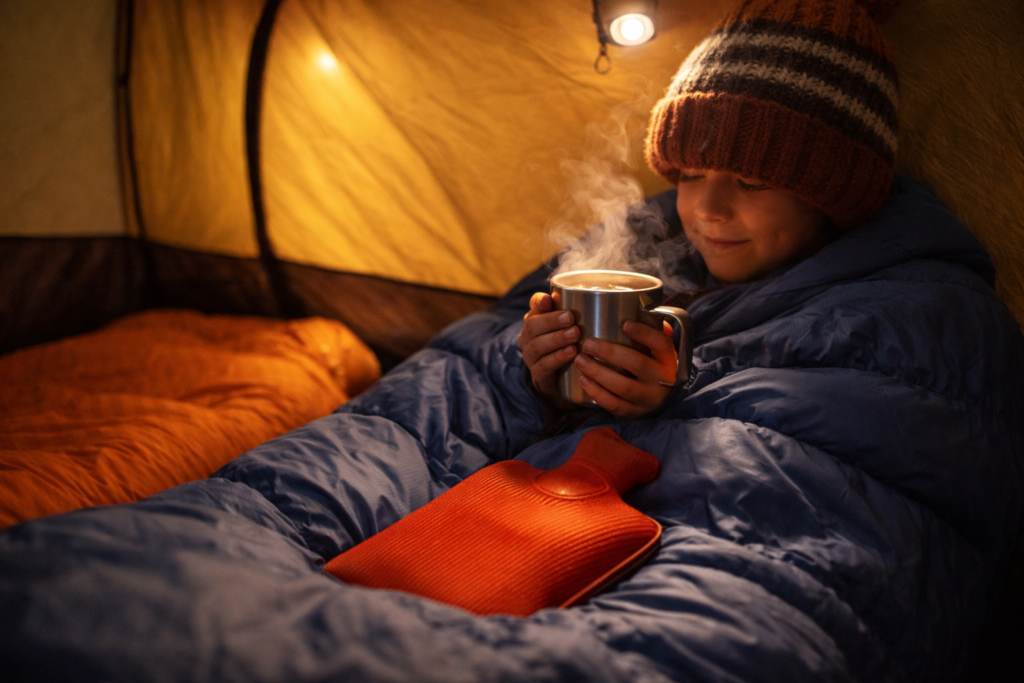
Warm them up before bed. A hot drink, a warm meal, some active running around before the wind-down — getting children’s core temperature up before they get into their sleeping bags means they start warm rather than relying on the bag to warm them from cold. A child who gets into a sleeping bag already cold will take a long time to warm up and may not manage it properly overnight.
Check on them in the first hour. The first hour after a child settles is when you’ll know if they’re going to be warm enough. If they’re wriggling or restless in a way that suggests cold rather than excitement, deal with it then rather than waiting until 3am. An extra layer, a hot water bottle in the foot of the bag, or adjusting the mat position can fix the problem in minutes at 9pm but becomes a major disruption if left until the middle of the night.
If you haven’t got a hot water bottle to hand — or need more warmth than one provides across a cold family tent — fill a 2-litre plastic bottle with warm water, check the lid is secure, and tuck it into the sleeping bag instead. It sounds almost too simple but it works surprisingly well. We’ve used this on more than one trip when the proper hot water bottle was forgotten or there wasn’t enough for everyone. Just make sure the lid is properly tightened. If the mat itself feels like it might be the problem rather than the bag or the layers, the best camping beds for kids covers the options between a basic roll mat and a full camp bed — worth reading if children consistently sleep cold regardless of what bag they’re in.
Hats overnight. Significant body heat is lost through the head. A simple beanie worn overnight in a sleeping bag adds noticeable warmth and weighs almost nothing. Our youngest refused to wear one for the first two trips and was consistently the coldest. He’s worn one every trip since without a single complaint.
Keep them off the tent walls. Children who sleep against the tent fabric will feel cold through it — canvas and nylon are poor insulators and contact with a cold wall transfers heat quickly. A rolled sleeping mat or a folded fleece blanket between a child’s sleeping bag and the tent wall helps on particularly cold nights.
Food, Drinks, and Warmth
This section is less about kit and more about the habits that make a cold camping night feel manageable.
Eating well before bed genuinely helps. The body generates heat from digesting food, and going to bed having eaten a proper warm meal — not just snacks — makes a real difference to how comfortable the night feels. Soup and a hot meal before the bedtime routine is a non-negotiable on our camping trips, regardless of how tired everyone is after a day outdoors.
Hot drinks throughout the day help maintain core temperature in a way that’s easy to underestimate until you’ve camped without making the effort. A camping flask that stays hot for eight hours means there’s always something warm available without boiling the kettle every hour. Tea, hot squash, hot chocolate — it doesn’t matter what, as long as it’s warm and it’s accessible without getting the stove out again.
A hot water bottle in the sleeping bag, pre-warmed for ten minutes before getting in, costs pennies in boiling water and makes the start of the night significantly more comfortable. Our kids now ask for one every camping trip without being prompted — it’s become part of the bedtime routine in the same way as brushing teeth, which is exactly what a good camping habit looks like once it’s embedded.
The Packing Principle — Less Than You Think
The overpacking instinct when camping in the UK comes from anxiety about the cold — and the anxiety is understandable, particularly with children. But the solution isn’t more kit. It’s the right kit in the right quantities.
Per person, for three-season UK camping, the warmth kit list is genuinely short: sleeping bag rated to 0–5°C, sleeping mat with R-value 3+, thermal base layer set, fleece jacket, waterproof outer layer, warm socks, hat. That’s it. After the first couple of seasons of bringing far more than that — I once packed four jumpers for a three-night trip and wore one of them once — we stripped the kit back and haven’t been cold since.
The things that get overpacked — multiple jumpers, heavy blankets, thick duvets, extra sleeping bags — add weight and take up space without meaningfully improving warmth over the correct base kit. A compression stuff sack for sleeping bags keeps everything compact and means you can fit a family of five’s warmth kit into a manageable amount of boot space. If you’re building the camping kit list from scratch and want to check warmth kit against everything else you need, the full family camping kit list is useful for making sure nothing important is missing without doubling up on things you don’t need.
The test we apply before adding anything else to the bag: does this solve a specific problem, or does it just make me feel less anxious about the cold? The second category almost always stays home. A microfibre towel for wiping down condensation from tent walls in the morning is a small addition that earns its place — it weighs almost nothing and makes the pack-up process significantly more pleasant on damp mornings.
FAQ
How cold is too cold for family camping in the UK?
With the right kit there’s no firm lower limit for adults, but for children under five we’d be cautious below about 5°C overnight. For children aged five and above with correct sleeping bags, mats, and layers, temperatures down to around 0°C are manageable. In practice UK summer camping rarely goes below 5°C at the lower end — it’s the spring and autumn shoulder season where temperatures drop further and kit choices matter most.
What’s the most important thing for staying warm camping?
The sleeping mat — specifically its R-value. Most people focus on sleeping bag ratings but it’s the mat that prevents ground cold conducting upward. A sleeping bag rated to -5°C on a thin mat will leave you colder than a bag rated to 5°C on a mat with an R-value of 4. Sort the mat first, everything else second.
Should I bring a blanket as well as a sleeping bag?
A spare fleece blanket is worth having as a lightweight backup layer over a sleeping bag on particularly cold nights. For children it’s more useful to have a correctly rated sleeping bag than to rely on a blanket to compensate for an inadequate one. A blanket on top of a good bag gives useful extra margin. A blanket instead of a good bag does not.
Is a tent heater safe for family camping?
Electric tent heaters designed for camping use are safer than gas options but still carry risks — overheating enclosed spaces, carbon monoxide in the case of any combustion heater, fire risk near tent fabric. The safer approach is to invest in good sleeping kit rather than heating the tent itself. On genuinely cold nights a well-insulated sleep system in a properly pitched tent is both safer and more effective.
Why do I wake up cold in the middle of the night even in a good sleeping bag?
Usually one of three things: the sleeping mat is inadequate and ground cold is coming through, the sleeping bag has picked up moisture from tent condensation and lost insulation efficiency, or body temperature dropped during initial sleep before the bag fully warmed up. Check the mat R-value first, then look at whether the bag feels damp, then consider adding a base layer or hat overnight.
How do I stop tent condensation making everything damp?
Keep a small amount of ventilation open even on cold nights — completely sealed tents build condensation faster from breath and body heat. Shake out sleeping bags in the morning rather than leaving them compressed. Keep wet gear in the porch rather than the sleeping area. A microfibre towel for wiping down condensation from tent walls in the morning makes the pack-up process significantly more manageable on damp UK mornings.
Does what I eat affect how warm I sleep?
Yes, genuinely. The body generates heat from digesting food — a proper warm meal before bed provides fuel for warmth generation overnight in a way that snacks don’t. High-fat, high-carbohydrate foods produce more heat during digestion than light meals. Not a reason to overeat, but a reason to make sure the evening meal is a proper one rather than an afterthought after a long day outdoors.
Related Guides
About The Author – Andrew Marshall
Andrew Marshall is the creator of Simple Days Outside and a UK parent of three who regularly camps, walks, and explores outdoor activities with his family. His guides focus on practical gear, realistic family adventures, and simple ways to help families enjoy the outdoors across the UK. The recommendations on this site are based on real-world use, research, and the kind of equipment families actually rely on for weekend trips and everyday outdoor fun.