

Written by Andrew Marshall
UK parent of three sharing practical advice to help families enjoy camping, walking, garden play, and simple outdoor adventures across the UK.
Creator of Simple Days Outside.
Last Updated: 3rd April 2026
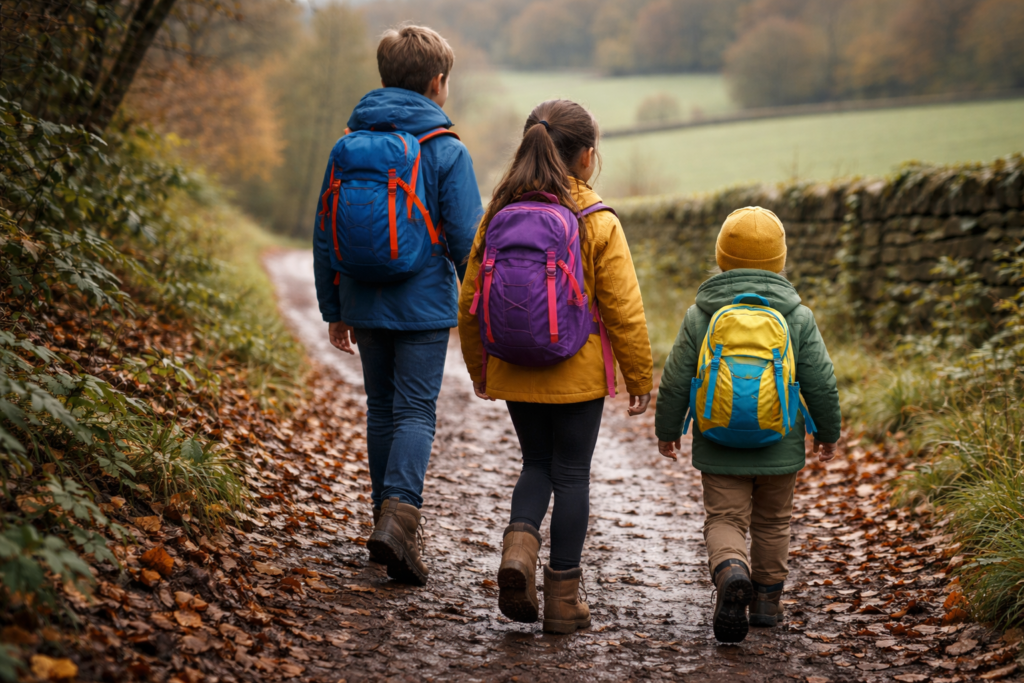
Getting a child their own backpack changes everything about a family walk. Suddenly they’re not just along for the ride — they’ve got kit, they’ve got responsibility, and they’ll walk considerably further because they’re carrying something that belongs to them. We noticed this with our youngest when they graduated from having things stuffed into our pack to carrying their own water bottle and snacks. The complaints about tired legs dropped noticeably. The questions about how far we still had to go became less frequent. Getting the footwear sorted first makes the whole thing work together — waterproof walking boots that keep kids’ feet dry on wet trails alongside a properly fitted pack is the combination that actually gets children walking further.
The challenge is finding a backpack that’s actually right for a child on a walking day out rather than one that’s designed for the school run and happens to be marketed as outdoor-suitable. School bags are built to carry books in a straight line from home to school. A proper kids’ daypack needs to stay comfortable when a child is moving over uneven ground, needs side pockets sized for a water bottle they can reach themselves, and needs to be light enough that carrying it doesn’t become an additional reason to complain before the halfway point.
The five below are confirmed on Amazon UK, sized for younger walkers and day trips rather than multi-day expeditions, and cover a range of ages from toddlers through to early teens.
More family outdoor gear picks are in our Family Walking & Easy Hiking Hub.
What Actually Matters Before You Buy
The single thing most parents overlook when buying a kids’ walking backpack is the weight of the bag itself before anything goes in it. A 500g empty pack on a 20kg child is already 2.5% of their body weight before the water bottle, waterproof, and snacks are added. For regular walking, aim for under 400g empty — ideally closer to 250–300g for children under 7. Everything else follows from getting this right.
After that: a chest strap before anything else. Side-to-side movement on uneven ground without a chest strap creates friction on small shoulders that shows up as complaints about the pack rather than about the terrain. All five packs below have one. Side pockets need to be stretchy enough for a 500ml bottle a child can reach without removing the pack — this sounds obvious and gets ignored surprisingly often in products marketed for outdoor use. A children’s walking backpack with chest strap is the simplest search term if you want to browse beyond these five picks.
A rough guide on load: children shouldn’t carry more than 10–15% of their body weight including the bag itself. For most family day walks this is easily managed — snacks, a waterproof, a water bottle, and whatever treasure they’ve collected from the path. If you’re unsure what distance is realistic for your child’s age before deciding how much kit they need to carry, realistic walking distances for kids by age is worth checking before planning the route.
Involving children in their own packing makes a difference too. A child who packed their own bag knows where everything is, is more invested in carrying it, and is less likely to demand the contents every five minutes on the path.
Get the Size Right Before You Order
A backpack that’s too large sits below a child’s waist and creates lower back strain within the first hour. One that’s too small is immediately outgrown and not worth the investment.
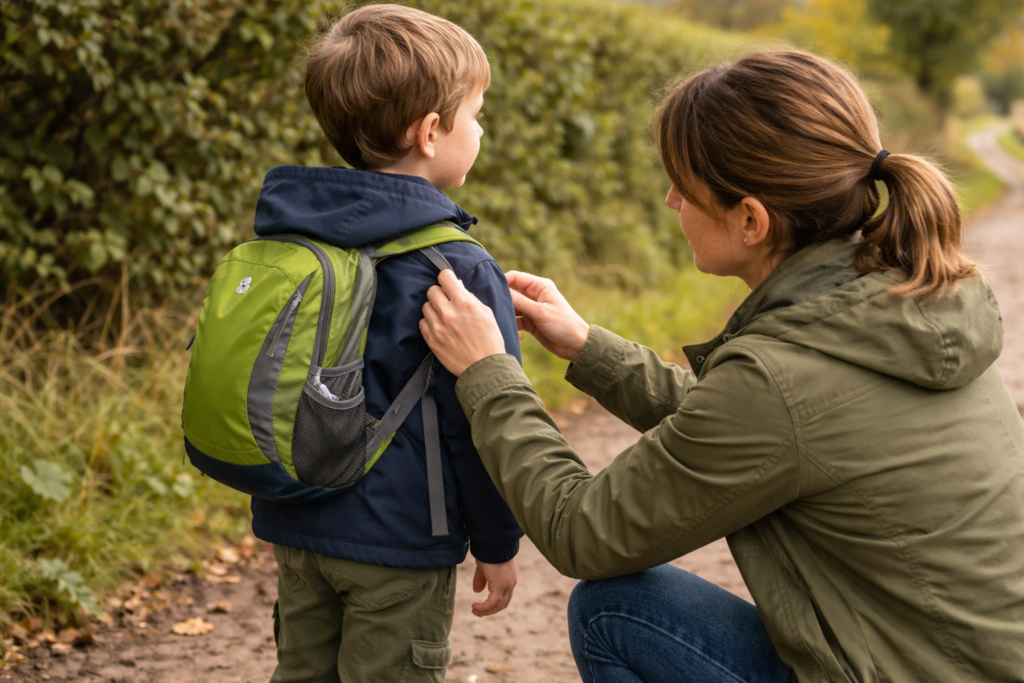
The general rule: the base of the pack should sit just above the child’s waist, the top of the pack should reach no higher than the child’s shoulders, and the shoulder straps should curve over the shoulders without gaps. Most of the packs below come in a single size per age range which removes much of the guesswork — but check the height recommendations on each listing rather than going by age alone. A tall 6-year-old needs a different size to a smaller 8-year-old, and getting this wrong before ordering is considerably easier than returning it afterwards.
The Five Worth Buying
1. Deuter Pico 5L — around £25–35 (Amazon UK)
Best for: children aged 2–5 on easy family walks and shorter day trips.
Deuter has been making backpacks since 1898 and the Pico is their entry-level children’s pack — and it shows in the quality of the fit rather than the price. The S-shaped shoulder straps have a Soft-Edge finish on the inner edges, which is the kind of detail that doesn’t appear in the product title but makes a real difference over a two-hour walk for a small child. A Deuter kids backpack search will show the full range if you want to see the larger sizes alongside this one.
At 5L it’s sized correctly for a toddler through to around age 5. It carries a water bottle in the stretch side pocket, a snack in the front zip pocket, and a thin waterproof layer in the main compartment — which is everything a young child needs to carry on a half-day walk. The curved zipper opening is designed for children’s hands rather than adults reaching in to retrieve things on their behalf.
The fabric is made from 100% recycled PET bottles with a PFC-free water-repellent coating — which matters for UK weather where a light drizzle mid-walk is a realistic expectation rather than an unlikely event. The sternum strap keeps the pack stable on moving children without being fiddly to clip for small fingers.
Our youngest graduated from having things in our pack to the Deuter Pico around the age of four and the weight difference compared to a generic character bag was immediately obvious. They wore it all day without once asking anyone to carry it, which had not previously been the case.
2. Osprey Daylite Jr 9L — around £35–50 (Amazon UK)
Best for: children aged 5–10 who walk regularly and need a pack that will grow with them for several seasons.
Osprey’s adult Daylite is one of the most widely used daypacks on the market. The Daylite Jr takes the same design principles — ventilated back panel, panel-loading main compartment, dual side mesh pockets — and scales them down for younger wearers. The proportions are genuinely child-sized rather than adult sizing at minimum adjustment, which is the main practical difference between this and buying an adult pack and shortening the straps. An Osprey kids daypack search shows the full Osprey children’s range if you want to compare sizes.
At 9L it carries enough for a full day out — packed lunch, waterproofs, a snack, water bottle, and a hat — while remaining light enough for a child to manage independently. The ventilated back panel makes a real difference in warmer months when a non-ventilated pack creates a sweaty back within twenty minutes of movement.
The built-in whistle is a detail worth noting. Not because family walks routinely become survival situations, but because children who have a whistle on their pack feel significantly more prepared, which changes how they approach the walk entirely. There’s also a hydration sleeve inside the main compartment for a water bladder if that’s preferable to managing separate bottles.
The Osprey Daylite Jr costs more than the other options here but it’s considerably better made. On an outdoor-focused budget this is the pack that lasts three or four years of regular walking rather than one season.
3. SKYSPER Kids Hiking Backpack 12L — around £15–22 (Amazon UK)
Best for: children aged 4–9 who need a practical walking pack at a budget-friendly price.
SKYSPER is a hiking and camping brand that produces gear across a wide range and the 12L kids backpack is their most consistently reviewed children’s option on Amazon UK. At 12L it’s a usable size for a full day walk — snacks, waterproof, water bottle, and space for whatever interesting things get collected along the path, which for children aged 4–9 is a legitimate packing consideration that most adult-written kit lists forget entirely.
The chest strap is adjustable and detachable, the shoulder straps are ventilated and widened compared to budget school bag alternatives, and the water bottle side pockets are genuinely stretchy enough for a 500ml bottle without fighting. Reflective strips on the pack are a practical addition for autumn and winter walks when light fades earlier than expected on a UK afternoon.
The honest note: this is not the same build quality as the Osprey or Deuter above. The materials are more utilitarian and the straps, while padded, aren’t in the same class as packs costing twice the price. For families who walk occasionally and want a practical pack without a significant investment, it’s a very reasonable choice. For families who walk every weekend regardless of weather, the Osprey is the better long-term value.
The dinosaur design option is worth mentioning separately below — if your child has strong views about what their pack looks like, which most children aged 4–8 absolutely do, having that option available is genuinely useful. A lightweight kids rucksack search will show the breadth of options if none of the five picks here fit the bill.
4. MOUNTAINTOP Children’s Backpack 15L — around £18–25 (Amazon UK)
Best for: children aged 6–10 who need slightly more capacity for longer day trips.
MOUNTAINTOP has been producing outdoor backpacks since 1986 and the children’s 15L sits in a useful middle ground — more capacity than the smaller kids packs, still light enough at 490g empty for a child to manage independently across a full day.
Our middle child used a very similar MOUNTAINTOP pack for a full season of walks and it survived everything including being sat on, dragged along a dry stone wall, and left in the rain overnight on one occasion. The zips still work.
The dimensions at 25 x 14 x 41cm make it the largest pack on this list and genuinely suited to a full family day out where the child is carrying their fair share rather than just their own snacks. The ergonomic back panel and breathable shoulder straps are the standout features alongside the chest strap — for older children aged 8–10 walking longer distances, the back support quality starts to matter in a way it doesn’t on shorter routes. A poorly padded back panel on a fuller pack creates lower back fatigue that shows up in the final kilometre as inexplicable complaints about everything. A children’s hiking rucksack UK search is worth running alongside this listing if you want to compare at this size.
The pack is water-resistant polyester which handles UK drizzle comfortably without needing a separate rain cover for anything short of heavy sustained rain. Two side pockets for a water bottle and umbrella — umbrella storage being a specifically practical addition for walking in British weather — and a front zip compartment for quick-access items.
5. SKYSPER Kids Backpack Dinosaur Print 12L — around £15–20 (Amazon UK)
Best for: children aged 4–9 who will only willingly carry a pack they’ve chosen themselves.
This is the same SKYSPER 12L construction as option three but worth listing separately because the design question is genuinely important with this age group. A child who has been allowed to choose a pack with a design they actually like will carry it more willingly, for longer, without being reminded. A child whose pack was chosen purely on practical grounds by parents will find any number of reasons to hand it over before the halfway point.
The dinosaur design is the most popular version of this pack and comes with the same practical features — chest strap, ventilated shoulder straps, reflective strips, stretchy side water bottle pockets, and a built-in whistle. The whistle earns its place for the same reason as on the Osprey — it makes children feel properly equipped for an adventure rather than just carrying their snacks.
Available in multiple designs if dinosaurs aren’t the current obsession. The right answer here is to show the child the options and let them choose. The walk is considerably smoother when the pack is something they picked. A kids waterproof daypack search will show the full range of design options available on Amazon UK if none of these designs fits the bill.
What to Actually Pack Inside
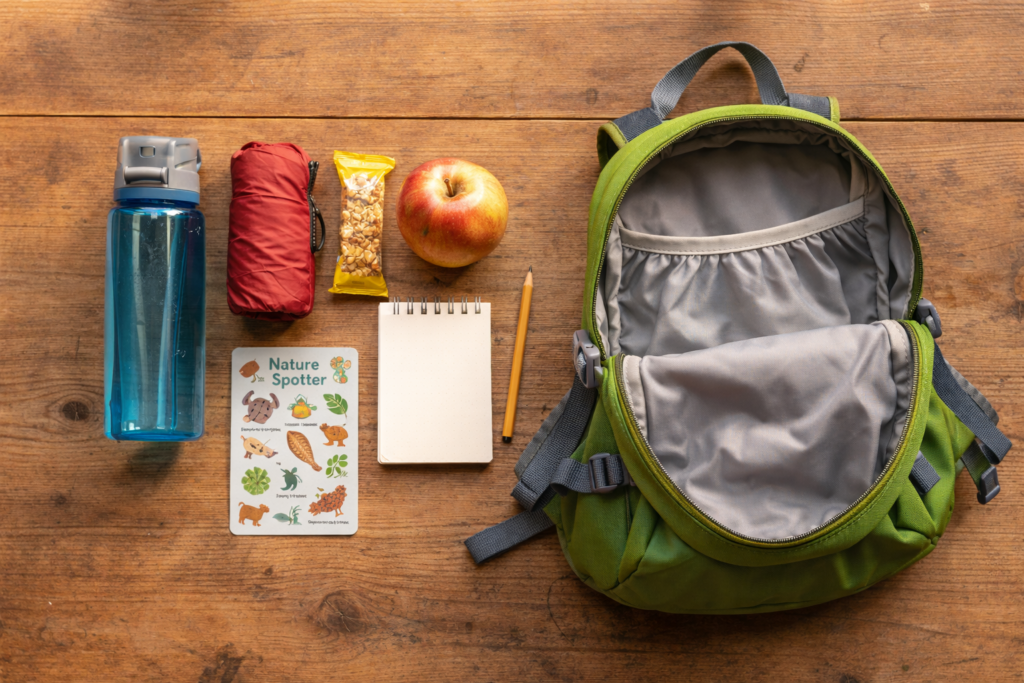
For a 2–3 hour family walk, a child’s pack should contain their own water bottle — 500ml is usually right for primary school age — one snack for mid-walk and one for the end, a packaway waterproof, and something personal. A small toy, a nature identification card, a notebook, or whatever the current obsession happens to be. The personal item matters more than parents expect. A child who has something in their pack that belongs to them engages differently with carrying it. For a full kit list covering everything worth having on a first family trail day beyond the backpack itself, what to pack for a 2–3 hour UK trail covers the complete picture.
Resist the temptation to add more. An overpacked child’s bag becomes a parent’s bag within the first kilometre.
Frequently Asked Questions
At what age can children start carrying their own backpack on walks? Around 3–4 is the realistic starting point — a toddler carrying their own snacks and water in a 5L pack changes their relationship to the walk entirely. Keep it genuinely light. A 3-year-old who finds their pack heavy before the car park is out of sight will not be carrying it again voluntarily.
How much weight should a child carry? No more than 10–15% of their body weight including the bag. For most family day walks on the packs listed above this limit is easy to stay within if you’re not overpacking. A child who feels their pack is too heavy will transfer the problem to you within twenty minutes.
Do children’s backpacks need to be waterproof? Water-resistant is sufficient for most UK day walks — it handles drizzle and light rain without the contents getting wet. True waterproofing is only necessary for sustained heavy rain, in which case a separate pack cover or a dry bag inside the main compartment is the more practical solution.
Which of these packs grows with a child the longest? The Osprey Daylite Jr and the MOUNTAINTOP 15L have the most longevity — the Osprey through build quality and the Mountaintop through capacity, which remains appropriate for older children carrying more kit. The Deuter Pico is excellent for its age range but will be outgrown around age 5–6.
Is it worth spending more on a branded pack like the Osprey? For families who walk regularly throughout the year — yes. The ventilated back panel, quality straps, and build durability on the Osprey make a genuine difference over multiple seasons of use. For occasional walkers, the SKYSPER or MOUNTAINTOP options are more than sufficient and represent good value for the frequency of use. Poles are the other piece of kit worth considering alongside a pack for children who are starting to walk longer or hillier routes — whether hiking poles are worth it for family walks covers the honest case for and against.
Related Guides
About The Author – Andrew Marshall
Andrew Marshall is the creator of Simple Days Outside and a UK parent of three who regularly camps, walks, and explores outdoor activities with his family. His guides focus on practical gear, realistic family adventures, and simple ways to help families enjoy the outdoors across the UK. The recommendations on this site are based on real-world use, research, and the kind of equipment families actually rely on for weekend trips and everyday outdoor fun.